12 Smart Camping Food Hacks To Master, Plus 10 Proven Tips That Work
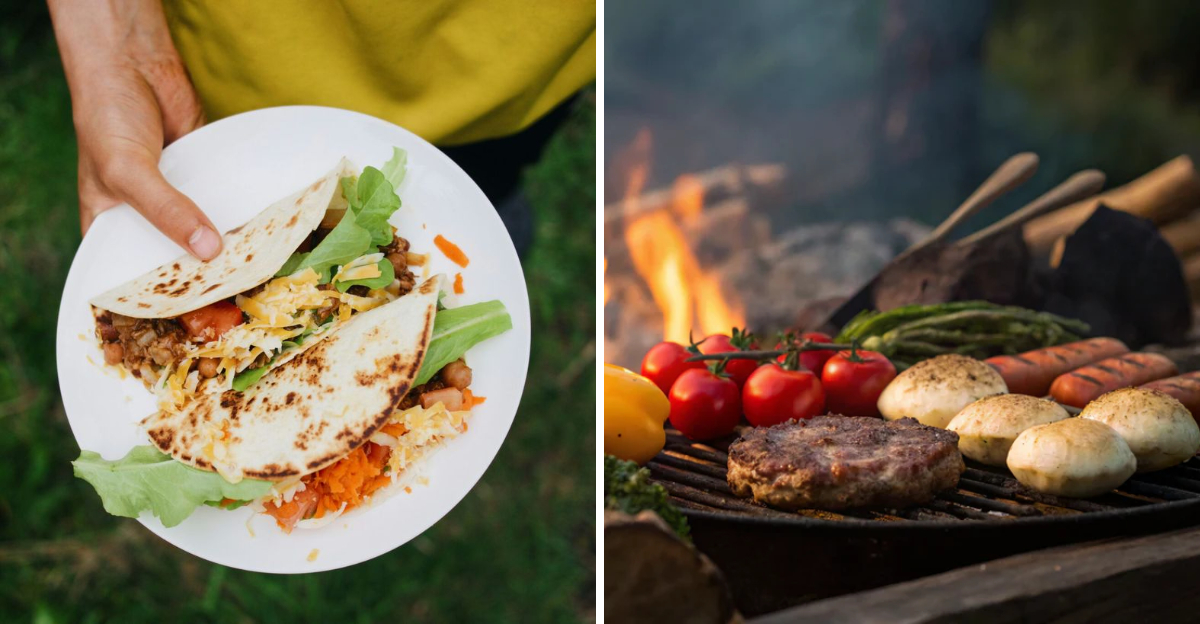
Camping food has a reputation for being bland or stressful, but it does not have to be. With a few clever moves before you leave, you can eat great meals without hauling your whole kitchen.
These hacks and tips keep your cooler cold, your meals fast, and your cleanup easy so you actually relax. Ready to cook smarter and enjoy the woods without the mess or fuss?
1. Freeze half your cooler on purpose
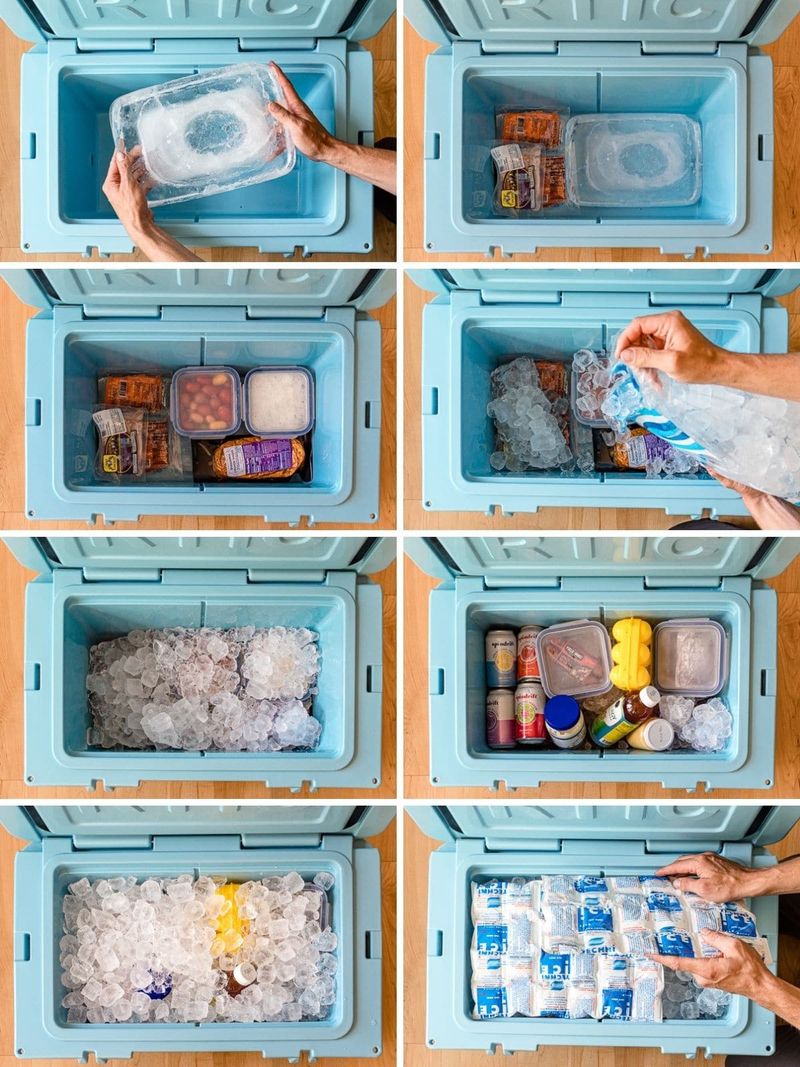
Freeze water bottles, juice boxes, and sturdy containers of pasta sauce to create a cold core that lasts. They double as safe drinking water as they thaw through the trip.
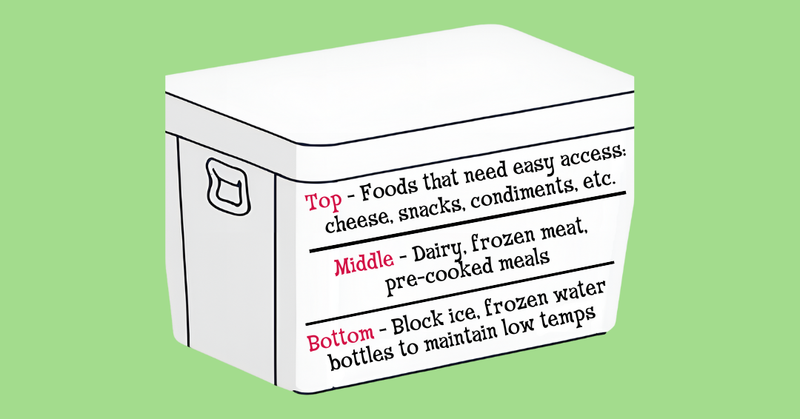
Pack the frozen items at the bottom and along the sides to form a chill wall.
Use leak-proof containers and leave expansion space to avoid bulging lids. Balance with a few fresh items on top for immediate use.
Keep the cooler shaded and closed so that ice packs are not doing all the heavy lifting.
Label what is meant to thaw earlier versus later. Rotate items upward as they soften so you do not dig.
You will cut ice costs, reduce sogginess, and stretch freshness significantly.
2. Pre-crack and bottle your eggs
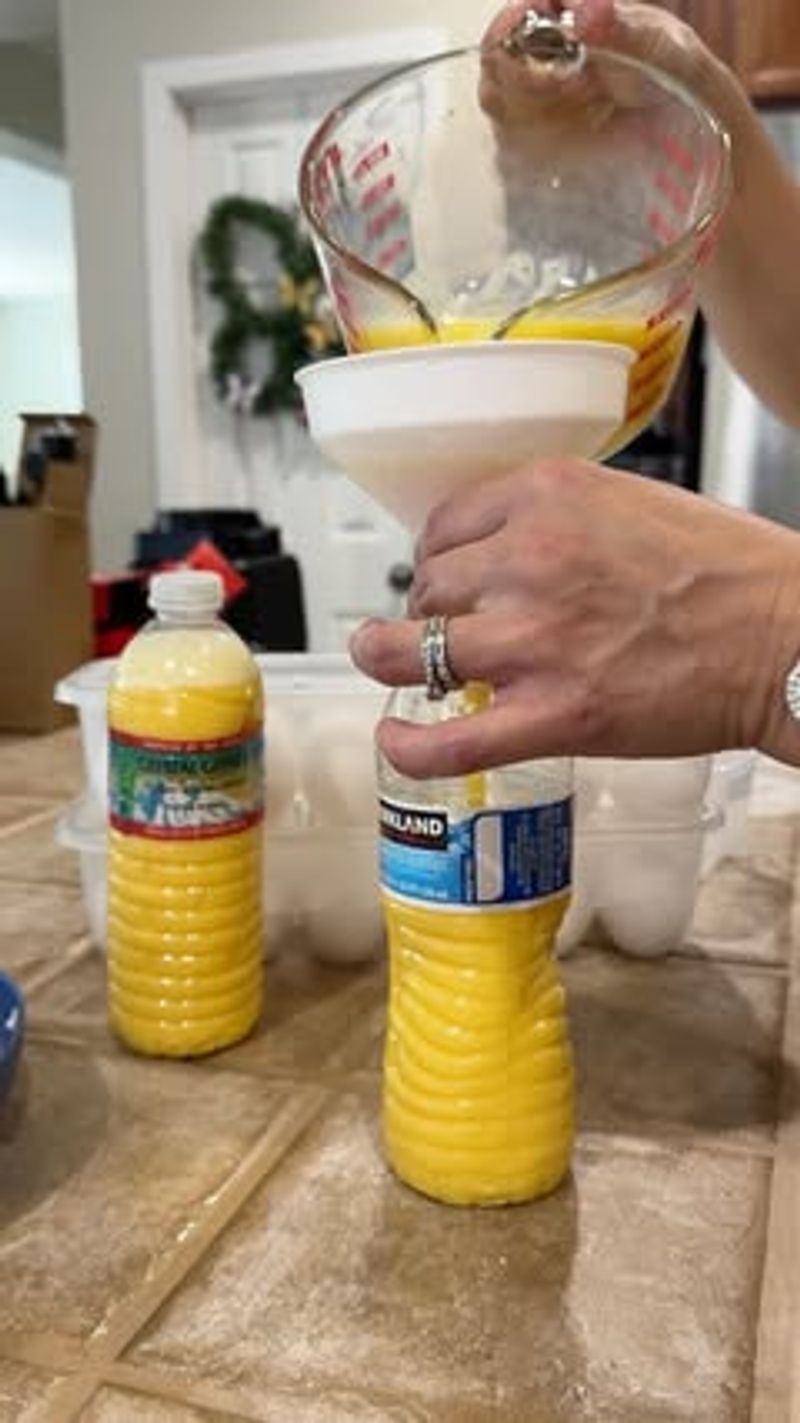
Crack eggs into a clean, sealable bottle before leaving home and you eliminate shells and mess. Use a funnel for neat pouring and add a pinch of salt if you like.
Mark the bottle with the number of eggs and the date.
Shake gently before cooking for fluffy scrambles or easy pour pancakes. Store the bottle cold near ice packs in the cooler.
A narrow-mouth bottle pours cleanly into a skillet, minimizing drips on the grate.
Bring a second small bottle for pancake batter to save time. You will make breakfast faster than coffee brews.
Cleanup becomes a quick wipe instead of a shell hunt in the dirt.
3. Cook once, eat twice
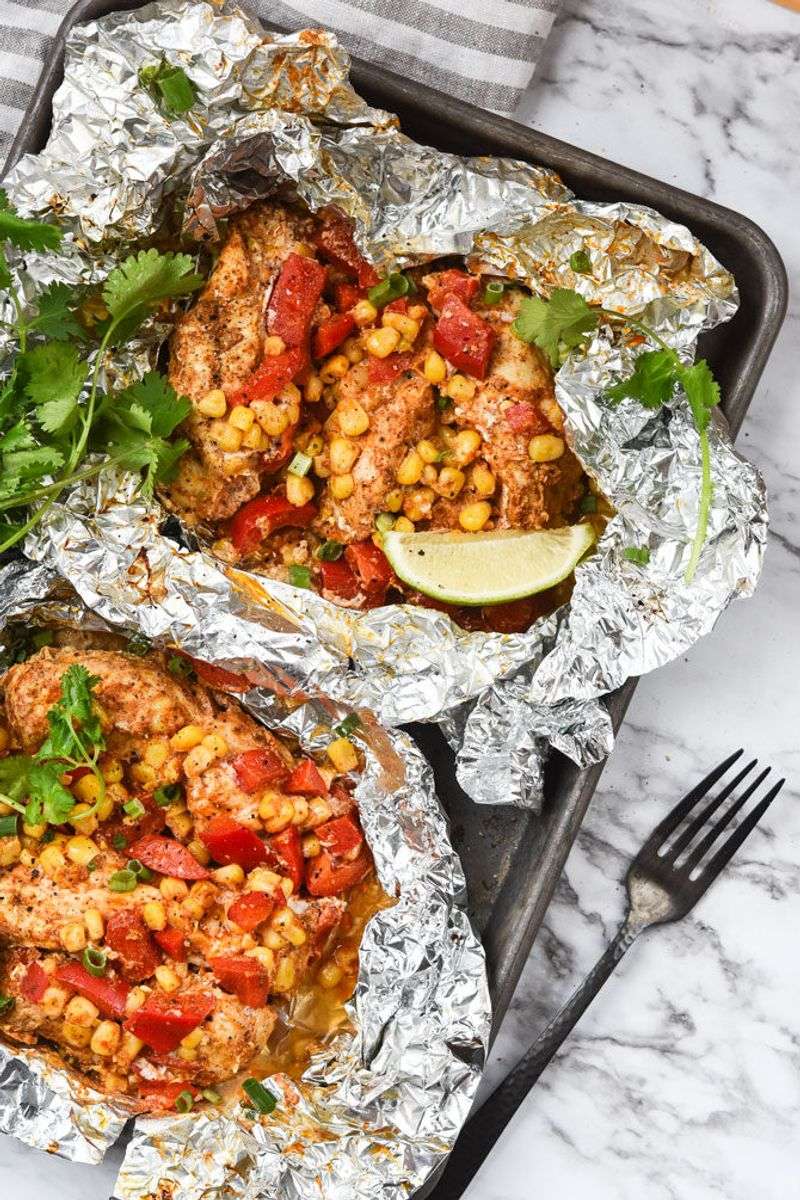
Batch cook taco meat, chili, or shredded chicken at home, then portion into flat packs for faster thawing. Vacuum sealer or zip bags work great.
Label each pack with contents and intended meals.
Reheat over low heat with a splash of water to revive moisture. Turn chili into nachos, quesadillas, or stuffed potatoes.
Use chicken in wraps one night and rice bowls the next without new prep.
This approach saves fuel and brainpower when you are tired. It also reduces raw meat handling at camp.
Plan two to three spinoff meals per batch and you will feel like a camp chef genius.
4. Pack flat meals that just need heat
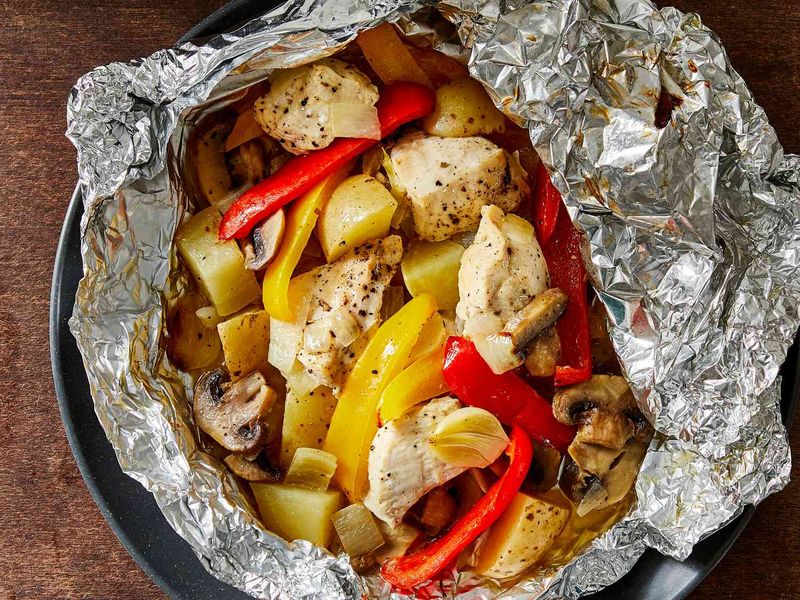
Choose meals that lie flat and cook quickly, like quesadillas, naan pizzas, and instant rice bowls. They fit neatly in the cooler and heat in minutes.
Foil-pack fajitas bring big flavor with minimal dishes.
Pre-portion fillings in thin bags so they thaw fast. A single skillet or griddle handles most of it.
Add pre-shredded cheese, salsa, and a squeeze of lime to keep things lively.
Flat foods reduce cooler chaos since they stack like books. You will spend less time rummaging and more time eating.
Plus, quick heat meals keep hunger from turning into camp grumps.
5. Use a muffin tin for campfire portions
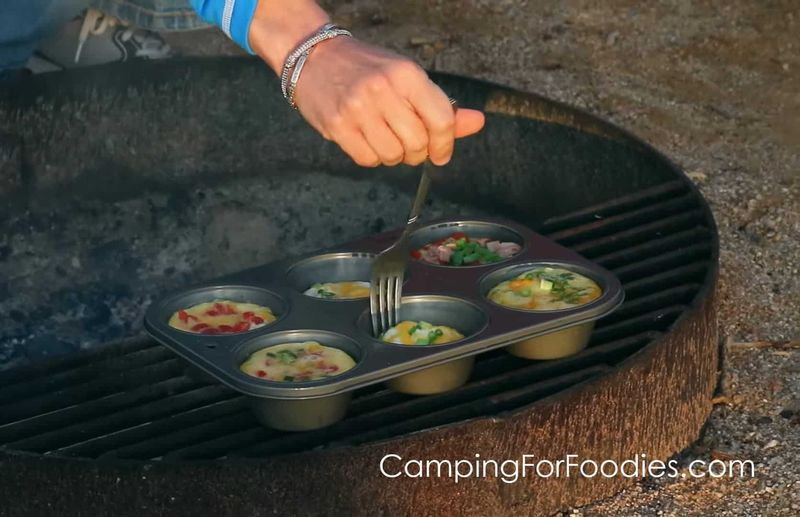
A muffin tin turns a campfire grate into organized cooking. Crack eggs, portion hash, or bake mini cornbreads without losing food through the bars.
Grease wells or use liners to prevent sticking.
Rotate the tin for even heat since campfires are uneven by nature. Cover loosely with foil to trap heat and speed cooking.
Silicone liners help with cleanup and reduce scrubbing later.
Think desserts too, like berry cobbler cups or brownie bites. You get neat serving sizes and fewer arguments about who gets more.
It is a tidy way to feed a group with less chaos and waste.
6. Foil packets are your best friend
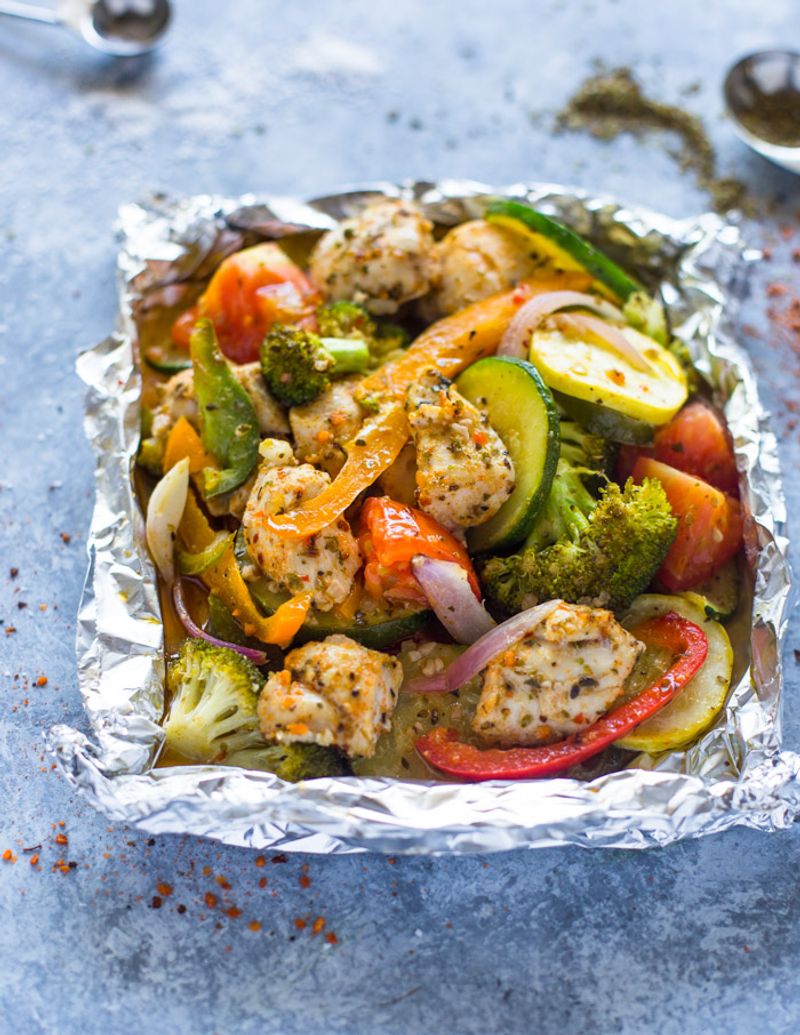
Build foil packets with protein, vegetables, seasoning, and a bit of fat to prevent drying. Double wrap for durability and seal tightly.
Place on coals, not flames, for more even cooking.
Cut ingredients small so they finish at the same time. Add a splash of broth or citrus for steam and brightness.
Rotate occasionally and check for doneness near the thickest pieces.
Cleanup is nearly nonexistent since the packet is the pan. Customize packets for picky eaters without extra work.
This method is fast, forgiving, and perfect when daylight is fading.
7. Make spice packets like a sauce stash
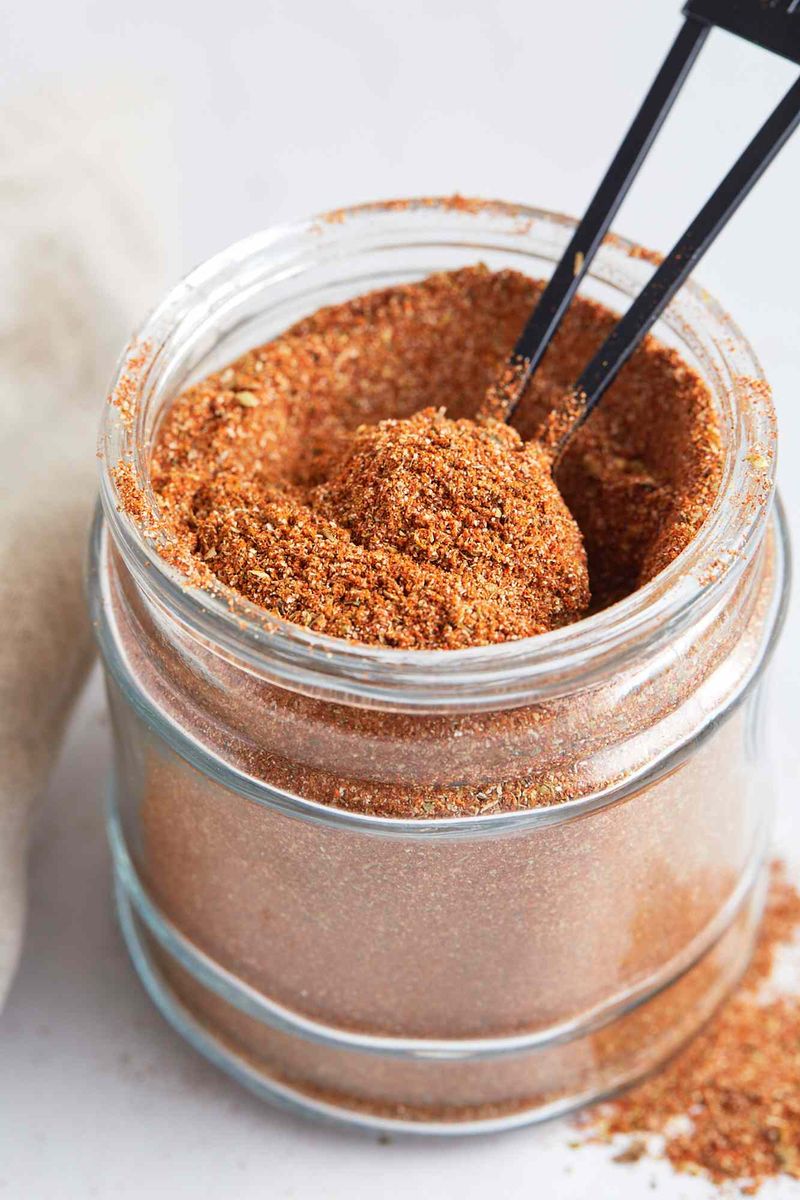
Pre-mix spice blends at home and portion into tiny bags or straws sealed with heat. Label clearly so you do not play mystery seasoning.
A taco blend, curry mix, garlic herb, and Cajun will cover most cravings.
Skip bulky jars and bring one small spoon. Combine with a single hero sauce to keep meals lively.
Keep packets in a waterproof pouch so humidity does not cake them.
This trick speeds seasoning on windy nights when lids go missing. You save space, reduce spills, and cook with confidence.
It is like having a drive-thru sauce drawer, but for camp cooking.
8. Pre-chop the annoying stuff
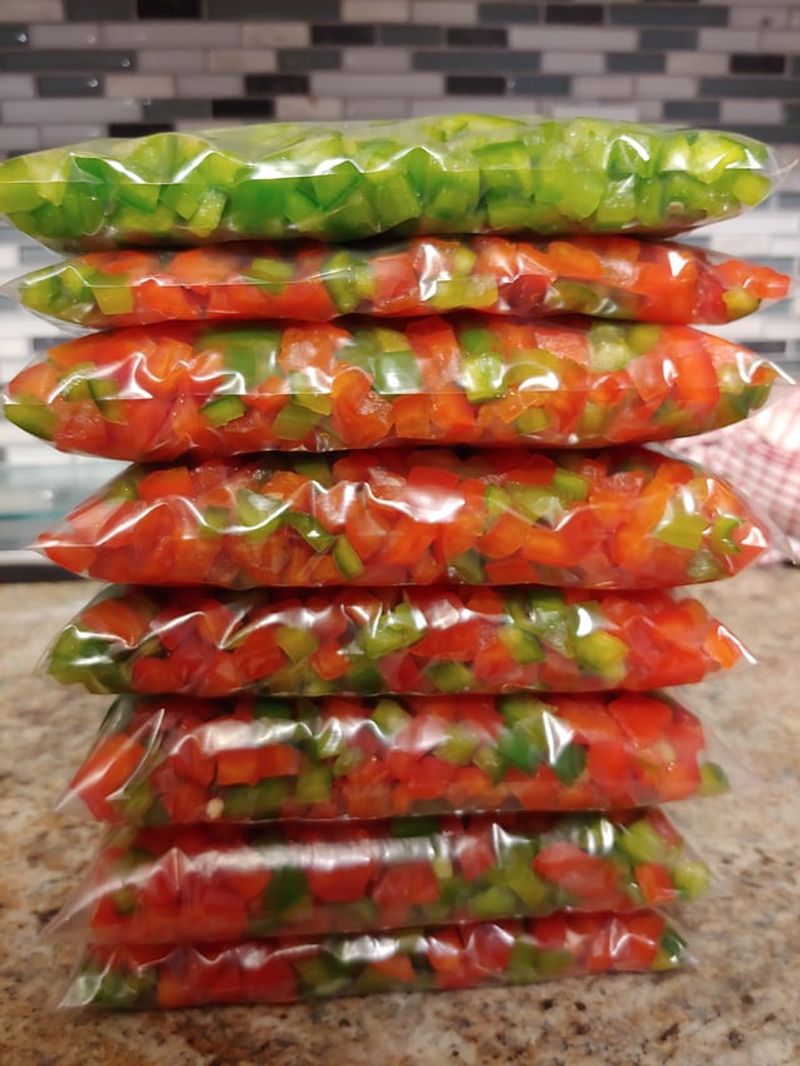
Dice onions, peppers, and mince garlic at home to avoid tears and sticky knives in the dirt. Store in leak-proof containers with paper towel to absorb moisture.
Herbs can be chopped or brought whole with stems wrapped in damp towel.
Pre-chopping accelerates cooking on tired nights. You go from stove ignition to sizzle in minutes.
Plus, less wildlife-attracting food scent wafts around your campsite.
Keep strong aromatics double-bagged to prevent cooler odor. Portion by meal so you only open what you need.
You will feel like you have an extra pair of hands when hunger hits.
9. Turn tortillas into everything
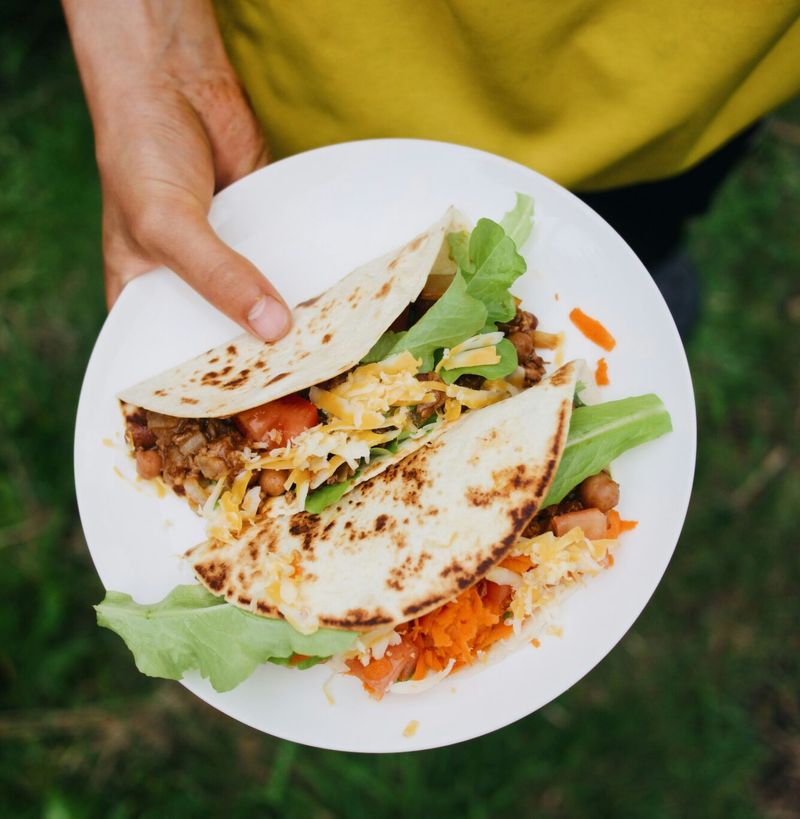
Tortillas do it all: wraps, tacos, quesadillas, and breakfast burritos. They act as edible plates and even lids for bowls.
Warm them directly on a dry pan or over low flame for flexibility.
Make sweet snacks with butter, cinnamon sugar, and a quick toast. For dinner, stuff with leftover chili or shredded chicken.
They pack flat and never shatter like bread does after a day in a backpack.
Bring a mix of sizes for snacks versus meals. A sturdy salsa or hot sauce keeps things exciting.
With tortillas, you will never feel stuck eating the same thing twice.
10. Use instant grains as a base
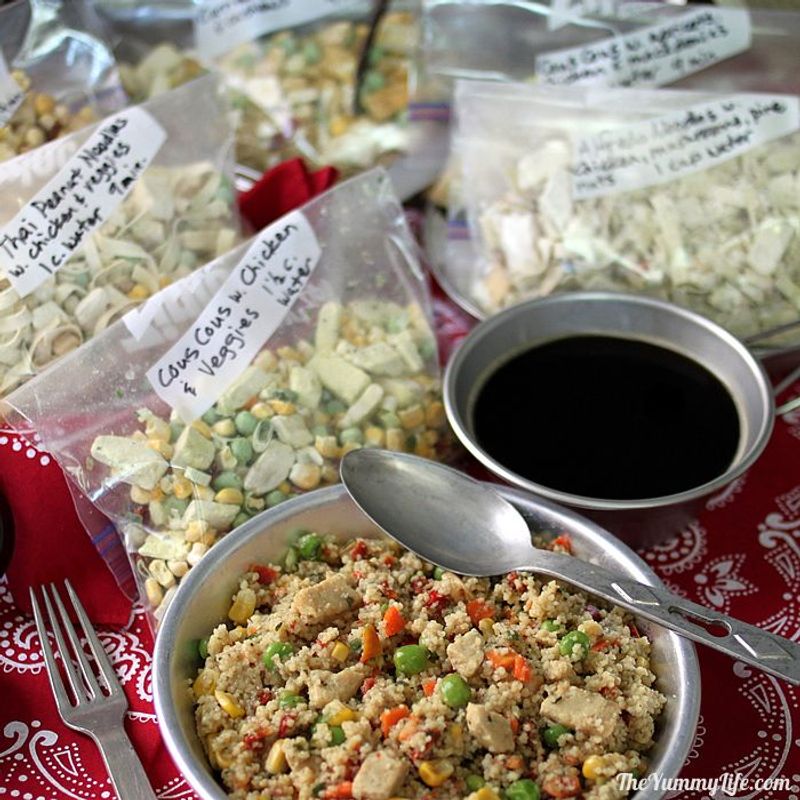
Instant grains are lightweight heroes that cook fast with minimal fuel. Rice, couscous, quick oats, and mashed potatoes pair with any protein.
Boil water, stir, and let sit off heat while you prep toppings.
Flavor with spice packets, a spoon of salsa, or a drizzle of oil. Add pre-cooked meat or beans for a complete meal.
The quick cook time keeps you from babysitting a pot when coals are unpredictable.
Pack a few single-serve portions to avoid leftovers. They are forgiving at altitude and in wind.
Your dinners will feel hearty without dragging camp on for hours.
11. Bring one sauce that fixes everything
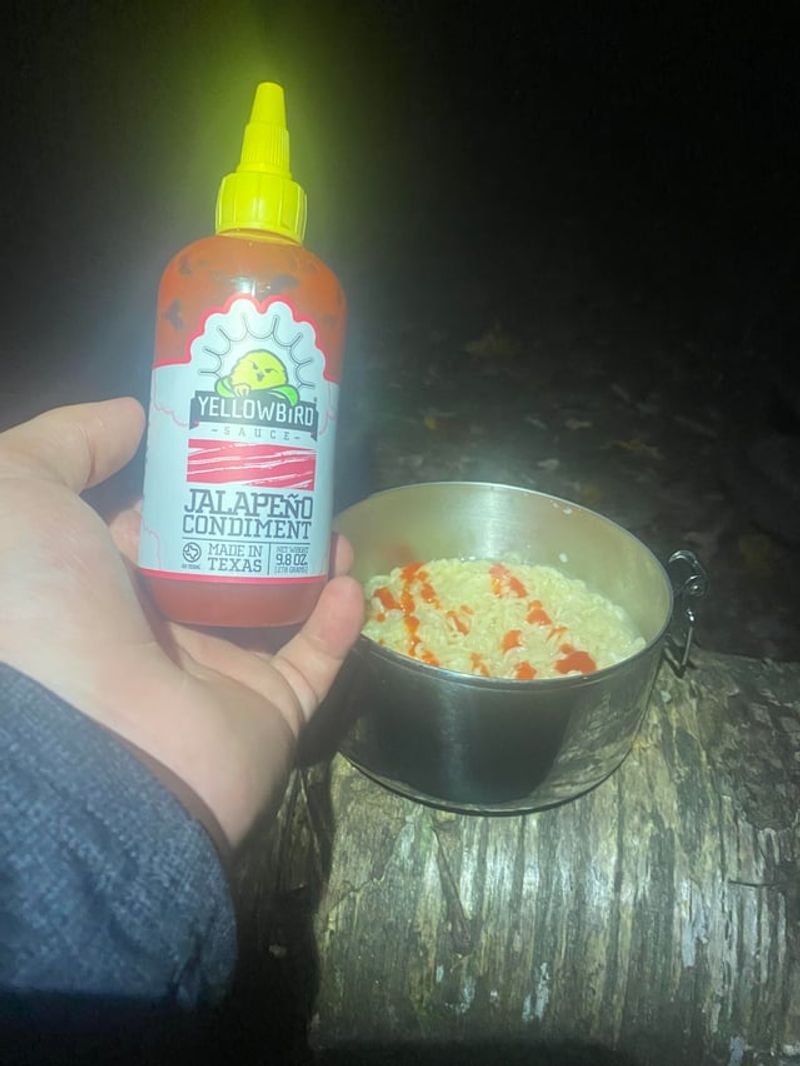
Choose a single powerhouse sauce like salsa, hot sauce, or garlic sauce to revive bland meals. It keeps flavors interesting across multiple nights.
One bottle is simpler than a dozen condiments sliding around.
Use it on eggs, rice, wraps, and grilled veggies. A bright sauce bridges leftovers into something new.
Store it upright in a small caddy so it does not tip in the cooler.
Consider heat levels for everyone and pack an extra if your group loves spice. A squeeze bottle prevents mess.
Suddenly even instant rice tastes like dinner, not just survival fuel.
12. Dessert hack: campfire cones
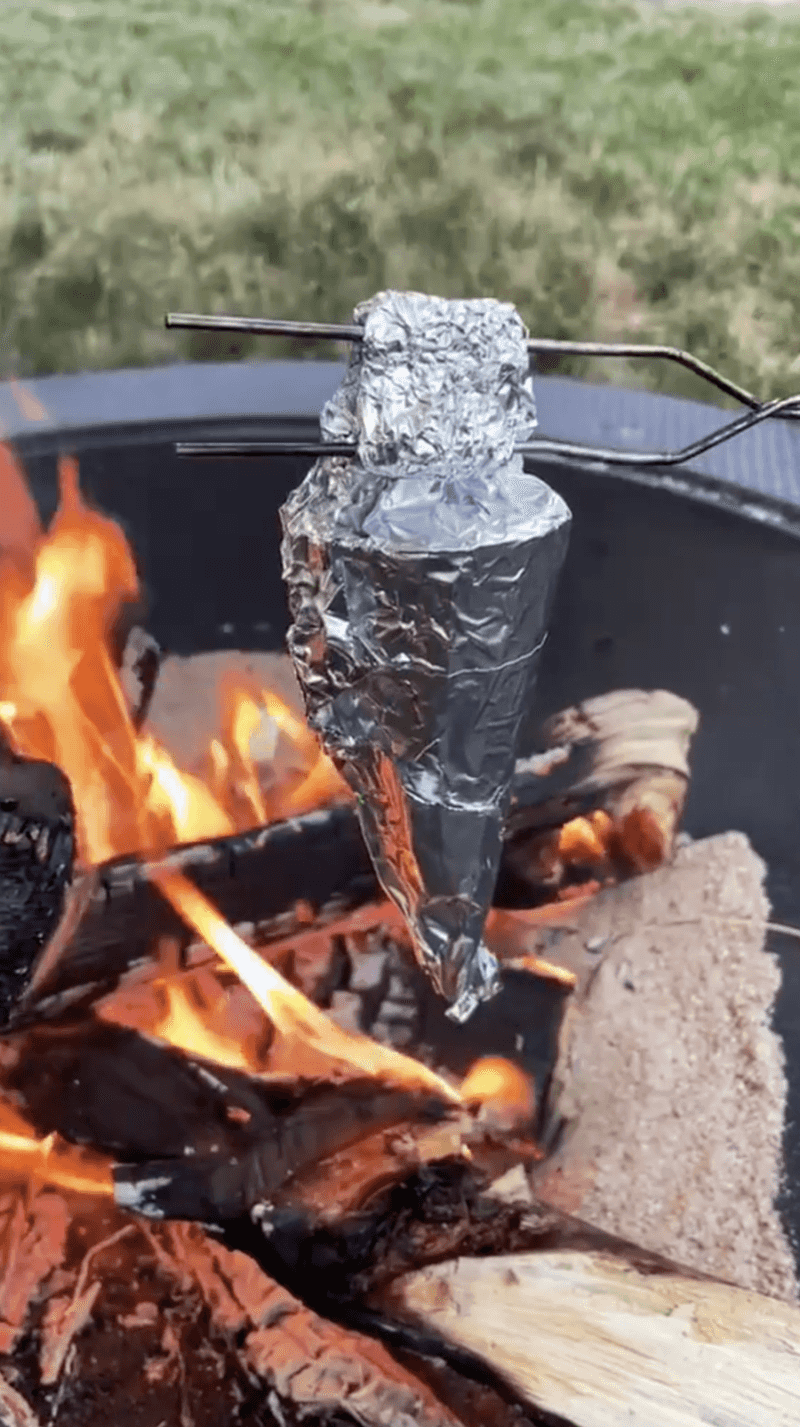
Fill waffle cones with chocolate chips, fruit, and mini marshmallows, then wrap in foil. Warm near coals until gooey, not over direct flame.
Unwrap and eat with a spoon for a no-bowl dessert.
Mix in peanut butter chips or crushed cookies for extra crunch. Assign each person a cone to customize.
This keeps dessert simple and fun without elaborate baking.
Prep fillings in small containers before the trip. The portion control helps sugar highs stay friendly.
It is the easiest way to end a camp night on a high note.
13. Pack meals by day, not by category
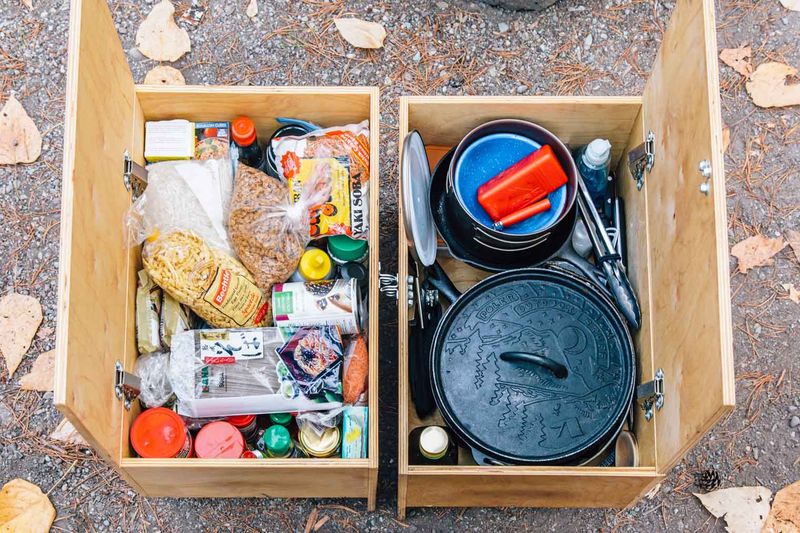
Group each day’s meals together so you are not digging for random pieces. Breakfast, lunch, and dinner go into one labeled bag or bin.
That way the cooler opens less and stays colder.
Color-code bags or use painter’s tape with bold writing. Keep Day One on top for a smooth arrival meal.
This system stops the treasure hunt that happens at dusk.
It also helps you spot missing items before you leave. You will reduce waste and avoid accidental double packing.
Meal by day planning keeps the campsite calm and organized.
14. Keep a grab bag of snacks separate
Make a dedicated snack tote so nobody raids the cooler every hour. Load it with jerky, nuts, bars, fruit, and crackers.
Keeping snacks separate preserves ice and protects dinner ingredients.
Place the bag in shade and restock daily. Clear rules help kids and tired adults alike.
Choose sturdy snacks that do not melt into chaos at noon.
Include a small trash bag and wipes for quick clean hands. Label everyone’s favorites to avoid squabbles.
Your cooler will last longer and the group will stay happily fueled.
15. Use two coolers if you can
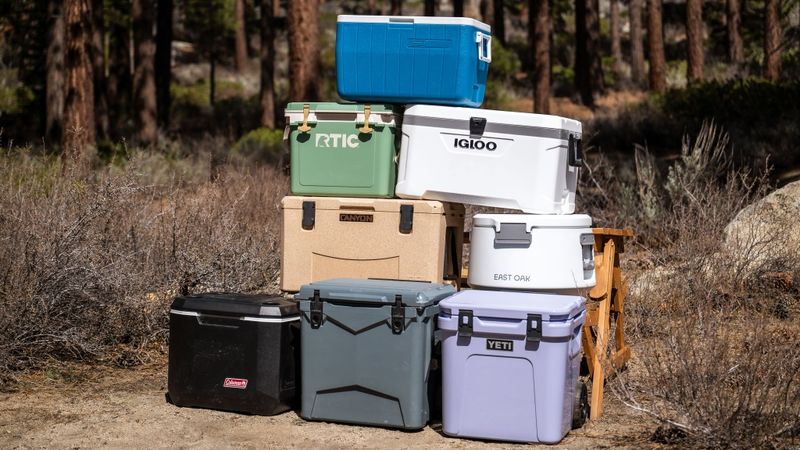
Run one cooler for drinks and one for food so you are not constantly warming dinner. The drink cooler gets opened often, while the food cooler stays cold and steady.
Label them clearly to train the crew fast.
Pre-chill both coolers and contents before packing. Put frozen blocks and raw items at the bottom of the food cooler.
Keep both in shade and cover with a reflective blanket if it is hot.
This simple split extends ice life dramatically. It also cuts cross contamination risks.
Your steaks will still be safe when the afternoon lemonade rush hits.
16. Put raw meat at the bottom in a sealed container
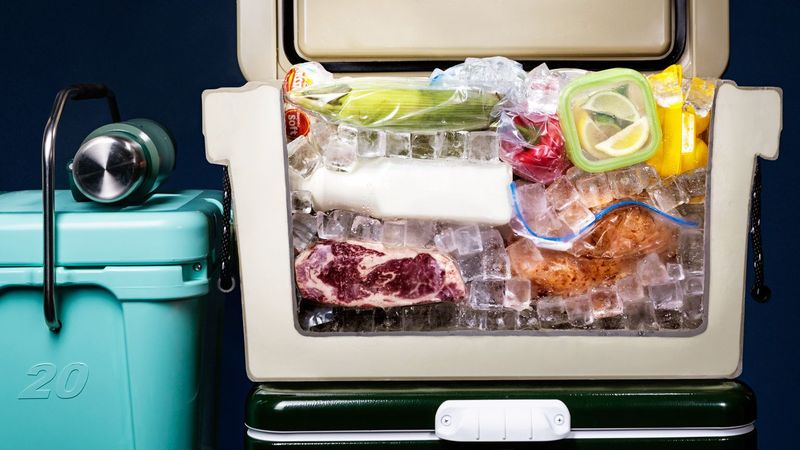
Store raw meat at the very bottom in a hard-sided, fully sealed container. That is the coldest zone and safest for drips.
Label with cooking day so you use it before other items.
Keep raw and ready-to-eat foods strictly separated. Use dedicated tongs and a clean plate for cooked items.
If space allows, add a small tray to catch any unexpected leaks.
This setup protects produce, cheese, and desserts from contamination. It also keeps your mind at ease.
Food safety in the woods is still food safety, just with fewer sinks around.
17. Use a cutting board that can get dirty
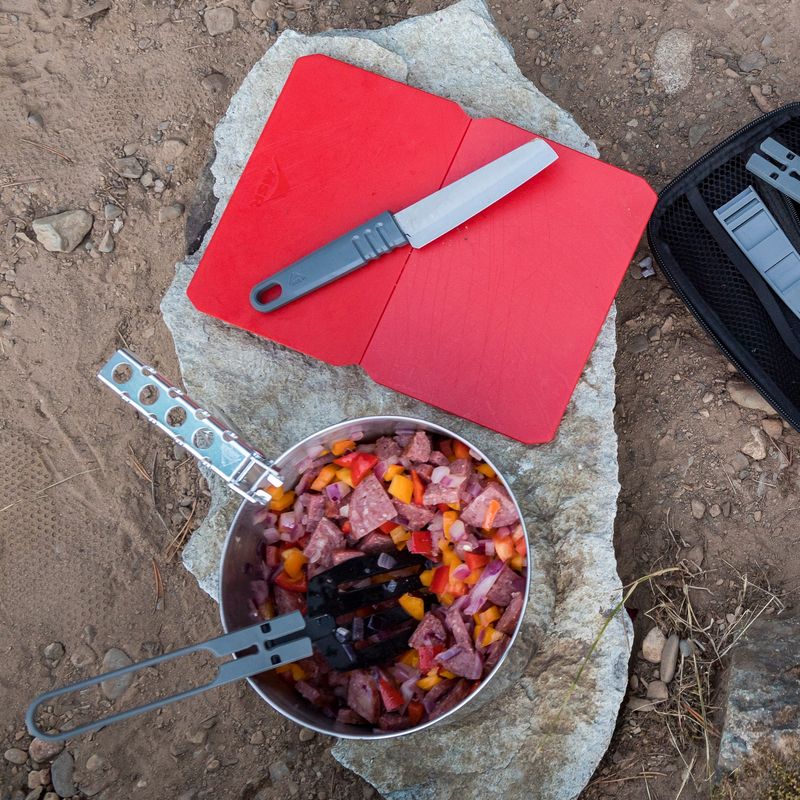
Bring one sturdy cutting board that can handle real work without fuss. Camping is not the place for delicate wood that hates moisture.
A grippy plastic board cleans quickly and dries fast in sunlight.
Pair it with one sharp knife and a towel for stability. Add a small bottle of soap and sanitizer spray to reset between tasks.
Use color-coded sides or a mat to separate raw and cooked prep.
Keep the board in a zip bag when not in use. You sidestep dirt, sand, and stray pine needles.
Simple tools make you faster and safer outside.
18. Bring disposable gloves for messy prep
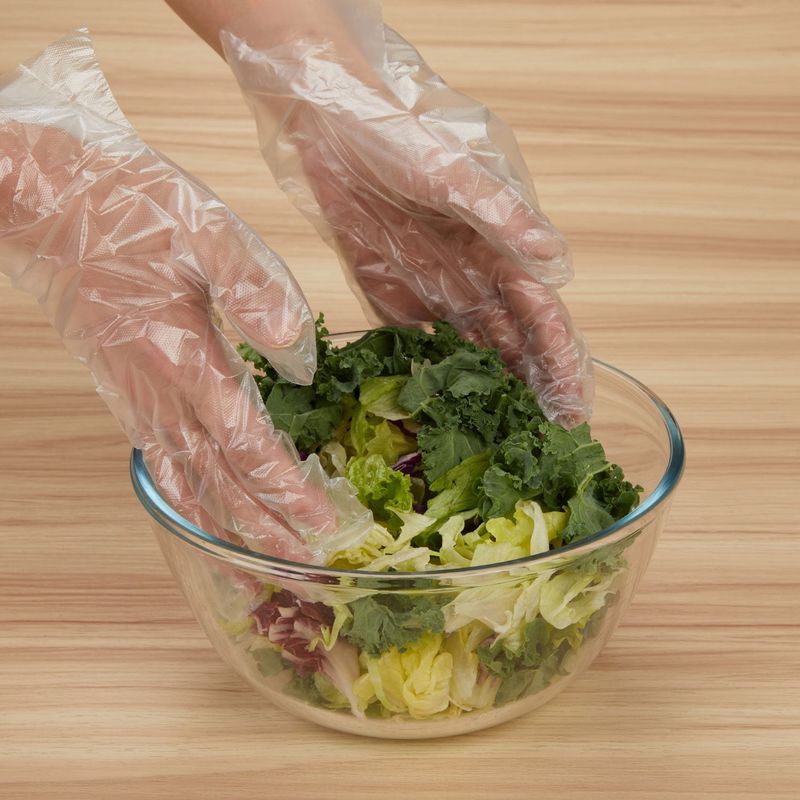
Disposable gloves make raw meat prep safer and cleanup easy. Slip a pair on to mix burgers, handle chicken, or tear pulled pork.
Peel them off and your hands are ready to torch marshmallows.
Keep a small box in a zip bag to stay dry. Choose your size so they do not slip.
Change gloves between tasks to prevent cross contamination with veggies or buns.
They also protect small cuts from stinging salt and citrus. In cold mornings, gloves add a touch of warmth during quick prep.
It is a tiny packing item that pays off big.
19. Go heavier on seasoning than you think

Outdoor cooking mutes flavors because wind and smoke dull your senses. Season more assertively than at home, especially with salt and acid.
A squeeze of lemon or vinegar brightens camp meals instantly.
Carry salt, pepper, garlic powder, and one fun blend like Cajun or taco. Taste as you go and adjust when reheating leftovers.
A little extra seasoning rescues instant grains and grilled veggies.
Do not forget texture boosters like crunchy chips or nuts. They make simple meals feel special.
Your camp food will go from fine to unforgettable with small tweaks.
20. Plan one no-cook meal
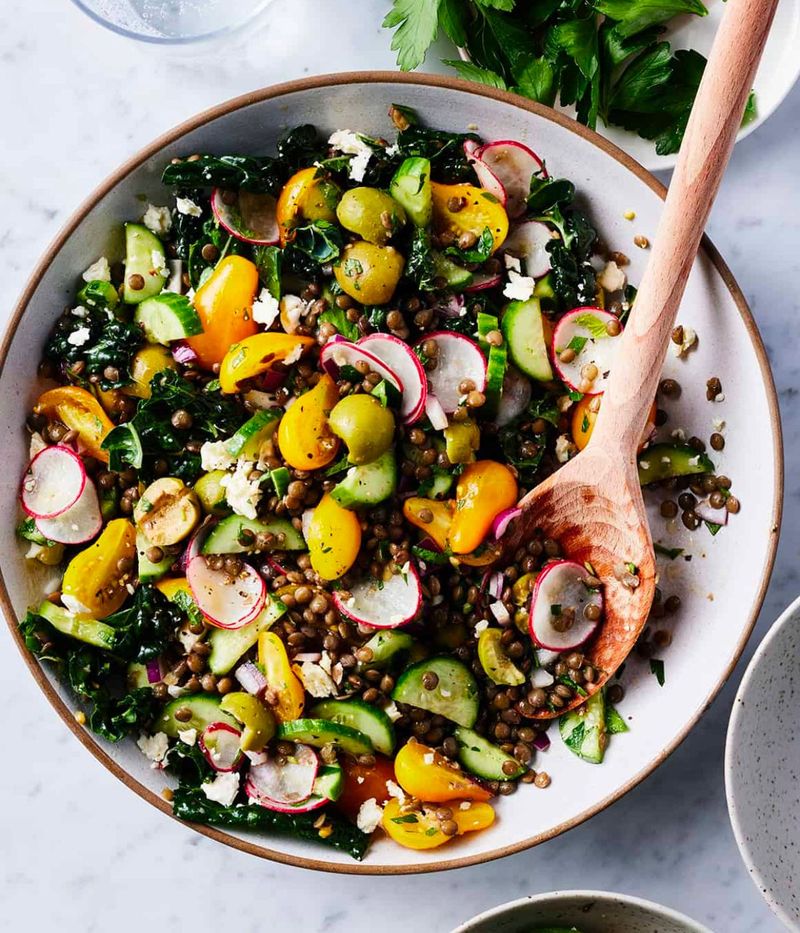
Schedule a no-cook night to save fuel and mental energy. Think wraps, tuna packets, cheese and crackers, or a big salad kit.
It is the perfect backup when weather flips or the firewood is soaked.
Prep veggies and spreads ahead so assembly is instant. Pair with fruit and a salty snack for balance.
This plan also prevents hanger when you return late from a long hike.
Use it on your final night to simplify cleanup. You will close camp with less stress and fewer dishes.
Sometimes the smartest cooking is not cooking at all.
21. Do not forget breakfast drinks
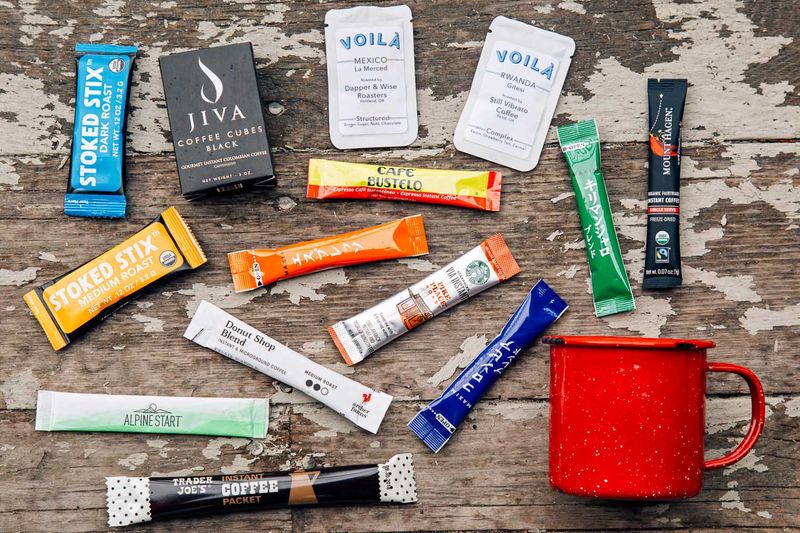
Warm drinks lift morale fast on cool mornings. Pack instant coffee, tea bags, and cocoa so everyone gets their favorite.
A small bottle of shelf-stable milk or creamer levels up the comfort.
Heat water while you start breakfast and hands warm up around mugs. Keep packets in a dry tin so they do not tear.
A sprinkle of cinnamon makes camp coffee feel fancy.
Hydration counts too, so include electrolytes for hot days. Happy mornings set the tone for the whole trip.
You will be amazed how much smoother camp runs with caffeine and cocoa.
22. Clean as you go, every time
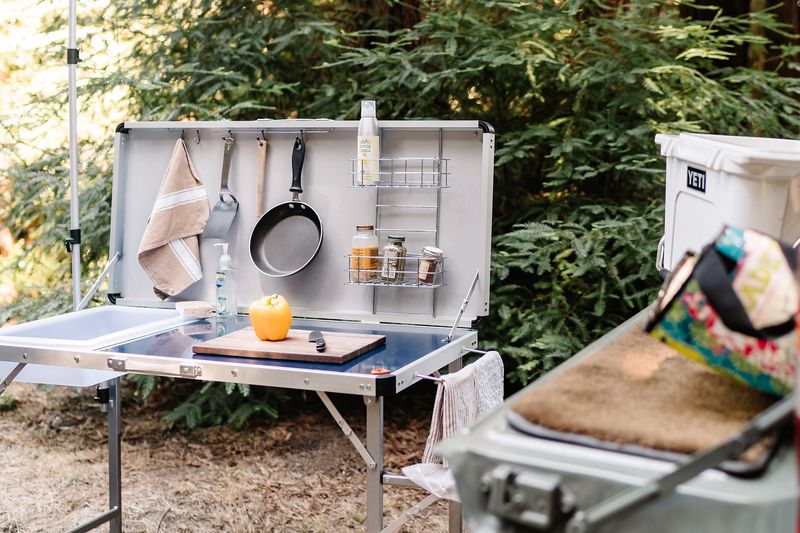
Wipe surfaces right after prep and keep a sealed trash bag within arm’s reach. A tidy camp means fewer critters and faster bedtimes.
Use biodegradable soap and a small basin for dish duty.
Assign roles so nothing piles up when the fire gets cozy. Dry dishes immediately to prevent grit from sticking.
Paper towels and sanitizer make quick work of splatters.
Put everything back in the same bin every time. Muscle memory beats flashlight searching.
Clean as you go turns chaos into calm without killing the vibe.