15 Traditional Tuna Dishes Common In Japanese Cuisine
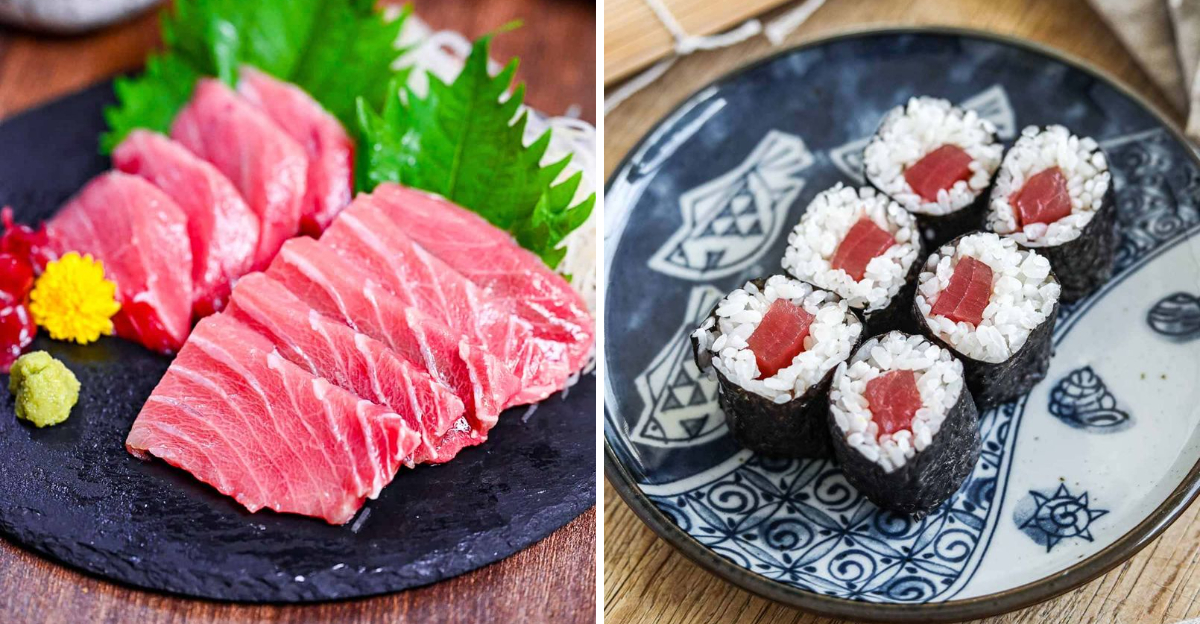
Tuna in Japan is more than sushi on a conveyor belt. From melt-in-your-mouth toro to homey simmered cuts, maguro shows up in comforting bowls, crisp fried bites, and salt-kissed grills.
You will taste clean ocean sweetness in raw slices and deep umami in slow-cooked glazes. Ready to explore the classics you will crave again and again?
1. Maguro Sashimi
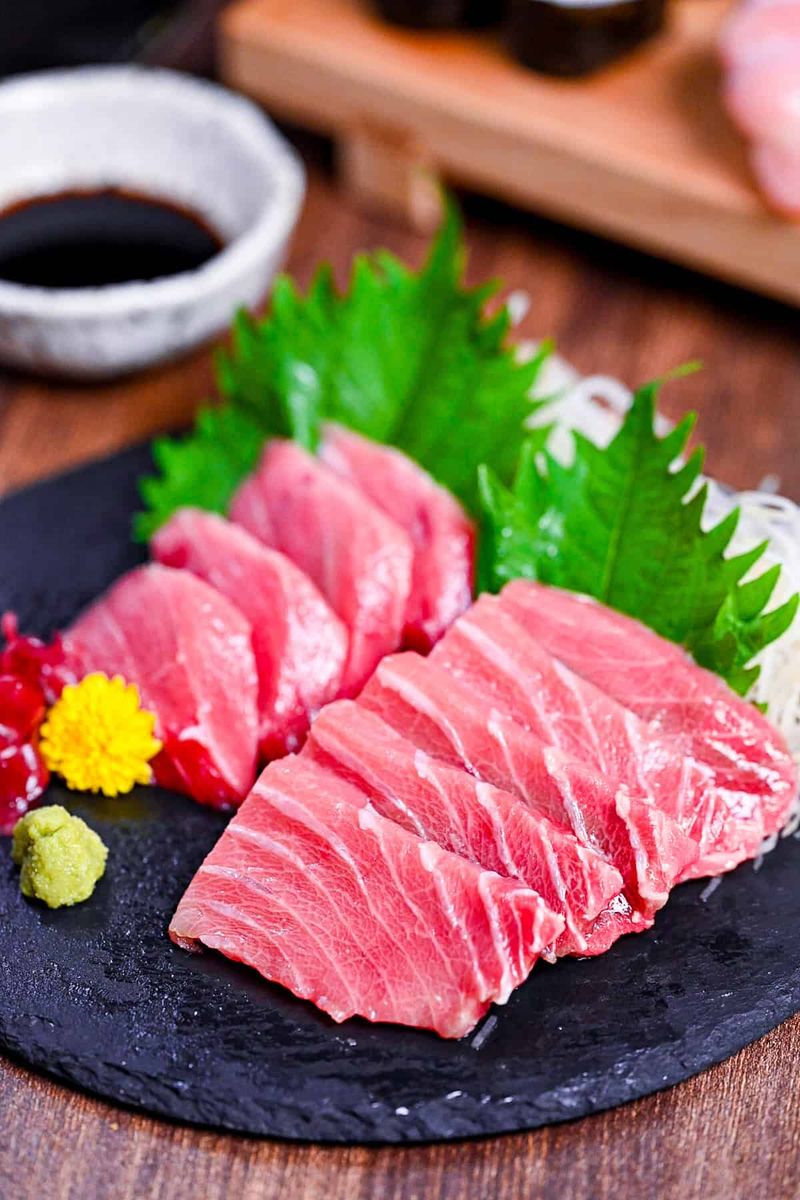
Maguro sashimi is all about freshness, texture, and clean flavor. Thin slices of ruby red tuna are arranged simply, often with shiso, daikon, and fresh wasabi.
Dip lightly into soy to let the fish shine rather than drown it.
You will notice subtle differences between lean akami and the richer, silky toro. Good sashimi feels tender yet resilient, never mushy or watery.
The temperature matters too, slightly cool so the fat does not mute flavor.
Pair with chilled sake or green tea for balance. At home, keep knives sharp and fish very cold.
Simple technique, careful handling, and perfect sourcing turn minimal ingredients into a quietly luxurious experience.
2. Maguro Nigiri
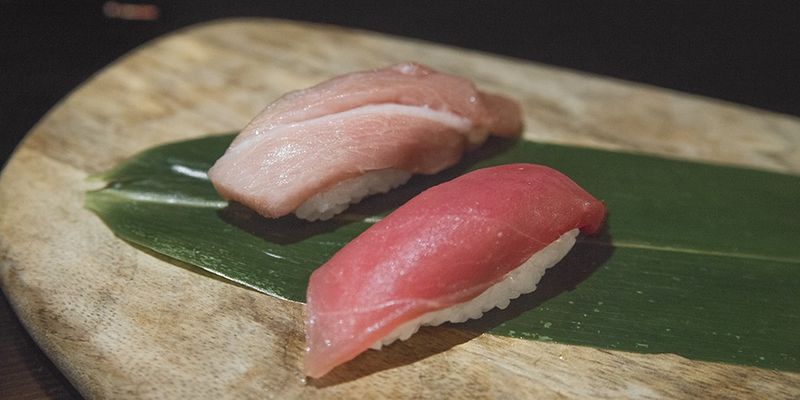
Maguro nigiri delivers that perfect bite of fish and rice harmony. A sushi chef forms a small pillow of vinegared rice, brushes soy or nikiri, then tops it with lean akami or buttery toro.
The warmth of rice against cool tuna is the magic.
Akami feels clean and meaty, while chu toro and o toro bring softness and sweet fat. You will want to eat it in one bite, letting textures blend.
Avoid oversoaking in soy to keep balance intact.
When ordering, watch the chef’s cuts and seasonal sourcing. Good rice can be as important as the fish itself.
A well-formed nigiri tastes composed, elegant, and incredibly satisfying.
3. Tekka Maki
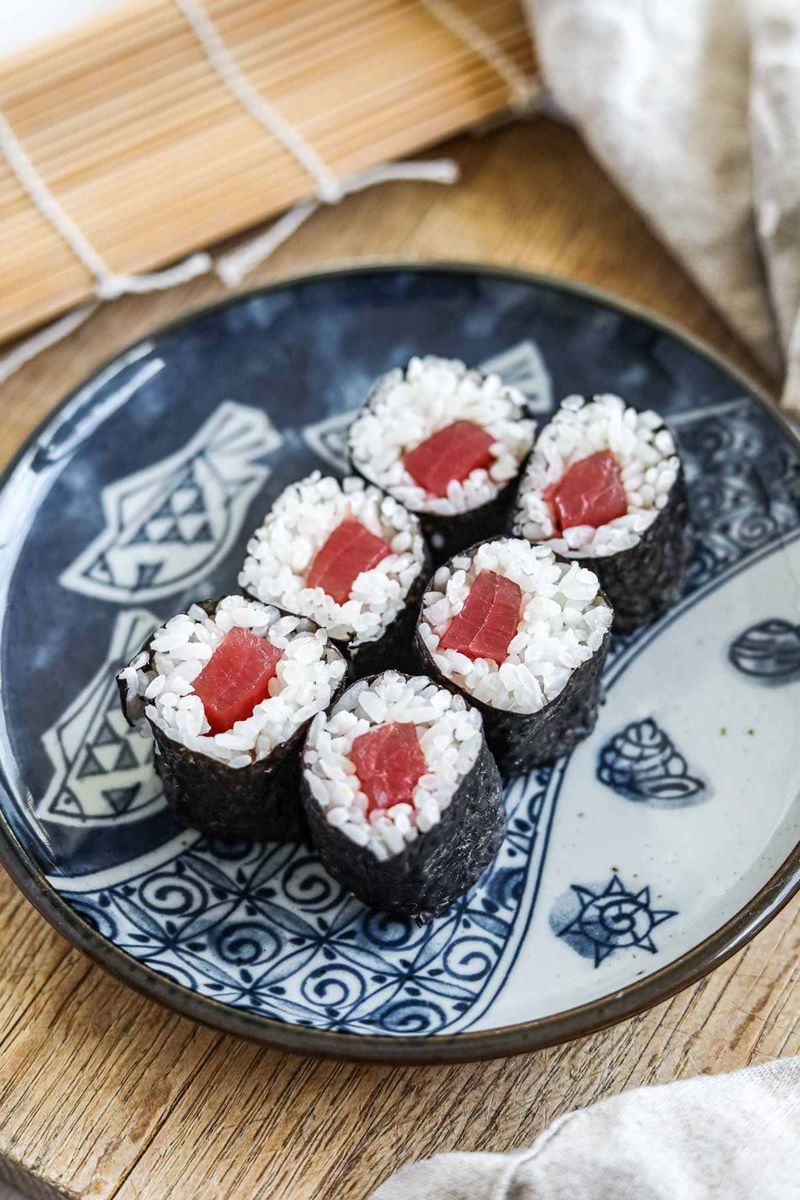
Tekka maki is the cleanest expression of tuna rolled sushi. You get nori, rice, and a focused strip of tuna, nothing distracting.
That simplicity lets briny seaweed and sweet-sour rice frame the fish.
Order it when craving something neat, light, and reliable. The cut matters here, usually lean akami for a tidy texture.
You will find tekka maki at nearly every sushi counter in Japan.
At home, keep rice evenly distributed and avoid crushing the roll. A sharp knife makes tidy cuts that hold together.
Serve with a restrained dab of wasabi and minimal soy so every piece stays crisp and balanced.
4. Negitoro Gunkan
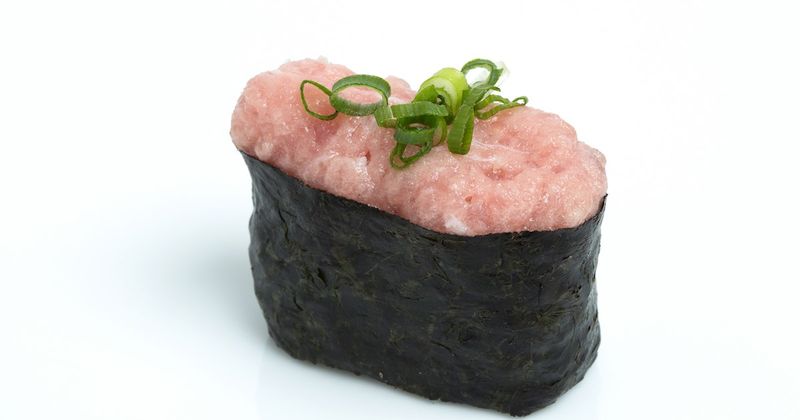
Negitoro gunkan is rich and plush, with minced fatty tuna mounded over a nori-wrapped rice base. Chopped scallions cut through the fat, keeping each bite bright.
The soft filling contrasts with crisp seaweed and gentle rice warmth.
You will taste umami depth without heaviness if the balance is right. Some places add a whisper of wasabi or a light soy glaze.
The texture should feel silky, not pasty or overly oily.
Eat quickly before the nori softens. If making at home, chill the negitoro so it holds shape.
This style feels indulgent yet approachable, a beloved staple that turns tuna into a creamy, savory treat.
5. Maguro Zuke
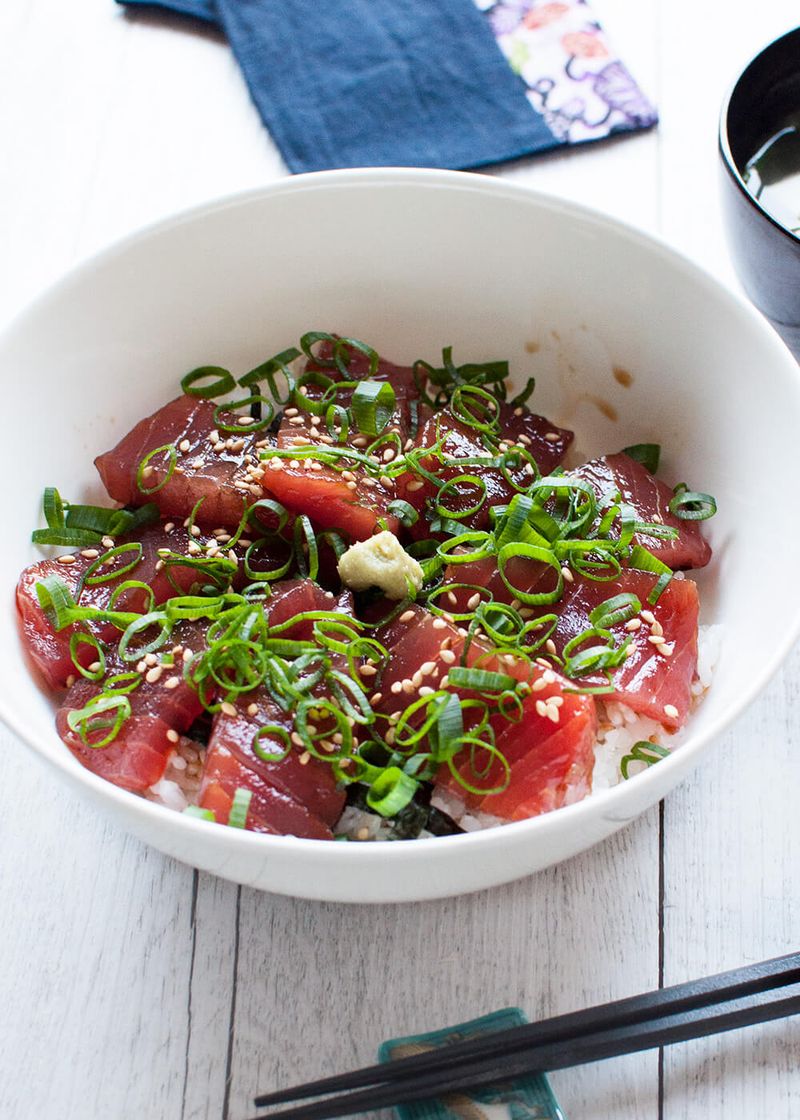
Maguro zuke takes lean tuna and bathes it in a soy, mirin, and sake marinade. The fish absorbs savory sweetness, gaining depth without losing clean character.
Slices develop a subtle sheen and tender bite.
You might see it served alone or over rice, sometimes with sesame and nori. The marinade should be short so texture stays lively.
A hint of ginger or dashi can add nuance without overpowering.
At home, pat the tuna dry so the zuke coats evenly. Keep the marinade chilled and balanced in salt and sweetness.
Zuke feels comforting and classic, a bridge between raw delicacy and cooked intensity.
6. Tekka Don
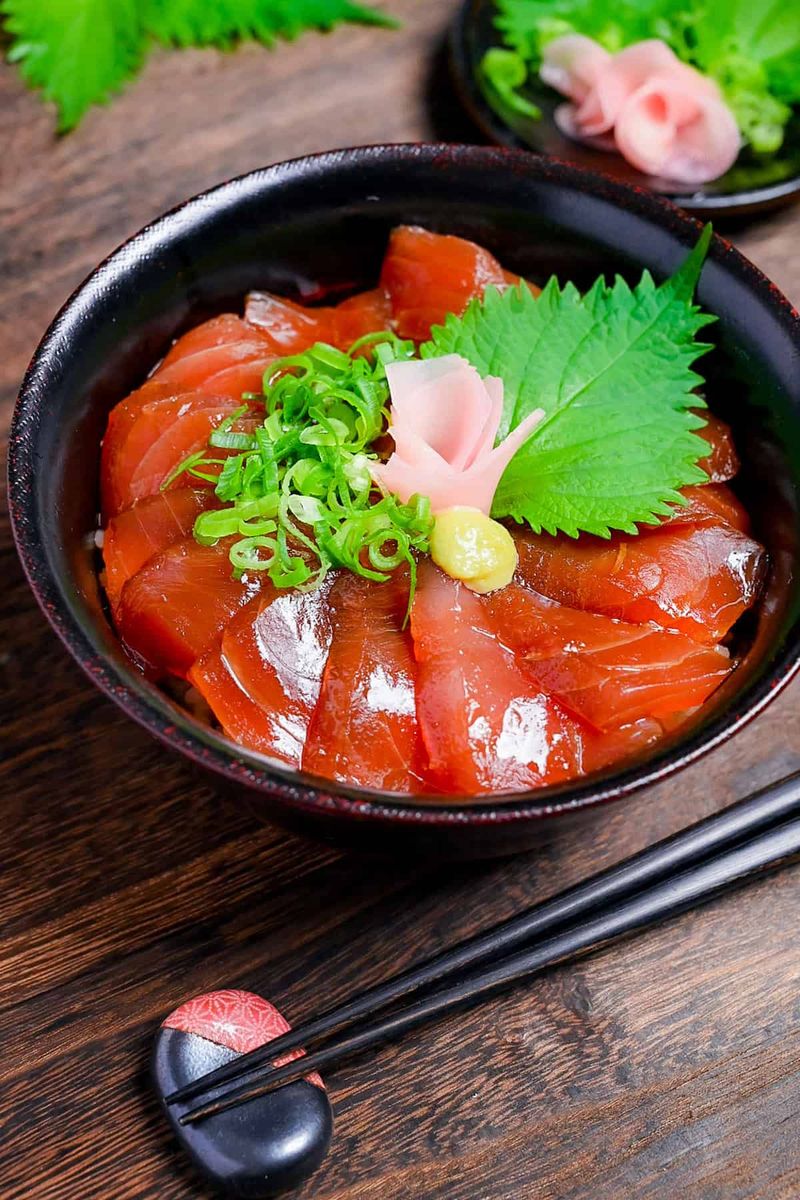
Tekka don is the simplest tuna over rice comfort. Uniform slices of raw tuna rest on seasoned rice, often with shredded nori and a small wasabi accent.
Every bite mixes cool fish with warm, tangy grains.
You will appreciate how the rice carries flavor while tuna stays the star. A light soy drizzle or nikiri keeps it elegant.
Textural contrast comes from seeds, pickles, or crisp nori threads.
When making it, cool rice to body temperature for perfect mouthfeel. Fan your slices for visual appeal and even distribution.
It is a weeknight-friendly staple that still feels special and satisfying.
7. Maguro Don (Maguro Donburi)
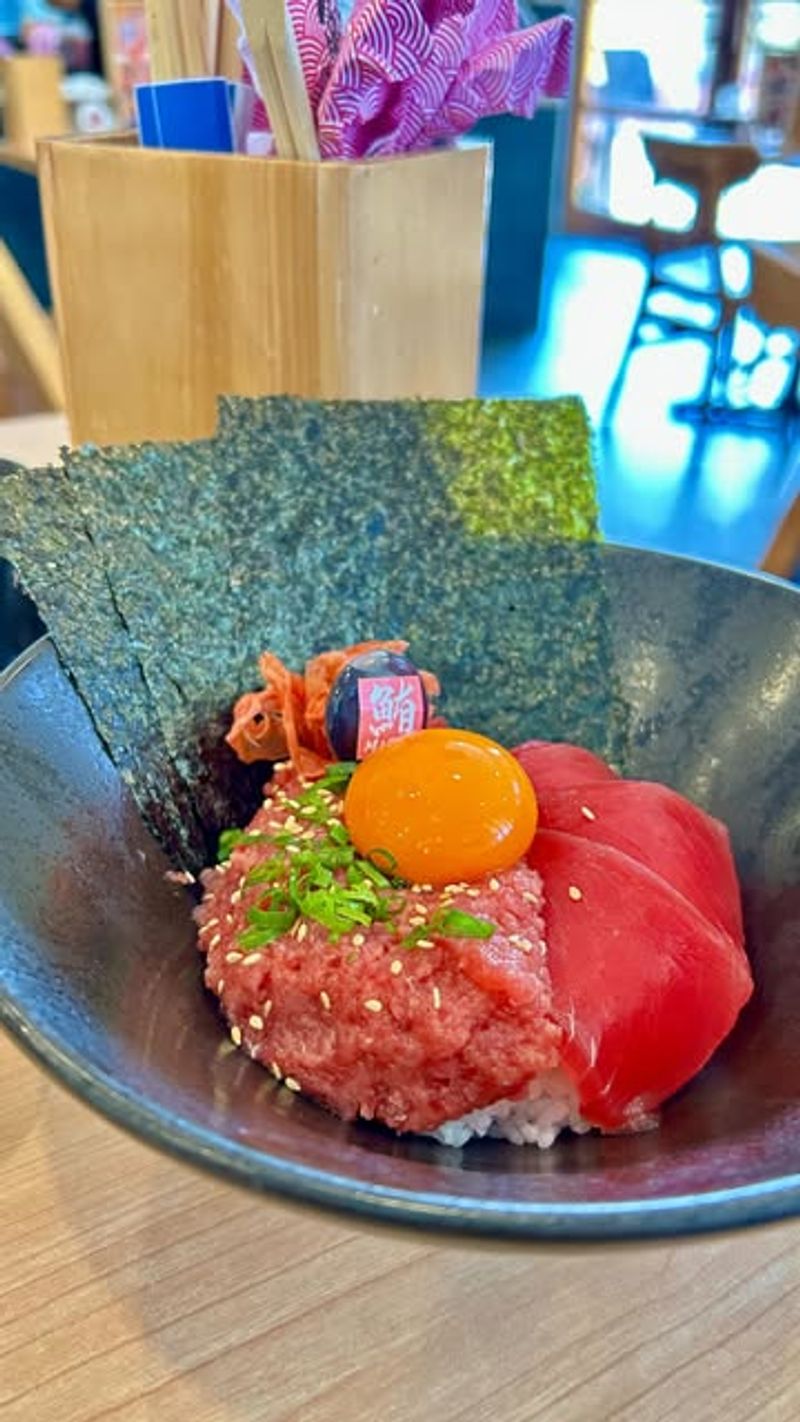
Maguro donburi leans heartier than tekka don, often mixing cuts like akami and toro. Toppings vary by shop: scallions, grated ginger, nori, maybe a glowing egg yolk.
You get richer textures and deeper savor in every scoop.
The yolk, when used, turns rice luscious and coats the tuna. You will want to stir and create your ideal bite.
A dab of wasabi or soy keeps things dynamic without overwhelming the fish.
Customize at home with quick-marinated chunks or plain slices. Warm rice at the right temperature makes everything sing.
This bowl feels generous, homestyle, and deeply comforting.
8. Kaisendon With Tuna
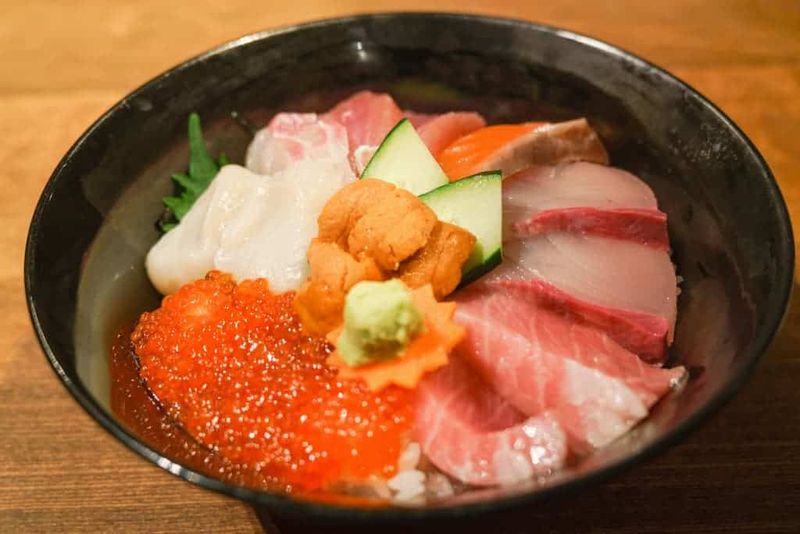
Kaisendon is a celebration bowl where tuna shares the stage. You might see akami slices beside salmon, scallops, shrimp, or ikura.
The variety keeps each bite interesting, with sweet, briny, and fatty notes rotating.
Tuna anchors the bowl with clean meatiness. You will appreciate how contrasting textures play off the rice.
A little soy or house tare ties it together without masking delicate seafood.
When assembling, balance colors and shapes for an eye-catching spread. Keep seafood chilled and rice gently warm.
This is the joy of the market in one bowl, fresh, vibrant, and endlessly customizable.
9. Tuna Onigiri (Tsuna Mayo)
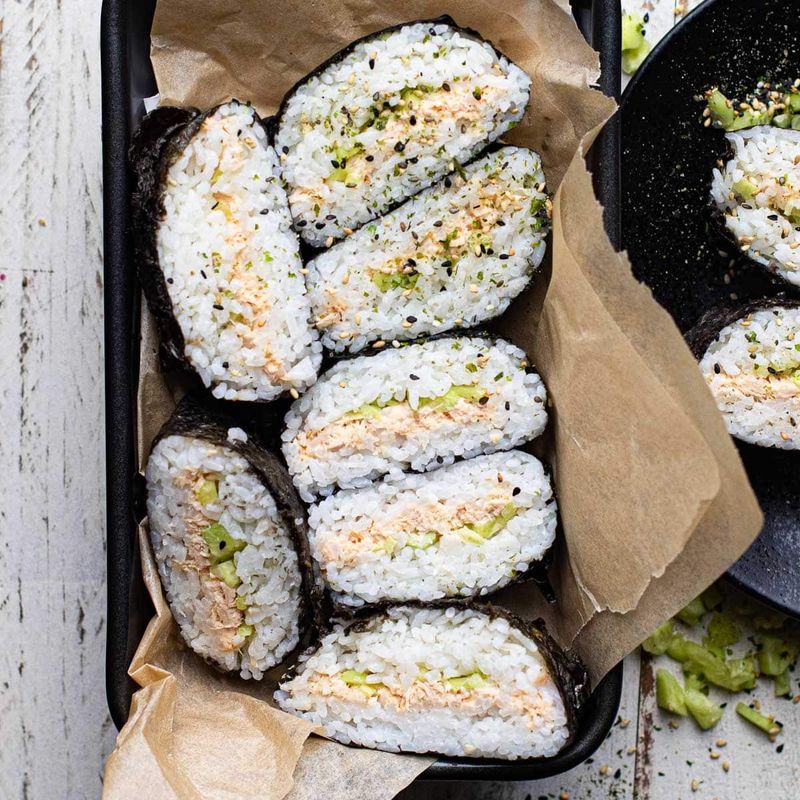
Tuna mayo onigiri is the everyday champion. A creamy tuna and mayonnaise filling hides inside a triangle of rice wrapped in crisp nori.
It is portable, satisfying, and everywhere from trains to picnics.
You will get comfort and nostalgia in every bite, even if it is more modern than other dishes here. Some shops add soy, pepper, or corn for small twists.
The key is that contrast of crunchy nori against soft, savory filling.
Make it at home with well-drained canned tuna and Japanese mayo. Wrap nori just before eating to keep it snappy.
Simple, affordable, and reliably delicious, it never wears out its welcome.
10. Maguro Kama Shioyaki
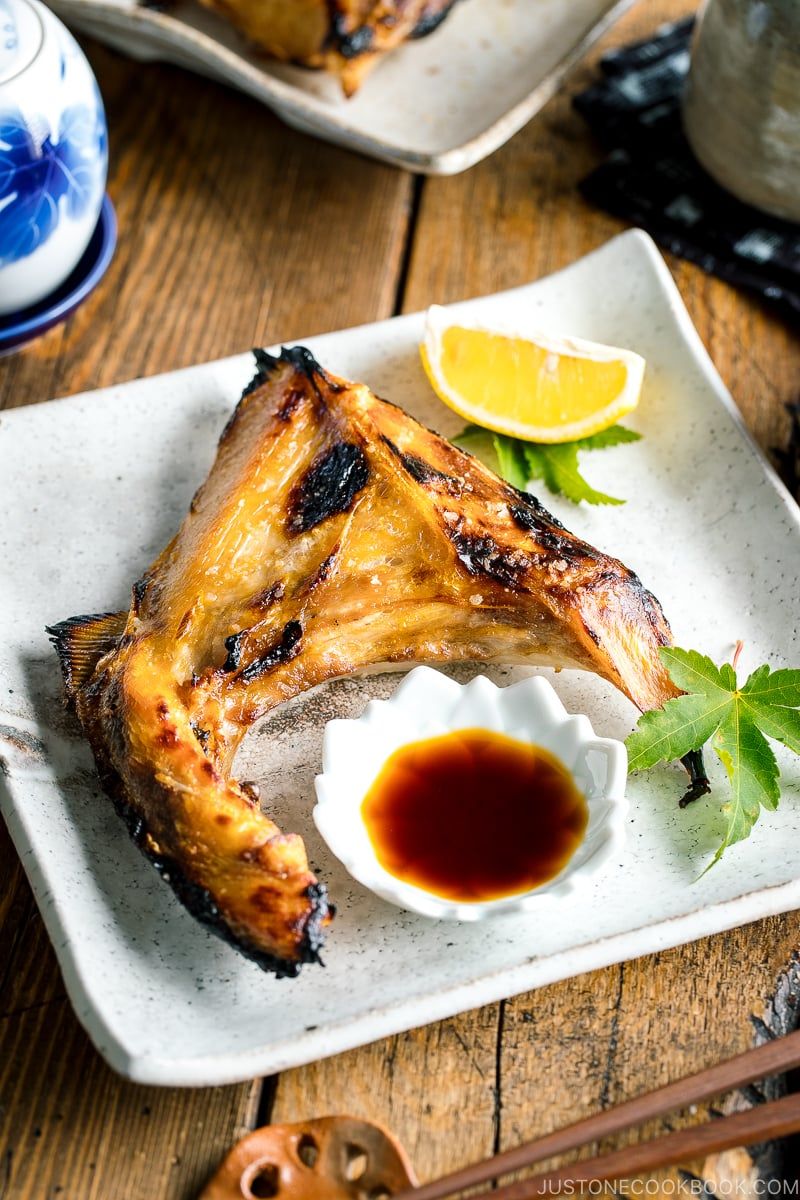
Maguro kama shioyaki showcases the fatty, juicy collar of the tuna. Salted and grilled until edges crisp, the meat inside stays tender and rich.
You will pick around bones and pockets of luscious flesh.
The flavor is primal and deeply satisfying. A squeeze of lemon and a bit of grated daikon refresh each bite.
Char adds smokiness that plays beautifully with the natural fat.
At home, broil or grill over high heat, keeping seasoning minimal. Let carryover heat finish to avoid dryness.
This cut feels like a secret prize, turning simple salt and fire into a showstopper.
11. Maguro No Nitsuke
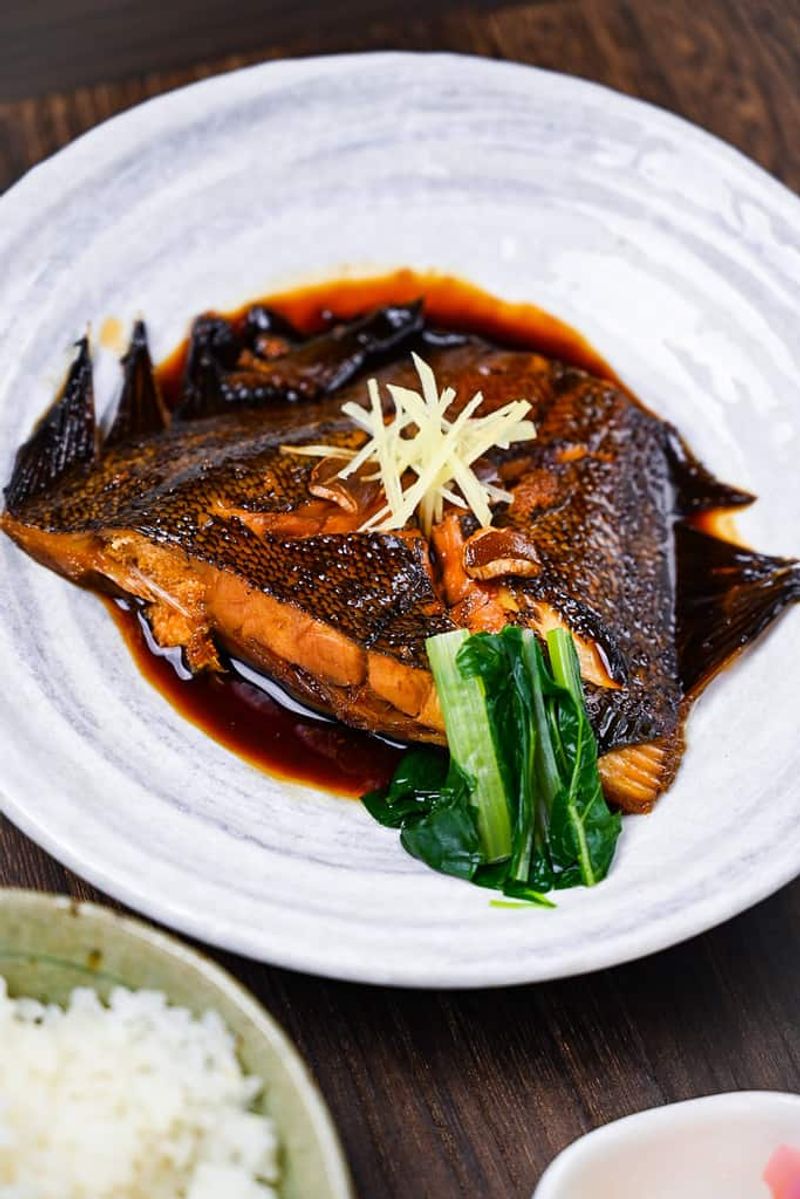
Maguro no nitsuke is cozy simmered tuna in a sweet-salty broth. Soy, mirin, sake, sugar, and ginger reduce to a glossy glaze that clings to each piece.
The aroma alone makes you reach for rice.
You will taste warmth and gentle spice from the ginger. The fish should be tender but not falling apart.
A quick simmer keeps texture intact while infusing deep flavor.
Serve with blanched greens or simmered daikon to soak up the sauce. At home, monitor heat and reduce carefully.
This is weeknight comfort that still feels thoughtful and nourishing.
12. Maguro No Misoni
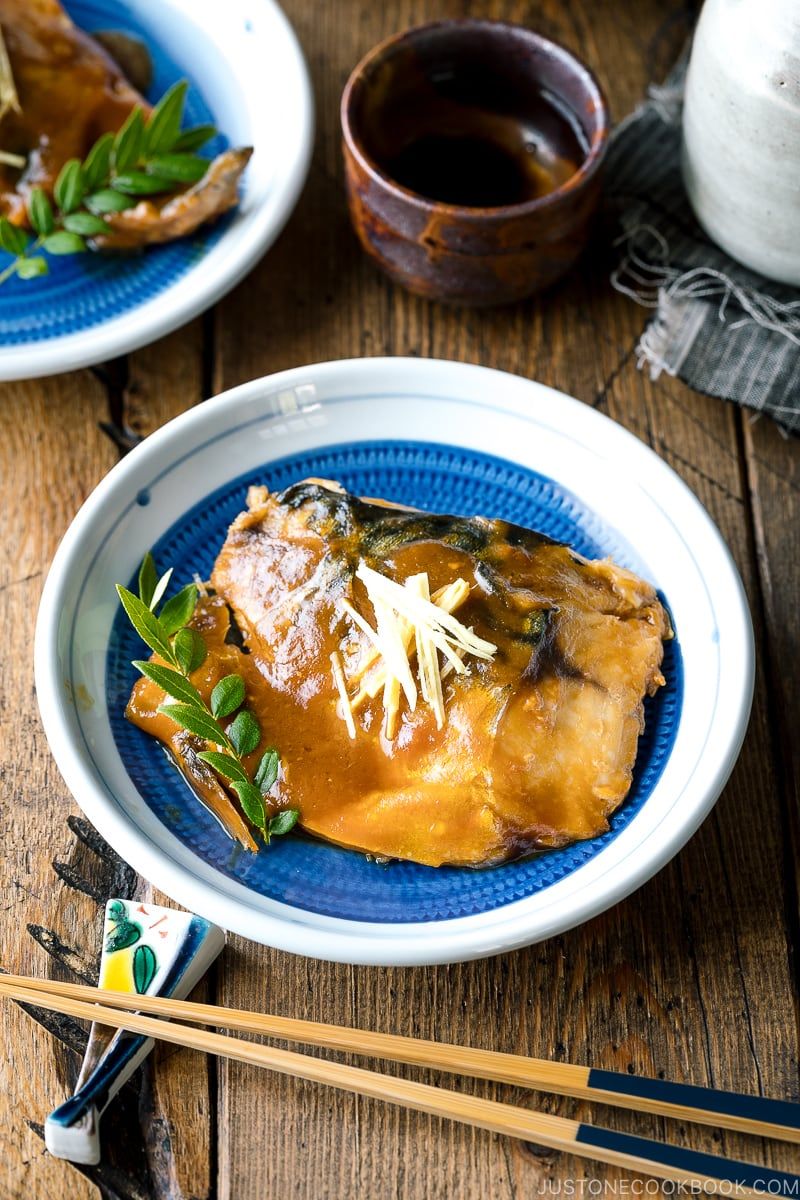
Maguro no misoni leans savory and gently sweet, thanks to miso’s depth. Tuna pieces simmer just long enough to absorb the sauce without drying.
Ginger brightens, while miso brings comforting richness.
You will want plenty of rice to catch every bit of sauce. The broth should be silky, not gritty, with miso whisked in off the boil.
A touch of sugar or mirin balances salt and rounds edges.
Garnish with scallions and sesame for aroma. At home, choose a medium-fat cut for tenderness.
This dish feels homestyle and restorative, perfect for cooler evenings.
13. Maguro Tatsuta-Age
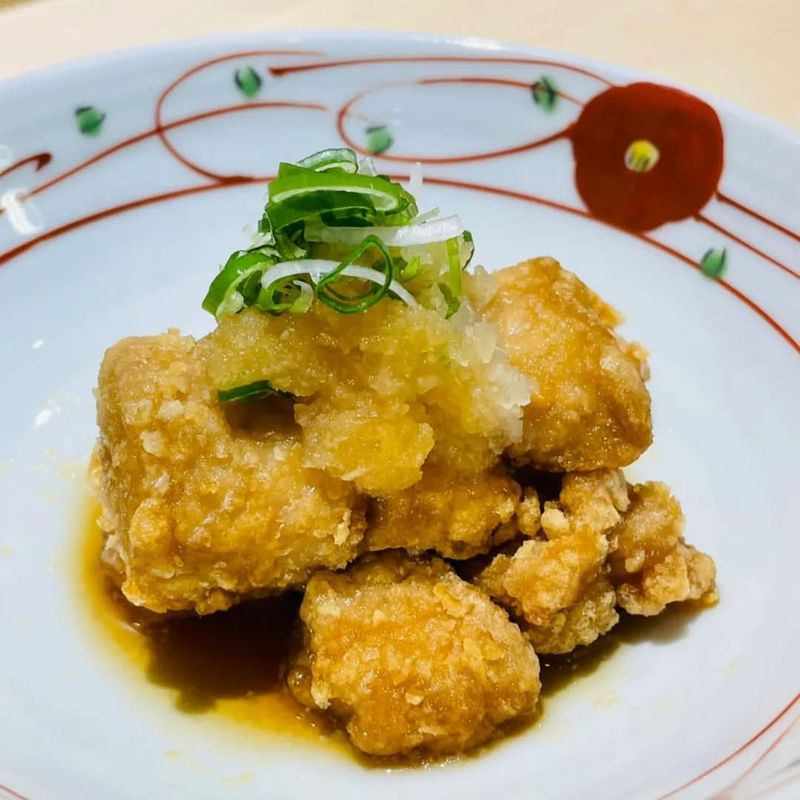
Maguro tatsuta-age gives you crisp edges and juicy centers. Tuna marinates with soy, ginger, and maybe sake, then gets a potato starch coat before frying.
The crust turns delicate and shattery.
You will squeeze lemon and feel everything come alive. A simple dipping sauce or grated daikon keeps the palate refreshed.
The marinade should season without overpowering the fish’s sweetness.
Fry hot and fast to avoid dryness. Rest pieces on a rack so they stay crisp.
This style feels snackable yet refined, perfect with cold beer or sparkling tea.
14. Maguro Karaage
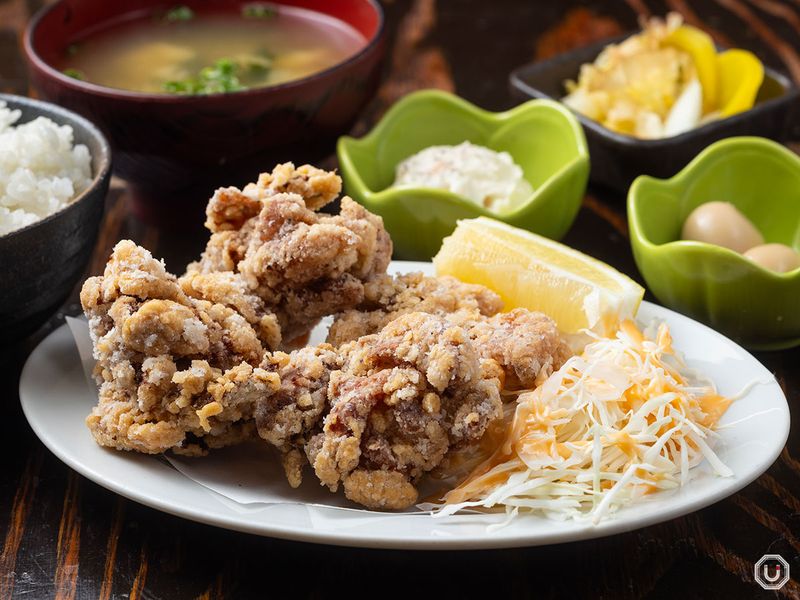
Maguro karaage pushes bolder seasoning and a crunchier shell. Think soy, garlic, ginger, and maybe a hint of chili for heat.
The coating fries up craggy and satisfying around tender tuna.
You will want lemon and a creamy dip for contrast. Shredded cabbage clears the palate between bites.
Compared to tatsuta-age, karaage tends to run louder in flavor and crunch.
Double-fry for extra crispness if you like. Keep pieces uniform for even cooking.
This izakaya classic is dangerously snackable and pairs well with lager or highballs.
15. Maguro Tsukudani
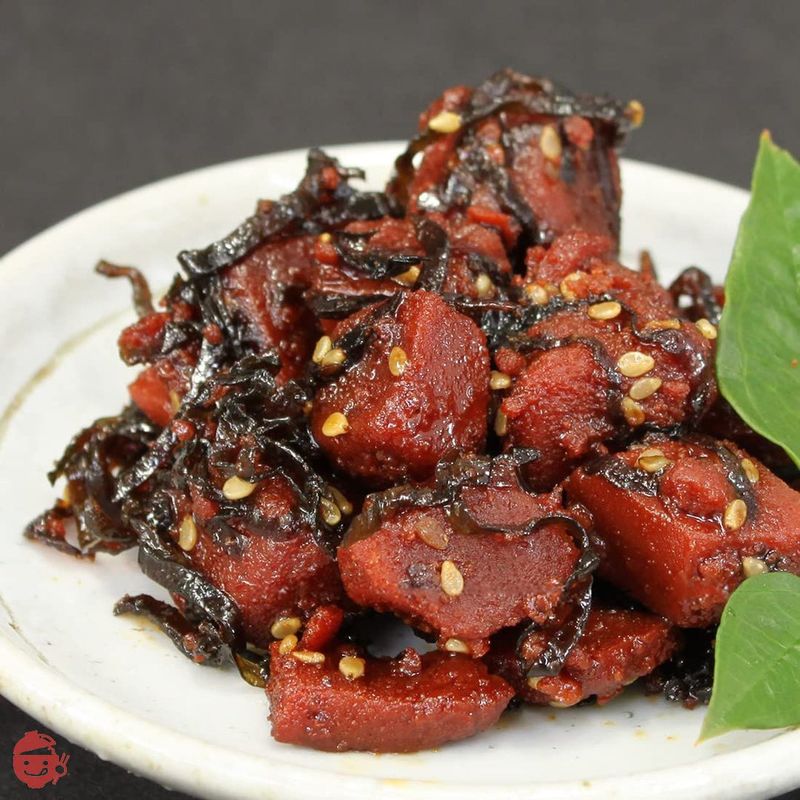
Maguro tsukudani is intensely savory, simmered until the sauce reduces to a lacquered glaze. Small flakes of tuna soak up soy, mirin, and sugar, becoming sweet-salty and deeply umami.
A little goes a long way over hot rice.
You will appreciate its keepability in the fridge, perfect for quick meals. Ginger or sansho can add gentle warmth.
Texture should be moist but sticky, not dry or tough.
At home, simmer low and slow, finishing glossy. Store in small jars for easy portioning.
This condiment-like dish turns simple rice into something addictive and satisfying.