17 Forgotten German Dishes Worth Remembering
German food is richer and more varied than the headlines suggest. Beyond bratwurst and schnitzel, there is a whole world of regional comfort cooking that once defined everyday life.
These are the cozy pots, humble bakes, and clever pantry meals grandparents still praise. Explore 17 forgotten or quietly legendary dishes that deserve a spot back on your table.
1. Labskaus
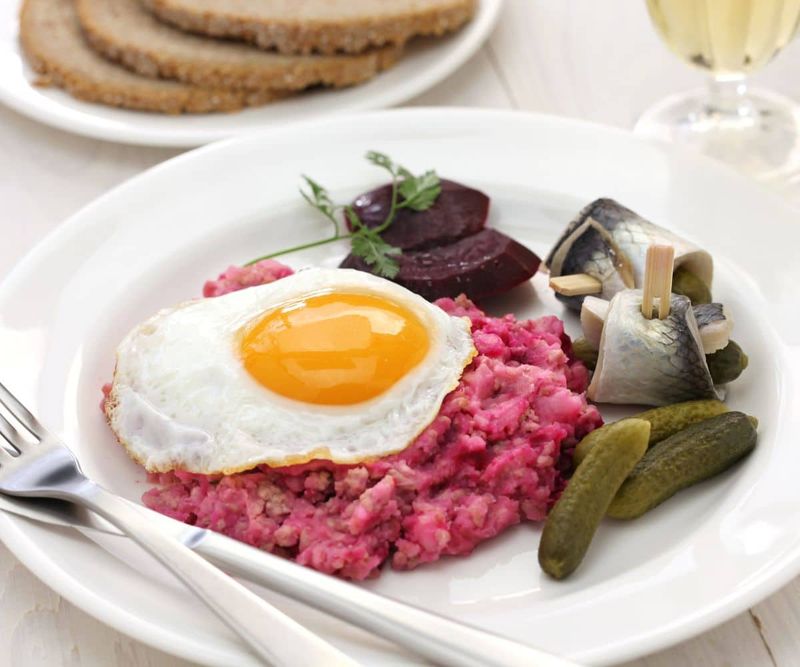
You might raise an eyebrow at Labskaus, but one bite and you get it. Corned beef, potatoes, onions, and beetroot mash into something rosy and soothing, then meet pickles and a fried egg for zing.
Sailors once swore by it because it was sturdy, salty, and practical on long voyages.
Cook it low and slow so everything melds, then mash until spoonable but not baby-food smooth. The pickled herring or rollmops garnish divides opinions, yet it adds bright brine that wakes the plate.
Serve with dark rye and a cold beer, and suddenly the looks stop mattering.
It is comfort food with grit, a little sweet, a little tangy, and completely satisfying on stormy nights.
2. Himmel und Erde
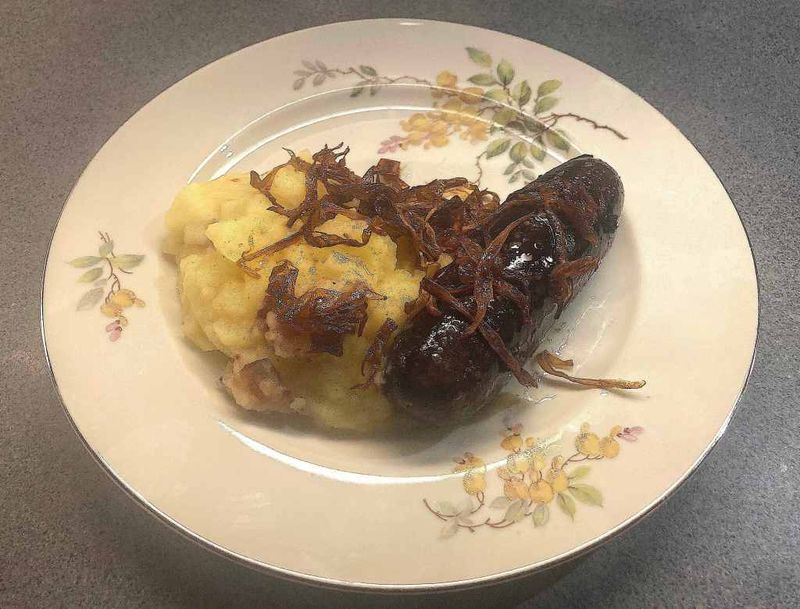
Himmel und Erde pairs apples with potatoes, sky and earth on one spoon. The apples bring bright sweetness while onions add savory depth, and together they cuddle up to buttery mashed potatoes.
Some regions add blood sausage, whose richness balances the fruit like a perfect duet.
Fry onions until they are sticky and golden, then gently fold in apple slices so they keep some bite. Serve alongside seared slices of blutwurst or a vegetarian mushroom topping if that is your lane.
A little vinegar or apple wine cuts through the butter and lifts everything.
It tastes like a chilly evening turning cozy. You will wonder why apples and potatoes ever lived apart on your plate.
3. Senfeier
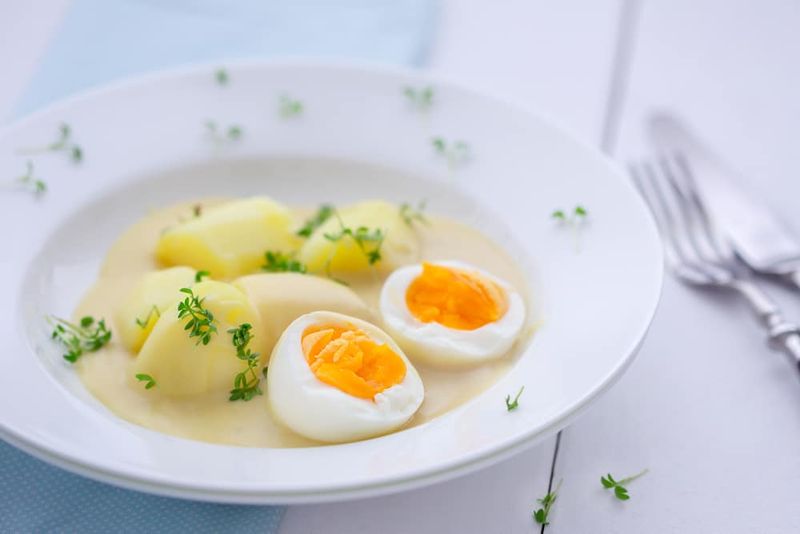
Senfeier is weeknight magic: hard-boiled eggs blanketed in a silky mustard sauce. The trick is balancing gentle creaminess with assertive mustard heat, using both smooth and grainy styles.
Served over boiled potatoes, it tastes like a hug that remembered to bring personality.
Start with a light roux, whisk in broth, milk, and a spoon of butter, then finish with sharp mustard. A touch of sugar or honey softens the edges, while lemon juice keeps it bright.
Salt gently, pepper generously, and do not skip fresh herbs.
It is thrifty, satisfying, and gloriously nostalgic. When you need dinner fast but want comfort, this old-fashioned plate steps up without fuss and delivers real pleasure.
4. Birnen, Bohnen und Speck
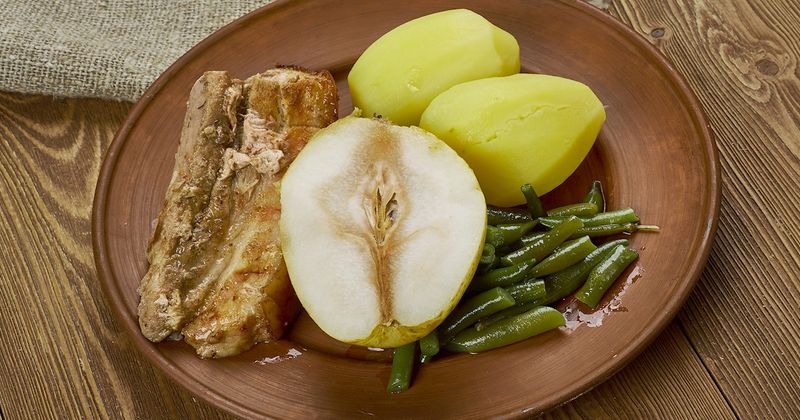
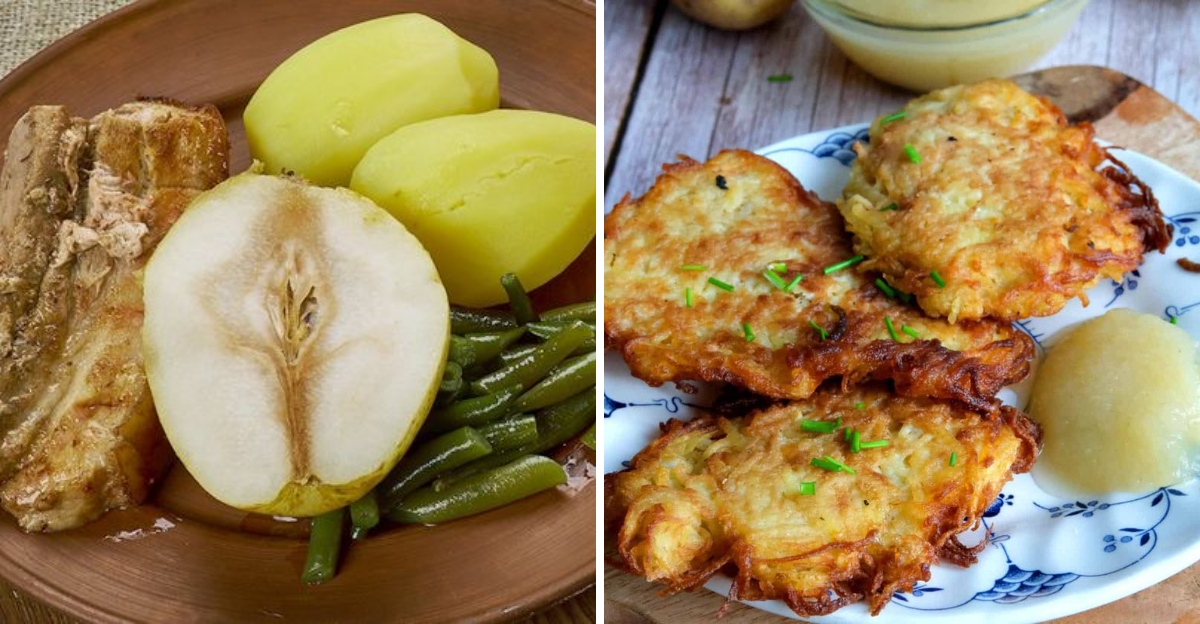
Birnen, Bohnen und Speck sounds quirky until you taste how beautifully it works. Sweet pears nuzzle up to snappy green beans while smoky bacon stitches the flavors together.
The broth turns lightly sweet-salty, perfect for ladling over boiled potatoes.
Choose firm, aromatic pears so they hold shape, and blanch beans to keep their color. Simmer with streaky bacon or smoked pork belly, adding a bay leaf and a grind of pepper.
A splash of cider vinegar at the end sharpens the sweetness.
This pot tastes like late summer sliding into fall. It is unfancy, generous, and completely convincing after a single spoonful, the kind of dish you quietly make again next week.
5. Sauerampfersuppe
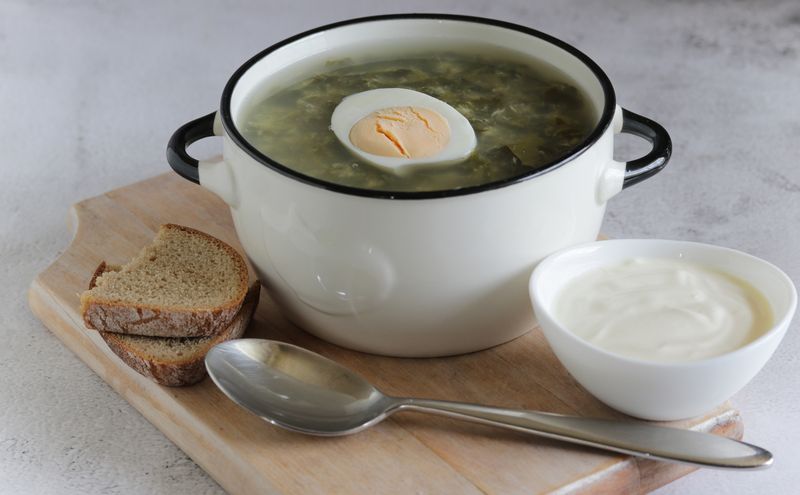
Sauerampfersuppe is spring in a bowl. Sorrel brings a lemony pop that needs only butter, potatoes, and good stock to shine.
The color is fresh meadow green, and the flavor feels like opening a window after winter.
Sweat onions in butter, simmer potatoes in broth, then stir in chopped sorrel right at the end. The leaves melt into a tangy silk that begs for a spoon of crème fraîche.
Add nutmeg and white pepper for gentle warmth.
Serve with rye croutons or a soft-boiled egg for extra richness. When markets brim with herbs, this simple classic snaps you awake, tasting bright without being thin, old-fashioned yet undeniably modern on the palate.
6. Grüne Soße (Frankfurter Grüne Soße)
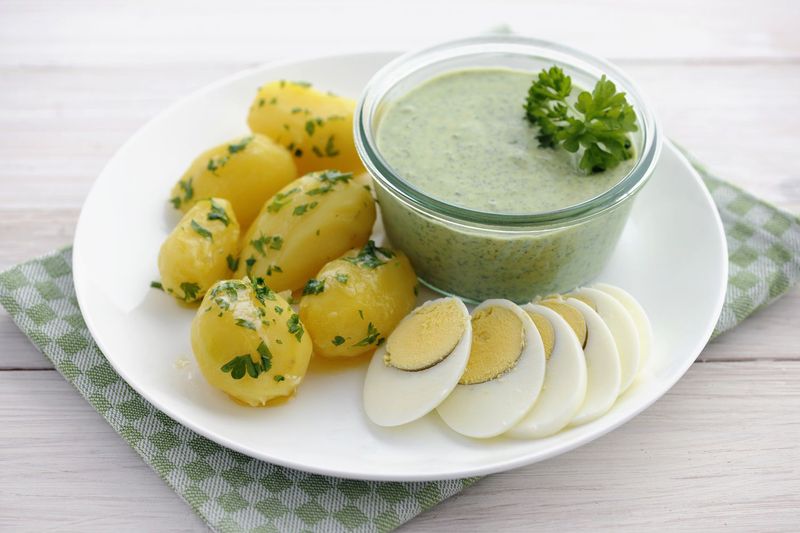
Frankfurter Grüne Soße is a cool herb thundercloud on a warm day. Parsley, chives, sorrel, borage, chervil, burnet, and cress whirl into a creamy, tangy sauce.
You spoon it over new potatoes and eggs, and everything suddenly tastes brighter.
Blend the herbs with quark or yogurt, a little sour cream, lemon, and oil. The color should be lively, not murky, so pulse gently instead of overblending.
Salt carefully and chill it so the flavors settle into harmony.
It is picnic-perfect, market-fresh, and proudly regional to Frankfurt. Once you try it, you start planning meals around the sauce, not the other way around, because green can absolutely be dinner.
7. Eintopf (Old-Style One-Pot Stew)
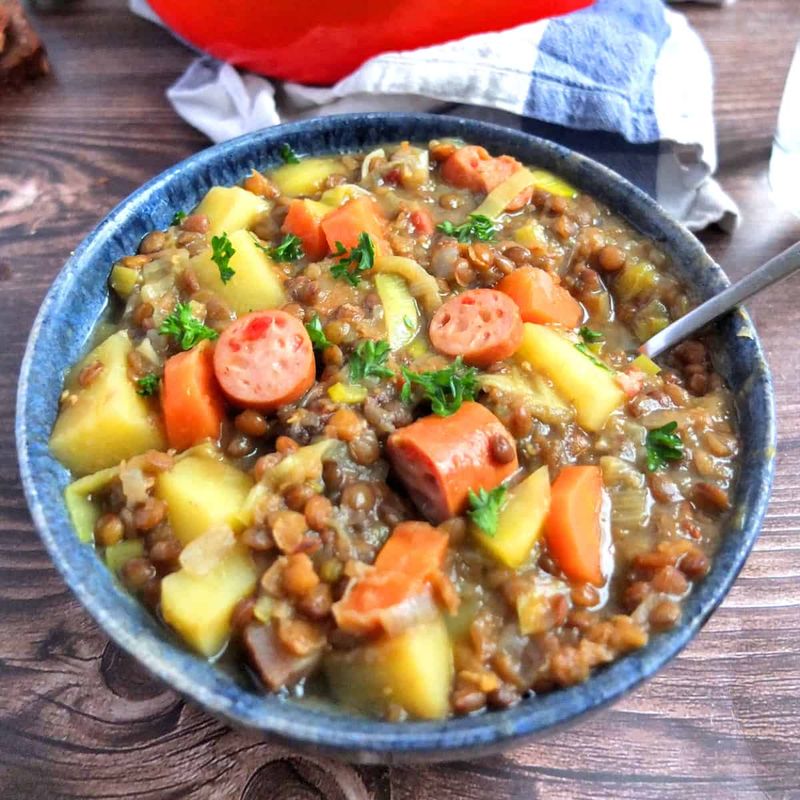
Eintopf is less a recipe than a rhythm: everything simmered together until it tastes like home. Old-style pots used beans, lentils, cabbage, and root veg, with a scrap of meat for backbone.
The broth grows richer the longer it murmurs.
Build flavor with browned onions and a quick toast of tomato paste. Add legumes, hearty vegetables, bay leaf, and maybe a smoked sausage heel.
Let it quietly bubble until the kitchen smells like Sunday patience.
Serve with mustard on the table and thick slices of bread for dunking. You clean the fridge, feed everyone, and somehow it feels intentional, not improvised.
That is the Eintopf spell, thrifty and deeply generous at once.
8. Königsberger Klopse
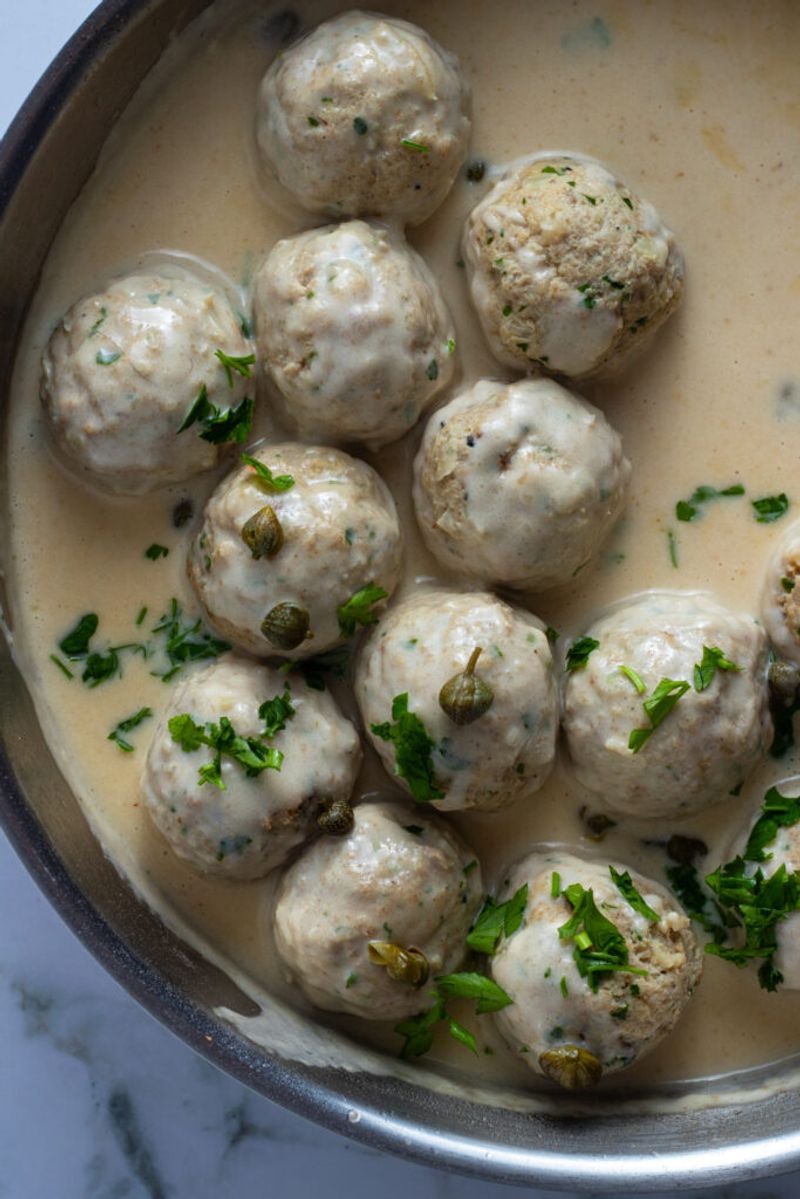
Königsberger Klopse are gentle veal or pork meatballs floating in a bright caper sauce. The flavor is comforting, lifted by lemon, white wine, and those briny green bursts.
It is the kind of Sunday dish that asks you to sit down and breathe.
Soak breadcrumbs in milk, season lightly, and poach the meatballs rather than fry. Use the poaching liquid to build your sauce, thickened with a light roux and enriched with cream.
Stir in capers at the end so they keep their pop.
Serve with potatoes and maybe beet salad for color. Every forkful lands soft and savory with bright sparks, a timeless plate that feels both elegant and inviting.
9. Rheinischer Sauerbraten (Old-School)
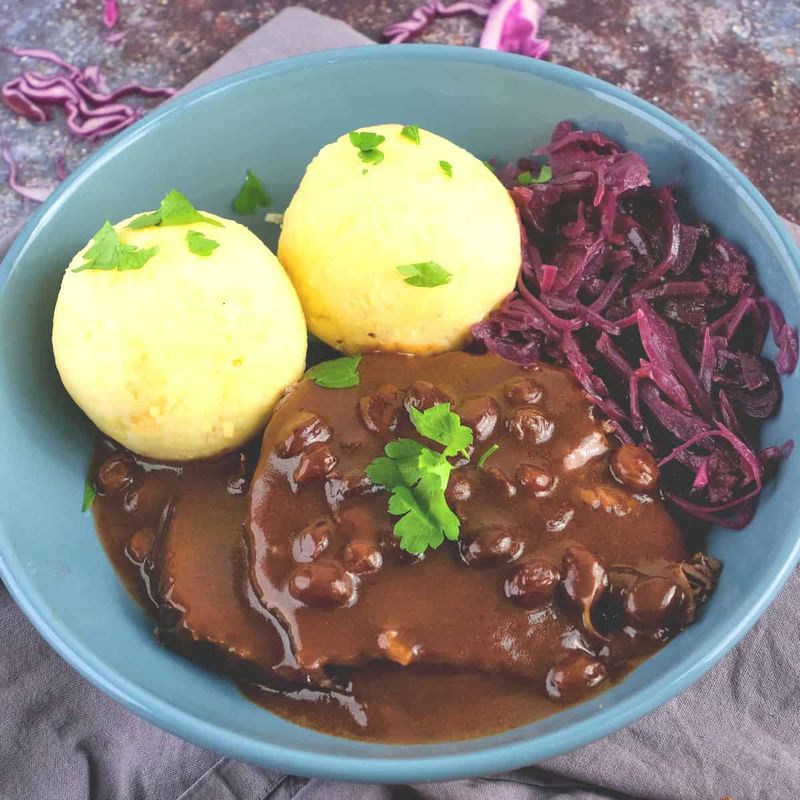
Old-school Rhenish Sauerbraten is patience on a plate. Beef bathes for days in vinegar, wine, aromatics, and spices until it turns tender and deeply flavored.
The gravy, often finished with a touch of raisins or gingerbread, lands sweet-sour and silky.
Brown the roast well, deglaze with the marinade, and simmer low until a fork slides in easily. Strain and thicken the sauce, adjusting acidity so it kisses, not bites.
Serve with red cabbage and potato dumplings for the full ritual.
It is celebratory without being showy, a memory-laden centerpiece that rewards planning. When you want tradition that still feels alive, this sauerbraten delivers warmth, fragrance, and a gravy worth guarding fiercely.
10. Blutwurst with Warm Potato Salad
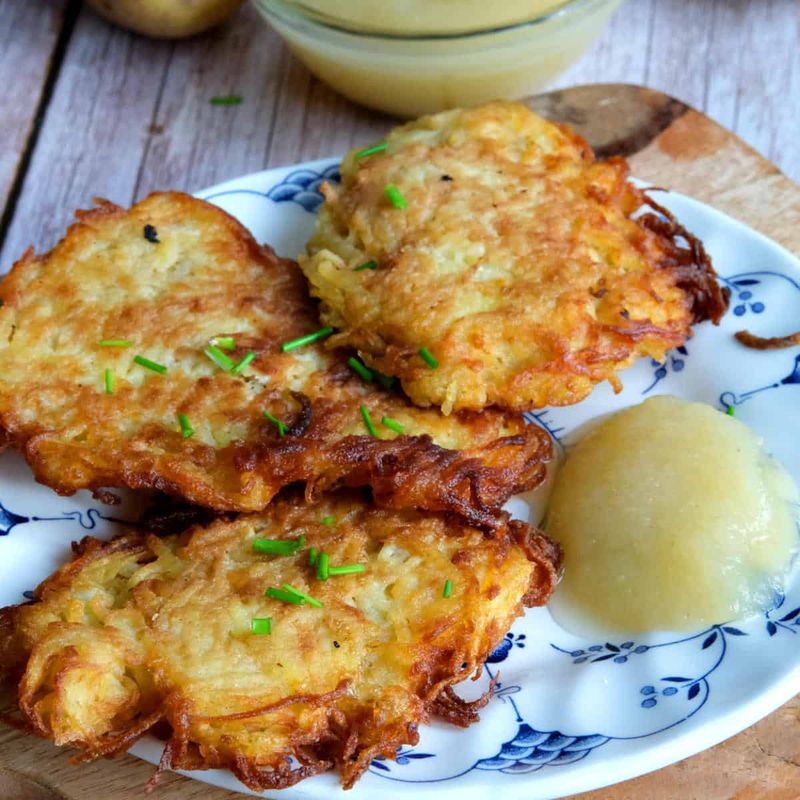
Blutwurst with warm potato salad is a study in balance. The sausage brings deep, spiced richness, while the salad cuts through with mustard, vinegar, and broth.
Every bite swings between creamy and bright, soft and lightly crisp.
Toss the potatoes gently while still warm so they drink in the dressing. Add onions, chives, and maybe a spoon of bacon fat for gloss.
Sear the blutwurst until the edges crackle, then plate with pickles for snap.
It is hearty tavern fare that feels surprisingly refined when the acidity sings. If the name scares you, let the first forkful decide.
Odds are you will finish the plate and plan seconds.
11. Leberknödelsuppe
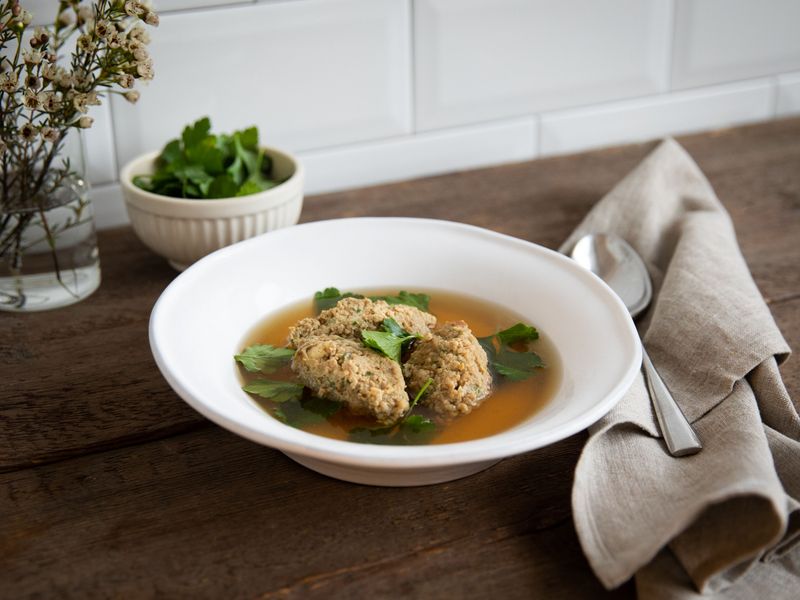
Leberknödelsuppe tastes heartier than it looks. A single liver dumpling rests in clear broth, releasing savory depth as you break it apart.
The texture should be tender, not grainy, floating like a cushion in golden stock.
Pulse liver with soaked bread, onions, parsley, marjoram, and egg, then shape gently. Simmer, do not boil, to keep the dumplings light.
A sprinkle of chives and nutmeg pulls everything together without shouting.
It is humble, restorative, and perfect when the air bites. You sip, pause, and feel anchored again.
If liver feels intimidating, this is the friendliest doorway, turning richness into comfort rather than intensity.
12. Grießbrei
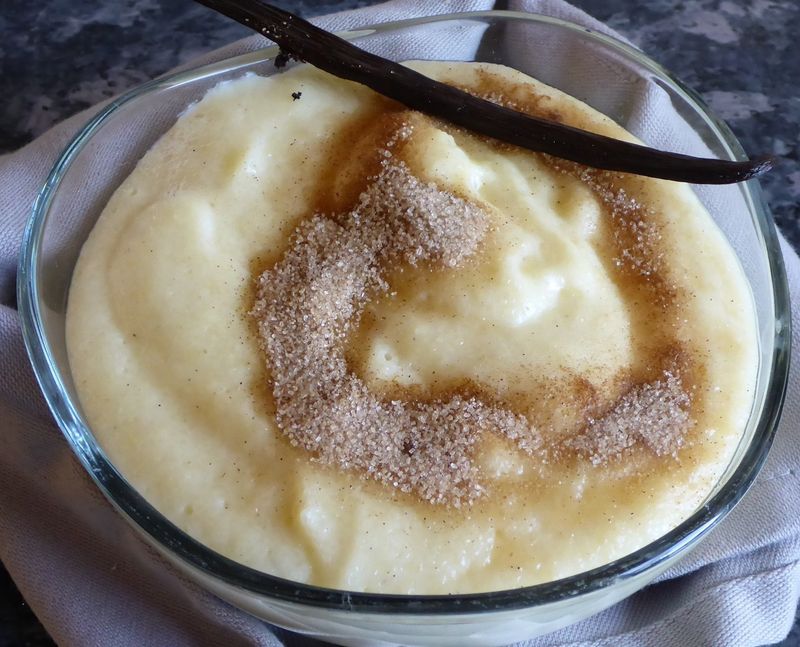
Grießbrei is the dessert-bowl you forget until a spoonful transports you. Semolina simmers in milk with vanilla and a whisper of butter until velvety.
A snowfall of cinnamon sugar or a spoon of stewed fruit turns it into pure comfort.
Heat the milk slowly, whisk semolina in a thin stream, and keep stirring to avoid lumps. Let it rest off heat so it thickens to that perfect, spoon-holding cream.
Sweeten lightly because toppings will carry the rest.
Serve warm for coziness or chilled for pudding vibes. It is budget friendly, soothing, and endlessly tweakable with cocoa, lemon zest, or roasted plums.
One bowl and you remember exactly why simplicity wins.
13. Brotzeit (The Traditional Bread-Time Plate)
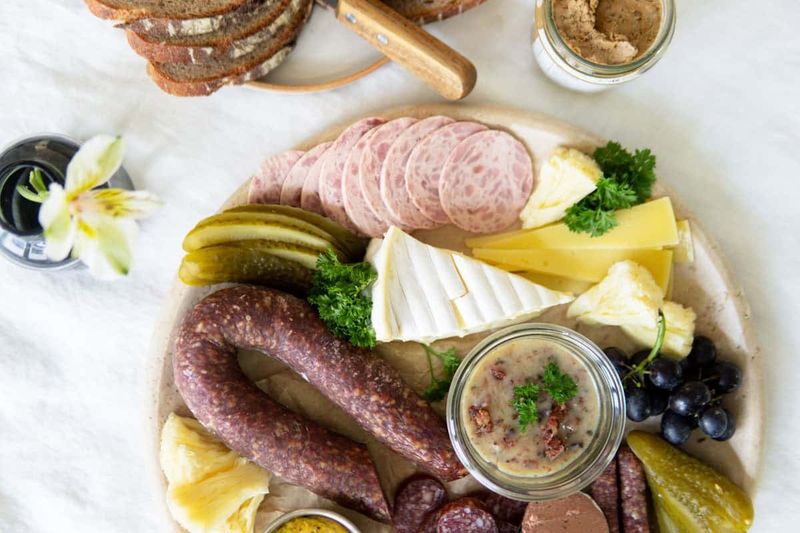
Brotzeit is not a recipe but a ritual. You lay out good bread, butter, cheeses, cold cuts, pickles, and radishes, then let appetite steer.
It is casual, sociable, and somehow more than the sum of its parts.
Choose sturdy loaves, a tangy cheese, a smoked one, and something creamy. Add a jar of mustard, sliced cucumbers, and maybe Obatzda for spreadable fun.
Let everyone build their perfect bite, no fuss or reheating required.
Great after hikes or lazy evenings, it turns a table into an invitation. Simplicity shines when the ingredients are honest.
You snack, talk, sip, and call it dinner without apology.
14. Handkäse mit Musik
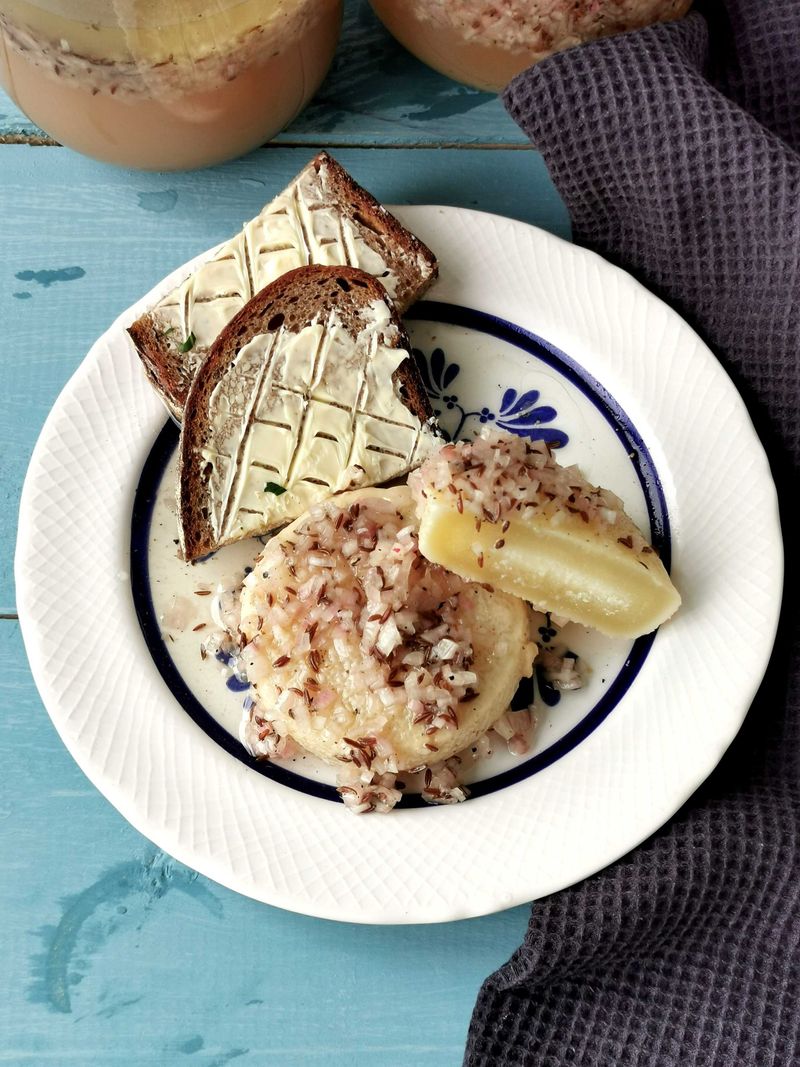
Handkäse mit Musik is boldly regional and unapologetic. Tart little cheeses bathe in vinegar, oil, and raw onions, sometimes with caraway.
The aroma announces itself, and the flavor follows with tangy clarity.
Serve it chilled with buttered rye and a glass of apple wine. The onions soften over time, trading sharpness for gentle sweetness.
A sprinkle of pepper and a drizzle of oil right before serving make it sing.
You either love it immediately or circle back later and fall hard. Either way, it has character to spare, a snack that refuses to be bland.
When you crave honest, bracing flavors, this is your move.
15. Zwiebelkuchen
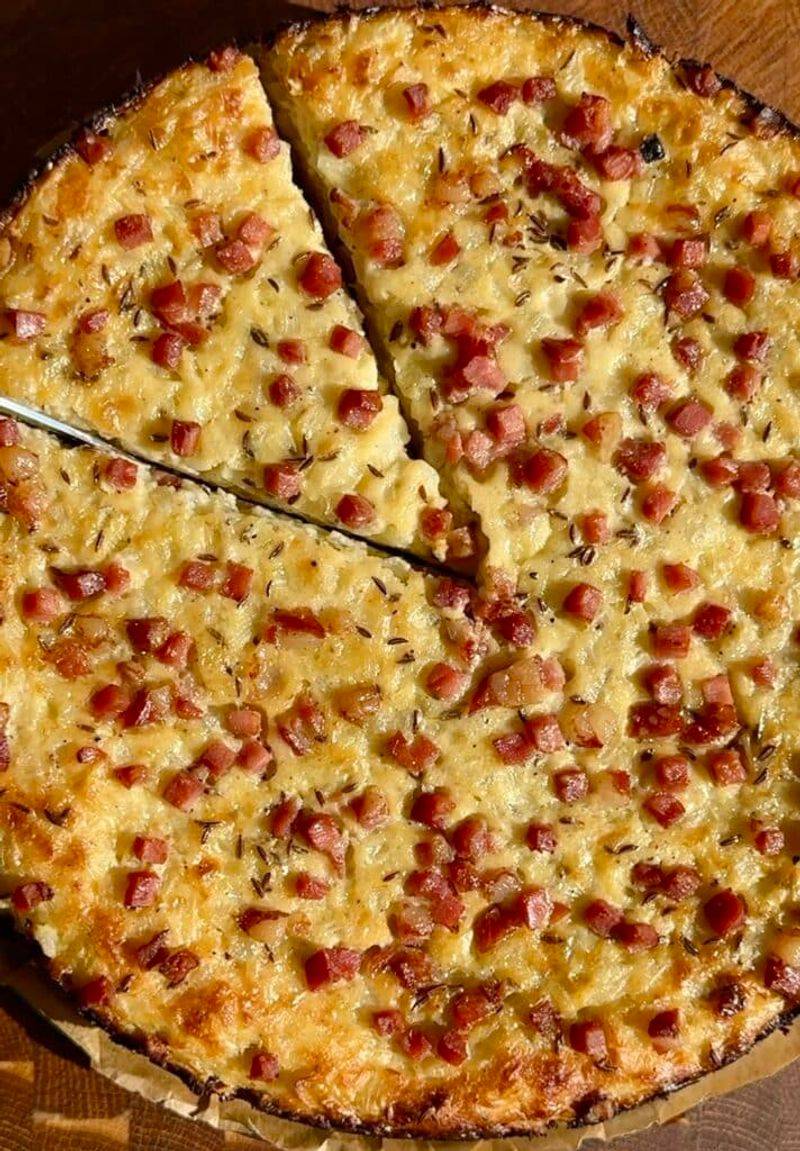
Zwiebelkuchen is the delicious middle ground between quiche and pizza. A buttery crust holds sweet sautéed onions, a creamy custard, and often smoky speck.
Serve it warm with Federweisser and you will understand fall in a bite.
Cook the onions low and slow until jammy, then cool before mixing with eggs and cream. Season with caraway, pepper, and nutmeg, and bake until the center just sets.
The top should blush golden, not brown.
It is perfect for harvest gatherings, cozy nights, or lazy Sunday lunches. The leftovers reheat beautifully, although there may not be many.
Pair with a crisp salad and call it dinner without regrets.
16. Dampfnudeln

Dampfnudeln are cloud-soft dumplings with a secret: a gently caramelized bottom from steaming in milk, butter, and sugar. Tear one open and steam escapes like a promise.
Dip in vanilla sauce or spoon over warm fruit compote.
Knead the dough until smooth and patient, then let it rise until pillowy. The pan liquid should bubble softly, not scorch, creating that tender crust.
Keep the lid on so they puff properly and stay moist.
They are festive yet deeply homey, a dessert that turns a kitchen into a bakery. Serve immediately for peak fluffiness.
If you need guaranteed smiles at the table, this is a reliable ticket.
17. Schupfnudeln
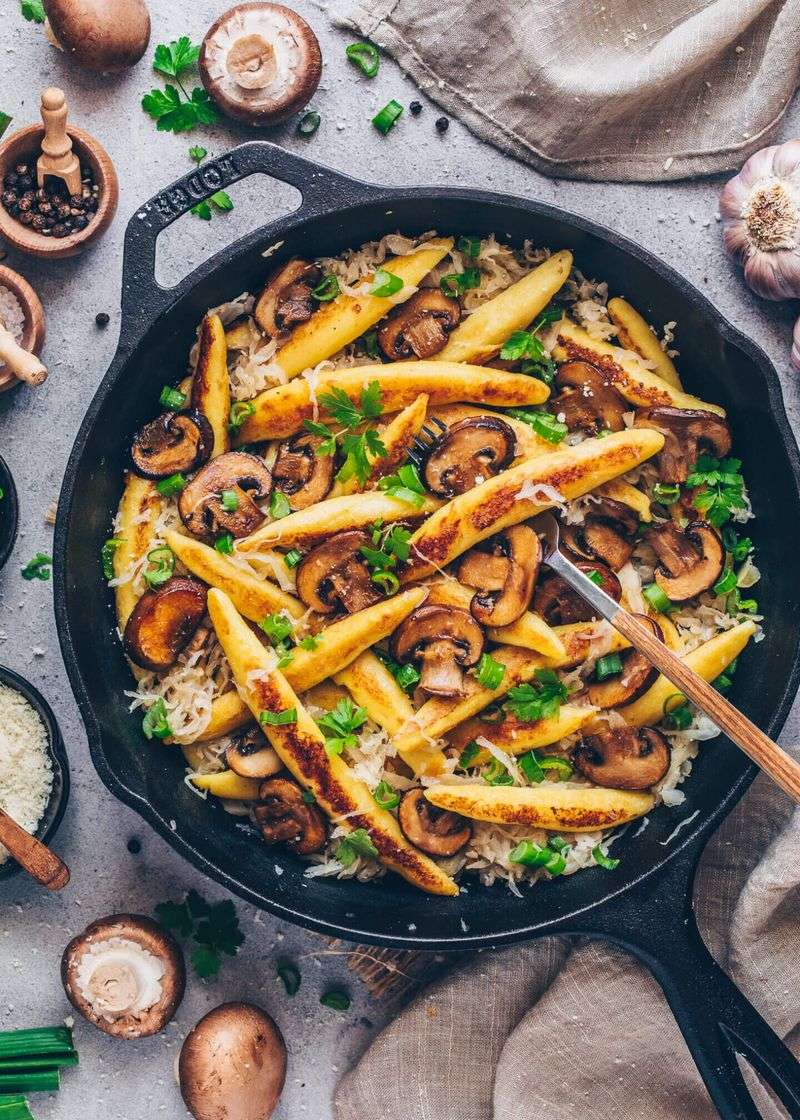
Schupfnudeln are potato noodles that fry up with irresistible crispy edges and tender centers. Tossed with sauerkraut, onions, and maybe bacon, they hit that sweet-savory-comfort trifecta.
You get chew, crunch, and tang in every forkful.
Start with a potato dough like gnocchi, rolled into tapered little logs. Boil briefly, drain, then pan-fry in butter or bacon fat until spotted gold.
The sauerkraut should sizzle and caramelize at the edges, not drown the pan.
Finish with caraway, parsley, and black pepper. They play well as a side or as the star with a fried egg on top.
Make a double batch because they mysteriously vanish.