17 Korean Recipes Used In Regular Home Cooking
On a regular Korean dinner table, comfort comes from rhythm: rice steaming, a humble soup simmering, and a couple of quick sides that make the meal feel complete. These are the reliable recipes you can cook after work without fuss, using pantry staples like gochujang, soy sauce, and kimchi.
You will find cozy stews, speedy stir-fries, and banchan that turn leftovers into something exciting. Let’s build a week of deeply satisfying, totally doable Korean home cooking.
1. Kimchi Fried Rice (Kimchi Bokkeumbap)

Kimchi fried rice turns old rice into a craveable dinner in minutes. You toss chopped kimchi, a spoon of gochujang, and a splash of soy sauce into a hot pan, then fold in day-old rice until every grain is glossy and red.
Slide a fried egg on top so the yolk becomes sauce, and scatter sesame seeds and scallions.
It is salty, tangy, slightly spicy, and endlessly flexible. Add spam, bacon, or tofu if you want extra protein, or melt in a little butter for richness.
You can even finish with roasted seaweed for crunch. When the fridge feels empty, this dish shows up like a dependable friend.
Keep kimchi around and you will always have dinner.
2. Soy Sauce Eggs (Gyeran Jangjorim)
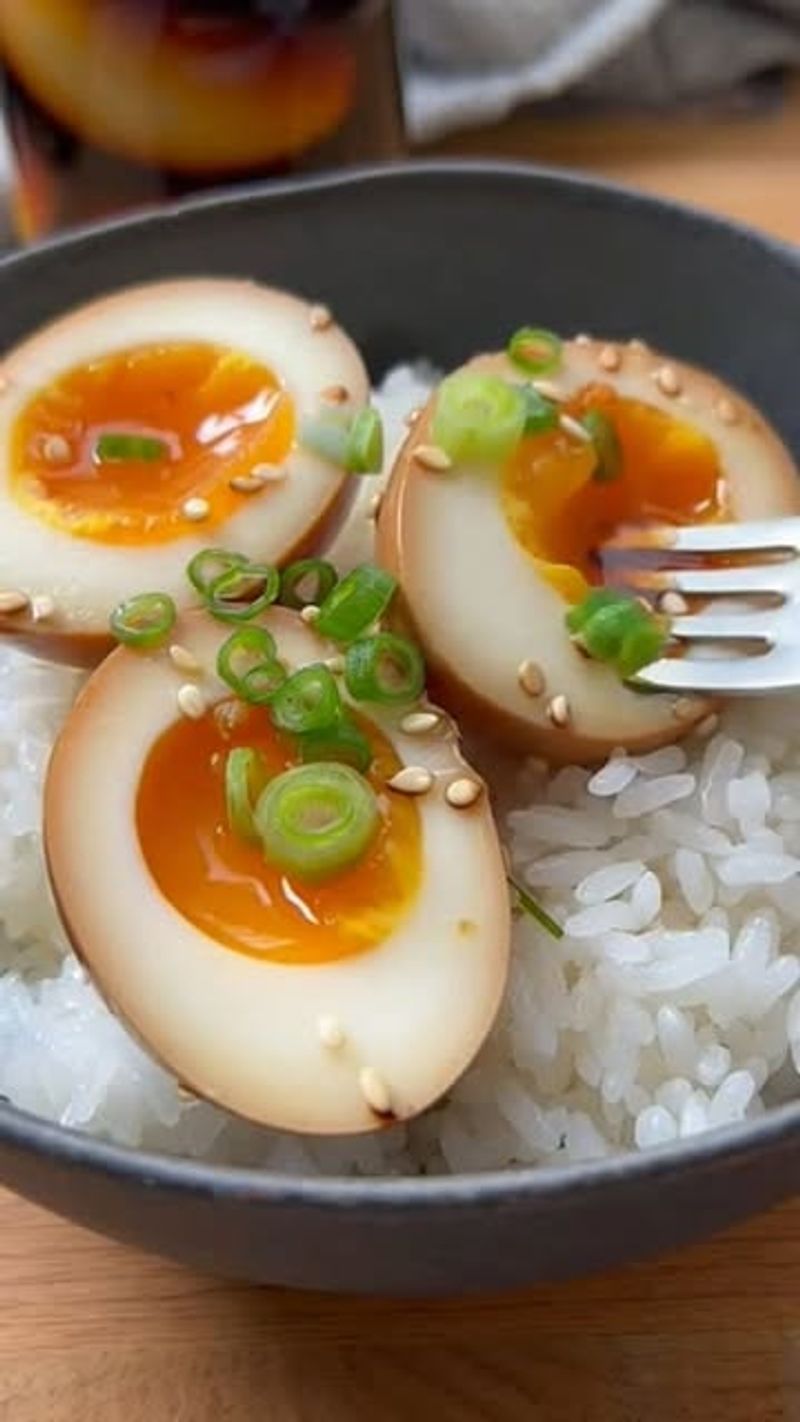
Gyeran jangjorim is your meal-prep secret for better bowls. Boil eggs to a jammy center, then soak them in a marinade of soy sauce, water, sugar, garlic, and a touch of mirin.
After a few hours, the whites are bronze and savory, and the yolks taste deeper and silkier.
Keep a container in the fridge, and you have an instant upgrade for rice, noodles, or toast. Add sliced chilies for heat or a little sesame oil for perfume.
The marinade can be reused and adjusted, getting rounder and more complex every batch. These eggs are simple, affordable, and incredibly satisfying.
When dinner needs help fast, a soy sauce egg turns plain rice into something you will actually crave.
3. Korean Beef Bowl (Bulgogi-Style Ground Beef)
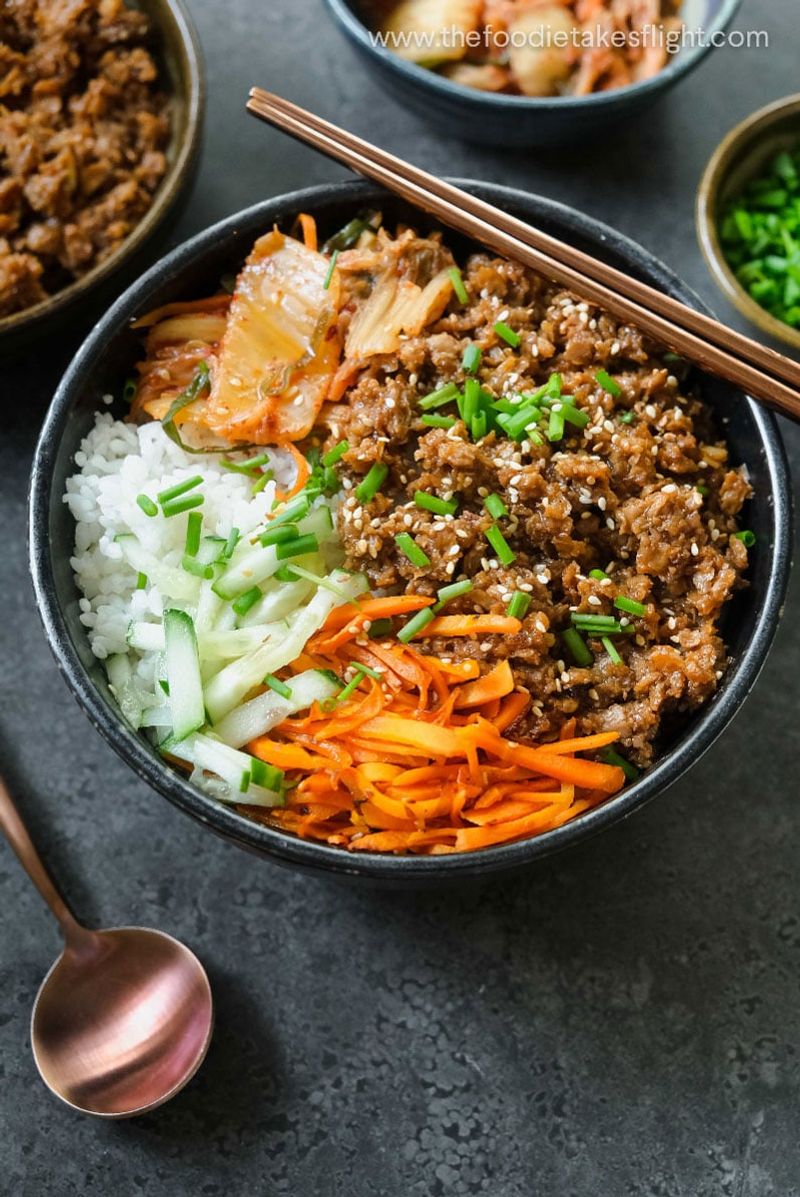
This weeknight bulgogi bowl uses ground beef for speed and budget friendliness. Brown the meat with garlic and scallions, then glaze it with soy sauce, sugar, and a drizzle of sesame oil.
A splash of water helps the sauce cling, while black pepper and a pinch of gochugaru add warmth.
Spoon it over hot rice with cucumbers or kimchi and dinner is done. You can bulk it up with mushrooms or shredded cabbage, or crack in an egg for extra richness.
It keeps well for lunches and tastes even better with a quick pickled veggie. Sweet-savory, aromatic, and kid friendly, this is a dependable staple.
When time is tight, this bowl proves delicious does not require marinating or special cuts.
4. Tofu Stew (Sundubu Jjigae)
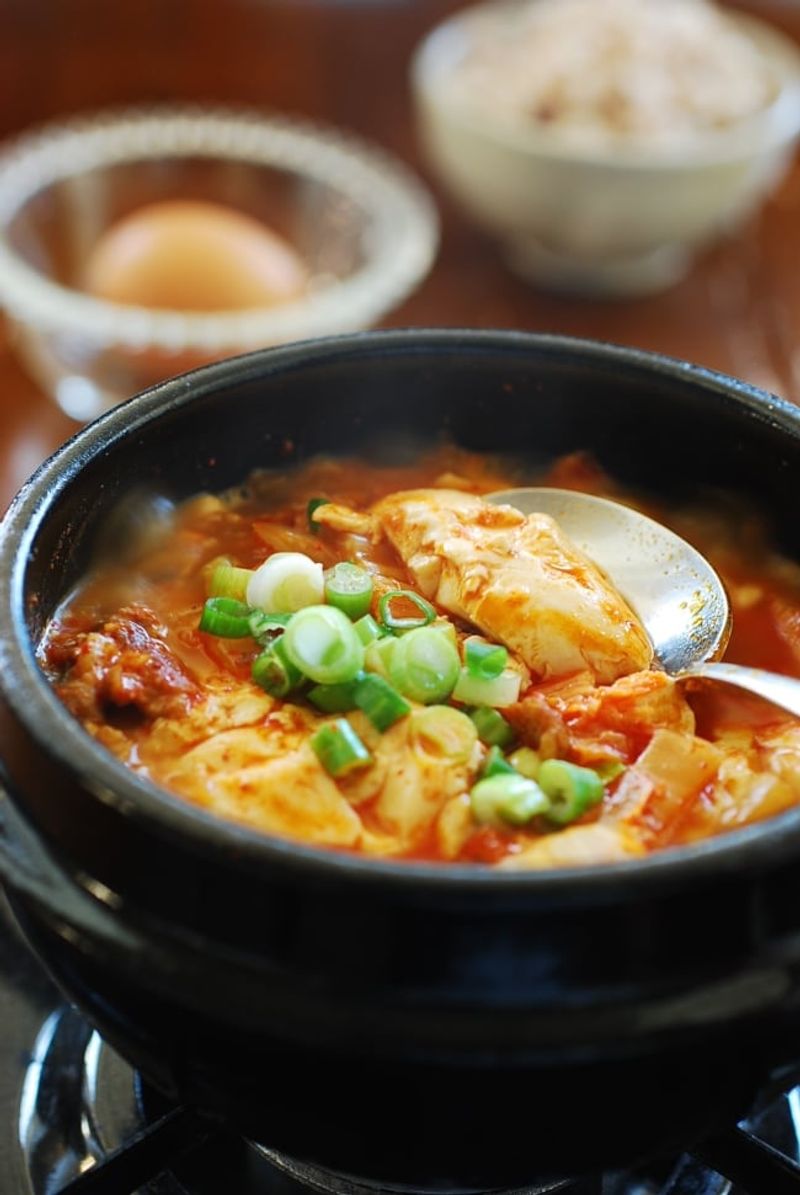
Sundubu jjigae is cozy heat in a bowl. The broth starts with garlic and gochugaru bloomed in oil, then anchovy stock or water, plus a spoon of gochujang for depth.
Slide in soft tofu logs, add seafood or pork, and finish with an egg that gently sets in the bubbling stew.
It is hearty without feeling heavy, and it cooks in one pot. You can keep it mild or make it fiery, and adjust the salt with soy sauce or salt to taste.
Serve with rice and a few banchan to round things out. The texture of the tofu is irresistibly silky.
On cold nights or stressful days, this stew makes you feel held, warmed, and fully fed.
5. Kimchi Stew (Kimchi Jjigae)
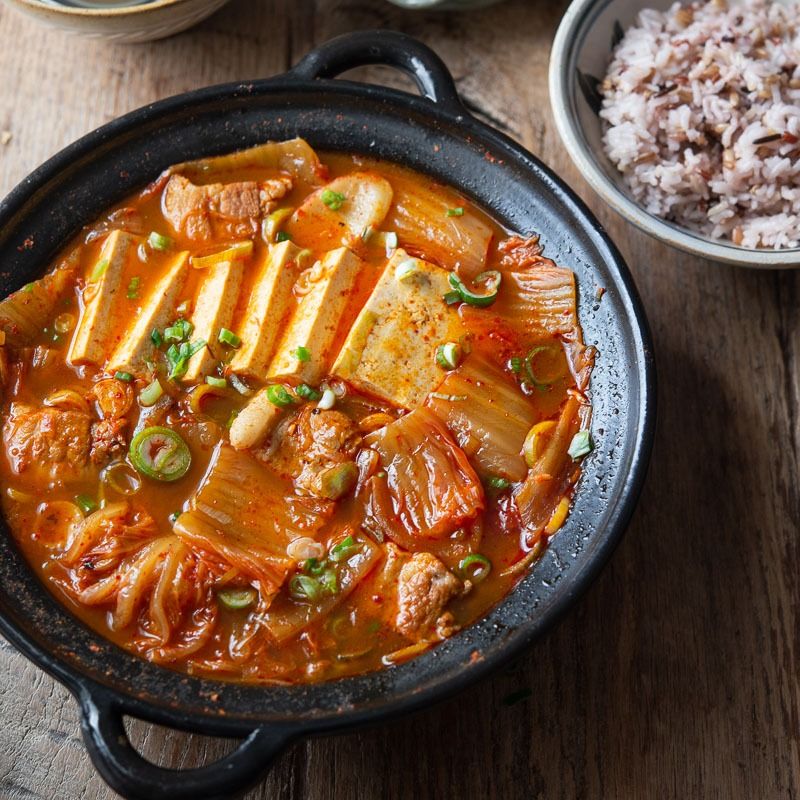
Kimchi jjigae tastes better the longer it bubbles. Start with aged kimchi, pork or tuna, garlic, and onion, then simmer with water or anchovy stock until the cabbage softens and the broth turns brick red.
Add tofu near the end so it stays tender and soaks in flavor.
The stew is bright, tangy, and comforting, with a gentle spice that invites more rice. Leftovers deepen overnight, becoming tomorrow’s even better lunch.
You can add mushrooms, zucchini, or a splash of kimchi brine to sharpen it. It is the definition of regular dinner at home: simple ingredients, big payoff.
Keep a jar of kimchi around and this stew is always within reach, no special shopping trip required.
6. Soybean Paste Stew (Doenjang Jjigae)
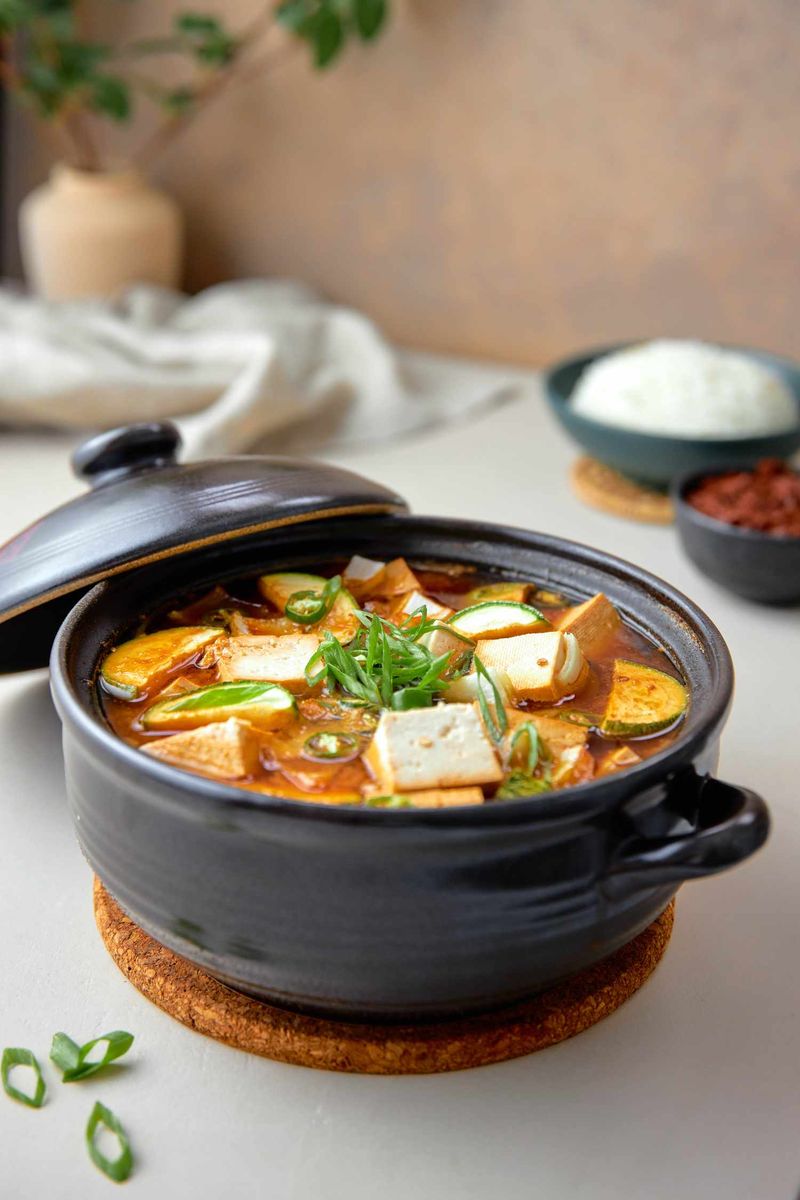
Doenjang jjigae brings earthy depth with minimal effort. Dissolve Korean soybean paste in hot stock, then add zucchini, onion, tofu, and mushrooms or clams.
A small chili and a few garlic slices brighten the pot, while a pinch of sugar balances the fermented savoriness.
It is the stew you can make while rice cooks, delivering a complete, warming meal. Adjust salt with more paste or a splash of soy sauce, and finish with sliced scallions.
Sometimes a pat of butter adds roundness, especially if the paste is intense. This is regular dinner energy: humble, nourishing, and steady.
Pair it with a quick stir-fry or a plate of kimchi, and your table suddenly feels abundant and calm.
7. Spicy Rice Cakes (Tteokbokki)
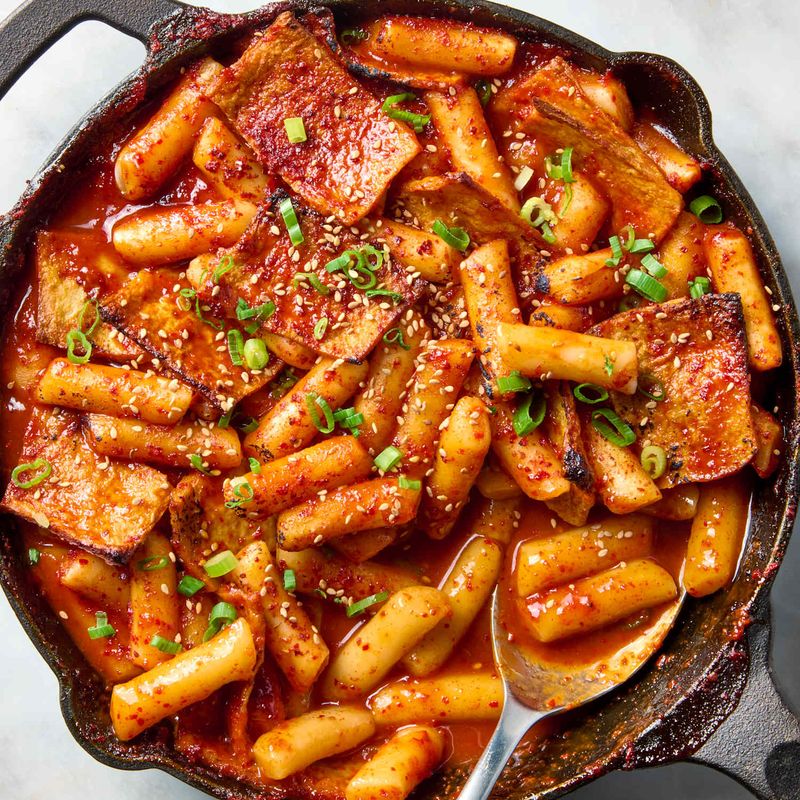
Tteokbokki is snack-night dinner with real substance. Soak or simmer rice cakes until tender, then toss them in a sweet-spicy gochujang sauce with a hint of sugar and soy.
Fish cakes, cabbage, and scallions make it feel meal-worthy, while boiled eggs add protein and richness.
The sauce should be thick enough to coat each piece, glossy and almost sticky. Adjust heat with gochugaru, and thin with stock if it gets too intense.
It is addictive, satisfying, and fun to share. Leftovers reheat beautifully, turning even chewier the next day.
When you want something bold without fuss, this dish delivers. Keep rice cakes in the freezer and you are always minutes from joyfully spicy comfort.
8. Japchae
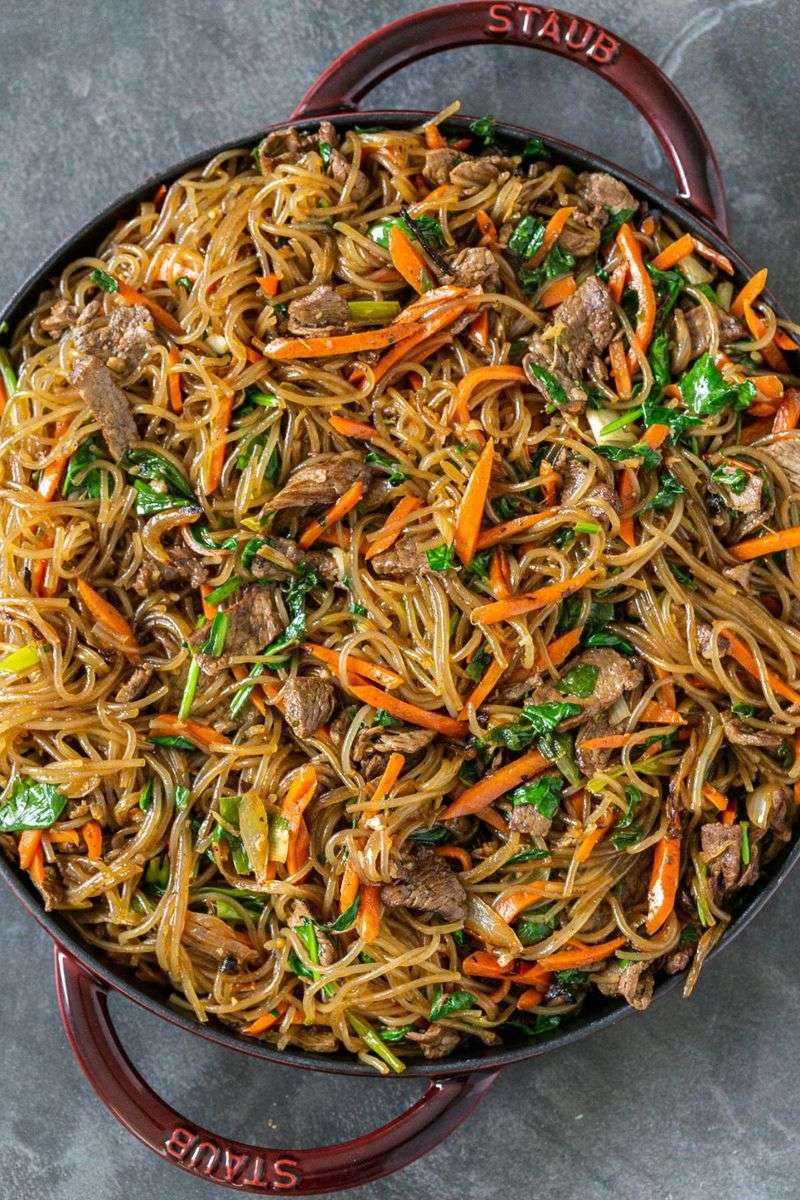
Japchae is a lightly sweet, sesame-forward noodle stir-fry that flexes between side and main. Boil sweet potato glass noodles, then toss them with sautéed onions, carrots, mushrooms, spinach, and a soy-sugar-sesame dressing.
Add beef or tofu if you want extra protein.
The noodles stay bouncy and clear, drinking up the sauce without getting heavy. Make it ahead and serve at room temperature or gently warmed.
It feels celebratory yet fits right into a weeknight rotation, especially when the fridge has stray veggies. Toasted sesame seeds and a drizzle of sesame oil finish the dish with fragrance.
Japchae pairs with everything on the table. It is endlessly comforting, pretty to serve, and always disappears first.
9. Vegetable Pancakes (Yachae Jeon)
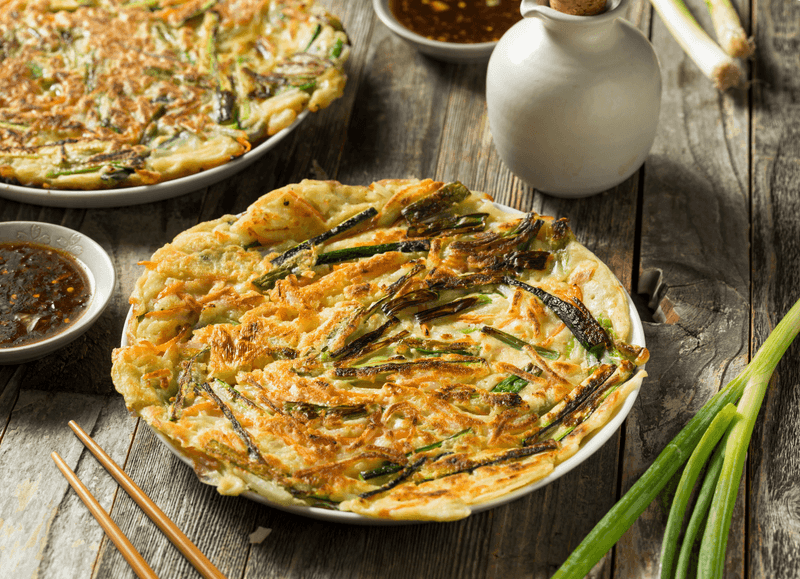
Yachae jeon is the clean-out-the-fridge pancake that saves dinner. Shred or thinly slice any firm vegetables, toss with flour, water, and salt, then fry flat until lacy and golden.
The edges crackle, the center stays tender, and everything tastes better dipped in soy-vinegar with a pinch of sugar.
You can add scallions, chilies, or a handful of shrimp. Keep the batter loose so it spreads thin, and press with a spatula for maximum crisp.
Make one big pancake to share or several smaller ones for quicker flips. It is simple, adaptable, and very satisfying.
With rice and kimchi, you have a complete meal. On rainy days, this pancake with hot tea feels just right.
10. Kimchi Pancakes (Kimchi Jeon)

Kimchi jeon is tangy, crispy, and deeply snackable. Mix chopped kimchi and a little brine into a simple batter, then pan-fry until both sides are burnished and crackling.
The sourness of older kimchi makes the flavor pop, while bits of cabbage caramelize at the edges.
Serve with a soy-vinegar dip sweetened slightly and seasoned with sesame seeds. Add a handful of pork belly pieces or seafood if you want more heft.
Cut into wedges and eat hot, or tuck leftovers into lunch boxes. This pancake is perfect when you want dinner fast without thinking.
A bowl of rice and a quick soup turn it into a full, satisfying meal you will repeat often.
11. Stir-Fried Fish Cakes (Eomuk Bokkeum)
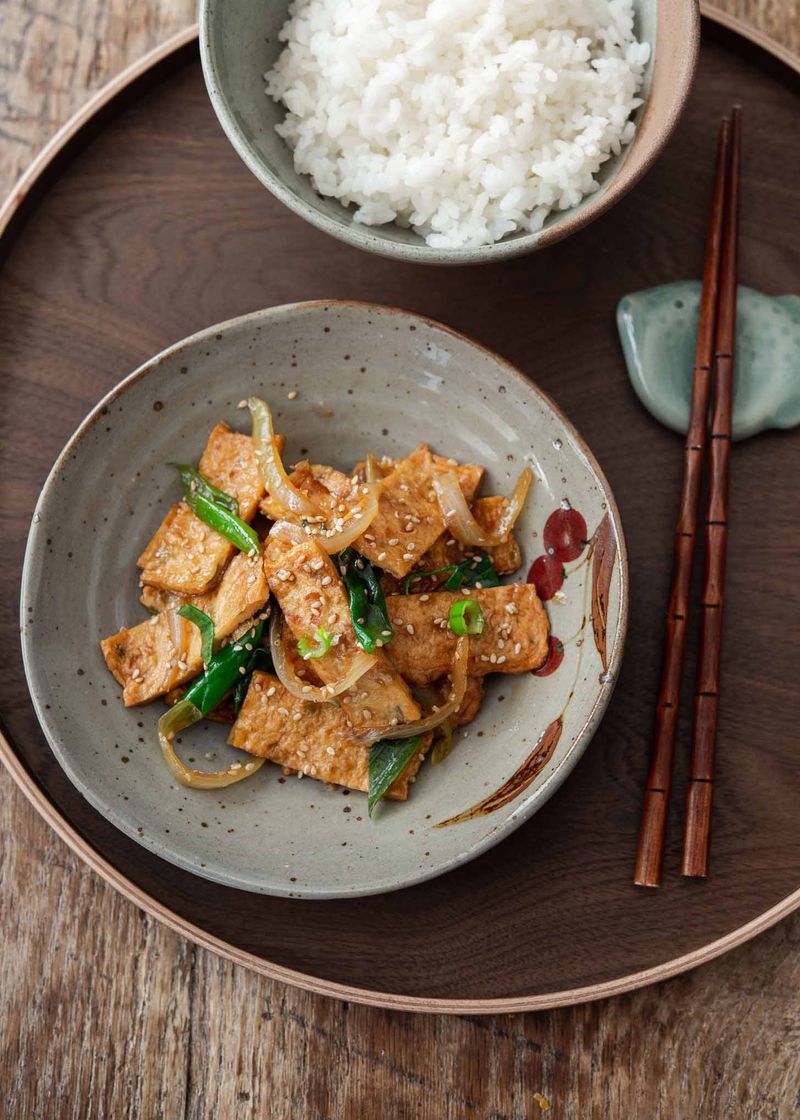
Eomuk bokkeum is a classic banchan that disappears fast. Sauté sliced fish cakes with onions and carrots, then glaze with soy sauce, sugar, and a little sesame oil.
A touch of garlic and gochugaru adds warmth without overpowering.
It is chewy, savory, slightly sweet, and perfect with plain rice. Make a batch and pack it into lunch boxes, because it holds up well cold.
You can add bell peppers or adjust sweetness to taste. The pan time is short, making this an easy side to cook while soup simmers.
Sprinkle sesame seeds and scallions to finish. Suddenly, your table looks complete and generous, like you planned far ahead when really it took ten minutes.
12. Spicy Cucumber Salad (Oi Muchim)
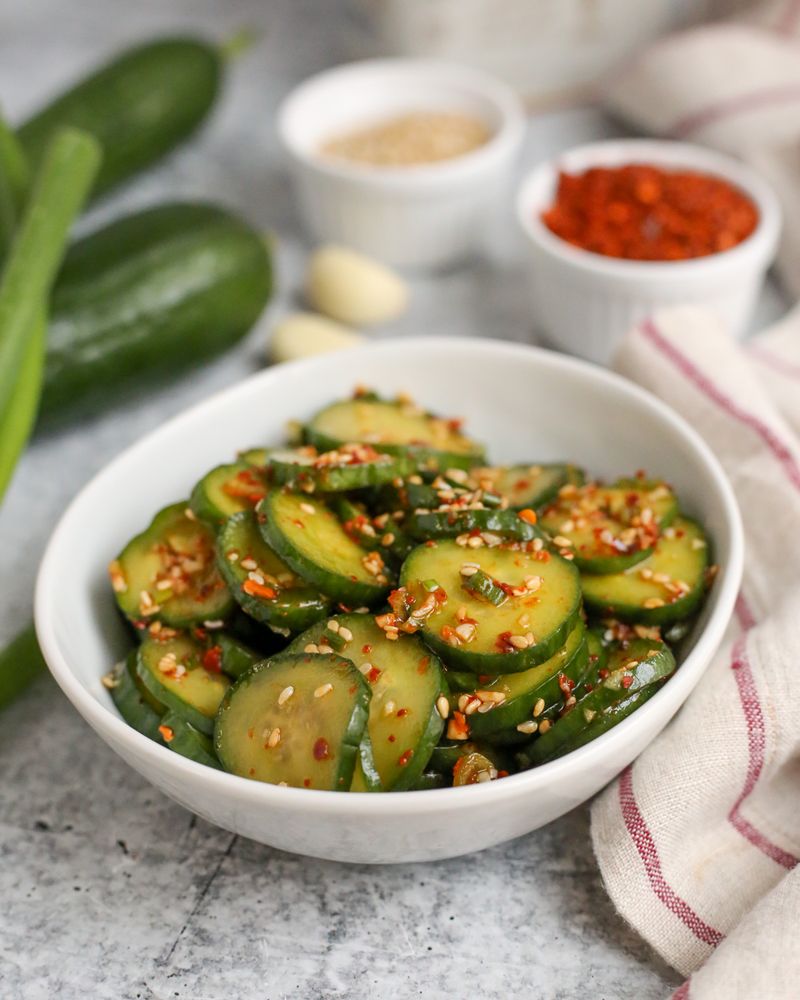
Oi muchim brings cool crunch to balance richer dishes. Toss cucumbers with salt to draw out water, then mix with gochugaru, garlic, sugar, rice vinegar, and sesame oil.
The result is bright, lightly spicy, and incredibly refreshing.
It takes minutes and makes everything else on the table taste sharper. Add sliced onions or perilla if you have them, and adjust vinegar to your tang preference.
Serve immediately for snap or let it sit briefly to meld flavors. This banchan rescues heavy meals, especially stews and grilled meats.
Keep cucumbers in the fridge and you always have a fast side. It is the reliable palate cleanser you will reach for again and again.
13. Seasoned Spinach (Sigeumchi Namul)
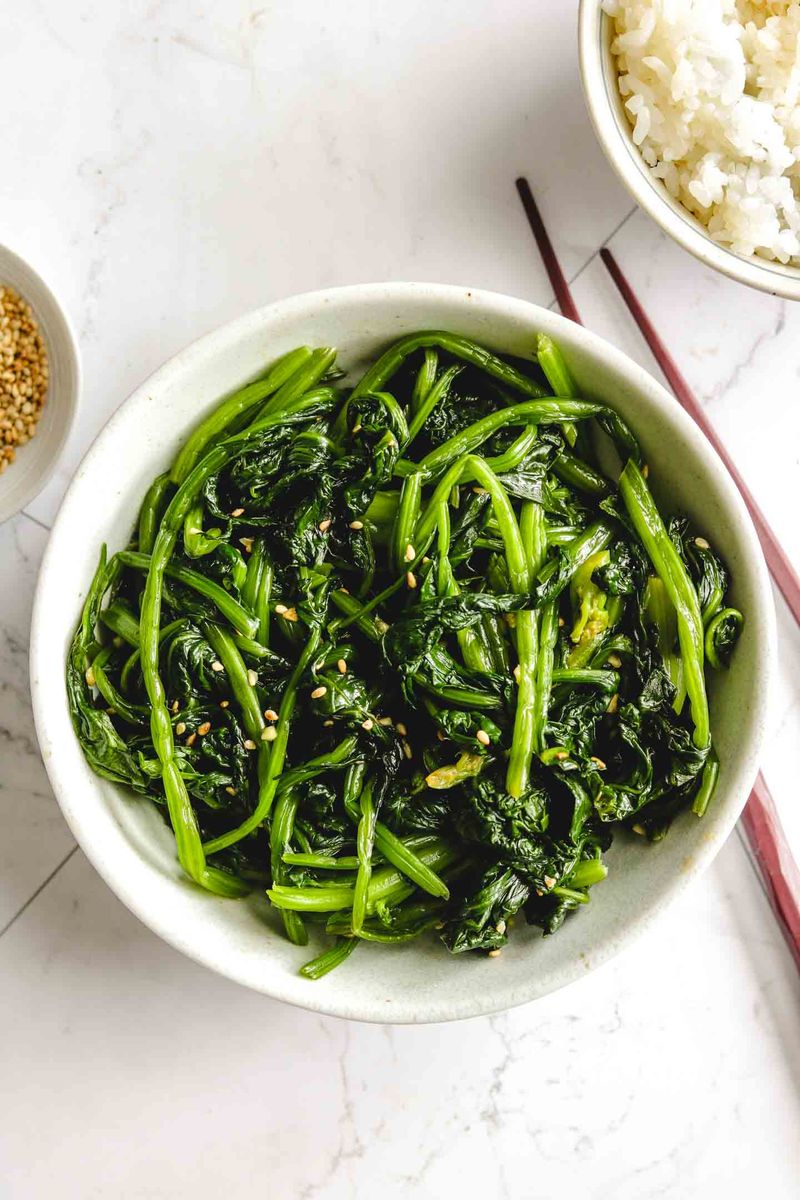
Sigeumchi namul is the definition of simple done right. Blanch spinach briefly, squeeze out water, then season with garlic, sesame oil, salt, and a few sesame seeds.
The greens turn silky and savory, tasting clean yet satisfying with hot rice.
It is fast, affordable, and kid friendly, and works in lunch boxes without getting soggy. You can add soy sauce instead of salt or a drizzle of vinegar for brightness.
Make it while your stew bubbles and the rice steams. Suddenly the table feels balanced and intentional.
This side proves that not every banchan needs many ingredients to shine. When you crave vegetables with minimal effort, this is the answer you will trust weekly.
14. Korean Potato Side Dish (Gamja Jorim)
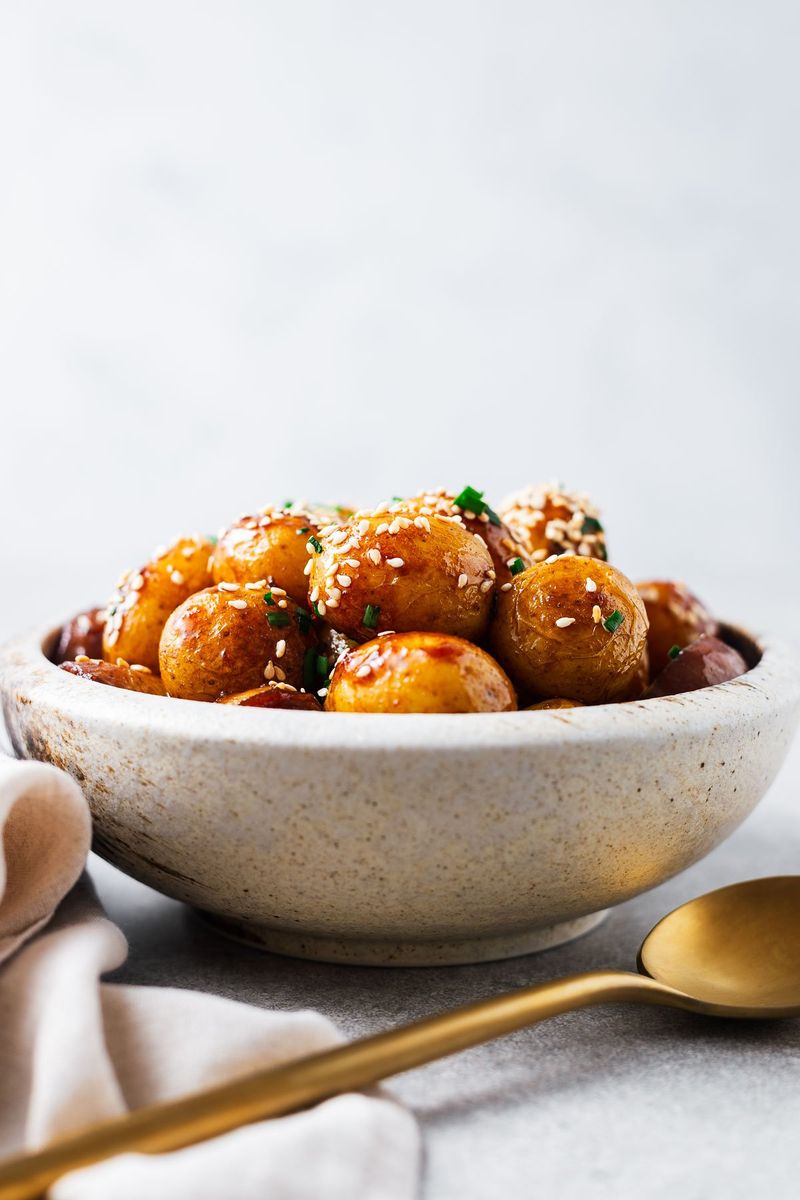
Gamja jorim turns humble potatoes into a glossy, sweet-savory star. Simmer chunks in a soy sauce mixture with sugar, garlic, and a bit of oil until tender.
As the liquid reduces, the potatoes glaze, their edges slightly caramelized and irresistibly shiny.
This banchan tastes great hot or cold and pairs with just about everything. Add carrots for color or a chili for gentle heat.
A final drizzle of sesame oil adds perfume, while sesame seeds give nutty crunch. It stores beautifully in the fridge for quick lunches and late-night snacks.
When you want comfort without frying, this is your move. The texture is melt-in-mouth soft, with a satisfying bite that never feels heavy.
15. Braised Spicy Chicken (Dak Bokkeumtang)

Dak bokkeumtang is a one-pot dinner with comforting heat. Brown chicken pieces, then simmer with potatoes, carrots, onions, gochujang, soy sauce, sugar, and garlic until the meat is tender and the sauce thickens.
The vegetables soak up flavor, turning soft and slightly sweet.
It is hearty, saucy, and perfect spooned over rice. Adjust spice with gochugaru and add perilla leaves if you like herbal notes.
Leftovers taste even better as the sauce settles. This is the kind of meal that makes the whole kitchen smell welcoming.
Set it in the middle of the table and watch everyone lean in. Big flavor, minimal dishes, and total satisfaction on a regular weeknight.
16. Seaweed Soup (Miyeok Guk)
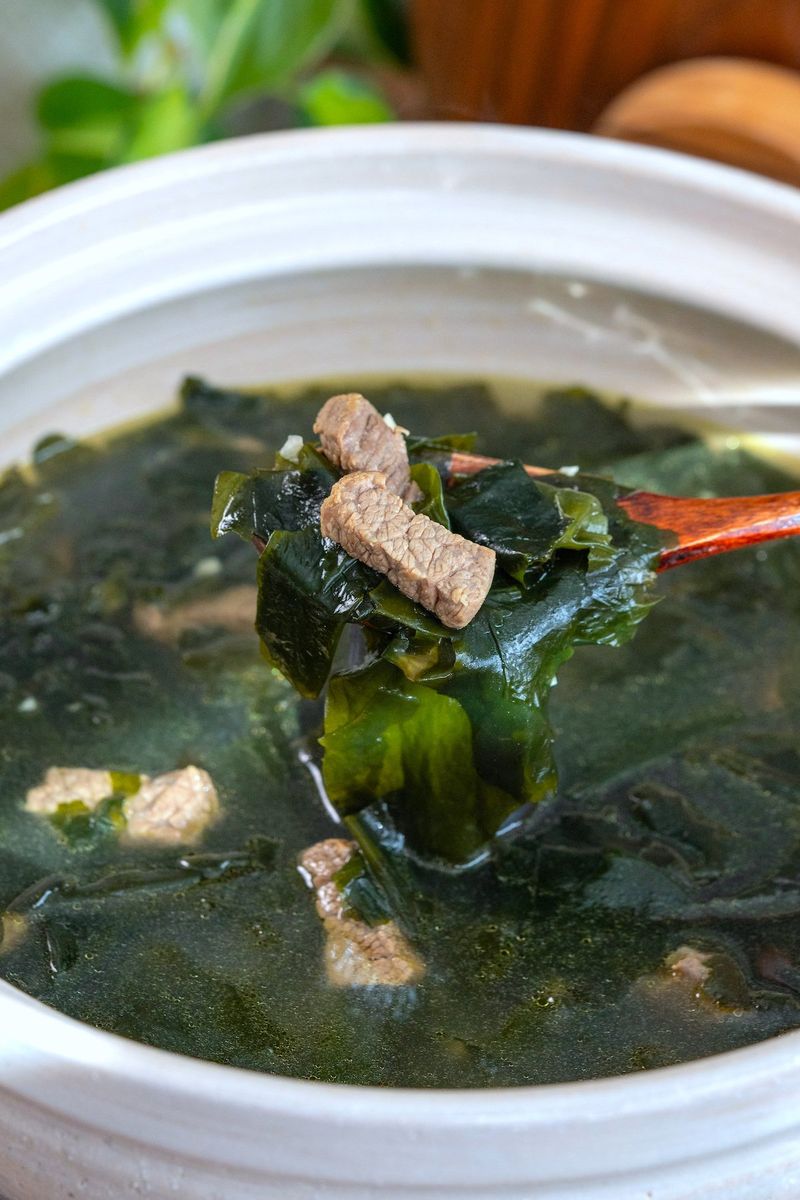
Miyeok guk is gentle and restorative. Soak dried seaweed, then simmer with beef or anchovy stock, garlic, and soy sauce until the greens turn silky.
The broth tastes clean but deeply comforting, perfect alongside rice and a few banchan.
It is common all year, not just birthdays, and it makes mornings feel calm when reheated. Add sesame oil for warmth or more soy for salt.
The soup is light yet nourishing, a balance to spicier plates. Keep dried seaweed in the pantry and you can make this anytime.
When you need a reset, this bowl steadies you without fuss or complexity.
17. Bean Sprout Soup or Seasoned Bean Sprouts (Kongnamul)
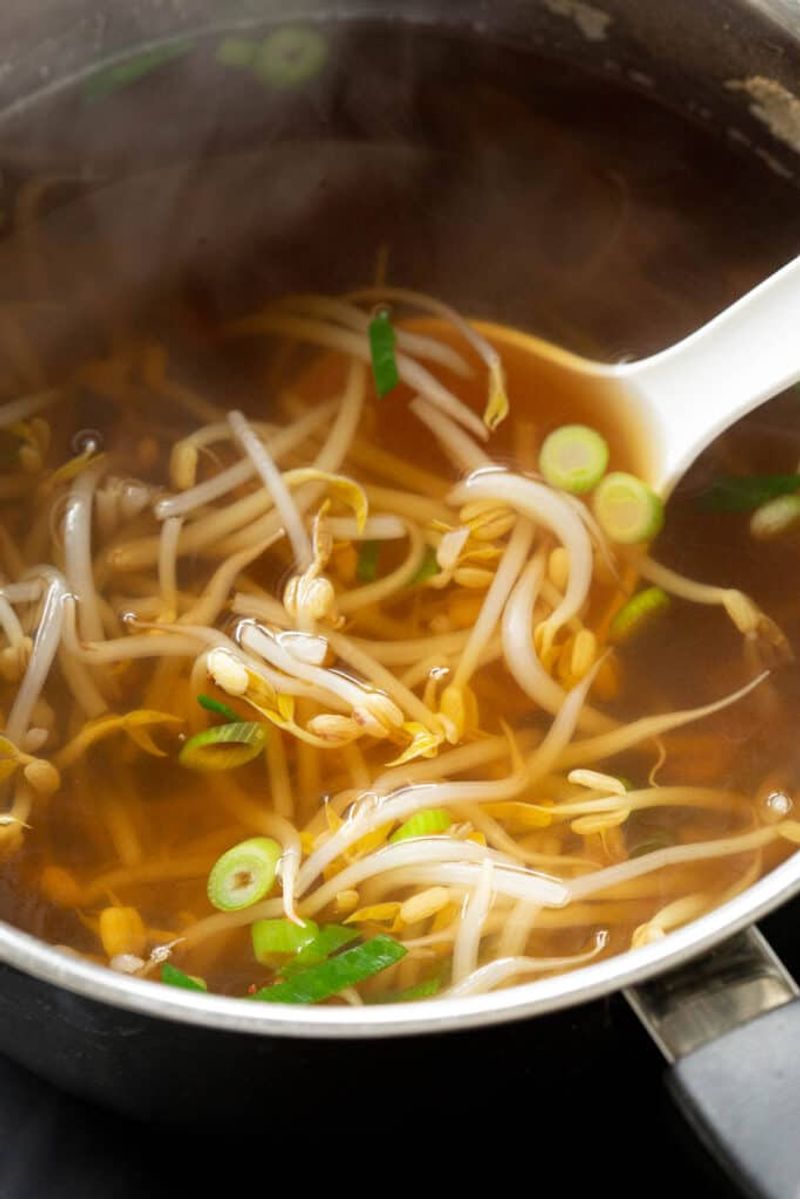
Kongnamul gives you two easy paths. For soup, simmer soybean sprouts with garlic and scallions in lightly salted broth until crisp-tender.
For banchan, blanch then toss with sesame oil, garlic, salt, and a pinch of gochugaru or sesame seeds.
Both versions are cheap, fast, and refreshing next to richer dishes. The soup is clean and soothing, while the seasoned sprouts add crunch and nuttiness to any bowl of rice.
You can make both in under twenty minutes, often while something else cooks. Keep a bag of sprouts in the fridge and you are set for the week.
This is everyday cooking at its most practical and satisfying.