17 Old-School American Foods History Books Barely Mention
Some of the most revealing American foods are the ones nobody writes about anymore. They lived in farmhouse kitchens, logging camps, and church basements, feeding crowds without ceremony.
You will recognize the thrift, the ingenuity, and the comfort packed into every pot, pan, and ash pile. Keep reading and you will taste a forgotten map of how people really ate, day after day.
1. Clabber Milk
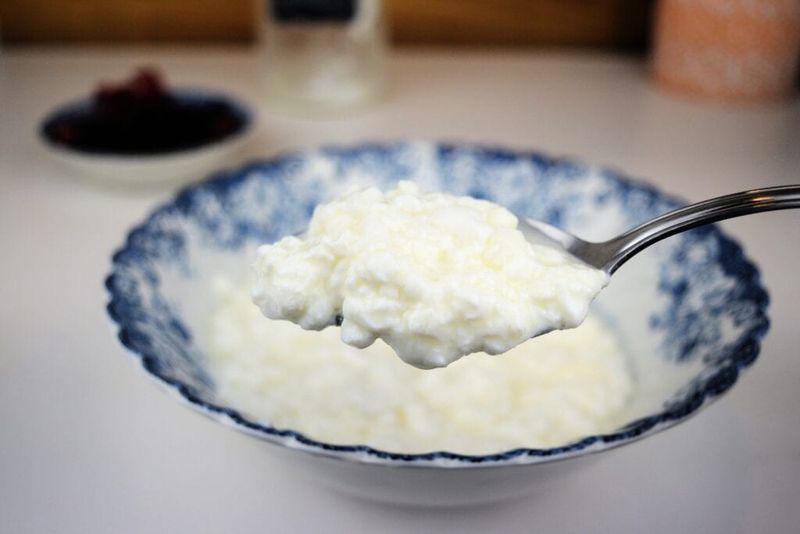
Clabber milk tastes like history in a spoon. Let raw or fresh milk sit warm and safe, and it naturally sours and thickens into something tangy and spoonable.
Before refrigeration took over, this was the everyday standard, not a curiosity.
You could stir in a little molasses, sprinkle nutmeg, or eat it plain with bread. It reminded people to respect time, temperature, and the farm’s rhythms.
When iceboxes and pasteurization arrived, clabber faded from daily life, replaced by yogurt and store culture. Still, you can sense its quiet logic: nothing wasted, everything transformed.
2. Ashcake
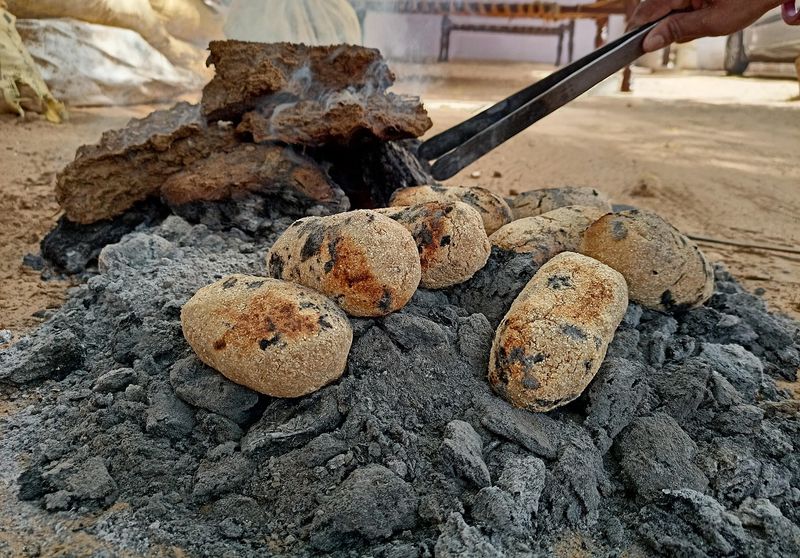
Ashcake turns a fire’s edge into an oven. Mix cornmeal with water and salt, maybe a bit of fat, then bury or nestle the dough in hot ashes.
Sometimes it gets wrapped in leaves to keep it cleaner, sometimes brushed off after baking.
It was survival bread, simple and direct. No fancy tools, just heat, patience, and practice.
You can taste smoke, grain, and a hint of adventure. History books prefer grand banquets, not someone crouched by coals.
Yet this humble cake fed travelers, farmers, and soldiers, proving a crust can rise from almost nothing.
3. Hot Water Cornbread
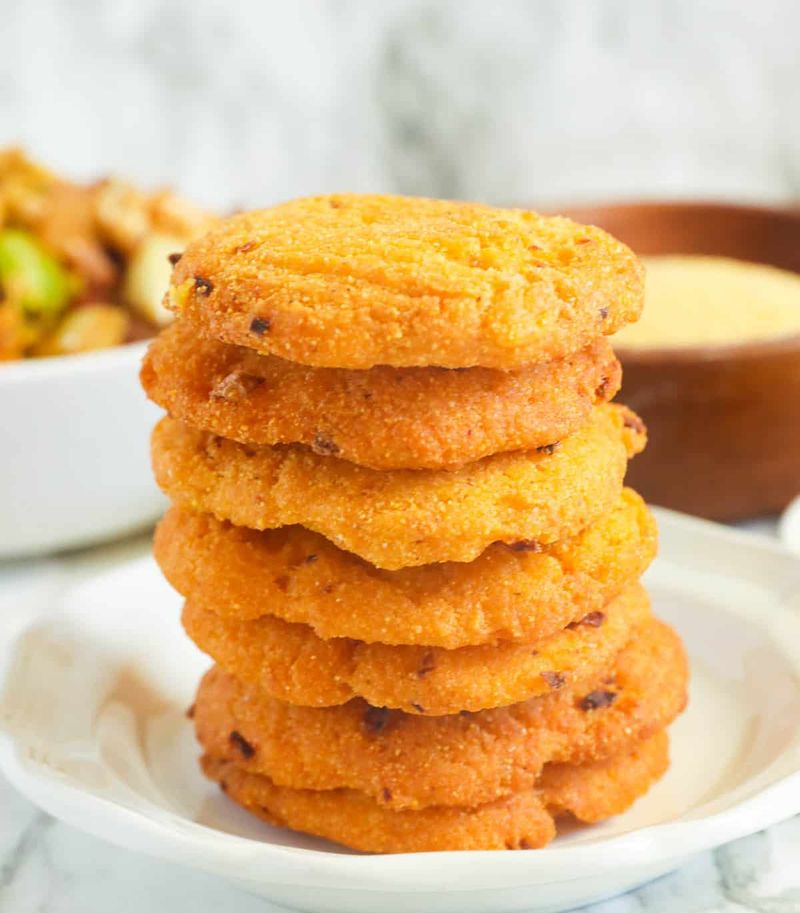
Hot water cornbread is fast food the old way. Pour boiling water into cornmeal, stir until it clumps, shape into patties, then fry until crisp outside and tender within.
No eggs needed, no waiting on yeast.
This was weeknight fuel long before anybody said heritage. You can break a piece, dab it in beans, or swipe through potlikker.
It tastes like corn meeting heat, straight and honest. When time is short and money is tight, this skillet magic stretches a meal.
You will hear it hiss and know supper is solved.
4. Spoonbread
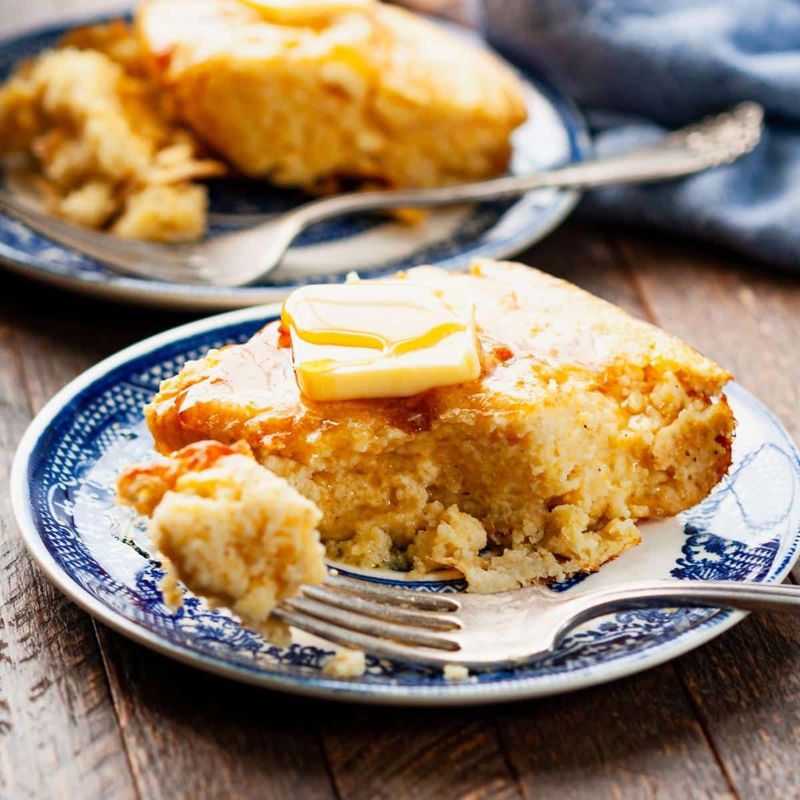
Spoonbread feels like cornbread’s gentler cousin. It bakes into a soft, custardy pudding you serve with a spoon, not a knife.
Milk, cornmeal, eggs, and butter come together into cloudlike comfort that leans savory but welcomes honey or gravy.
This dish is tied to Appalachian and Southern tables where textures mattered as much as flavors. It fills the space between bread and pudding, between ordinary and special.
You scoop into warmth and steam. It carries modest ingredients into Sunday clothes, reminding you elegance can arrive in a casserole.
5. Indian Pudding
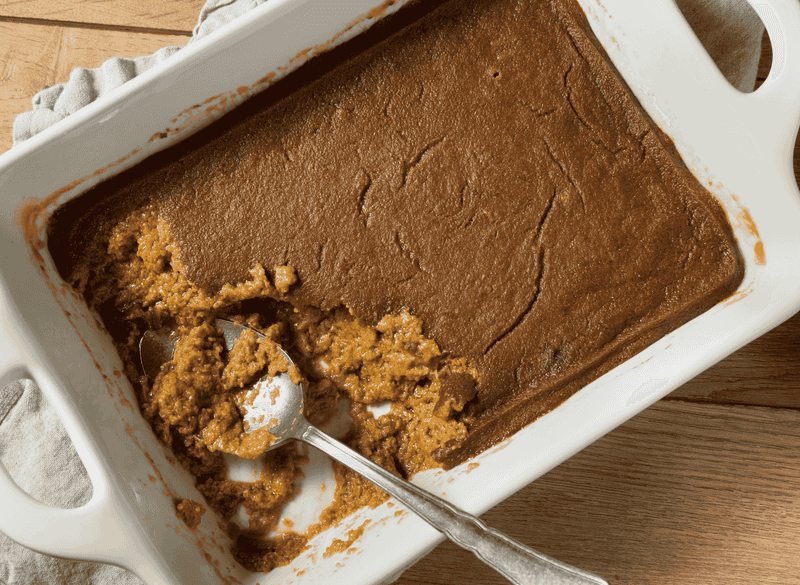
Indian pudding bakes slow and smells like molasses and spice. Cornmeal thickens milk into a custard, sweetened with molasses, sometimes studded with raisins.
It looks humble, but the flavor is deep and soothing.
New England once knew it well, serving it warm with cream or ice cream. Today it reads like a colonial whisper.
You taste patience inside each spoonful, as if time itself were an ingredient. This dessert rewards low heat and long waiting, the opposite of instant gratification.
It is comfort that lingers after the bowl is empty.
6. Flummery
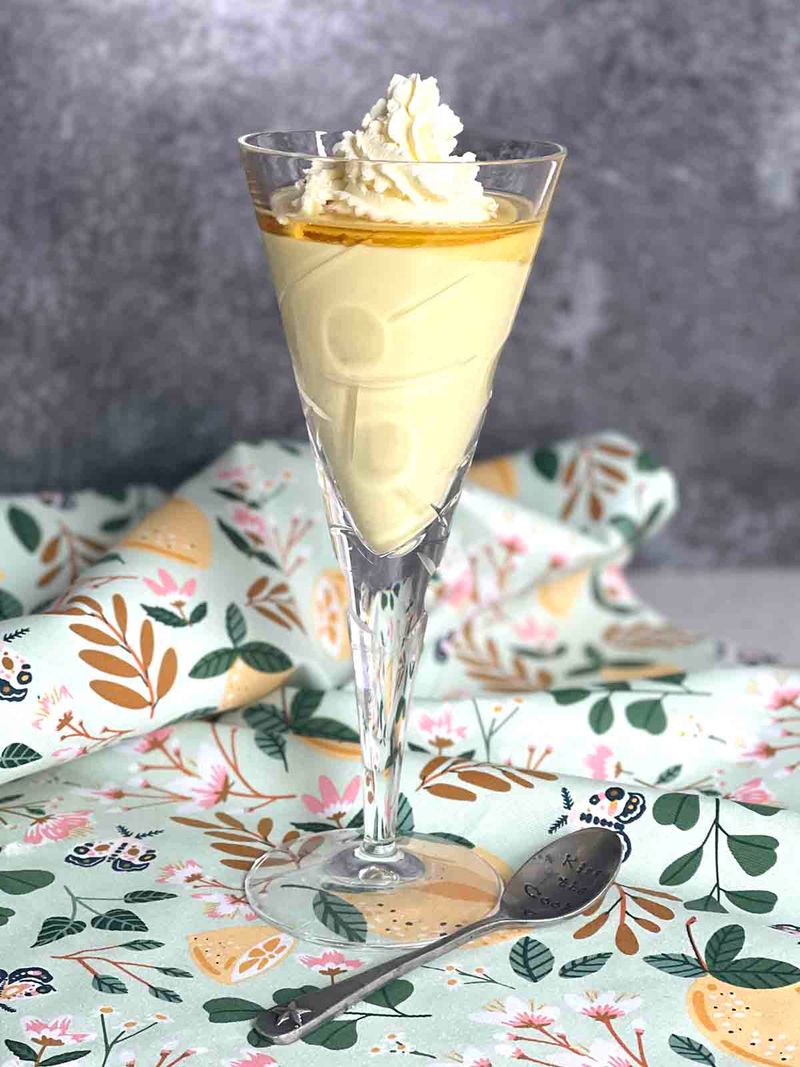
Flummery is a thrifty sweet that sets like a gentle wobble. Thickened with oats or starch, it turns pantry scraps into dessert.
Served with cream, fruit, or a splash of wine, it transforms scarcity into something dainty.
People once knew how to coax texture from very little. You will notice how lightly it quivers, how it carries berries and cream without heaviness.
It is not flashy, but it respects the line between comfort and simplicity. Flummery reminds you sweetness used to be earned, not poured from a bottle.
7. Election Cake
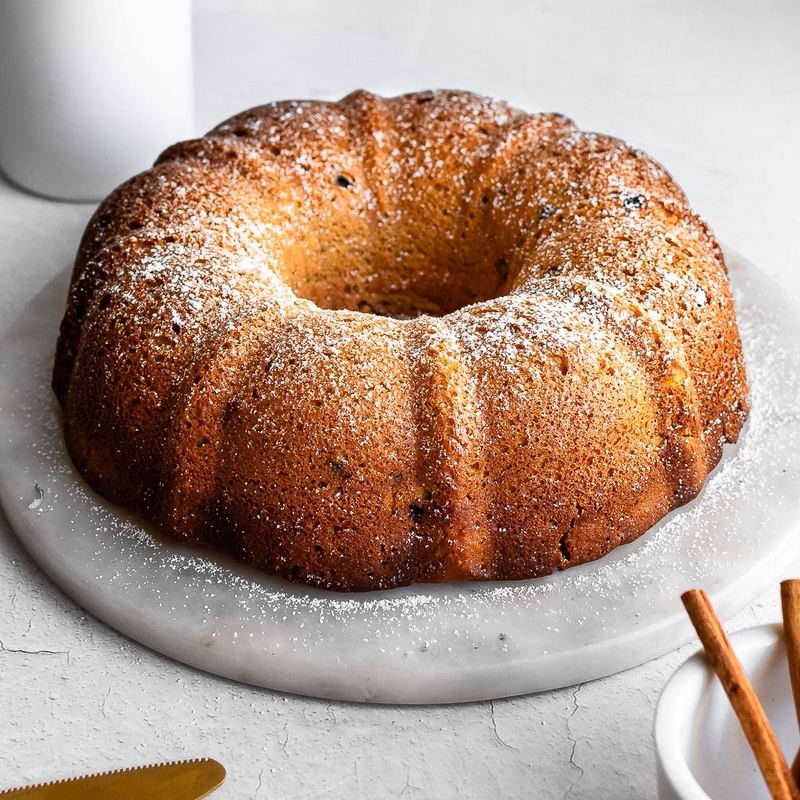
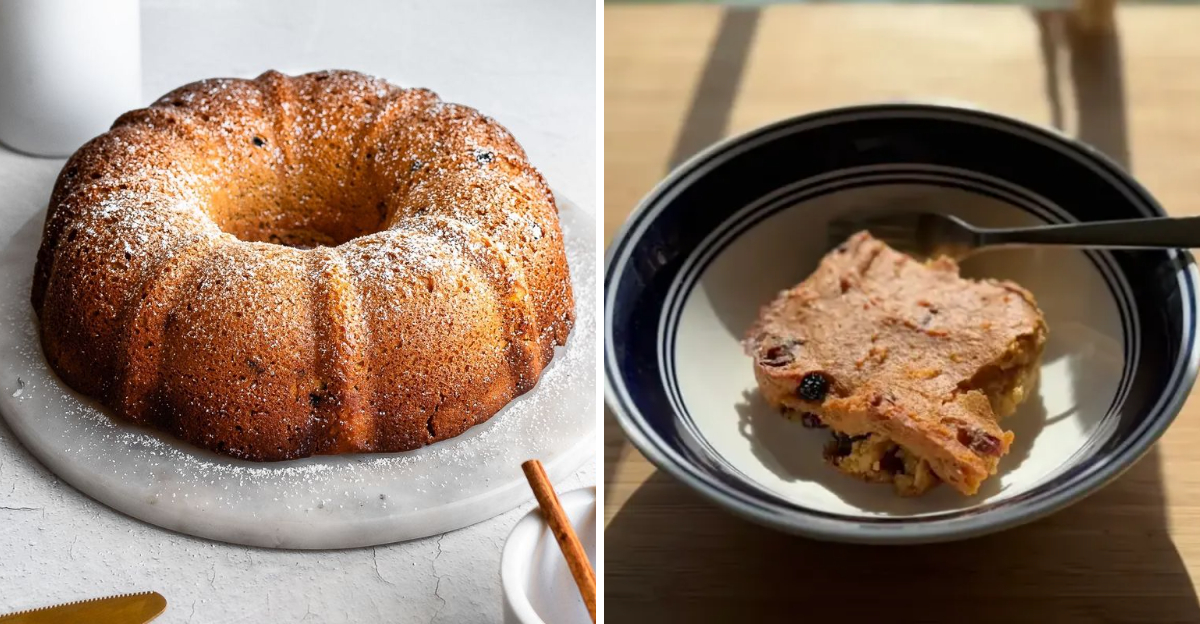
Election cake once greeted neighbors and news at the town green. A big yeasted batter, spiced and fruity, it rose like a festival in a pan.
Bakers fed crowds with slices that tasted of nutmeg, cinnamon, and community.
We remember the name, not the labor. Starters fed overnight, flour sifted, batter beaten.
This was civic sugar, a pastry for turnout and talk. You can bake one now and feel the room gather.
It is history you can slice, proofed by conversation.
8. Johnnycakes
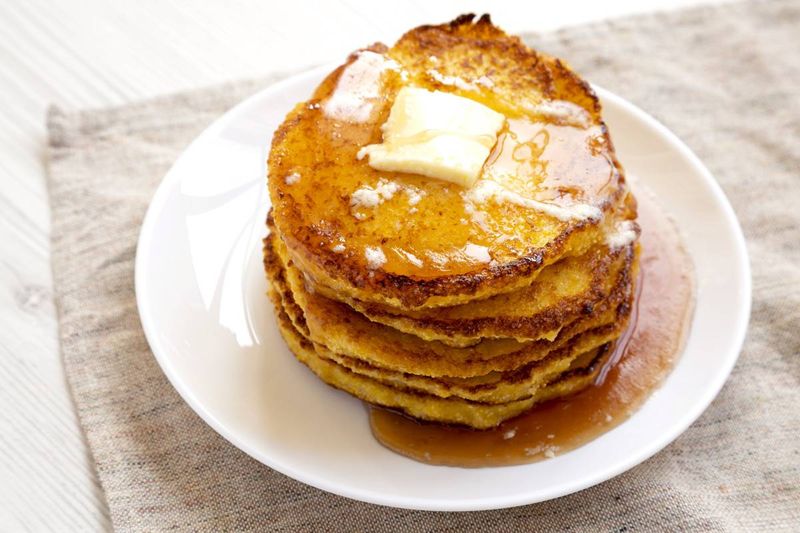
Johnnycakes are cornmeal on a hot surface, endlessly adaptable. Thin and lacy or thick and tender, they were daily bread for sailors, farmers, and families.
Water, salt, maybe fat, maybe milk, then onto the griddle.
Eat them with syrup, salt pork drippings, or chowder alongside. They belong to many regions, each claiming a perfect thickness or flip.
History often reduces them to novelty, but they fed mornings for generations. When corn meets heat, you get something more than a pancake and less than a loaf, exactly enough.
9. Hasty Pudding
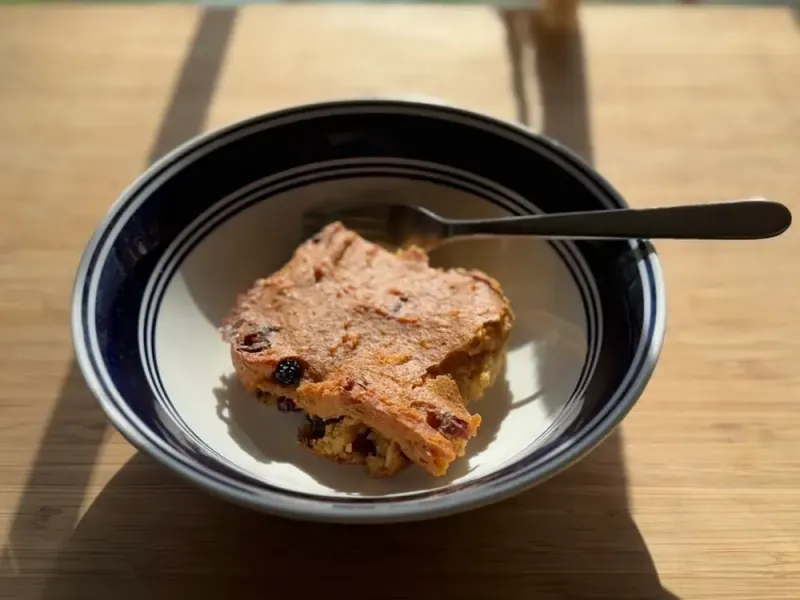
Hasty pudding cooks quickly but lingers in memory. Cornmeal simmered in water or milk becomes a thick porridge, sweetened with molasses when luck allowed.
It is plain, economical, and deeply steady.
People ate it for breakfast, then cooled the leftovers to fry. You can feel its purpose: fuel first, pleasure second, although warmth and molasses make a strong case.
It is a reminder that speed existed long before instant packets, just add heat and stir. Every spoonful tastes like a day’s work about to begin.
10. Burgoo
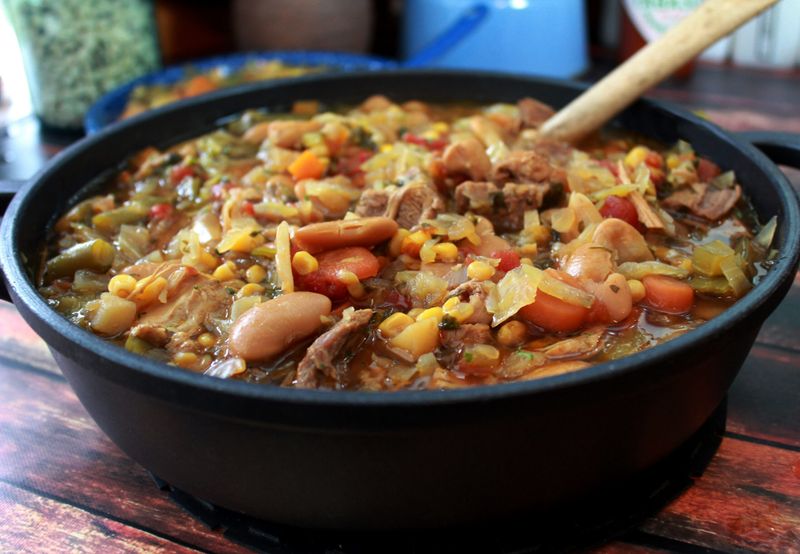
Burgoo is a kettle big enough for a county. Mixed meats, vegetables, and time melt into a thick stew designed to feed crowds.
You will smell pepper, tomatoes, and woodsmoke before you taste anything.
Church socials, political rallies, and fundraisers kept the ladles moving. Recipes vary wildly, but the point is shared labor and shared bowls.
It resists tidy definitions because communities defined it together. Serve it hot, with bread and laughter, and you will understand why history struggled to fit it on a page.
11. Mulligan Stew
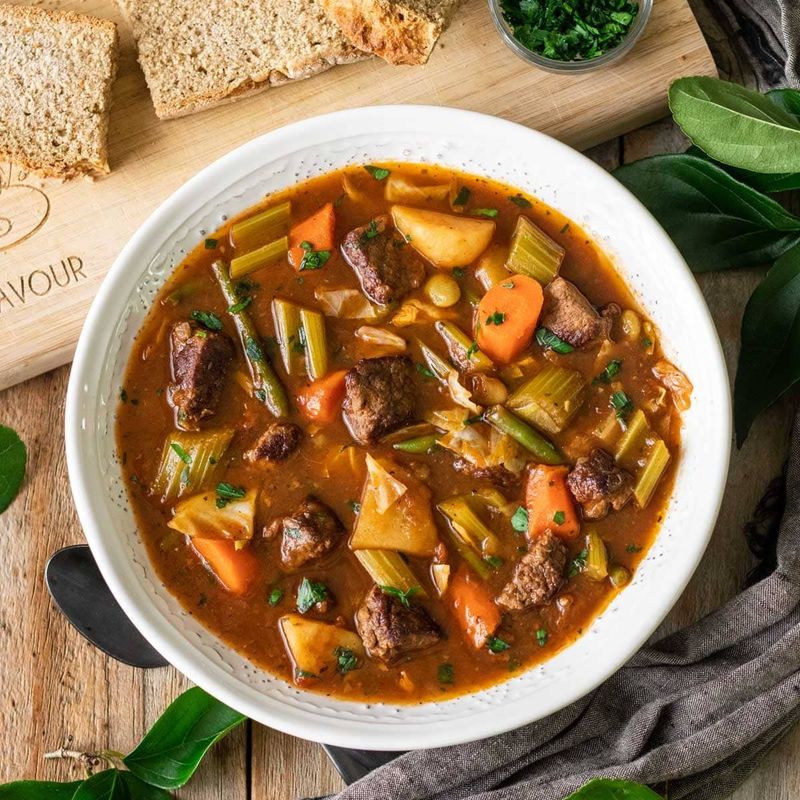
Mulligan stew is the taste of improvisation. Whatever ingredients you have meet in one pot and make peace.
Workers, wanderers, and families stretched thin built flavor from scraps, broth, and patience.
There is no authoritative recipe, only the spirit of sharing. Someone brings potatoes, another onion, someone else a bone for depth.
It teaches you to value contribution over perfection. When the lid lifts, you inhale possibility.
That is why history struggles to footnote it: the stew belongs to whoever needed dinner right then.
12. Son-of-a-Gun Stew
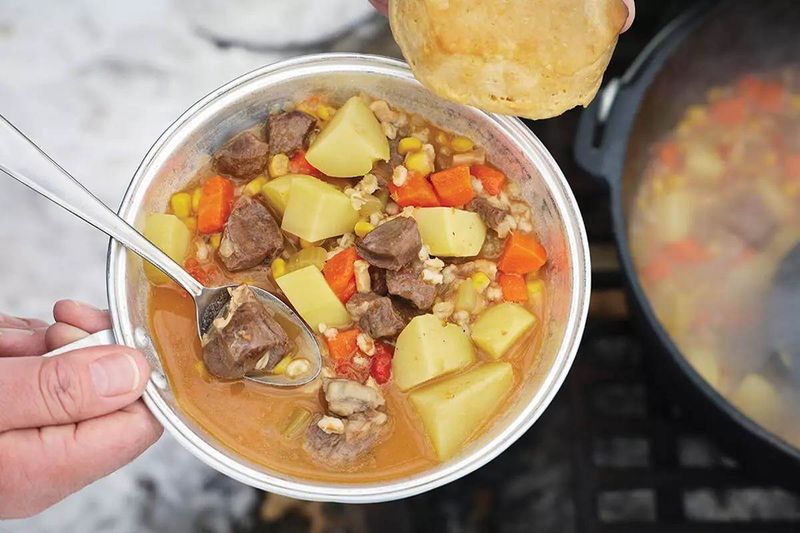
Son-of-a-gun stew comes from the chuckwagon and wastes nothing. Offal meets tender cuts in a pot built to ride the trail.
The flavor is rich, minerally, and hearty, a nose-to-tail lesson disguised as comfort.
Cowhands prized it for nourishment and speed. Today, the offal part scares many away, but earlier cooks embraced every edible piece.
You will find marrowy depth, pepper, and a ranch fire’s whisper. It is frontier practicality you can still ladle into a bowl and respect.
13. Oyster Pie
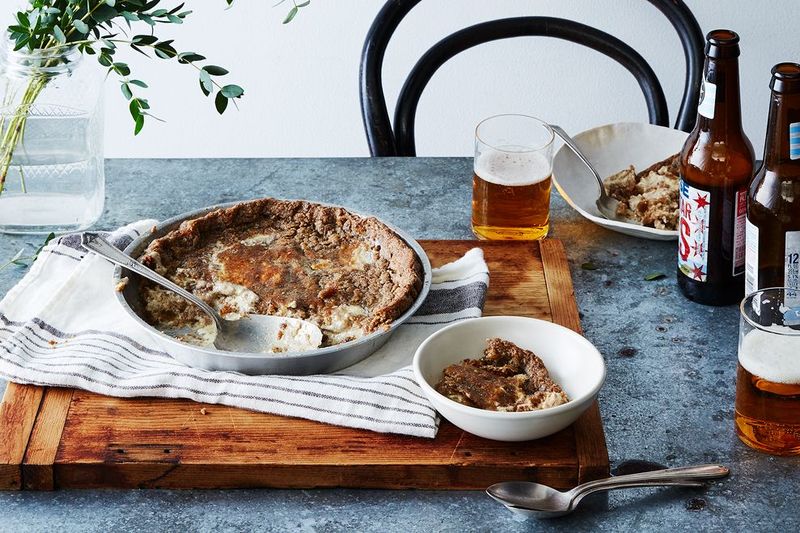
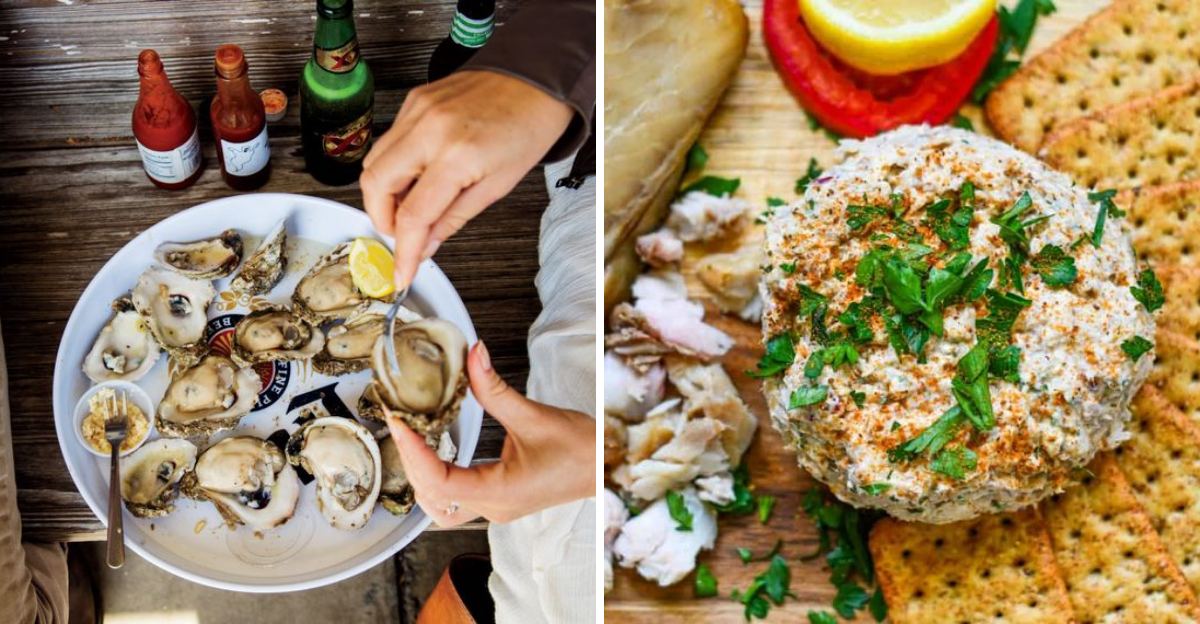
Oyster pie reminds you oysters were once everyday food. Baked in a flaky crust with cream, herbs, and brine, it carried sea richness into city apartments and farmhouse tables.
When oysters were cheap and abundant, pies showed up for dinner, not just holidays.
As beds declined and prices rose, the dish retreated to memory. Bite into one now and you taste a lost normal.
Pepper, cream, and ocean sweetness tuck under pastry like a secret.
14. Fish Cakes From Salt Cod
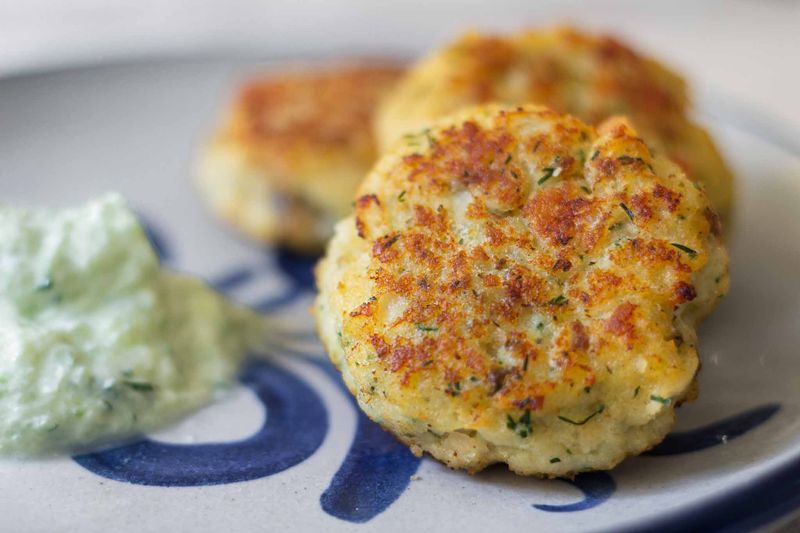
Salt cod made dinner predictable and possible. Soaked, flaked, and mixed with potato or crumbs, it turned into fish cakes that stretched protein all week.
Fry them crisp and you get salt, sea, and comfort in each bite.
These cakes traveled easily from work lunch to Friday supper. They feel old-fashioned, but the logic is modern: shelf-stable protein, minimal waste, satisfying texture.
Serve with mustard or tartar and a squeeze of lemon. You will understand why pantries once reserved space for the sturdy, salted slab.
15. Scrapple
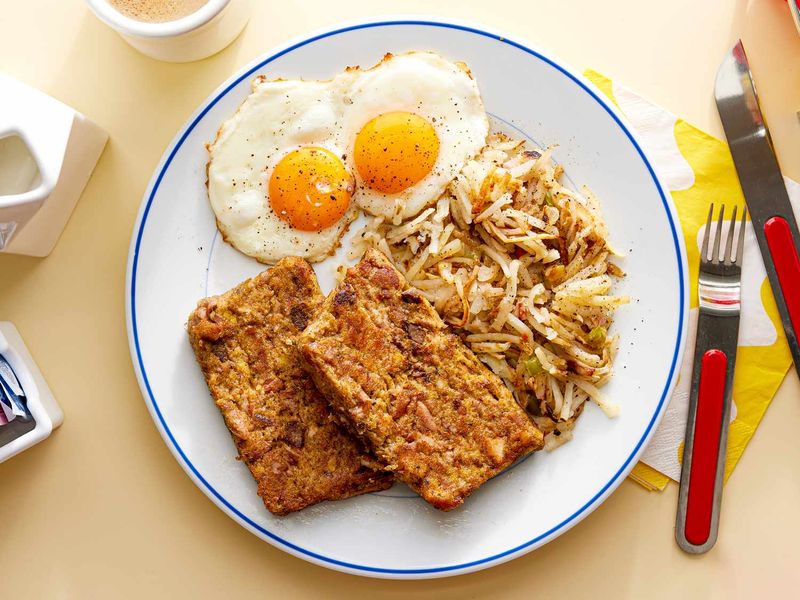
Scrapple speaks fluent thrift. Pork scraps and broth meet cornmeal, set into a loaf, then sliced and fried until the edges crackle.
It is savory, peppery, and best with applesauce or eggs.
Born from butchering days, it preserved flavor and respect for the animal. Some wrinkle noses at the idea, but the skillet settles arguments.
You taste heritage and ingenuity. In the Mid-Atlantic, breakfast still remembers.
One slice becomes two, and suddenly the plate feels complete.
16. Liver Mush
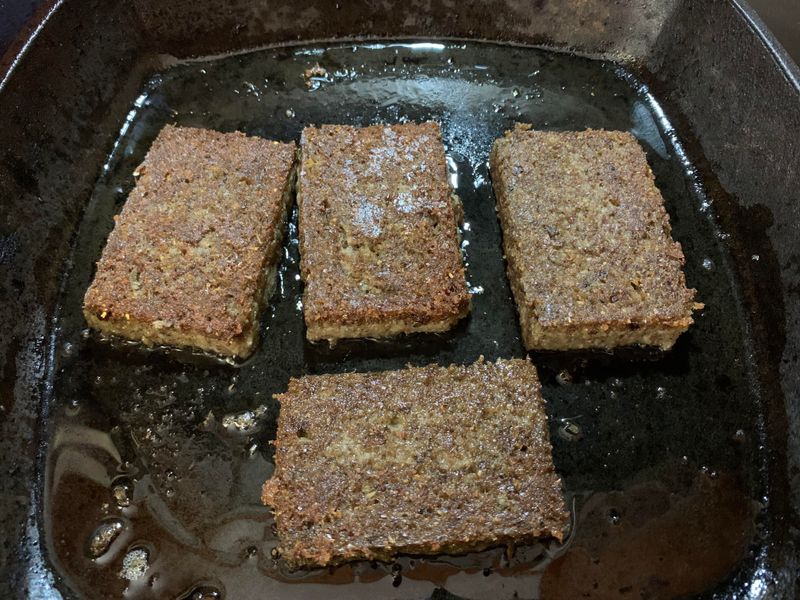
Liver mush stands proudly next to scrapple’s kin. Pork liver, head meat, and cornmeal cook into a seasoned loaf, chilled, sliced, and fried.
The texture turns crisp outside, creamy within, delivering deep savory flavor that rewards bravery.
In parts of the South, a mustard sandwich of liver mush is breakfast royalty. You will find it at diners and festivals, but rarely in glossy cookbooks.
It saves waste, saves money, and saves mornings. Taste it hot, and the name makes perfect sense.
17. Chicken Mull
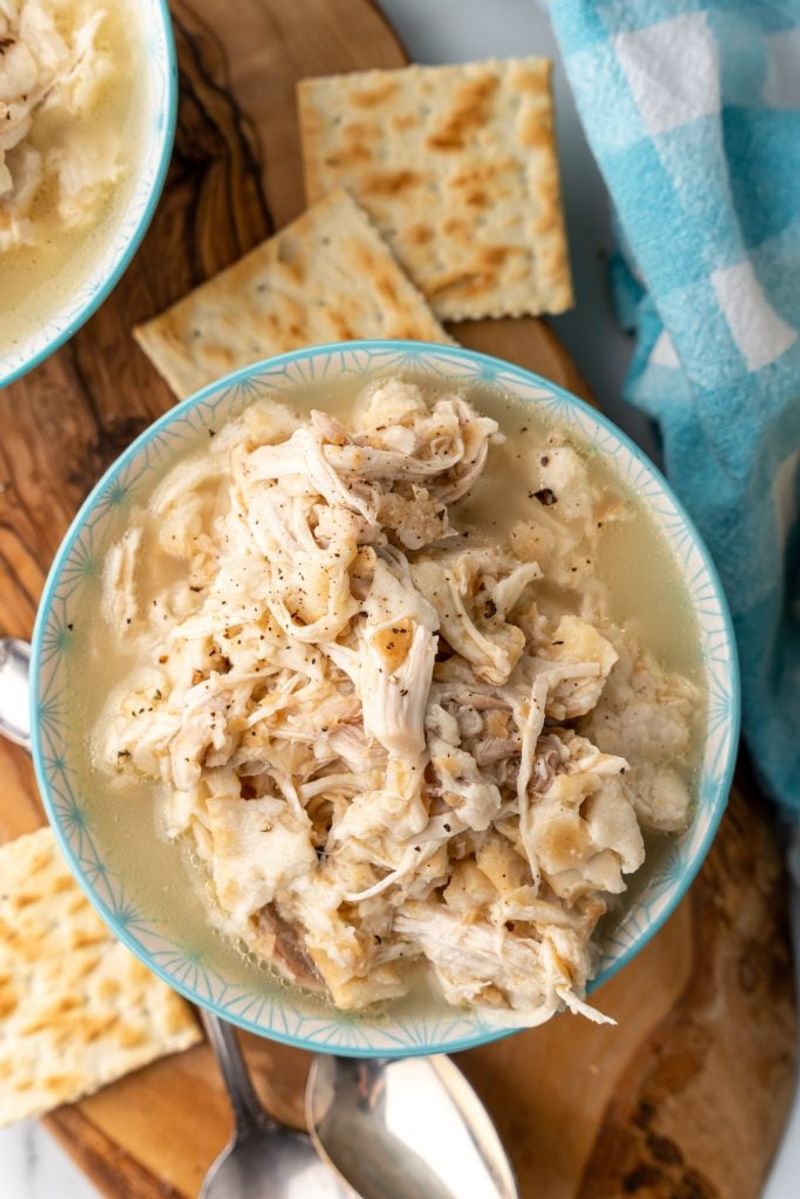
Chicken mull is comfort you can sip. A simple stew of chicken, milk or broth, and pepper, it thickens soft and welcomes crackers crumbled right in.
It shows up at fundraisers, fellowship halls, and cold nights.
There is nothing fussy here, only warmth and generosity. You taste chicken first, then pepper and dairy smoothing edges.
Serve it with cornbread or just a spoon and a patient chair. When life feels drafty, this pot closes the window.