20 Chicken Tender Taste Tests, Some Truly Surprised Me
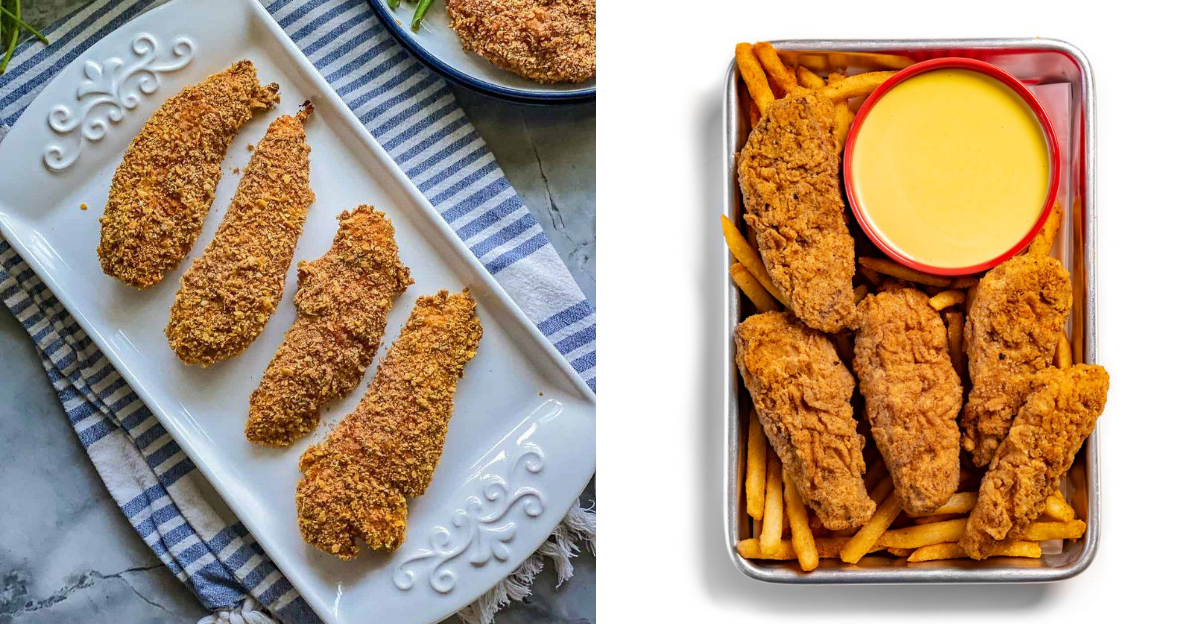
I lined up twenty kinds of chicken tenders and tasted them side by side so you would not have to. Some brands and restaurants absolutely shocked me, especially when seasoning and cooking method took center stage.
A few crunchy heroes won without sauce, while others crumbled the moment the dip disappeared. If you love a good tender, these surprises will change how you buy, cook, and reheat your next batch.
1. Classic fast-food tenders
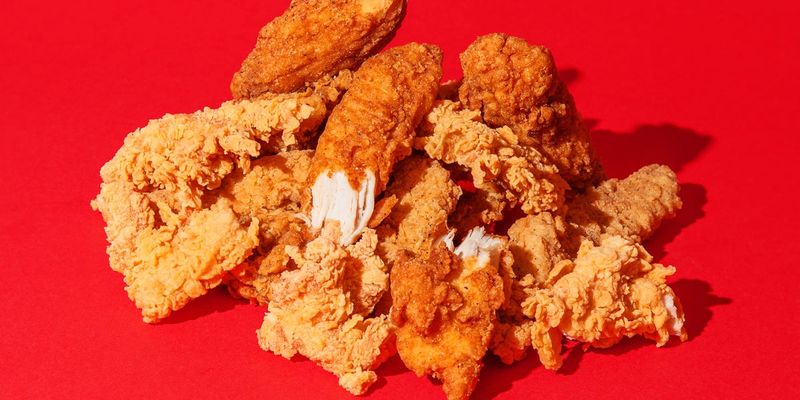
These fast-food tenders live and die by the seasoning blend. When they nail it, you taste peppery, savory punch even before reaching for sauce.
The crust feels thin but snappy, with just enough salt to keep you nibbling between dips.
Texture varies by location, but a fresh batch sings. You want that just-fried sheen and audible crunch when you take a bite.
The surprise is how much flavor comes from the seasoning alone, carrying even average chicken.
2. “Hand-breaded” restaurant tenders
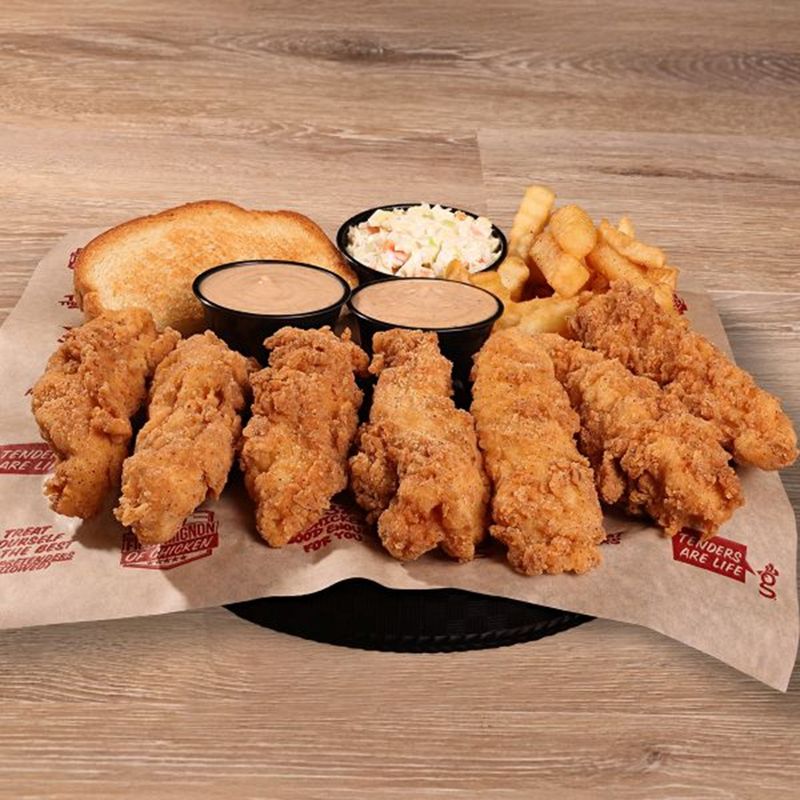
Hand-breaded tenders promise magic, and sometimes they deliver. When the dredge clings well, the coating fries into craggy armor that shatters beautifully.
The chicken inside often stays juicy, with a gentle buttermilk tang that keeps bites lively.
But inconsistency is real. A rushed breading step leads to bald patches and soggy corners.
You might get one perfect piece next to a patchy dud, which makes every order a gamble.
3. Frozen “restaurant style” tenders
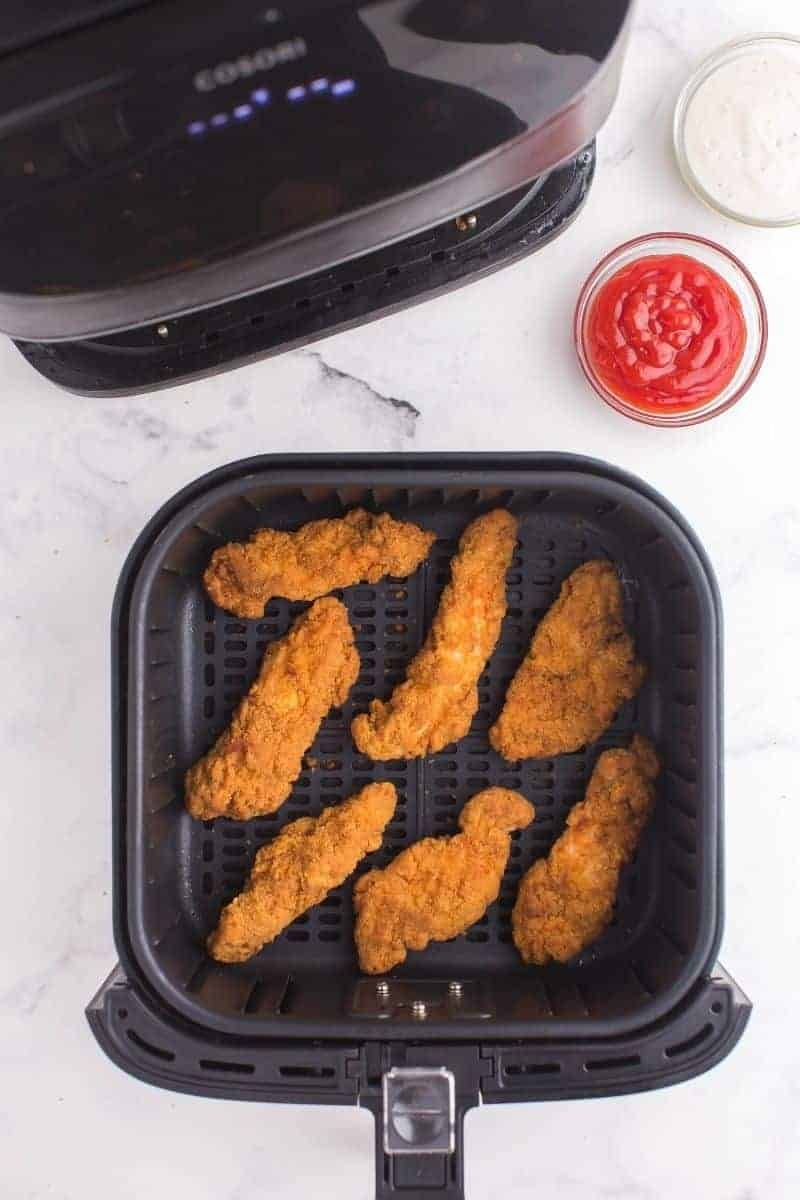
Restaurant style from the freezer aisle can surprise you. Bake or air-fry hot enough and the coating crisps like a decent pub fry.
The seasoning leans balanced, not bold, which lets the chicken flavor peek through without screaming salt.
The trick is heat and space. Do not crowd the pan, and flip halfway.
When you do, you get reliable crunch and respectable juiciness for weeknight speed.
4. Frozen “extra crunchy” tenders
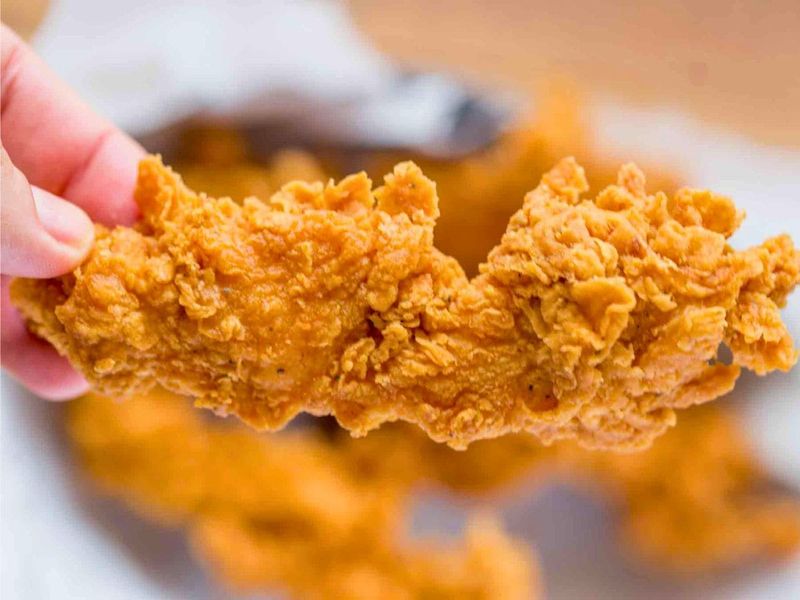
Extra crunchy is truth in advertising, but sometimes it is smoke and mirrors. The coating is the star, stealing attention with loud crackle and thick ridges.
Bite in and you might meet thin, slightly stringy chicken hiding under the drama.
Still, the texture party has its place. With a bold sauce, the crunch holds up and stays fun.
Just know the chicken may not be the headline.
5. Frozen “lightly breaded” tenders
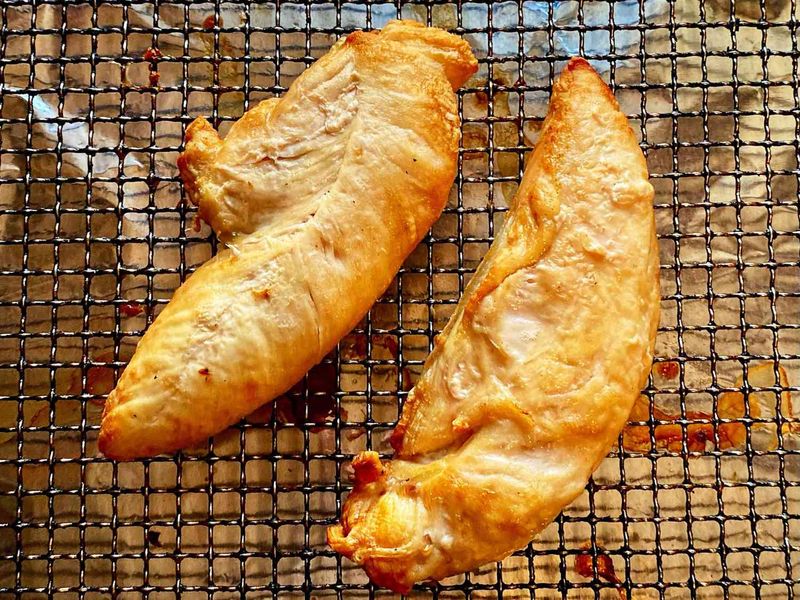
Lightly breaded tenders whisper instead of shout, letting chicken take the lead. When cooked right, you taste clean poultry with just enough seasoning to keep it interesting.
The coating crisps delicately and does not weigh you down.
Overcook even a little and they go dry fast. Watch time and temperature closely, and rest them briefly.
Get it right and they feel closer to homemade than most freezer options.
6. Spicy tenders
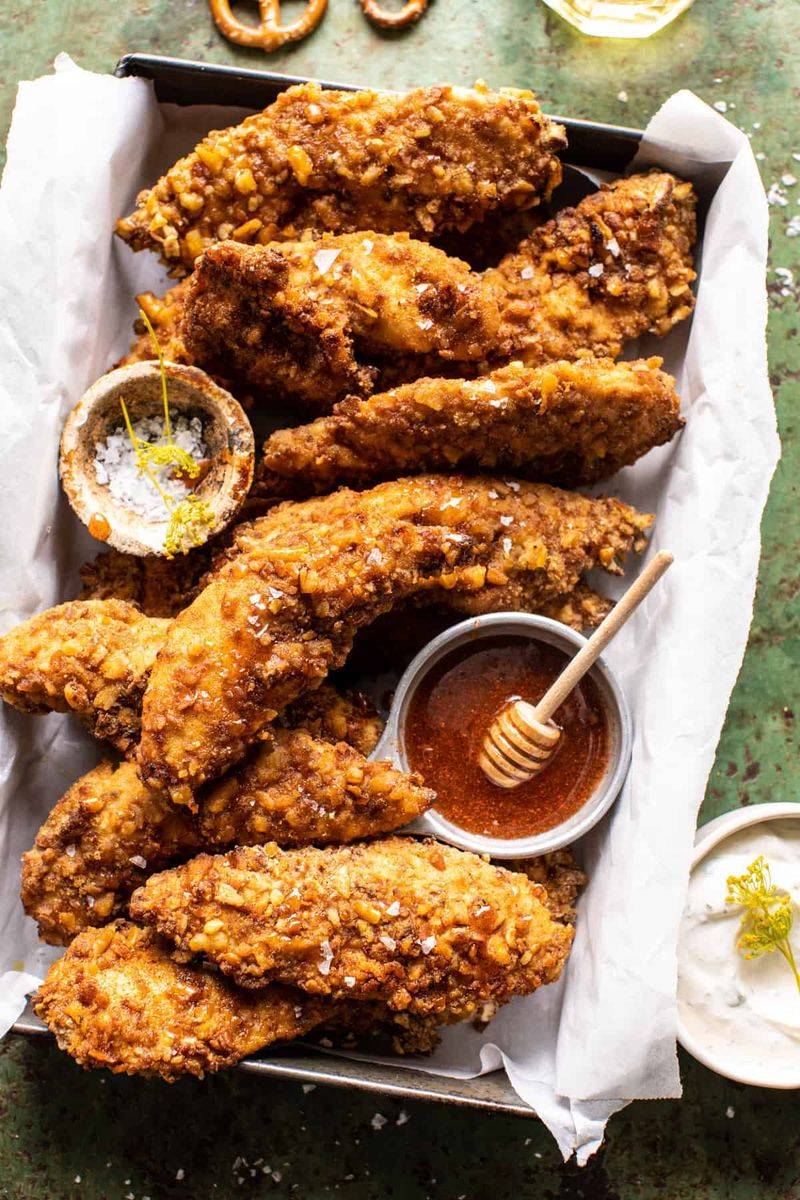
Spicy tenders often promise heat but deliver paprika and pepper perfume. That is tasty, just not fiery.
The few that bring real kick announce themselves immediately, building warmth that lingers without blowing out your palate.
Good heat rides with salt and tang. A hint of cayenne or chili oil in the breading wakes everything up.
When heat is honest, sauces become optional instead of mandatory.
7. Buttermilk-brined tenders
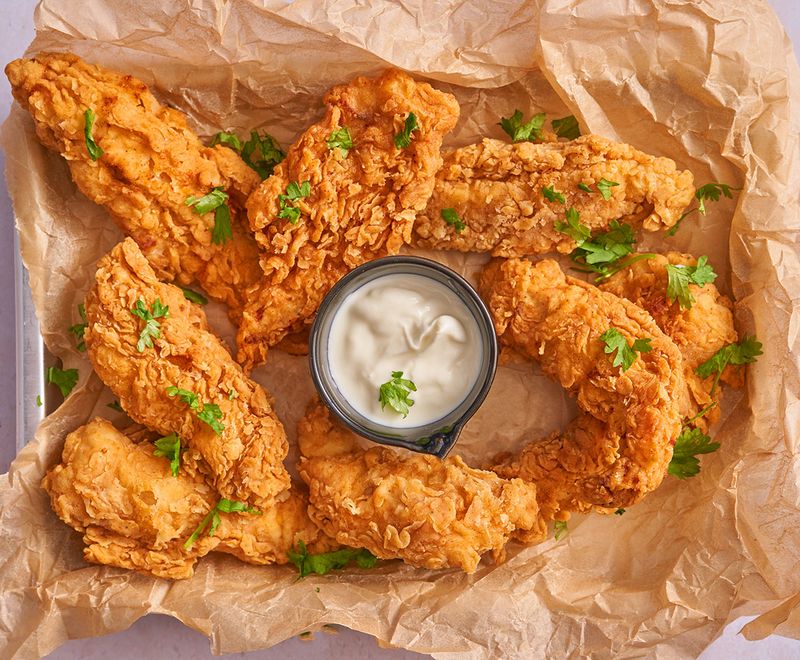
Buttermilk brining is forgiveness in a bowl. The acidity tenderizes, and the dairy helps seasoning cling.
Pull them a minute late and they still come out juicy, with a gentle tang that makes even simple salt and pepper feel special.
The crust fries up evenly when the batter is not too thick. You get dependable moisture and friendly flavor.
It is the technique that makes average chicken taste premium.
8. Air-fryer tenders
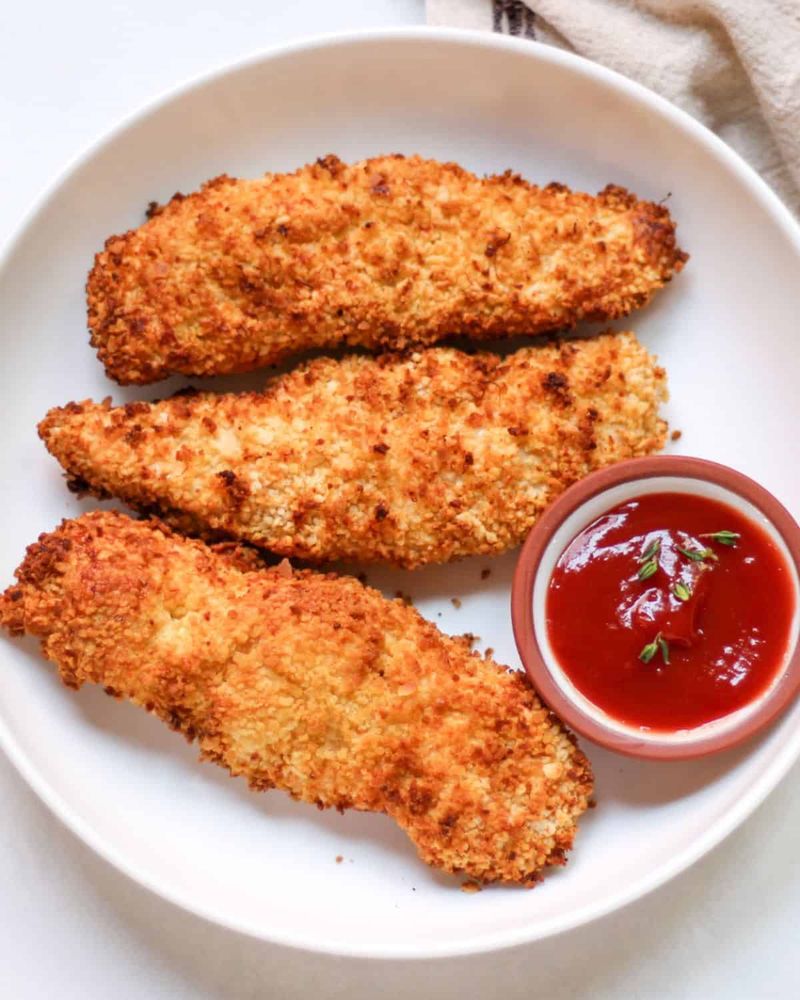
Air fryers love chicken tenders, especially when the basket is not crowded. Hot air kisses all sides, crisping the breading without soaking oil.
You get snap and steam at once, which beats most oven results on a busy weeknight.
Shake halfway and let them rest on a rack. That keeps the underside crisp and the juices settled.
When you respect airflow, the air fryer wins easily.
9. Oven-baked tenders
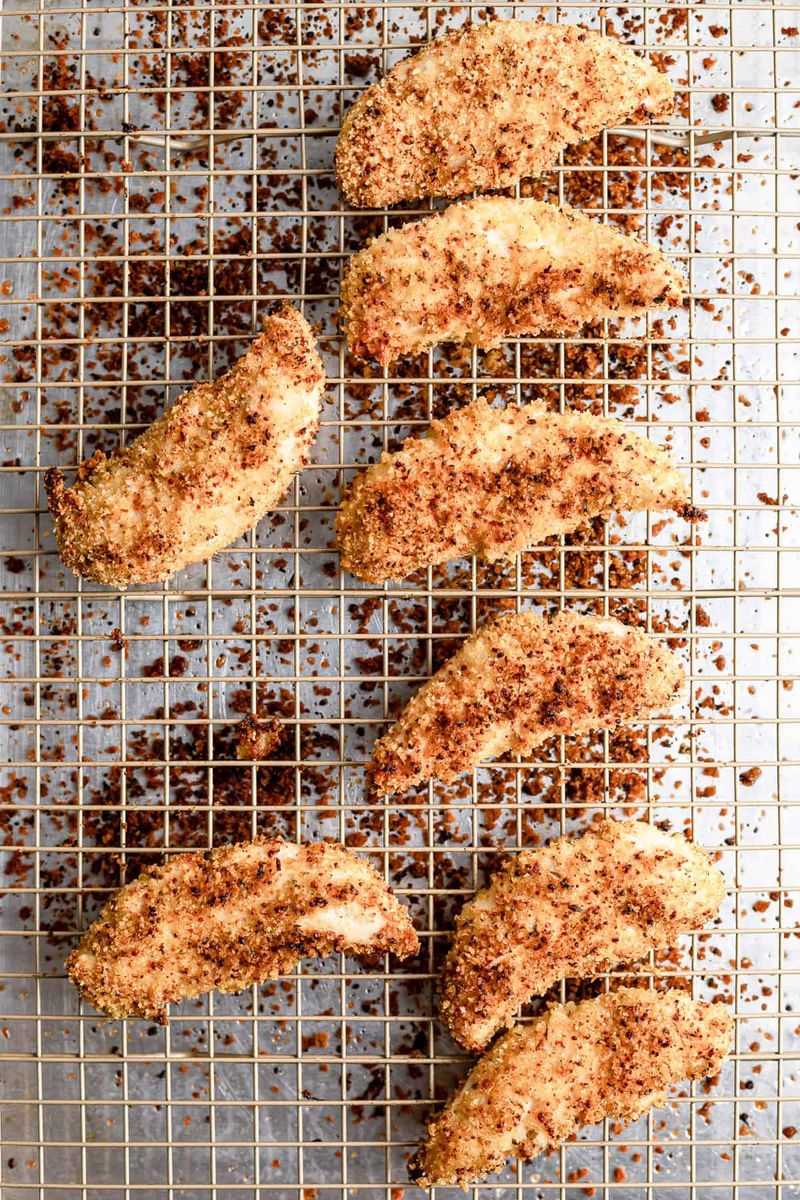
Oven-baked tenders can shine with one simple upgrade: a preheated pan or rack. That first contact sizzles the bottom, stopping sogginess before it starts.
With convection on, the edges go golden and the center stays moist.
Flip once, and give them breathing room. Rest briefly so the crust sets.
It is not deep-fry crisp, but it is honest, clean, and definitely good enough for dinner.
10. Deli hot-bar tenders (grocery store)
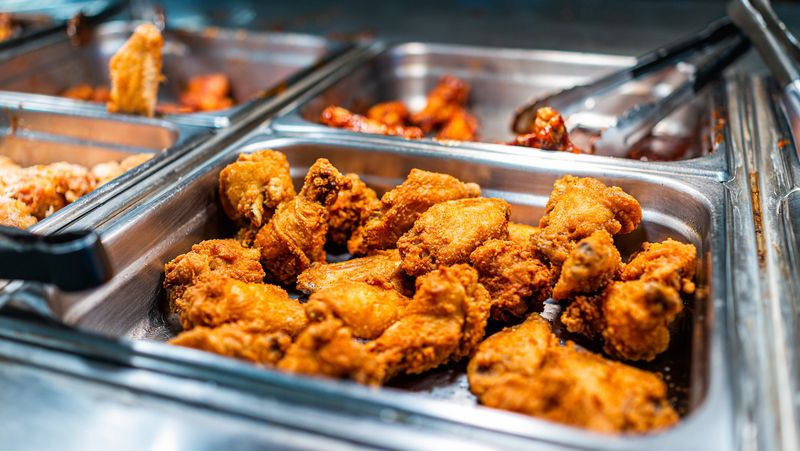
Deli hot-bar tenders are a timing game. Catch them fresh and you get crackly coating and juicy centers that rival fast food.
Arrive after a long hold and they slump into dry sadness, the breading soft and the flavor stale.
Ask for the newest batch or watch when trays turn. A little vigilance pays off.
Pair with a quick dip and they can be excellent.
11. Gas station hot-case tenders
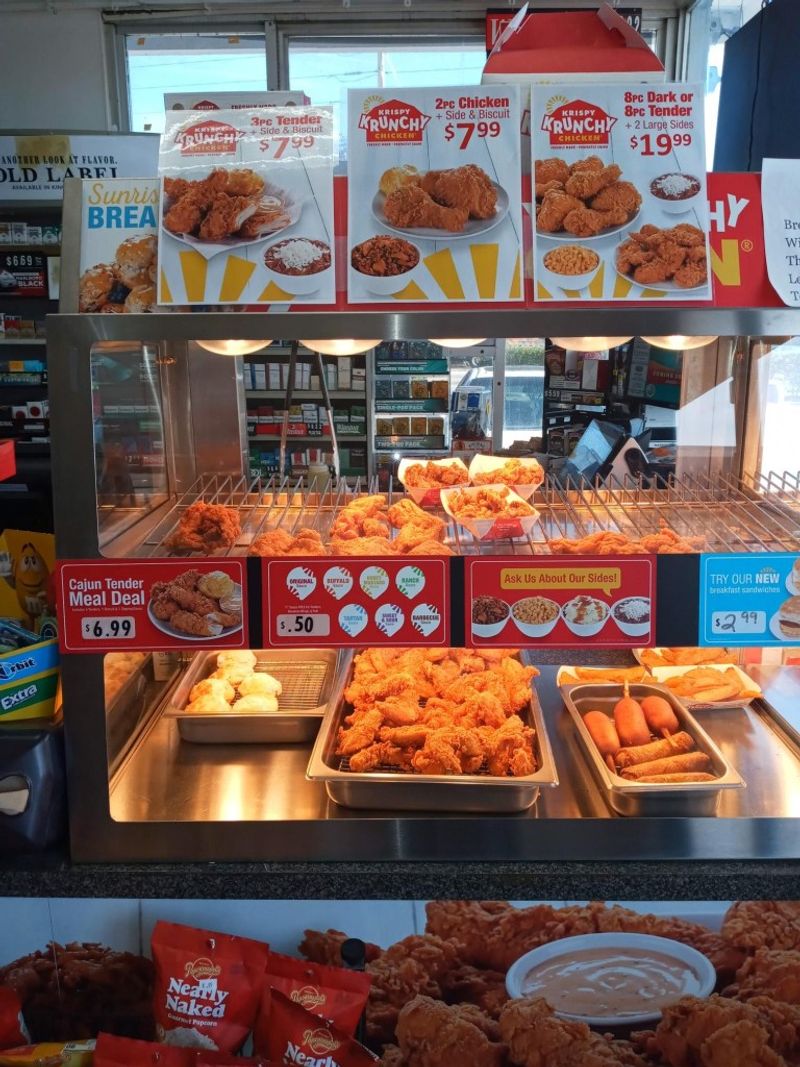
Do not sleep on gas station tenders in fried chicken regions. Some are shockingly good, especially where pride and turnover stay high.
You get seasoned flour that tastes like a family recipe, with peppery kick and real crunch.
Yes, there are duds. Look for busy spots and fresh timestamps.
When the case is humming, these can beat national chains without breaking a sweat.
12. “Southern-style” tenders
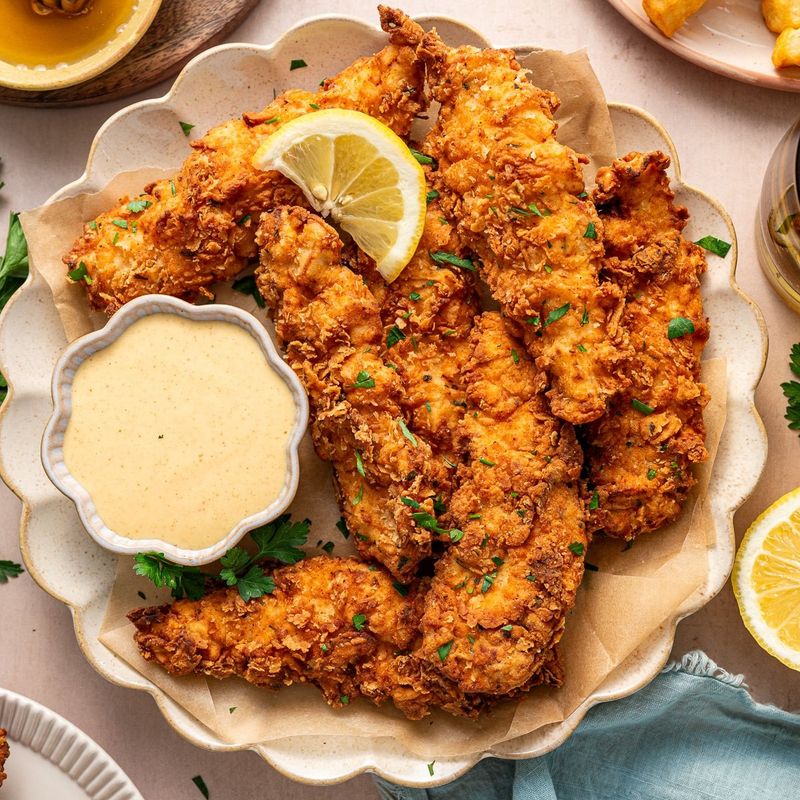
Southern-style tenders should be seasoned all the way through, not just on the crust. Salt, pepper, a whisper of garlic, and maybe a little cayenne make every bite count.
The best versions taste complete even without sauce.
Juiciness matters here. A quick rest after frying keeps the coating crisp and the meat succulent.
When that seasoning threads from surface to center, you will not miss a dip.
13. Panko-crusted tenders
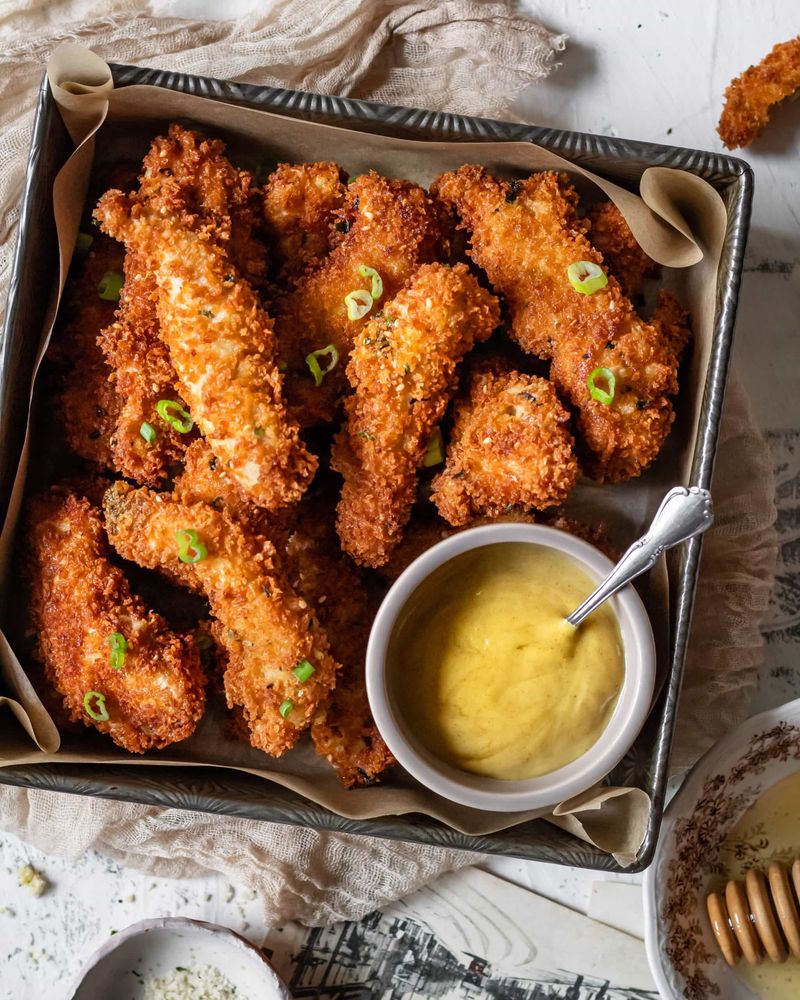
Panko brings super crunch, those big airy crumbs frying into light armor. It is addictive, though the texture can read fried shrimp if crumbs get too chunky.
Keep the layer even and you will love the shatter on every bite.
Season the flour underneath so flavor does not fade. A quick dip in a thin batter helps crumbs cling.
With balance, panko becomes a textural win.
14. Tempura-style tenders
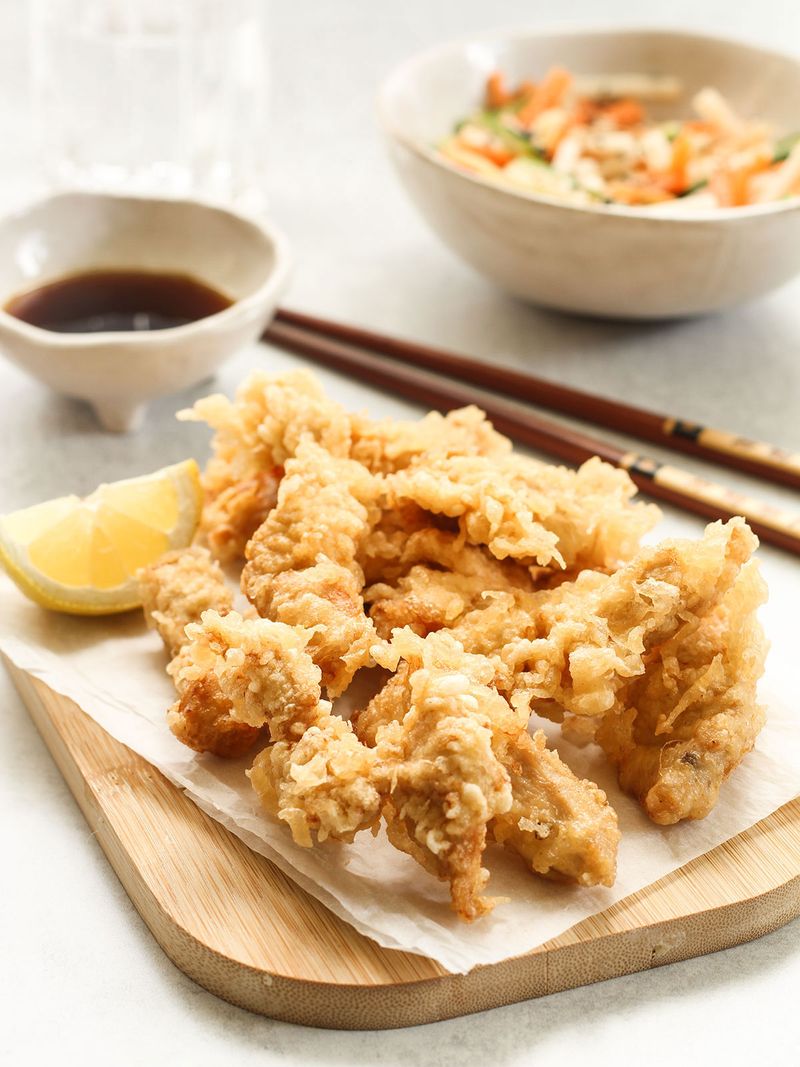
Tempura-style tenders feel featherlight compared to thick American breading. The batter puffs into delicate lace that stays crisp without heaviness.
You taste chicken first, then subtle seasoning and a clean finish.
Cold batter and hot oil are nonnegotiable. Work fast, do not overmix, and serve immediately.
These shine with citrusy dips that keep the brightness going.
15. Gluten-free tenders
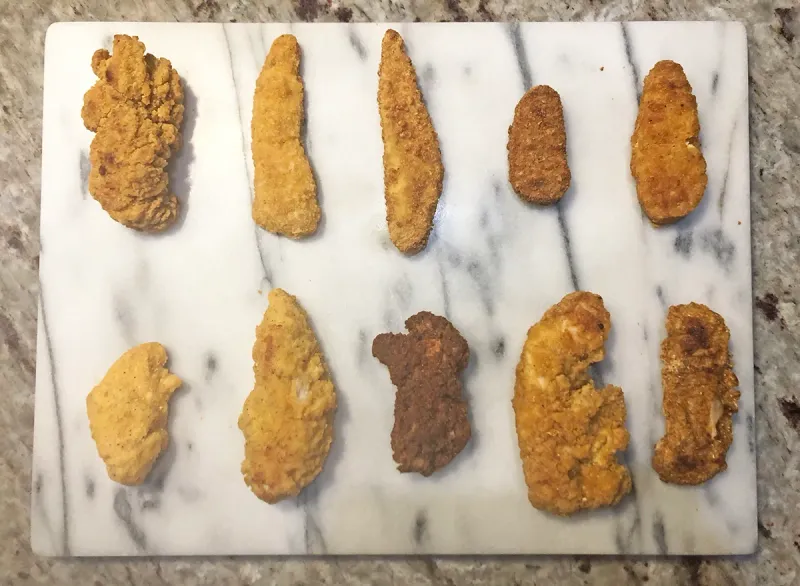
Gluten-free tenders used to scream compromise, but not anymore. Rice flour and starch blends fry up surprisingly crisp, sometimes crisper than wheat.
The key is seasoning, because neutral flours need extra help.
Texture can swing wildly between brands. Look for short ingredient lists and avoid gummy binders.
When done right, you get clean crunch with zero “alternative” aftertaste.
16. Plant-based “tenders”
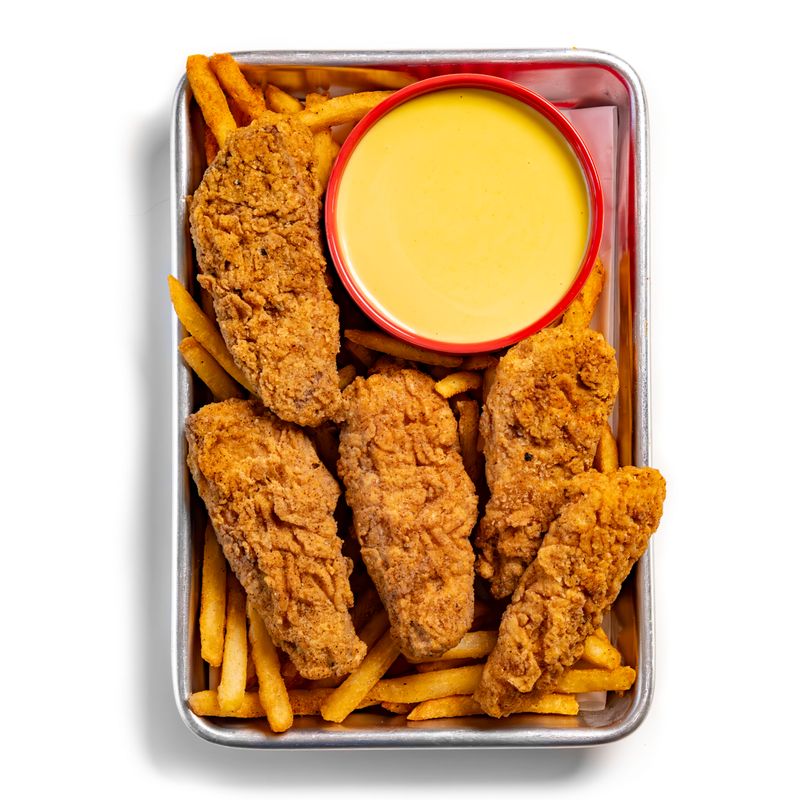
Plant-based tenders win or lose on texture. Some pull apart in convincing fibers, others chew spongey and echoy.
Breading usually nails flavor, which helps, but the center decides whether you keep eating.
Air-frying improves everything here. A hotter, longer cook firms the interior and crisps the outside.
With the right brand and a good sauce, these can satisfy a mixed crowd.
17. Nugget vs tender showdown
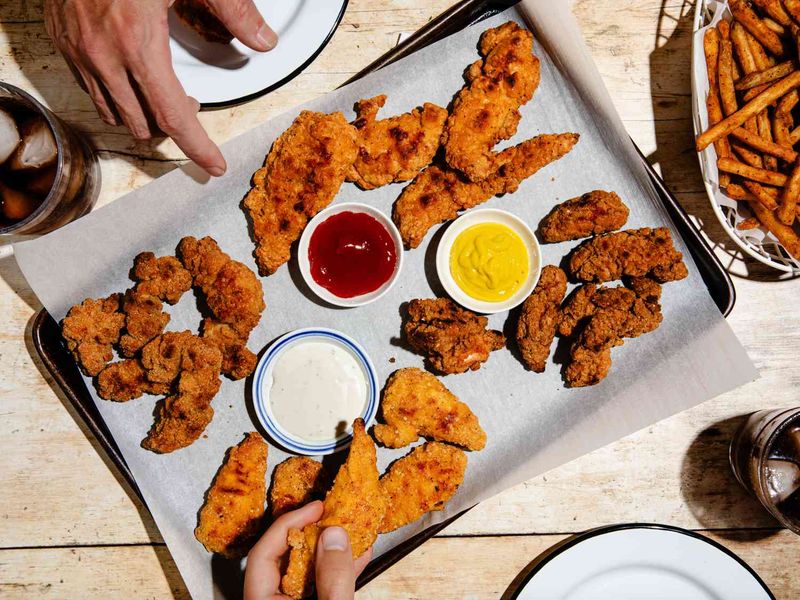
Nuggets versus tenders sounds unfair until you taste them blind. The best nuggets can beat a mediocre tender, no question.
Seasoning balance and moisture trump shape, and a well-made nugget delivers both in a tidy bite.
Tenders should win on real meat texture. But if they are dry or bland, nuggets take the crown.
Let flavor and juiciness decide, not silhouette.
18. Sauce-free test
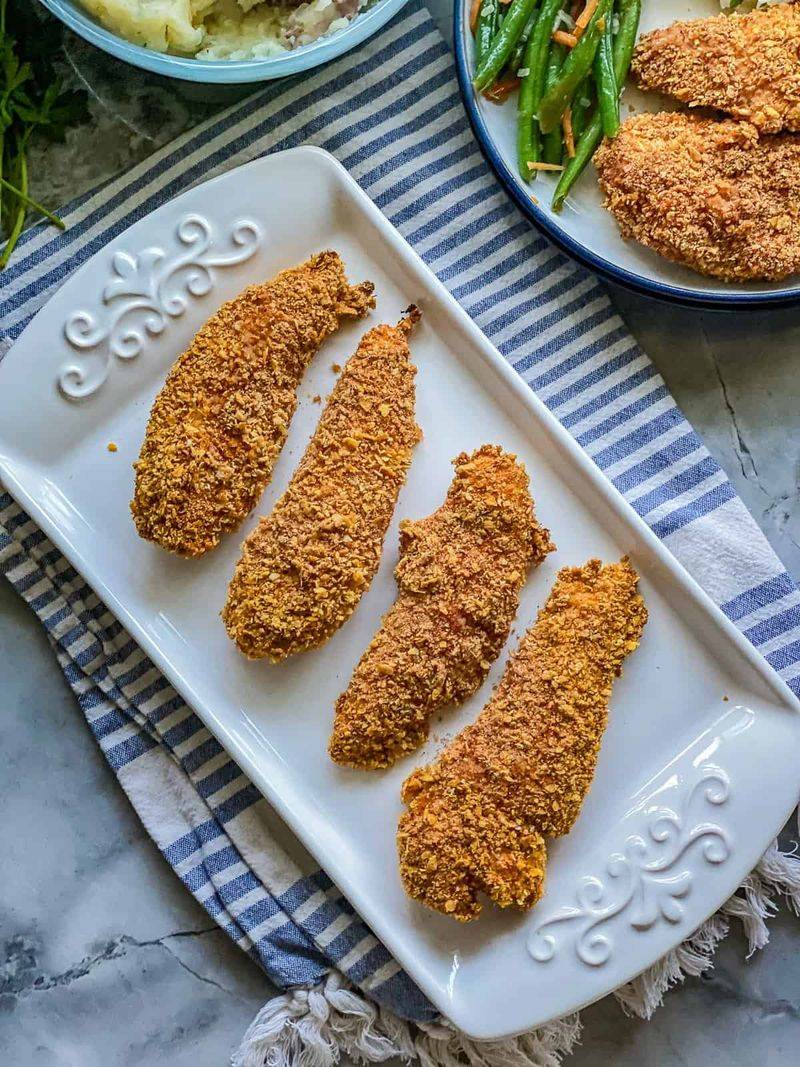
Eating tenders without sauce is the truth serum. Suddenly seasoning and salt balance are obvious, and dryness cannot hide.
The great ones taste complete solo, with peppery snap and real chicken flavor.
Many popular options wilt here. You notice blandness fast, then reach for a dip that once seemed optional.
The winners make you forget about sauce altogether.
19. Sauce pairing test (ranch, honey mustard, BBQ, buffalo)
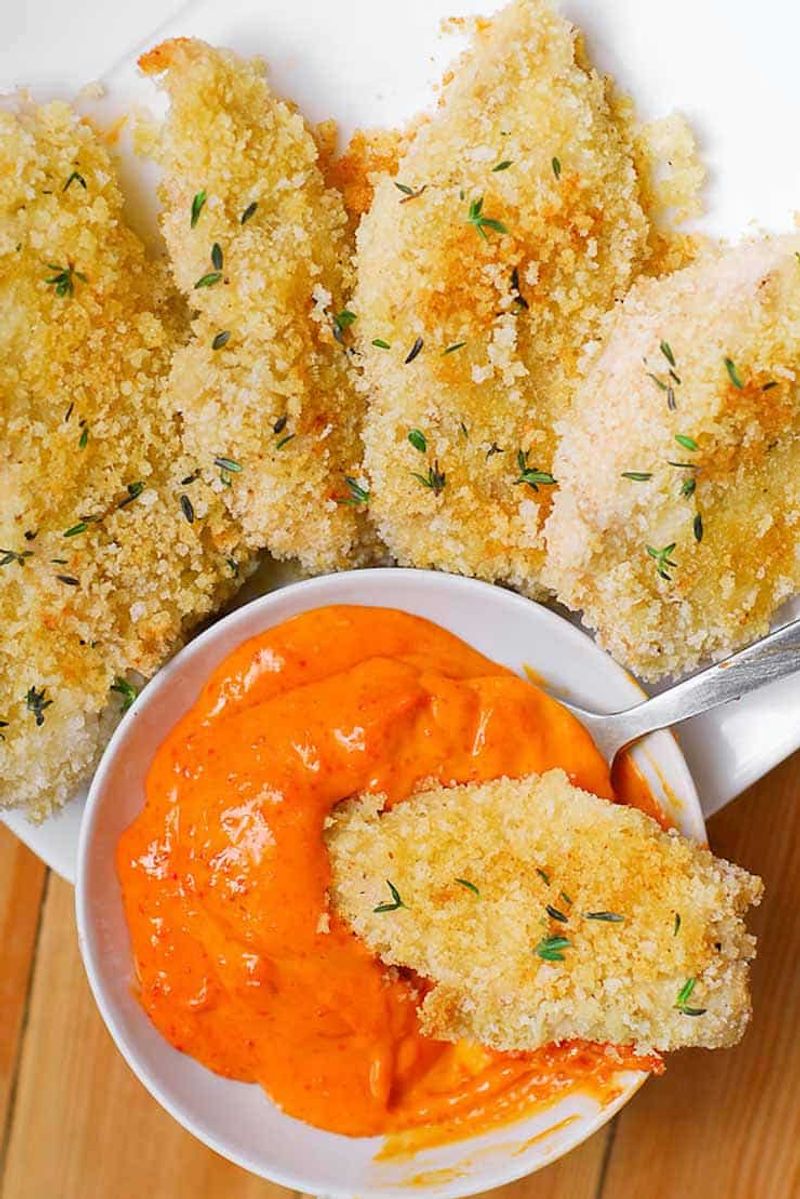
Pairing sauces changes everything. Ranch brightens pepper and cools heat, honey mustard flatters salt and adds tangy sweetness.
BBQ brings smoke that can overshadow subtle seasoning, while buffalo masks dryness with acid and spice.
The same tender morphs across dips. Try them side by side and you will find a favorite match.
Stronger sauces suit simpler tenders, while nuanced tenders deserve restraint.
20. Reheat test (next-day tenders)
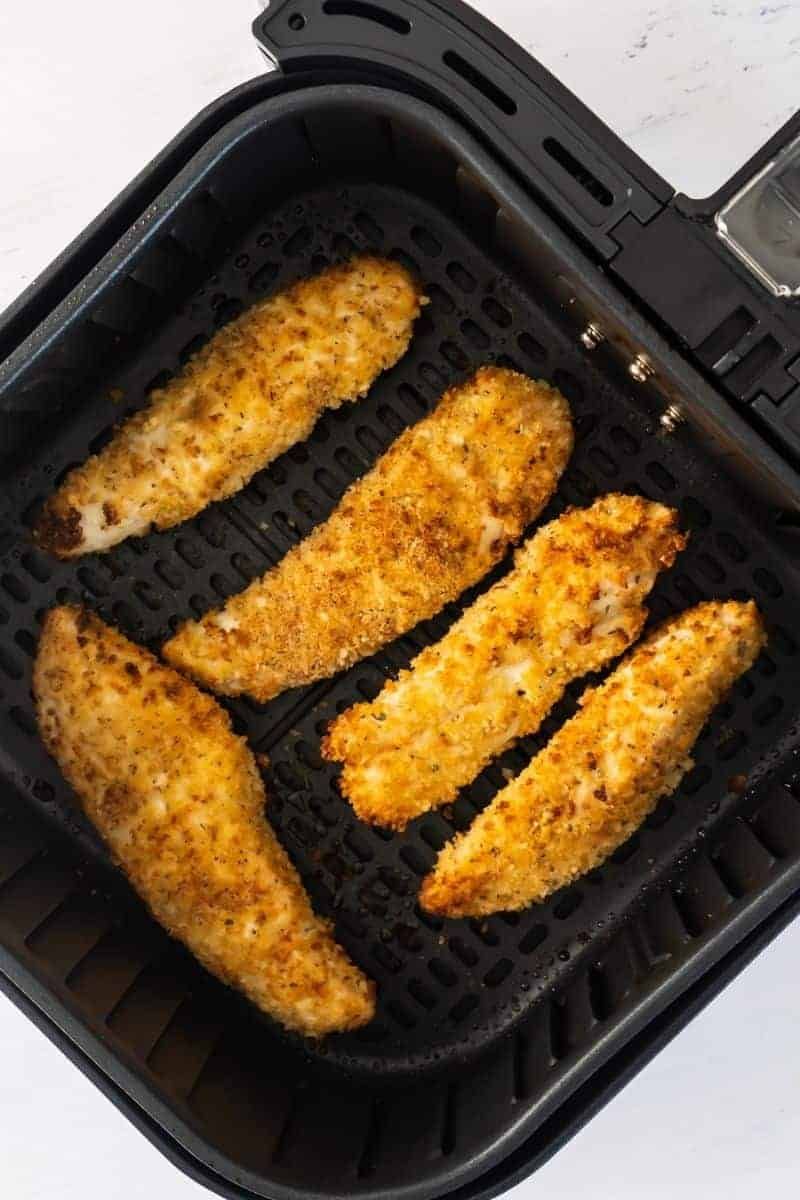
Next-day tenders are a redemption arc if you use an air fryer. A few minutes brings back the crust and wakes the seasoning.
Microwaves rush steam into the breading, turning everything limp and salty without payoff.
Let leftovers warm on the counter briefly, then air-fry hot and short. They taste nearly new, especially with a pinch of fresh salt.
It is the easiest save you can make.