How To Pick The Perfect Pineapple In 12 Easy, Foolproof Steps
Craving that sweet, sunny pineapple without the guesswork? These easy, foolproof steps will help you spot a juicy winner every single time.
You will learn how to read ripeness like a pro and avoid bland or stringy duds. Follow along, and your next pineapple will taste like vacation in a bowl.
1. Check Overall Shape
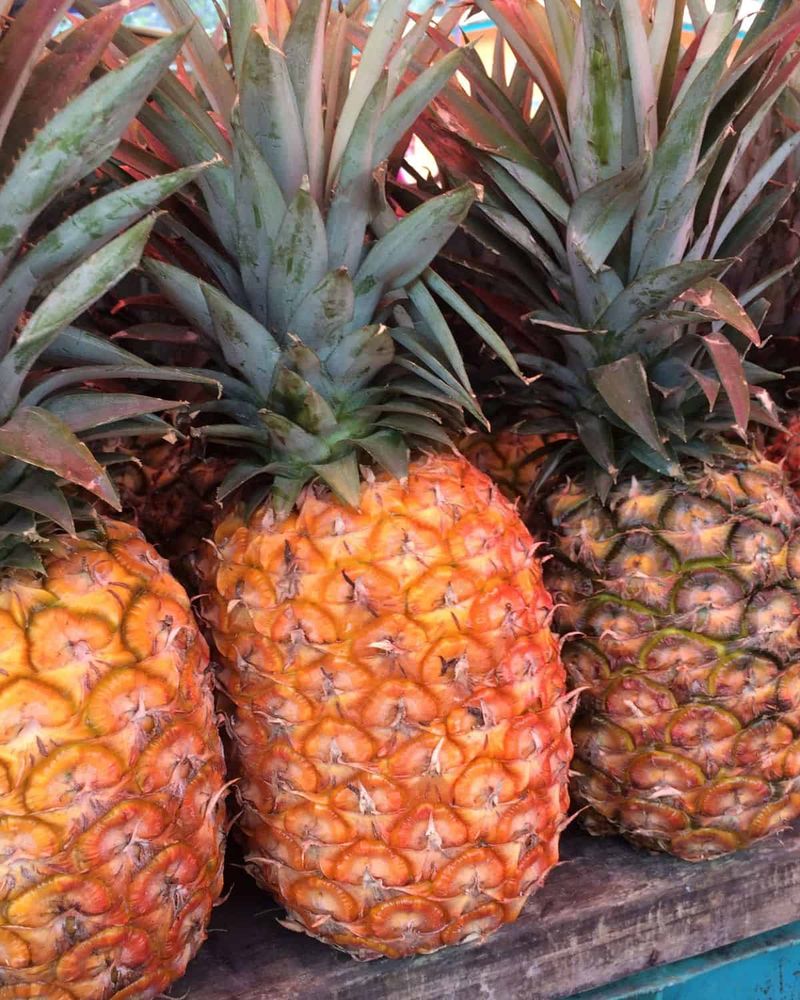
Start by scanning the pineapple’s silhouette. You want a plump, evenly cylindrical shape that feels balanced from crown to base.
Very tapered or lopsided fruit can mean uneven ripening inside, leading to bland bites.
Stand it on a flat surface and look from multiple angles. If it leans or bulges strangely, pass.
You are aiming for symmetry that suggests consistent growth and sweetness. A nicely proportioned pineapple usually signals better texture and fewer tough, woody spots.
2. Assess Weight In Hand
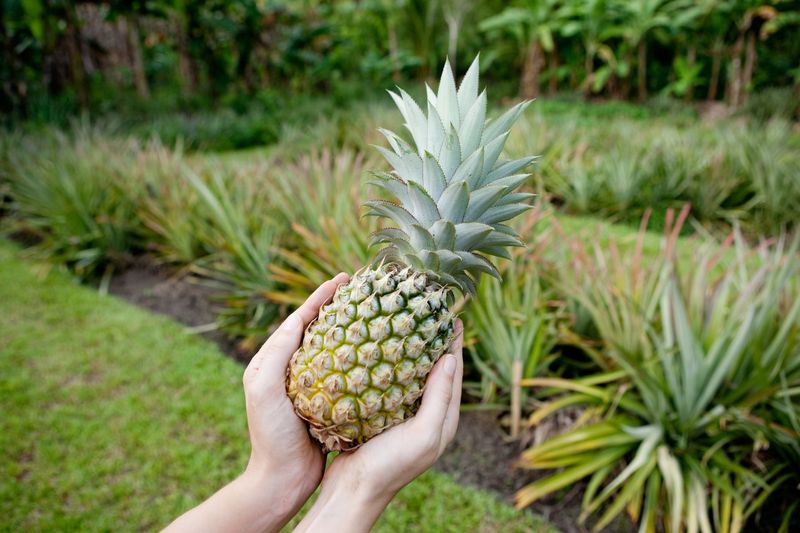
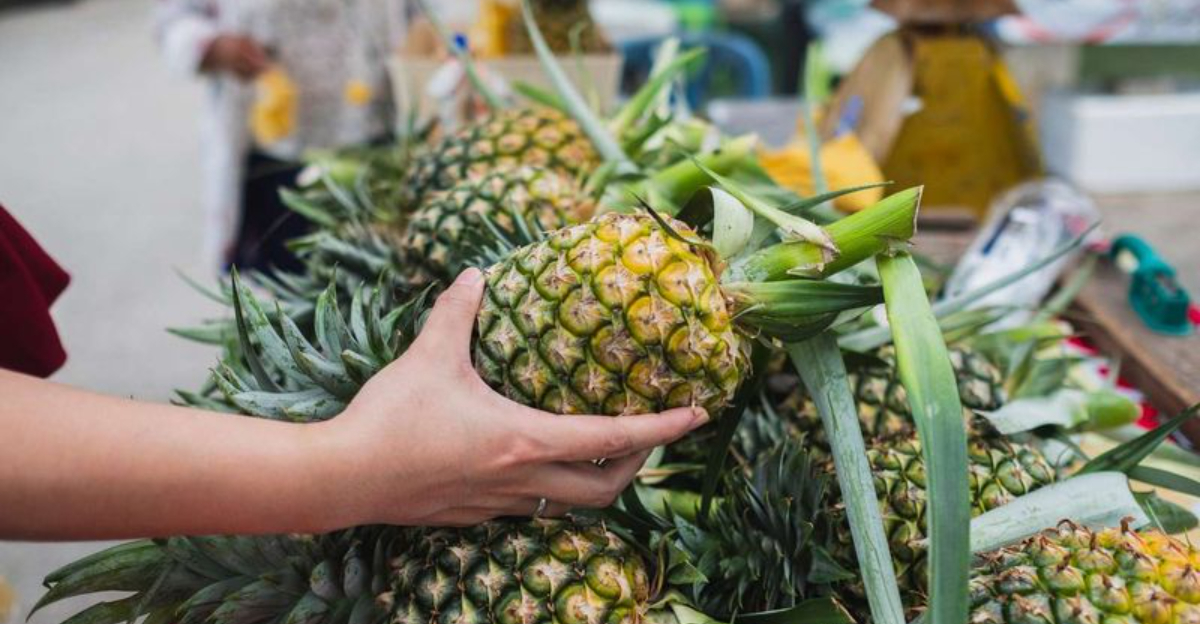
Pick up the pineapple and feel its heft. Heavier often means juicier, because higher water content correlates with ripeness.
Compare two similar sizes and choose the one that surprises you with weight.
Light pineapples can be dry or underripe. You do not need a scale, just your hands and a quick side-by-side test.
If it feels dense without being rock hard, that is a great sign. Trust the weight test to quickly narrow choices.
3. Inspect Skin Color
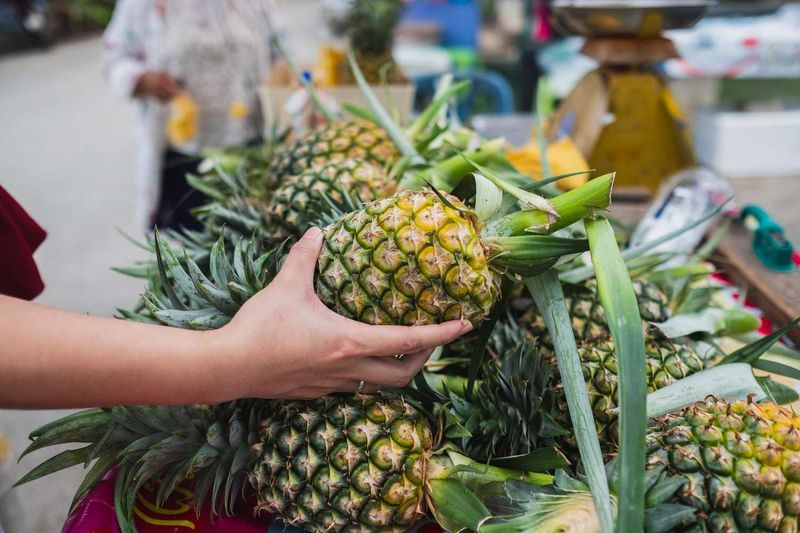
Color can be a helpful clue, though not the only one. Look for golden yellow spreading from the base upward, avoiding mostly green fruit.
Some varieties stay slightly green when ripe, but a warm yellow glow usually suggests sweetness.
Avoid fruit with grayish or dull tones. Do not chase full orange, which can signal overripe or fermented flavors.
Aim for balanced, vibrant color and pair this check with other tests. Color gets you close, not perfect, so keep verifying.
4. Examine The Eyes
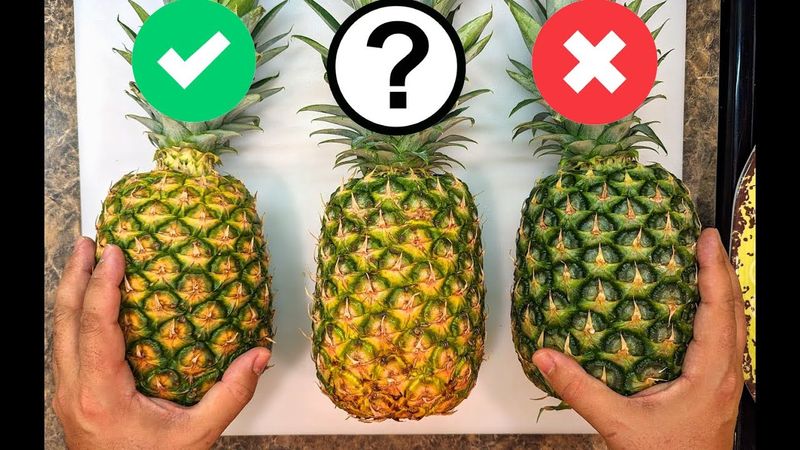
The eyes are the diamond-shaped segments on the skin. Choose pineapples with large, relatively flat eyes arranged evenly.
Deep, sharp, or shriveled eyes can indicate underripe or tough flesh.
Run your fingers lightly across the surface. Smooth, broad eyes often correlate with better texture and sweetness inside.
If the eyes look dry or overly spiky, move on. This tiny detail tells you a lot about how the fruit matured and concentrated sugars.
5. Squeeze For Firmness
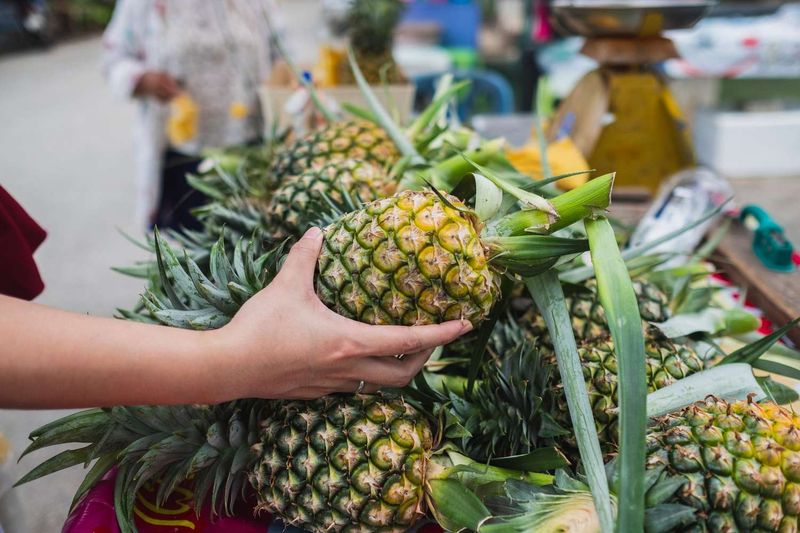
Give the pineapple a gentle squeeze at the midsection. You want firm with a slight spring, not hard like a rock or mushy.
A tiny bit of give suggests juiciness without collapse.
If it feels spongy or leaves dents, it may be overripe inside. Extremely rigid usually means underripe and sour.
Balance is the goal. Use this test together with weight and aroma for a more reliable call, especially when color is ambiguous.
6. Smell The Base
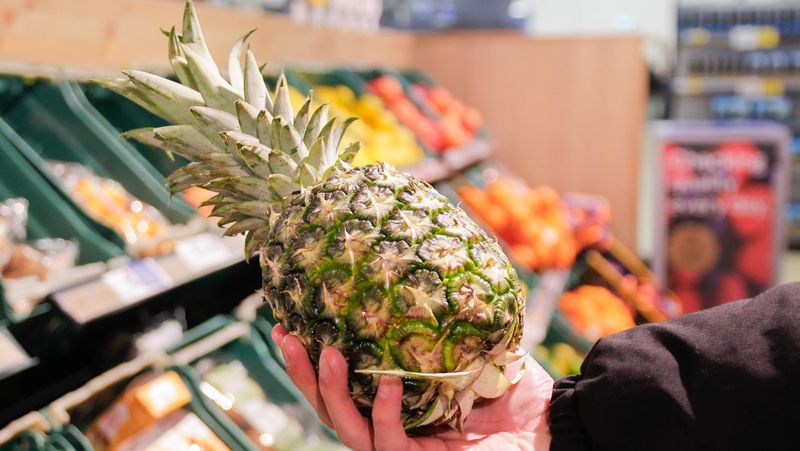
Bring the bottom of the pineapple to your nose. A ripe one smells sweet, tropical, and inviting.
If there is little to no aroma, it may be underripe.
A funky, vinegary, or boozy scent signals fermentation and overripe fruit. You want a pleasant perfume, never sour.
Do this check last to confirm your other clues. Aroma is the final green light that tells you sweetness is ready and waiting.
7. Check Crown Leaves
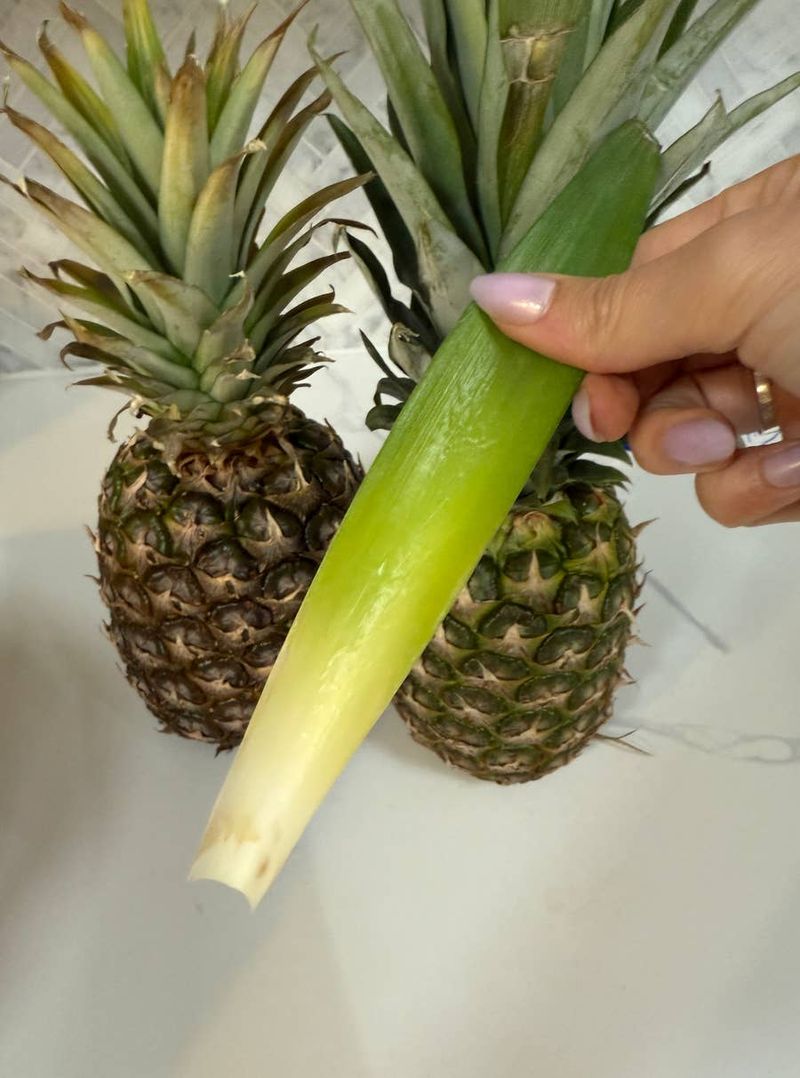
Look at the crown for fresh, vibrant green leaves. They should be flexible and not brittle or brown at the tips.
Dry, tired leaves hint at age and moisture loss.
Gently tug one inner leaf. It should resist slightly but release with a steady pull.
If leaves fall out easily, the fruit might be past peak. If glued tight, it could be underripe.
Aim for healthy crowns that mirror a fruit in its sweet spot.
8. Inspect For Mold Or Damage
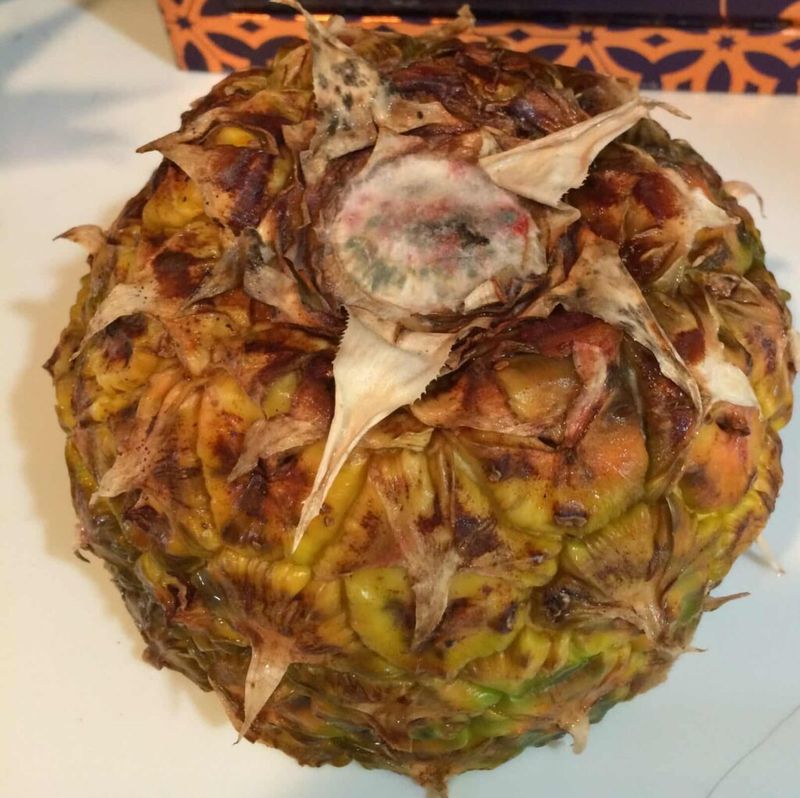
Turn the pineapple and check the base, crevices, and crown for mold. White fuzz or wet spots are red flags.
Also watch for bruises, cuts, or cracked areas that invite decay.
Minor surface scuffs are fine. Avoid fruit with sticky leakage, which suggests breakdown inside.
Clean, intact skin helps preserve flavor and shelf life. A quick 360-degree inspection saves you from a disappointing, compromised pineapple at home.
9. Consider Season And Origin
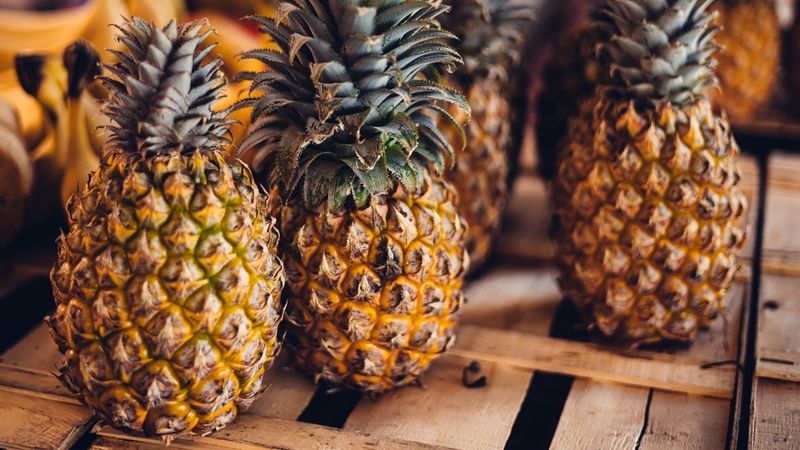
Ask the store or read the label to learn origin and season. Regions with consistent sun and warmth produce sweeter fruit.
Peak arrival windows often deliver the best flavor and price.
If you can, buy from sources known for careful handling and quick transit. Long shipping can dull aromas.
Local or in-season options tend to shine. A little sourcing intel stacks the odds in your favor before you even touch the pineapple.
10. Avoid Overripe Soft Spots
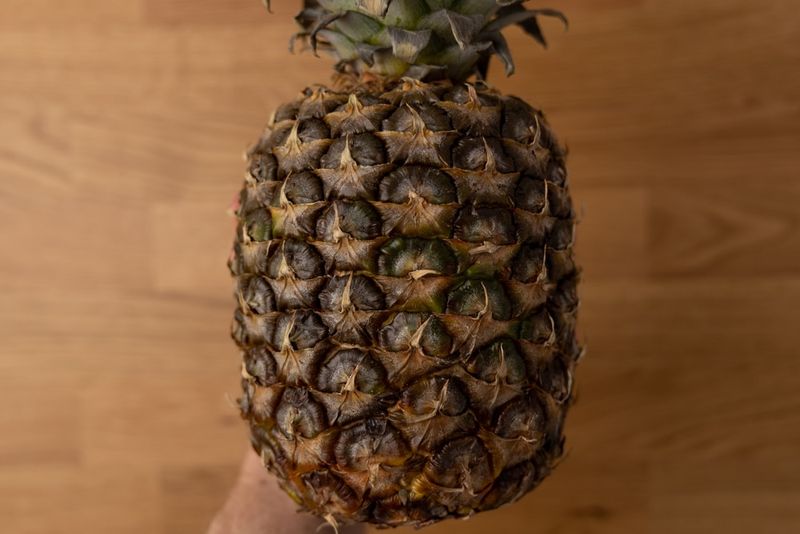
Press gently around the base and midsection to find localized soft spots. Small give is good, but sunken areas mean breakdown.
Overripe patches can taste fermented and spread quickly once home.
Scan for discoloration around soft areas. If the fruit leaks or feels soggy, skip it entirely.
You want consistent firmness across the body. This small test keeps your selection bright, fresh, and safe to enjoy within a few days.
11. Mind The Base Sweetness
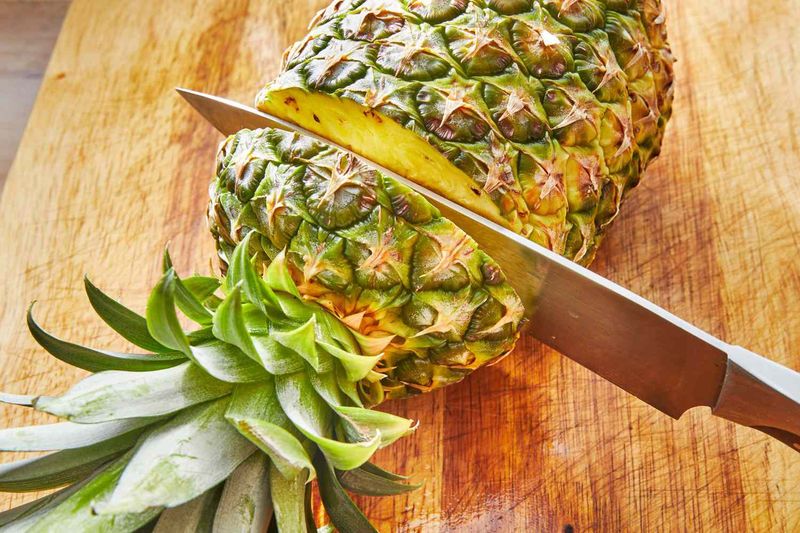
Sweetness concentrates from the bottom upward. Choose pineapples showing more yellow toward the base, paired with a fragrant smell.
This pattern usually indicates developed sugars without overripe mush.
Do not ignore the top, but focus your checks near the bottom rim. If the base is pale and scentless, the fruit likely needs time it will not get.
A golden, aromatic base is a delicious green light for your cart.
12. Plan For Ripening At Home
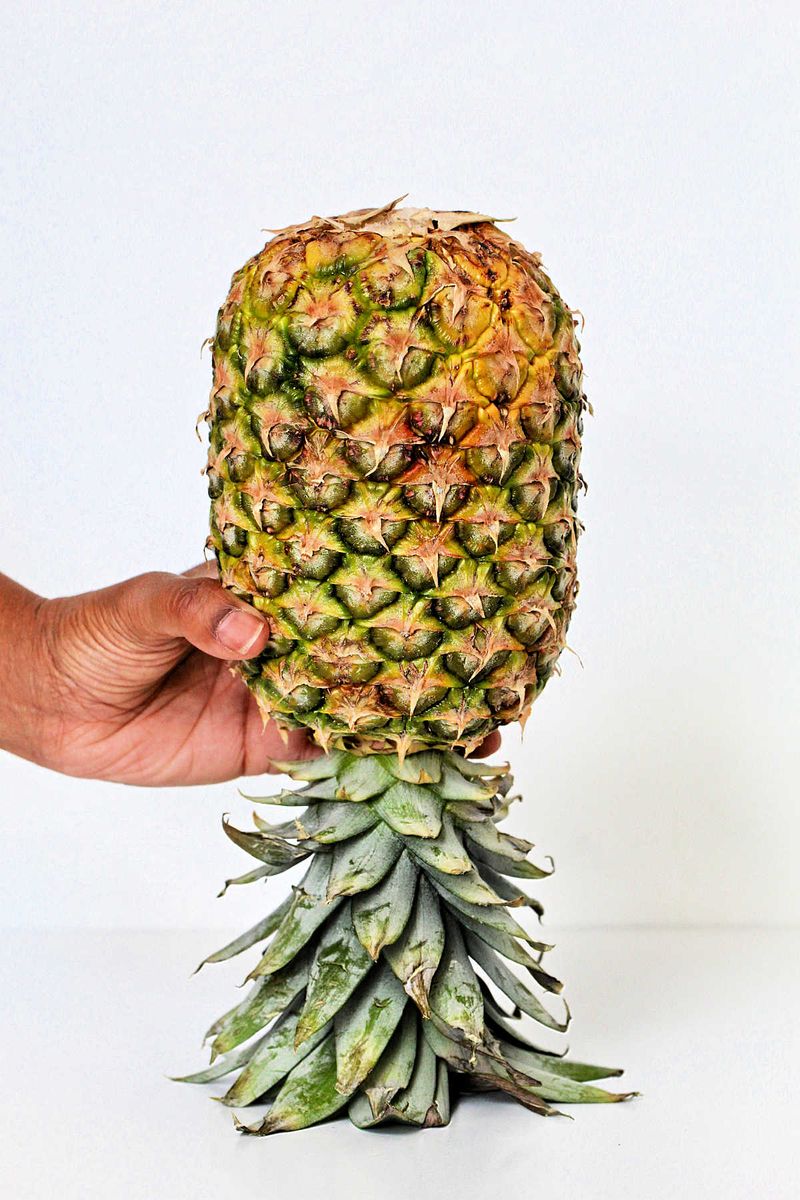
Pineapples do not continue to increase sweetness after harvest, but they can soften a bit. If yours seems close, let it sit at room temperature one to two days to relax the texture.
Keep it upright on a plate.
Refrigerate once ripe to slow deterioration and hold quality. Cut within a few days for peak flavor.
If you need it now, choose the most fragrant, heavy, golden option in the store. Planning prevents disappointment and preserves that sunny, juicy payoff.