
What Apple Stickers Reveal About Produce Labeling
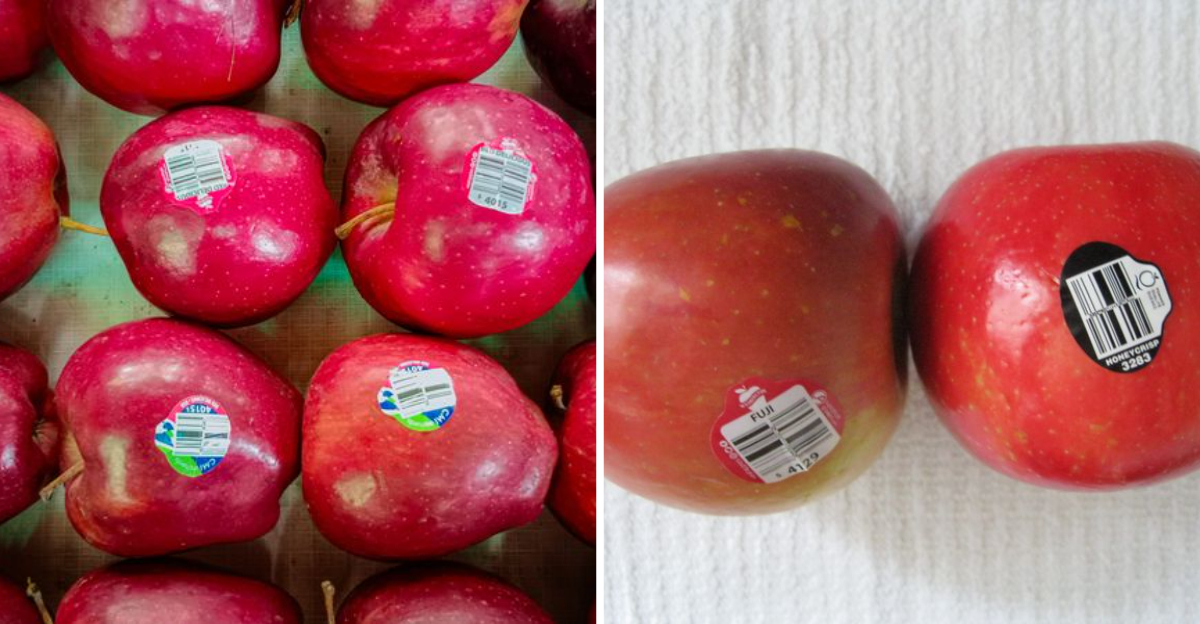
That tiny sticker on an apple looks forgettable, but it has a story to tell. It helps stores ring up the right fruit fast, track inventory behind the scenes, and sometimes hint at how that apple was grown.
Once you know what the numbers and logos mean, you can shop smarter in seconds. Ready to decode your next snack and skip the guesswork at checkout?
1. The sticker’s real job: speed at checkout
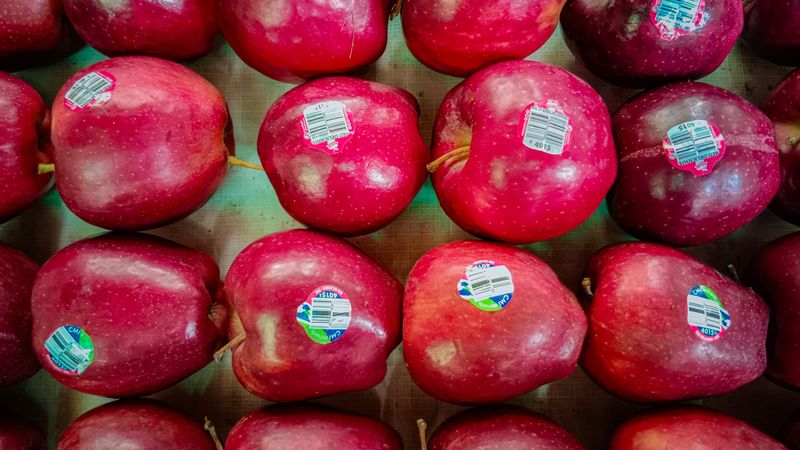
That little sticker is basically a speed pass. It tells the register exactly which apple you grabbed, so the system charges the right price without anyone guessing.
At self-checkout, the digits help you pick the correct item fast and avoid choosing a vague “red apple” button.
Behind the scenes, the sticker links that piece of fruit to product data, promos, and codes. Mistyping costs time and accuracy, so stores rely on clear labels to keep lines moving.
Think of it as the apple’s boarding pass, guiding it from bin to bag with fewer hiccups.
2. Those 4–5 digits are PLU codes
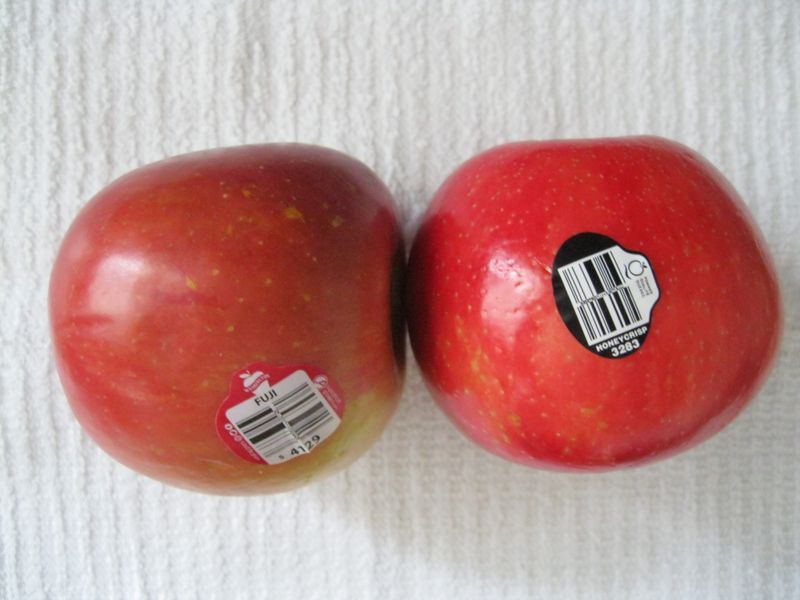
Those numbers are PLU codes, short for Price Look-Up, and they separate a Honeycrisp from a Gala in seconds. Cashiers and scanners use them to avoid misidentifying similar-looking fruit.
The code maps to a database entry with the correct price and product name.
For shoppers, it explains why two red apples can ring up differently. The PLU carries variety data, not nutrition details.
If you want to double-check a price or find the right button at self-checkout, read those digits. They are the grocery world’s shorthand that keeps everything consistent.
3. Organic apples often start with 9
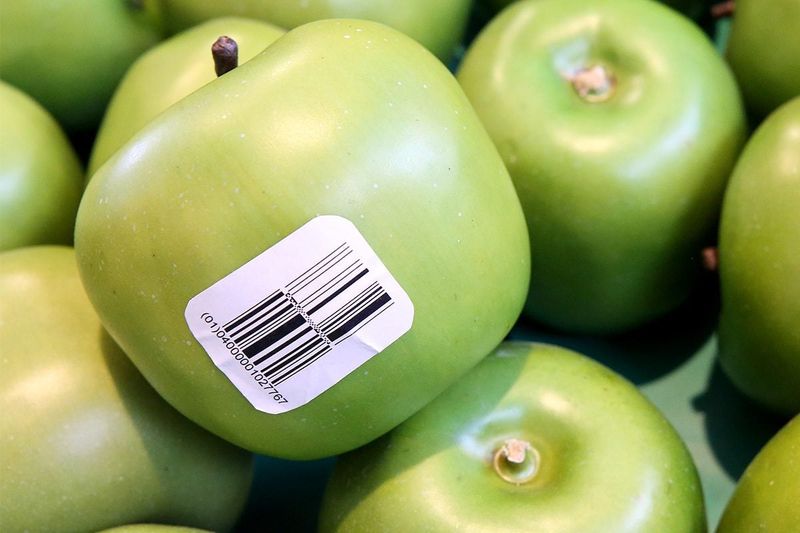
See a five-digit PLU starting with 9 on an apple. That usually signals organic in many stores.
It is a helpful shortcut when you are deciding between organic and conventional bins that look nearly identical.
However, treat it as a store convention, not a federal law. It is widely used, yet packaging and signage should still confirm.
When in doubt, look for certified organic seals on nearby displays. If you care about pesticide practices, that 9 can guide you, but consider cross-checking with shelf tags, because stores sometimes re-sticker or mix inventory when things get hectic.
4. Conventional apples use 4 digits
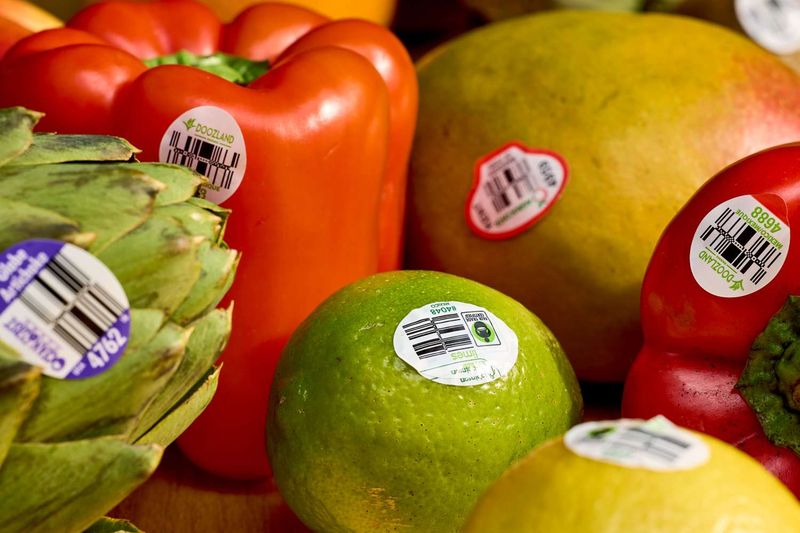
Conventional apples typically carry four-digit PLUs. That shorter number is one clue you are looking at non-organic fruit.
It helps staff and shoppers avoid confusion when similar varieties sit side by side.
Remember, the code does not reveal growing practices beyond that broad organic versus conventional hint. It exists to make checkout fast and accurate.
If price matters, those four digits tie directly to the store’s pricing file. When scanning yourself, matching the exact code reduces errors, voids, and awkward calls for assistance.
Simpler code, same goal: clean, quick identification.
5. Variety identification drives price differences
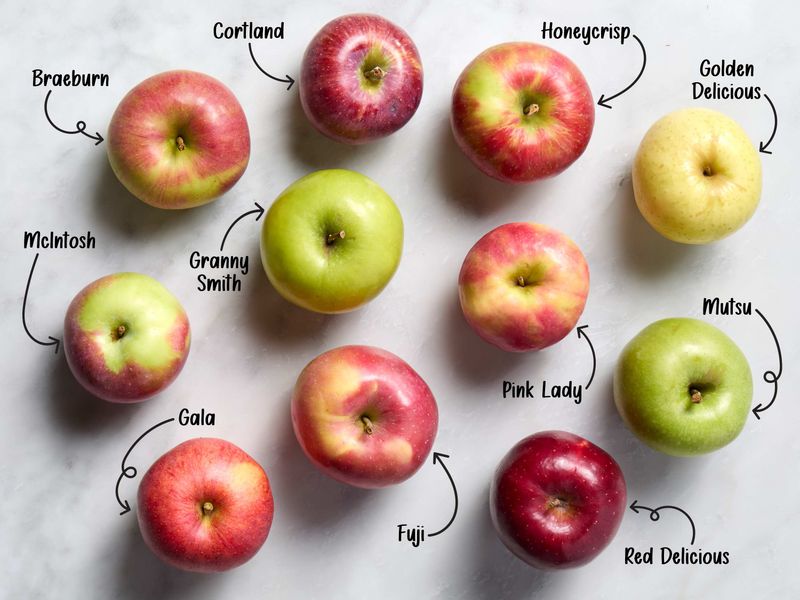
Ever wonder why two red apples cost different amounts. The sticker usually holds the answer.
It connects each apple to its variety, which affects sweetness, crunch, storage life, and demand.
Honeycrisp often costs more because it is harder to grow and store well. Gala or Fuji might be priced lower due to availability and yield.
Variety impacts your experience too: crisp snap, tart bite, juicy finish. When prices seem random, the PLU and name bridge the mystery.
If you care about flavor or recipes, let the sticker guide your pick confidently.
6. Brand logos are marketing cues
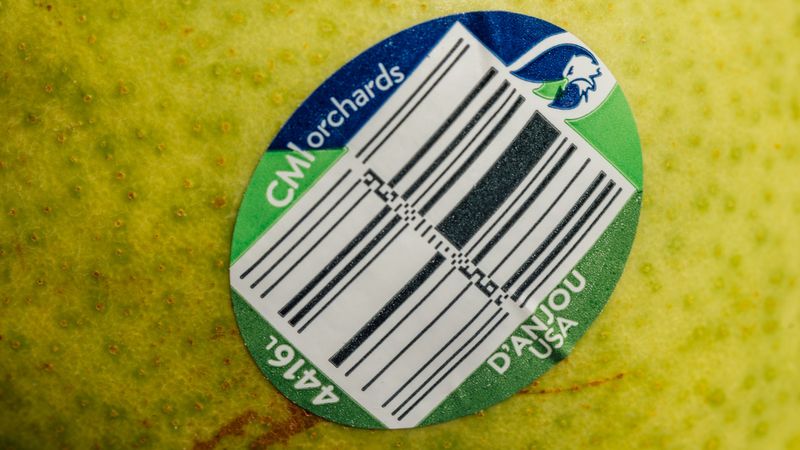
Spot a shiny logo on your apple. That is branding, not a nutrition badge.
It usually tells you which company packed or markets the fruit, aiming to build recognition and loyalty.
Some brands invest in consistent size, color, and texture to feel premium. Still, the logo itself is not a guarantee of better farming practices or health benefits.
It is more like a signature than a certification. If claims matter, check the shelf sign, QR codes, or the brand’s website.
The sticker’s job remains retail identification, while the logo plays the advertising role in miniature.
7. Signals of premium handling
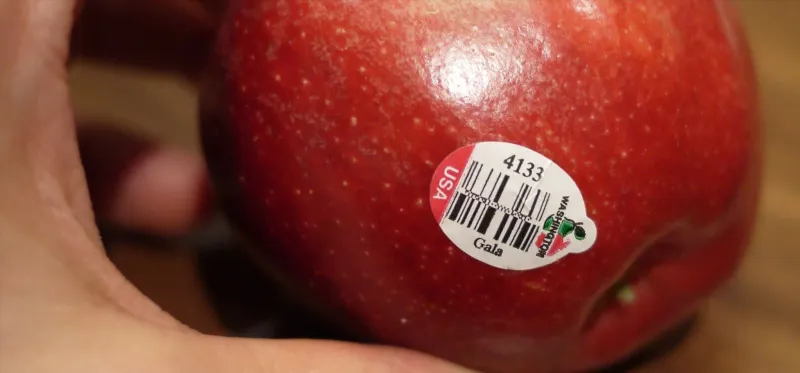
Some stickers indicate a premium lot, separating carefully graded apples from the standard mix. These may reflect tighter size ranges, color, or fewer blemishes.
Retailers use distinct labels to justify higher prices and manage limited inventory more closely.
You may not see flashy language, just a code or subtle mark that staff recognize. For shoppers, the difference shows up in uniform appearance and perceived freshness.
If you want the best-looking apples for a centerpiece or gift basket, those labels help you find them. Pay attention to consistency across the pile and any signage that hints at upgraded handling.
8. Tiny text for traceability
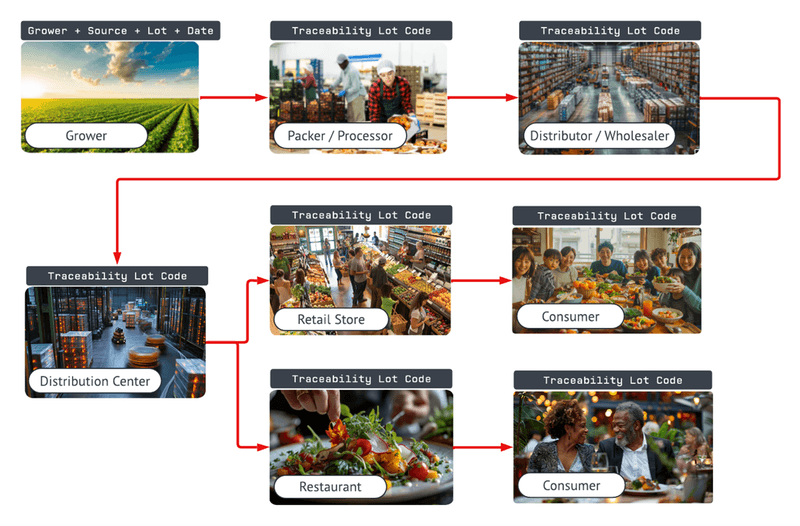
Look closely and you might spot a packer name or facility code in tiny print. That micro text exists for traceability, not everyday shoppers.
If a quality issue pops up, those details help identify the source quickly.
Traceability keeps recalls precise and limits waste. It also helps retailers evaluate supplier performance.
You do not need to decode it during shopping, but it is reassuring to know the trail exists. If you are curious, note the code and search the brand’s website.
It is the apple’s breadcrumb trail back to a packing line and a lot record.
9. Country of origin is usually on signage
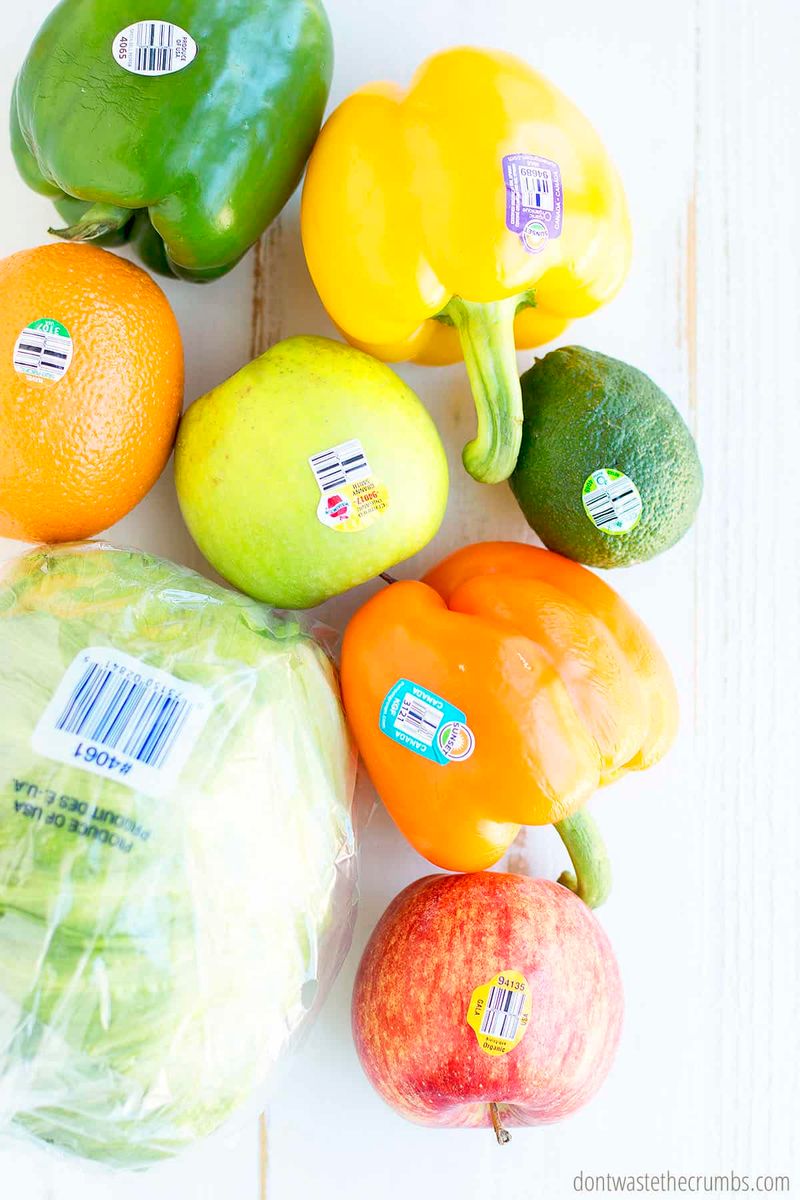
The sticker does not always tell you where the apple was grown. Stores often put country or state-of-origin on shelf tags instead.
That sign pairs with the sticker’s code to link back to the correct shipment.
If origin matters for you, read the rail labels or ask staff rather than relying on the sticker alone. The combo of signage and PLU keeps pricing correct and inventory organized.
Origin details can shift with seasons, imports, and storage lots. So check each visit, especially during transitions, when Northern and Southern Hemisphere supplies trade places.
10. Stickers and stock rotation
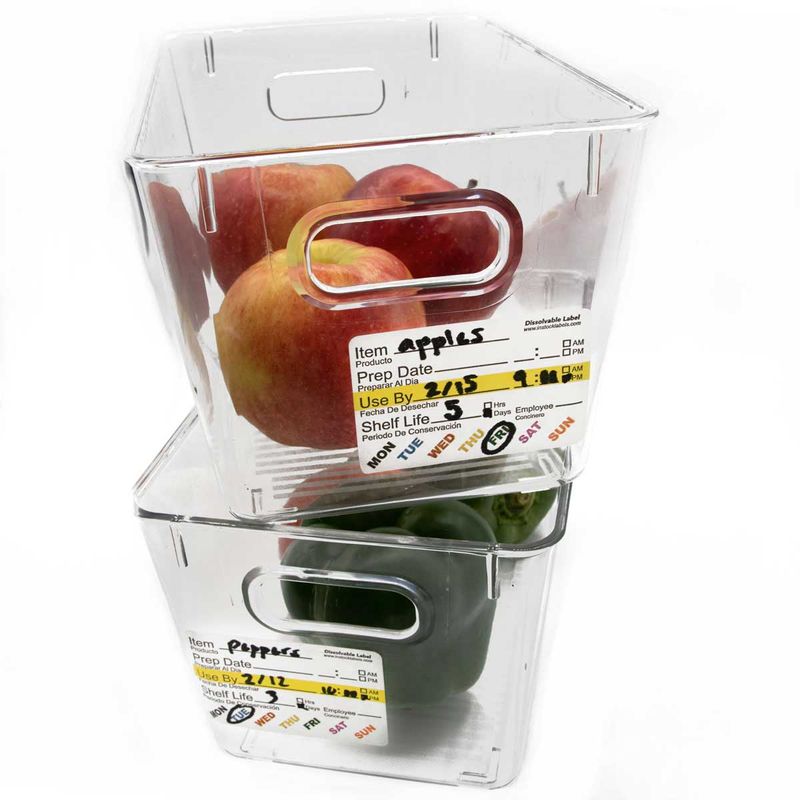
Retailers use PLUs and shipment data to rotate apples so older stock sells first. The sticker is part of the system, linking each piece to a lot and variety.
Proper rotation keeps texture crisp and reduces shrink.
When everything works, the freshest boxes land in back while older ones move forward. You might notice subtle differences in sheen or firmness across displays.
If freshness is your priority, check firmness and aroma, not just the sticker. Still, that tiny label is a quiet player in the logistics that keep your snack from turning mealy before you bite.
11. The sticker will not confirm wax
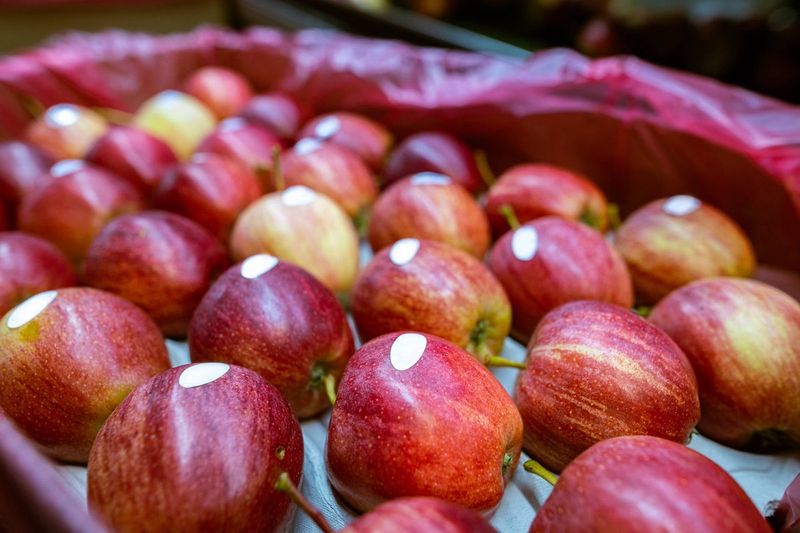
Many apples are waxed to slow moisture loss and keep them looking appealing. The sticker rarely mentions it.
Waxing is a common practice after washing fruit at packing houses, replacing natural waxes removed during cleaning.
If you care about it, check store signage or brand FAQs. Either way, wash your apple.
Rinsing and rubbing under running water helps remove surface residues and dust from handling. Do not expect the PLU to tell you anything about wax type or thickness.
It is there to price and identify, not to list cosmetic treatments.
12. It will not list pesticide history
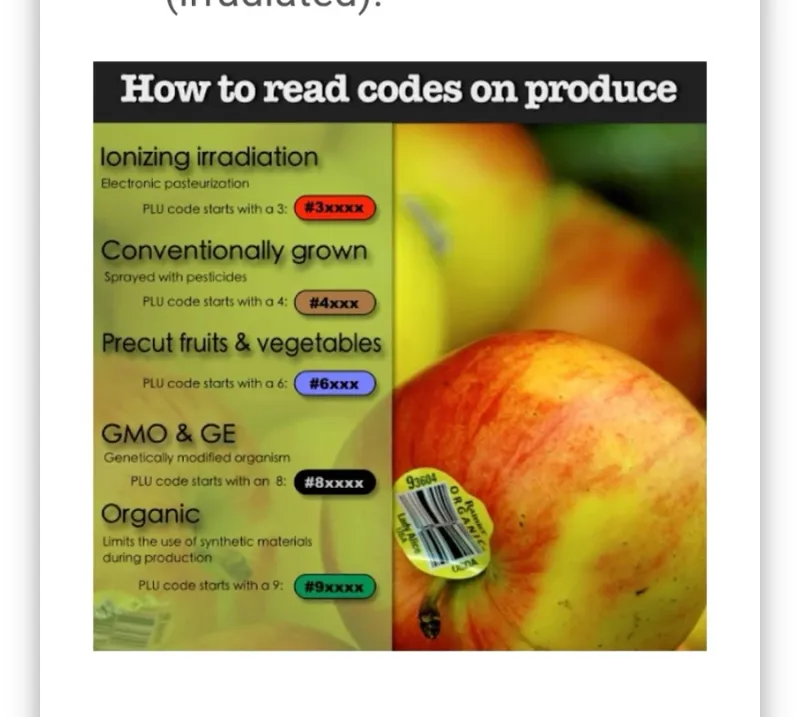
A PLU code will not tell you which sprays were used or how often. If that information matters, look for certified organic labeling, store sourcing notes, or farm transparency programs.
Some brands provide QR codes linking to practices.
Remember, PLUs are retail tools, not safety dossiers. For deeper insight, ask produce staff, check certification databases, or research the grower online.
Choosing organic where available can simplify decisions. But do not skip washing.
Regardless of growing method, apples travel through many hands, and a quick rinse is practical protection.
13. Ignore the GMO number myths
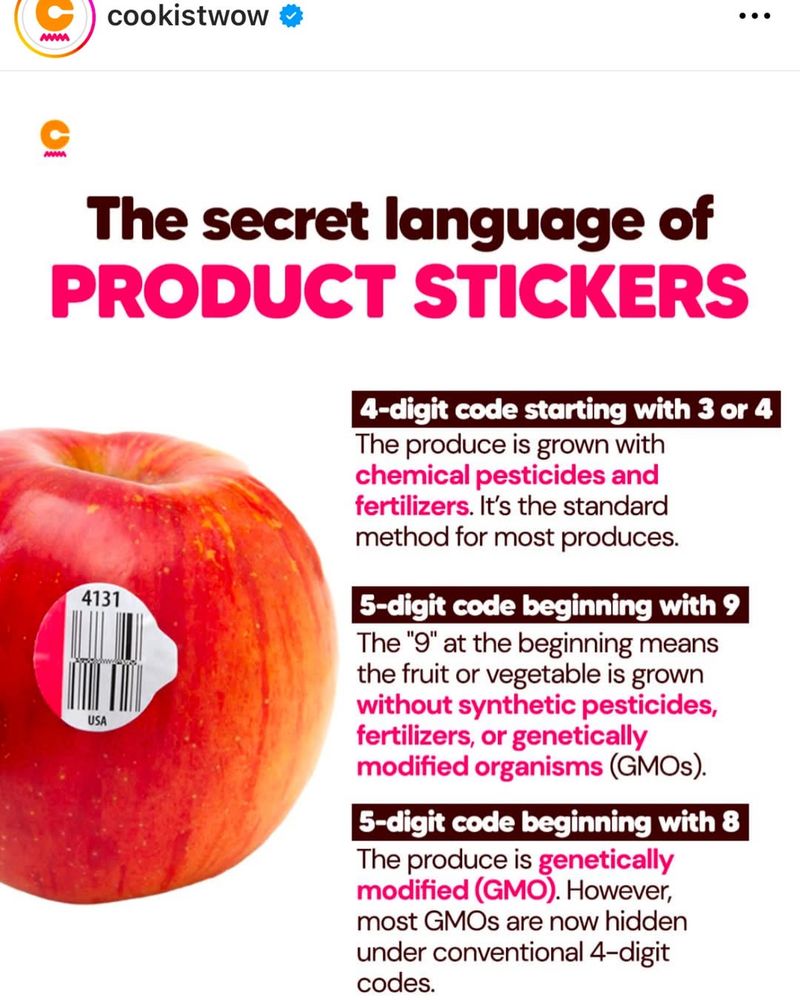
You may hear claims that certain PLU patterns prove a fruit is GMO. For apples, that is mostly noise.
PLUs exist for pricing and identification, not genetic labeling. There is no secret GMO digit hiding on that sticker.
If genetic traits concern you, rely on official certifications, brand disclosures, or store policies. Some engineered apples exist, but the PLU alone will not confirm them.
Focus on variety names, origin notes, and certifications instead. The sticker keeps checkout smooth while other labels carry the science and policy signals you actually need.
14. Sticker materials and glue choices
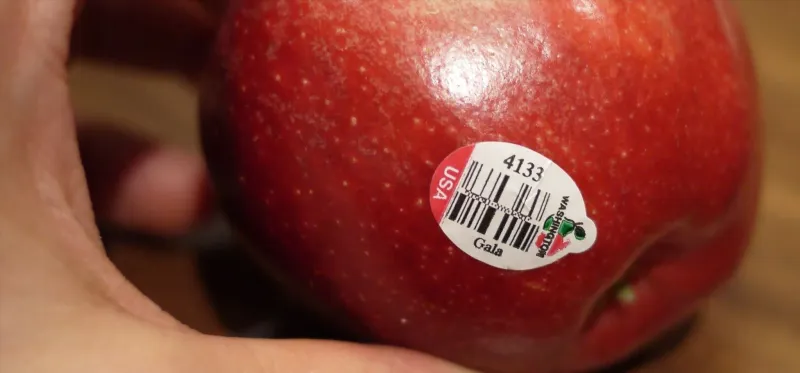
Some stickers peel cleanly while others leave stubborn glue. That difference often comes from material and adhesive choices designed for cold storage, moisture, and cost.
Paper labels may tear on damp fruit; films can hold better but resist removal.
Packer priorities include staying put during shipping and surviving condensation. Unfortunately, removal can be annoying at home.
A quick trick: peel slowly from the edge, then wash to lift residue. These choices are logistics decisions, not shopper-focused perks.
Expect variation by season, supplier, and storage conditions.
15. One reminder that matters: wash anyway

Sticker or not, wash your apple. It has traveled through orchards, packing lines, pallets, trucks, and bins.
A quick rinse and rub under running water removes dust, wax bloom, and random residue from many hands and surfaces.
Even if you plan to peel, wash first to keep any surface grime from transferring to the flesh. The sticker is a quiet signal of that journey.
Once clean, enjoy the crunch and flavor you actually shopped for. Identification is the sticker’s job.
Your job is the quick clean that turns logistics into lunch.