What Gives New York Cheesecake Its Signature Texture
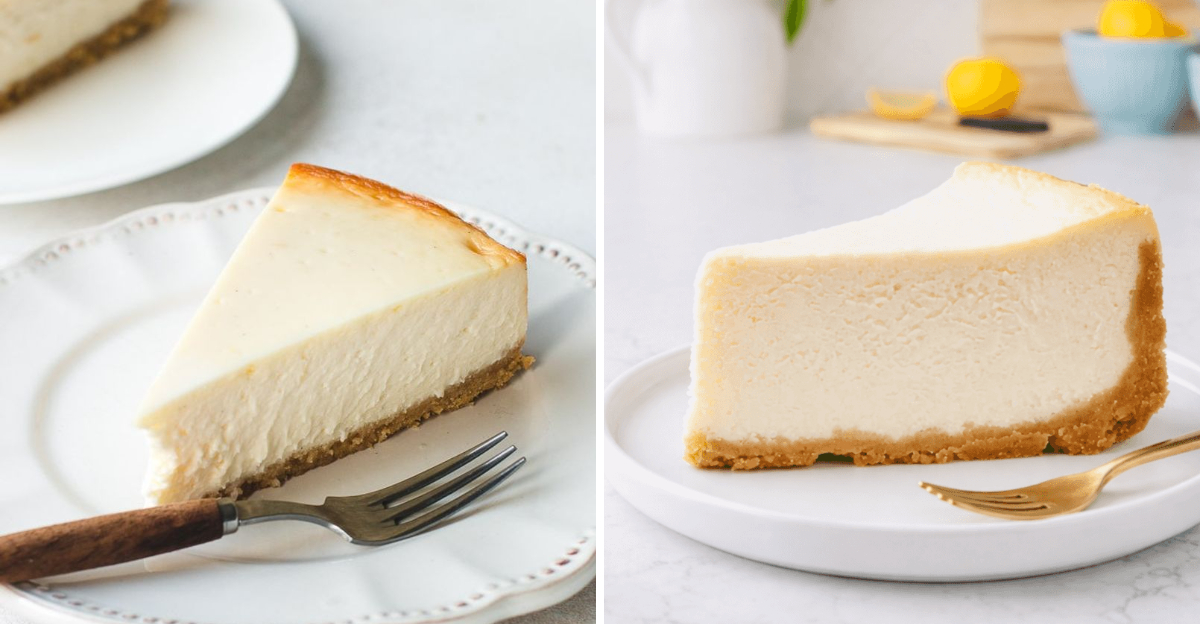
You know that moment when a fork slides through a slice and it lands like velvet on your tongue. That dense-but-creamy bite is not an accident, it is a chain of smart choices.
Each step tunes the moisture, fat, and structure so the cake sets tight yet stays luxuriously smooth. Keep reading and you will see exactly how each choice stacks up to deliver that iconic New York finish.
1. Full-fat cream cheese as the base
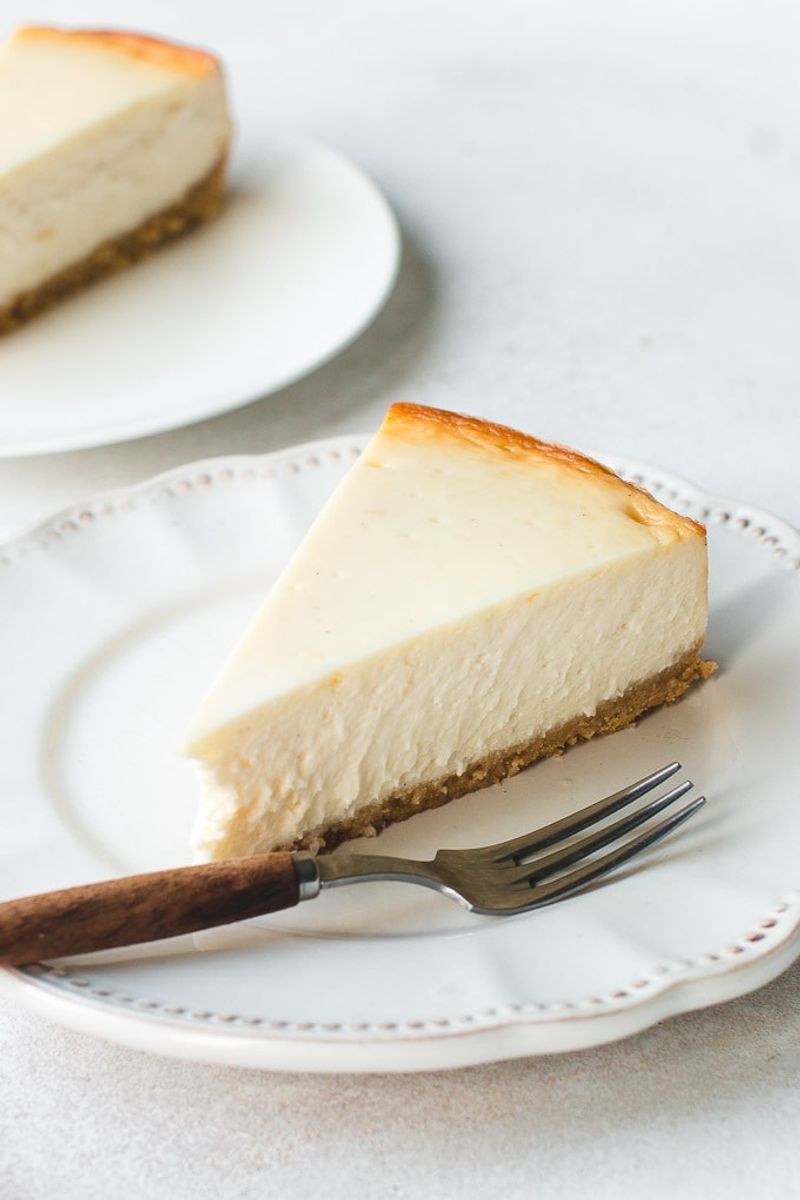
Start with full-fat cream cheese, not light versions or whipped tubs. That concentrated fat means less water and more luscious body, so every bite feels velvety and rich.
When you minimize added liquids, the batter stays thick and bakes into a tight, creamy crumb.
Let the cream cheese soften fully so it blends smooth without lumps. Cold blocks force you to overmix, sneaking air into the batter and loosening structure.
Room temperature cheese blends quickly, keeping the texture dense and uniform.
Measure by weight if you can to stay consistent. Slight shifts in moisture between brands matter.
Choose brick-style cream cheese with a clean, tangy flavor that supports sweetness without turning chalky or gummy in the oven.
2. Eggs that set a custard
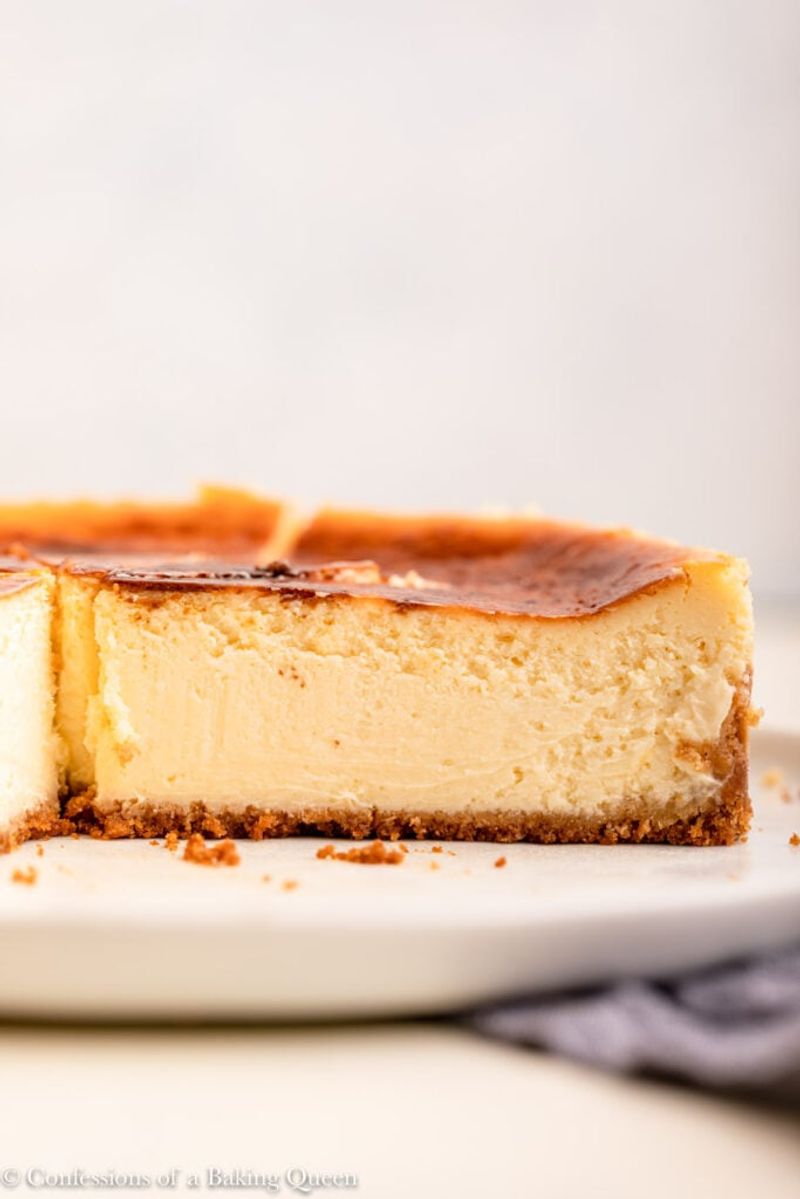
Eggs are the engine that sets the custard. Their proteins gently coagulate as heat rises, transforming soft batter into a sliceable, silk-smooth cake.
In New York style, a slightly higher egg ratio tightens the set without losing creaminess.
Beat the eggs lightly before adding, then mix just until combined. Overbeating whips in air, which lifts, then collapses, and can turn the texture spongy.
Properly mixed eggs give a fine, custardy crumb instead of bubbles.
Room temperature eggs blend faster and reduce streaks. Add them last, after cream cheese turns smooth, to avoid lumps.
That careful order locks in structure so each slice stands tall, cuts clean, and still melts on the palate.
3. A touch of flour or cornstarch
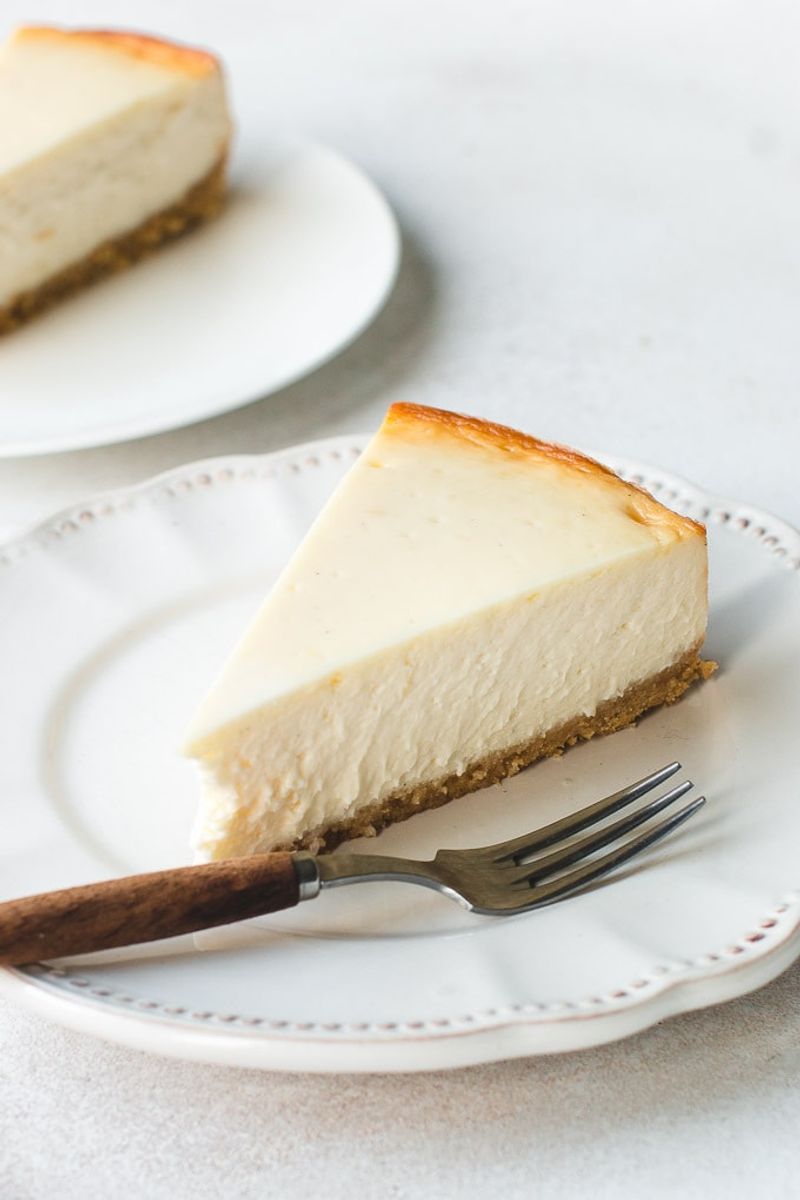
A small amount of flour or cornstarch quietly stabilizes the batter. Starch absorbs free moisture, keeping the texture cohesive and less prone to weeping.
It also helps prevent cracks by firming the custard without overcooking the eggs.
Use just a spoonful or two. Too much turns the bite bready, but the right touch creates that signature tight body New York fans love.
Cornstarch keeps things silkier, while flour lends a slightly heartier chew.
Sift it in to avoid clumps and mix gently. This minor addition makes the difference between loose and sculpted slices.
You get clean edges, a satiny interior, and a cheesecake that holds shape from first cut to final forkful.
4. Sour cream or heavy cream in moderation
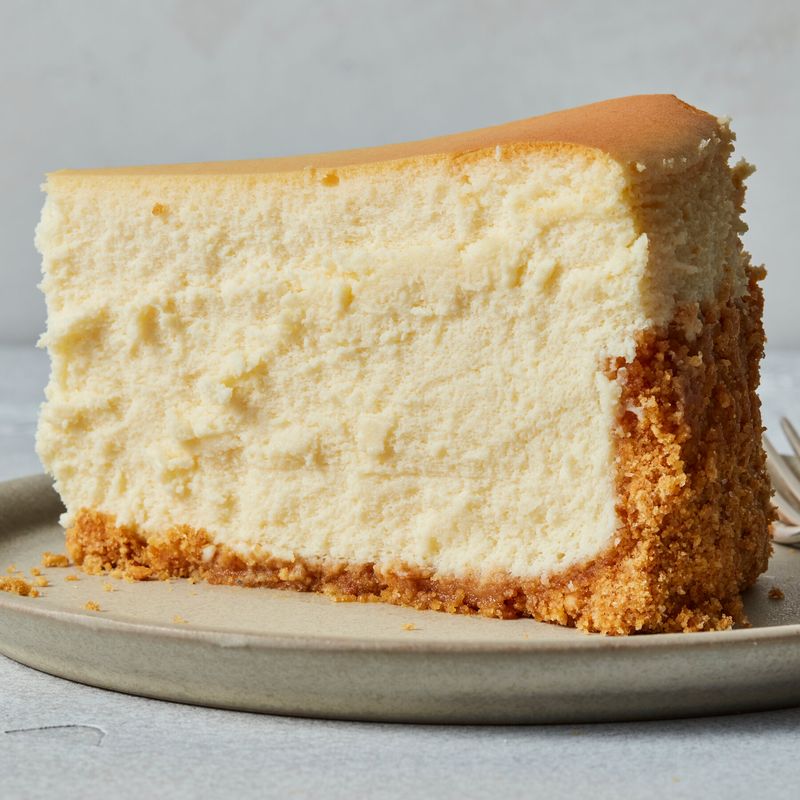
A modest pour of sour cream or heavy cream mellows tang and loosens the batter just enough. The goal is creamier mouthfeel without turning airy.
New York style keeps additions restrained so the cake stays dense and deeply smooth.
Sour cream adds gentle tang and tenderness. Heavy cream contributes richness and silk.
Either way, balance is key so fat stays high but water stays low, protecting that iconic heft on the fork.
Fold it in at the end, mixing until no streaks remain. Too much will dilute structure and lengthen bake time.
Just a small addition gives a more luxurious, round finish while preserving that compact, custard-first texture.
5. Low-and-slow baking with humidity
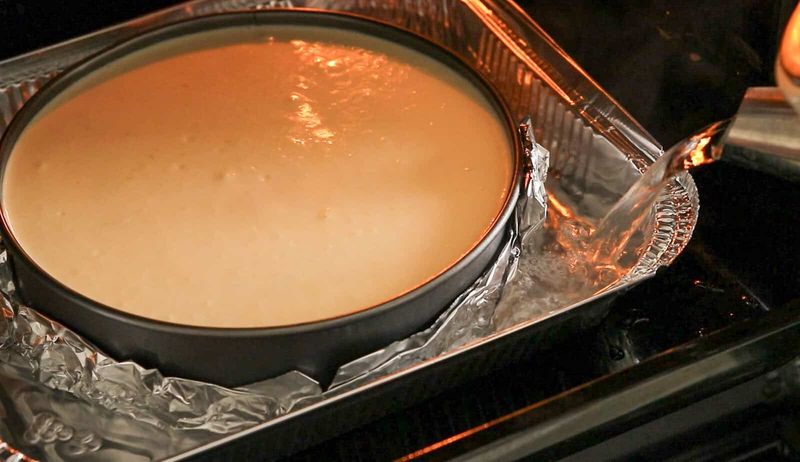
Gentle heat protects the custard from curdling. Bake at a moderate temperature so the edges set gradually and the center retains creaminess.
A water bath or a pan of hot water on a lower rack adds humidity that prevents drying and cracking.
Wrap the springform in foil to keep water out. The moist environment evens out temperature swings and helps the cheesecake rise slightly, then settle without collapse.
Low-and-slow translates to a tight yet silky interior.
Pull it when the center still wobbles like set jelly. Residual heat completes the cook.
That restraint keeps proteins tender, starches smooth, and the final texture dense, custardy, and seamless from rim to core.
6. Mixing just until smooth
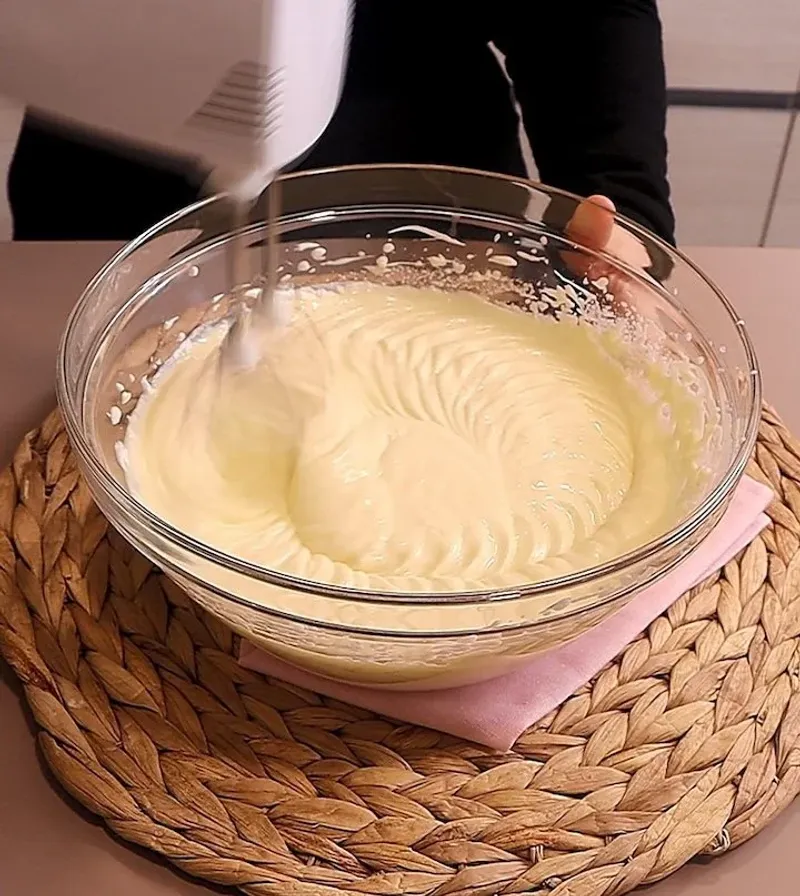
Mixing is where many cheesecakes go wrong. Overmixing whips in air that puffs the cake, then sinks into cracks and graininess.
New York texture depends on minimal aeration so the crumb stays compact and creamy.
Beat the cream cheese until satiny, scrape the bowl, then add sugar and beat only until blended. Add eggs last and mix on low just to combine.
Avoid frothy tops or visible bubbles in the bowl.
Tap the pan before baking to release stray pockets of air. Smooth the surface with an offset spatula for even set.
Those small moves mean fewer fissures, a tighter custard, and that signature smooth cut that holds at room temperature.
7. The overnight chill
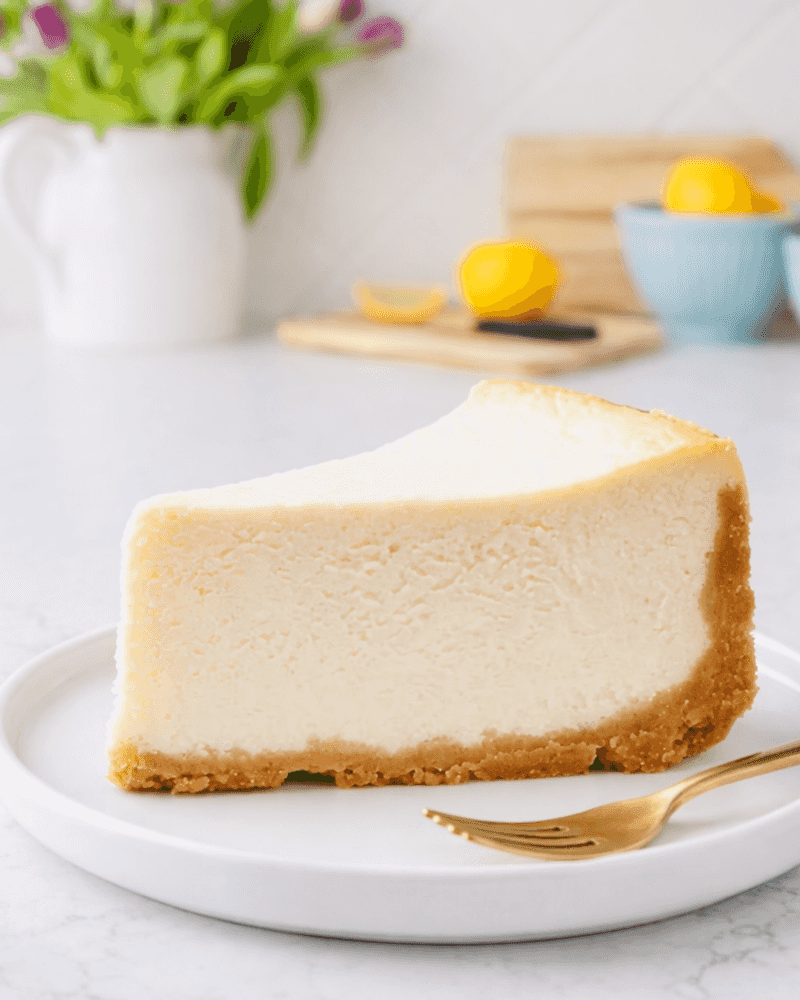
Cooling is not downtime, it is part of the recipe. As the cheesecake rests, proteins relax and moisture redistributes, tightening the crumb from soft wobble to clean slice.
Refrigeration locks in the set for that dense-but-creamy finish.
Cool to room temperature first to avoid condensation that can drip and mar the top. Then chill at least overnight, preferably 12 to 24 hours.
The flavor deepens while the texture becomes cohesive and velvety.
Slice with a hot, dry knife for glassy edges. Wipe between cuts to keep faces smooth.
Patience here pays off with a stable, custardy interior that stands tall on the plate and tastes even better the next day.