
Signs Your Watermelon Is No Longer Fresh
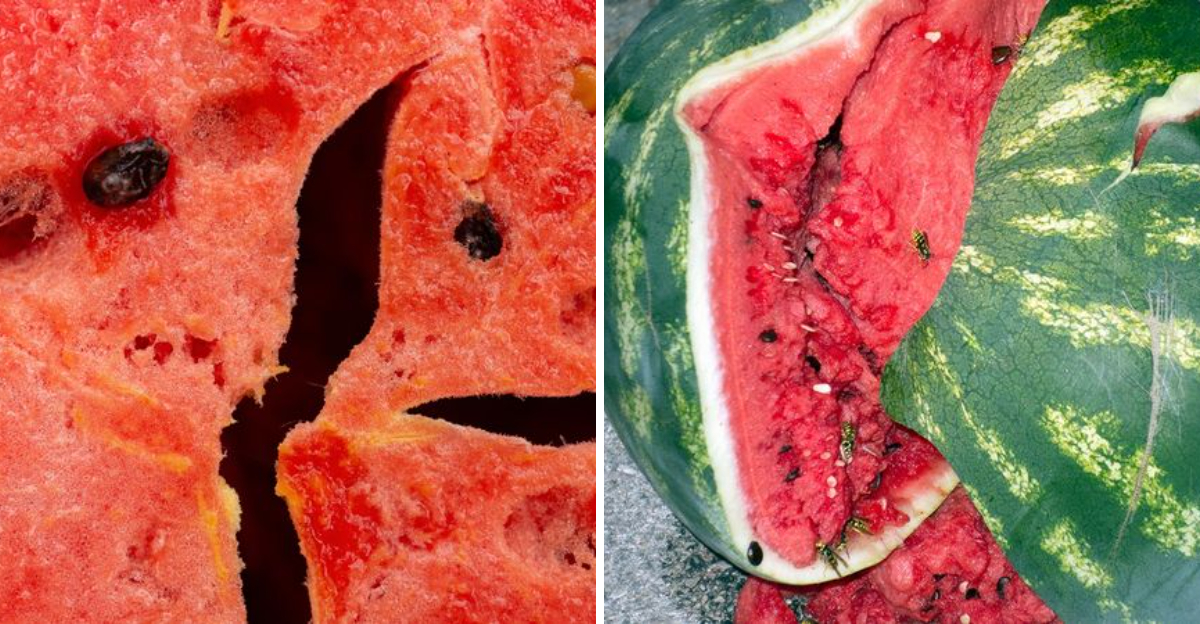
Watermelon can fool you. It might look flawless on the outside yet be tired, watery, or even a little fizzy inside.
If you want every slice to be crisp and candy sweet, spotting early warning signs is your best move. Here are the easiest checks you can do in seconds, plus what each one really means so you never waste another melon.
1. It feels unusually light for its size
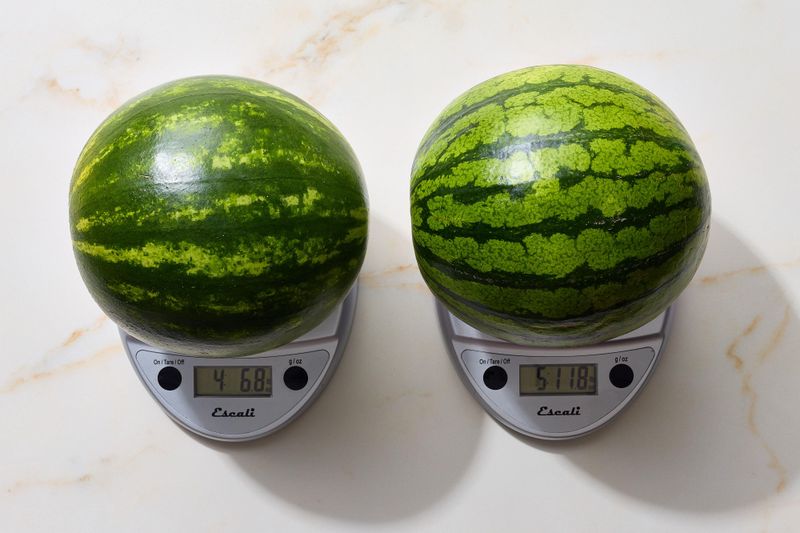
Pick it up and compare to similar melons. If it feels oddly light for the size, the watermelon likely lost moisture over time.
Less water inside means less juice waiting for you, and a drier, mealy bite.
As water escapes through natural respiration, cells collapse and texture degrades. The result is disappointing flavor that tastes flat instead of fresh and sweet.
A light melon can also signal it was stored too warm or too long.
Use a quick side by side test in store. Grab two similar sizes and choose the heavier one.
At home, if yours suddenly seems lighter than you remember, that usually means it is past its prime.
2. Soft spots or give when pressed
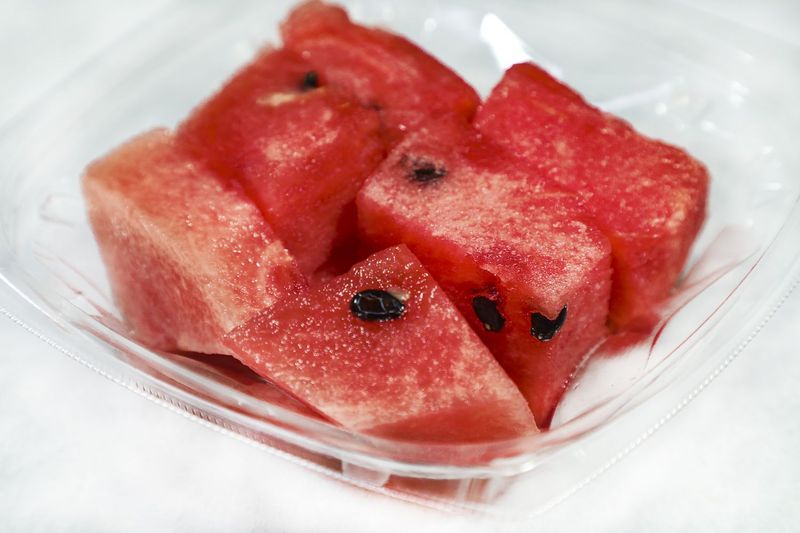
Press gently around the rind. Fresh watermelon should feel firm with little to no give.
Soft spots mean the flesh beneath is breaking down, turning mushy, and losing structure.
Those softer areas often come from bruising during handling or from age related tissue collapse. Inside, you may find grainy flesh or pockets of watery mush.
Flavor suffers too, becoming bland or oddly sour.
If you feel more than a slight springiness, move on. A firm rind is your first defense against disappointment.
When you already own it, soft spots are your cue to cut and use immediately or plan for a quick toss.
3. Leaking or sticky wetness on the rind
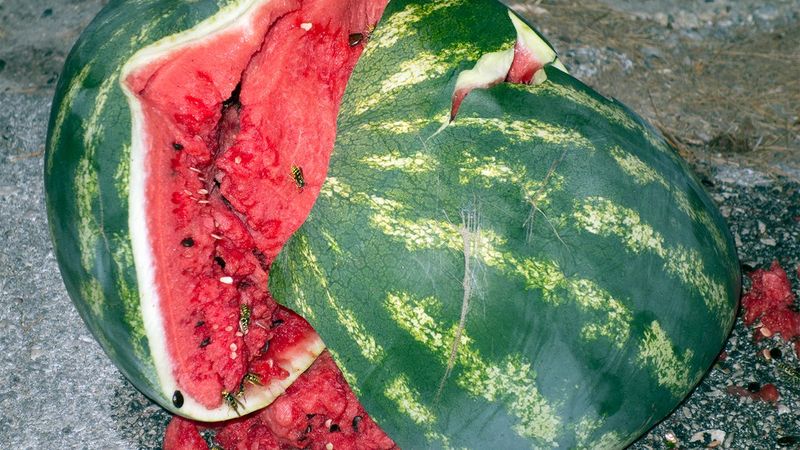
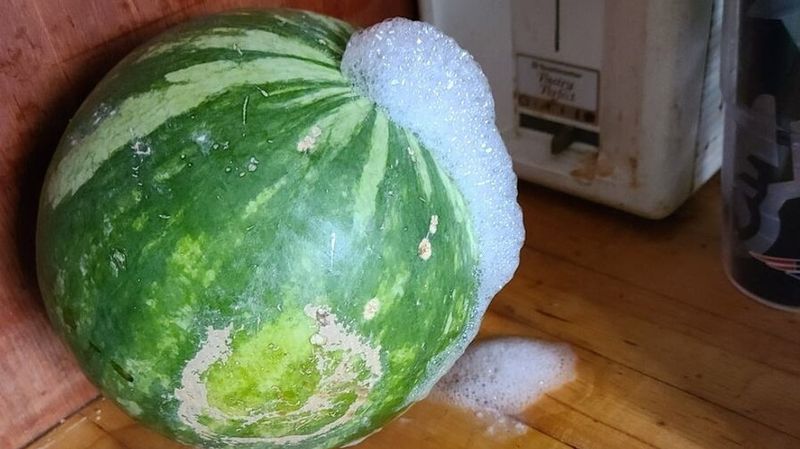
Notice any tacky film or drips on the rind. That sticky wetness can mean internal cracks or juice seeping out as the interior breaks down.
It is a red flag for fermentation starting.
When cells rupture, sugars escape and create a syrupy surface that grabs dust and dirt. The rind may even feel slick.
If you sniff and catch a sour or wine like note, the clock has run out.
Even without a strong smell, consistent stickiness suggests damage or overripeness. Clean residue will return if the issue is internal.
Best move is to skip that melon or refrigerate and use immediately if already bought.
4. Deep bruises, dents, or cracked areas
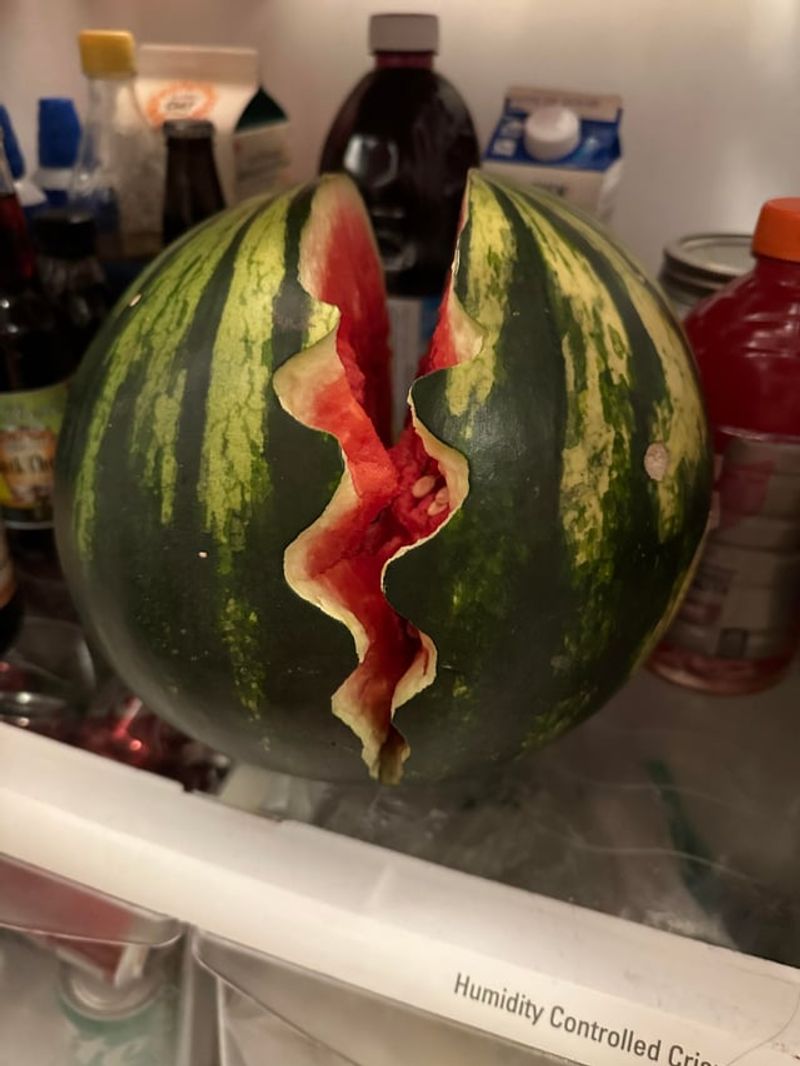
Look for dents, spidering cracks, or dark bruised patches. These injuries let microbes in and speed up breakdown.
Inside, bruised flesh often turns brownish, mushy, and off tasting.
Cracks can be subtle hairlines or deeper splits. Both compromise the rind’s protective barrier and invite spoilage.
The melon might leak, ferment, or simply taste tired and grainy.
If the damage is wide or deep, pass. For minor cosmetic scuffs, still check weight, sound, and smell.
When the outside looks battered, the inside rarely delivers satisfying crunch or clean sweetness.
5. A sour, wine-like smell from the outside
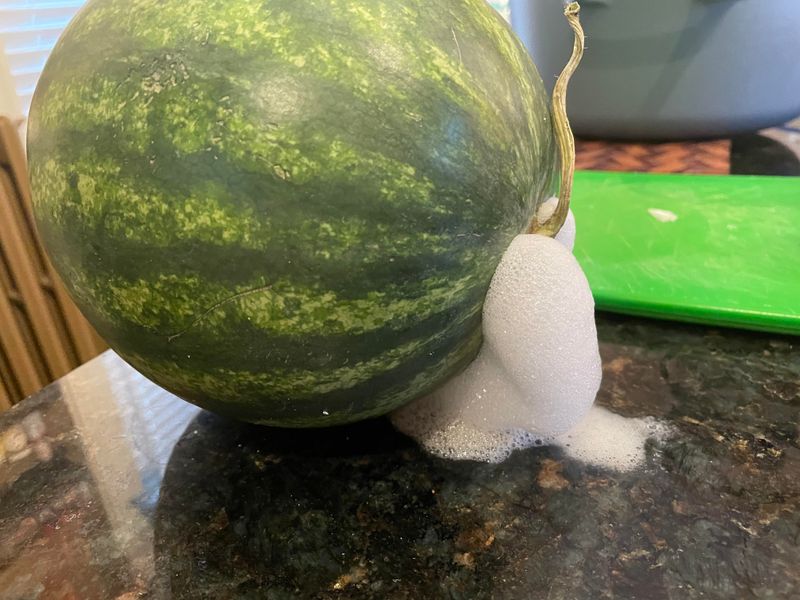
Give it a sniff near the stem end. Fresh watermelon smells clean and barely sweet.
If you catch sour, wine like, or boozy notes, fermentation is underway.
Natural sugars feed wild yeasts when conditions are warm. That creates alcohol like aromas and sometimes faint fizz inside.
Flavor shifts from bright to funky or bitter, and texture often turns slushy.
Trust your nose. An off smell is one of the most reliable freshness checks you have.
If it smells like it is turning into a drink, it already has, and you should skip it or discard.
6. Mold on the rind
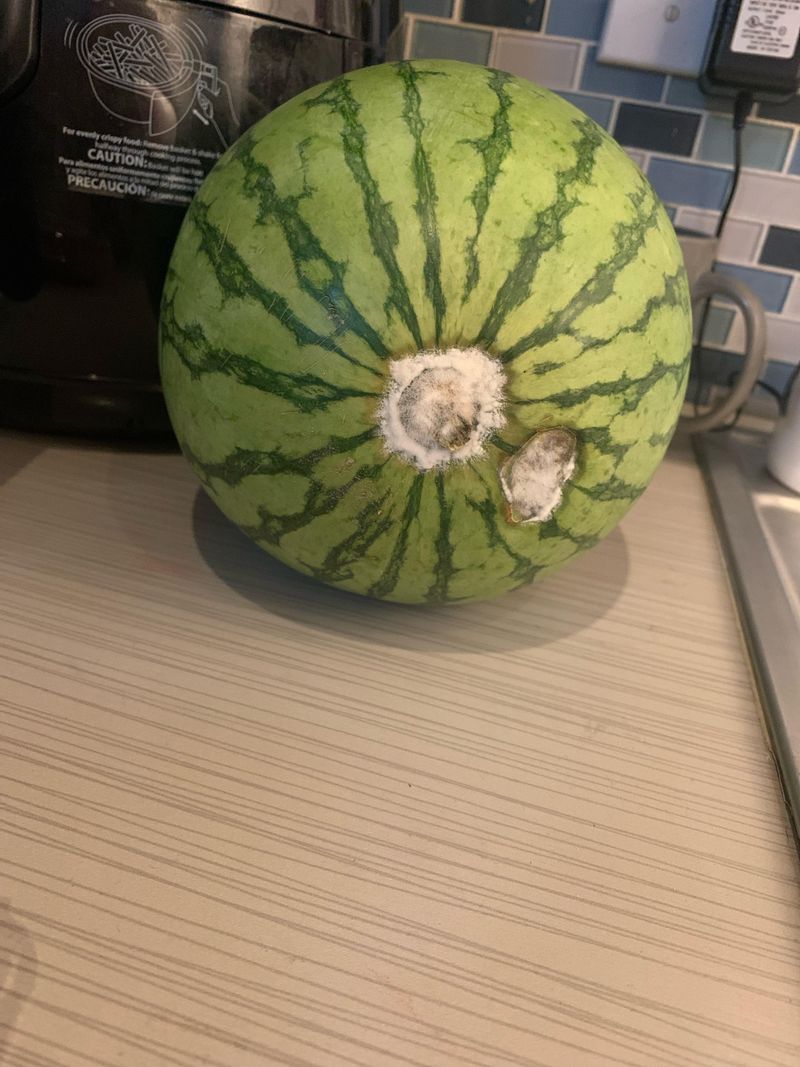
Inspect the rind closely, especially around the stem and underside. Any fuzzy spots, white dusting, or colored mold growth is a clear no. Mold means moisture sat there long enough for spores to flourish.
Even if the patch seems small, roots can extend deeper than you see. Cutting around it is risky because spores spread quickly and may have reached the flesh.
The taste can turn musty or sour.
When in doubt, toss it. Moldy rinds usually accompany other problems like soft spots or off odors.
Choosing a clean, dry rind keeps your chances of crisp, safe fruit much higher.
7. Dark, damp, or slimy stem area
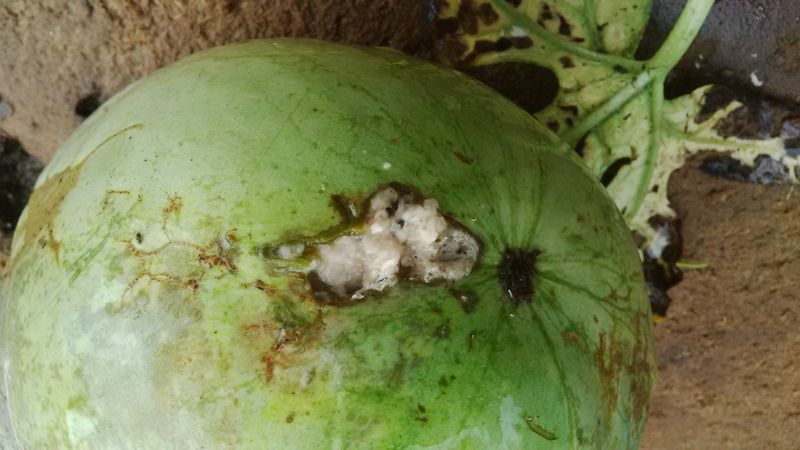
Check the stem end for darkness, dampness, or slime. That spot is a common turning point where moisture collects and microbes thrive.
A healthy stem area looks dry and firm.
When it appears glossy wet or sticky, internal breakdown may be progressing. You might also smell sour or yeasty notes here first.
Cut melons with slimy stems tend to be mushy inside.
If the stem zone is questionable, skip the whole fruit. For one you already bought, refrigerate and use quickly, but prepare for lackluster texture.
Better yet, choose melons with clean, matte, and intact stem scars.
8. Slimy or sticky surface on cut pieces
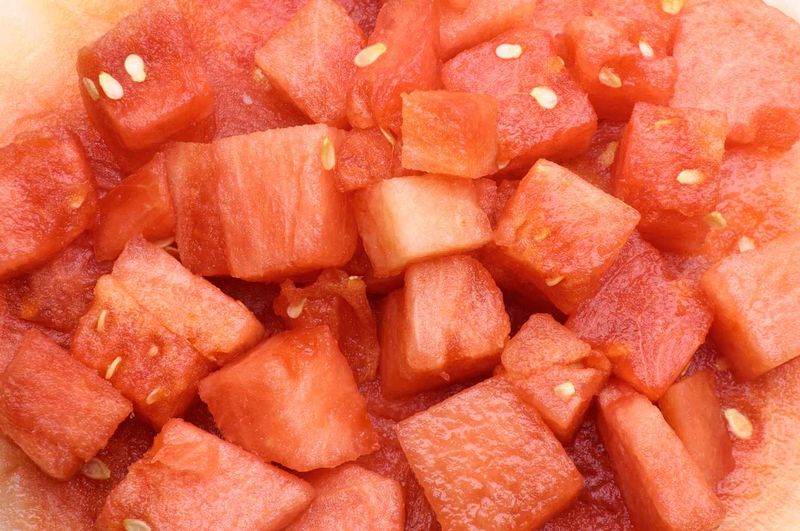
Touch a cube and rub fingers together. A slick, slimy film means bacterial growth is likely underway.
Fresh pieces feel clean and juicy, not syrupy or sticky.
This texture often appears after sitting too long at room temp or in a warm fridge. Sugars feed microbes, and the surface turns slippery.
The taste may shift toward sour or fermenty.
When you notice slime, do not rinse and eat. Washing will not fix internal spoilage.
Discard the batch and sanitize the container to avoid seeding future fruit with lingering microbes.
9. Flesh looks dull, grainy, or mushy
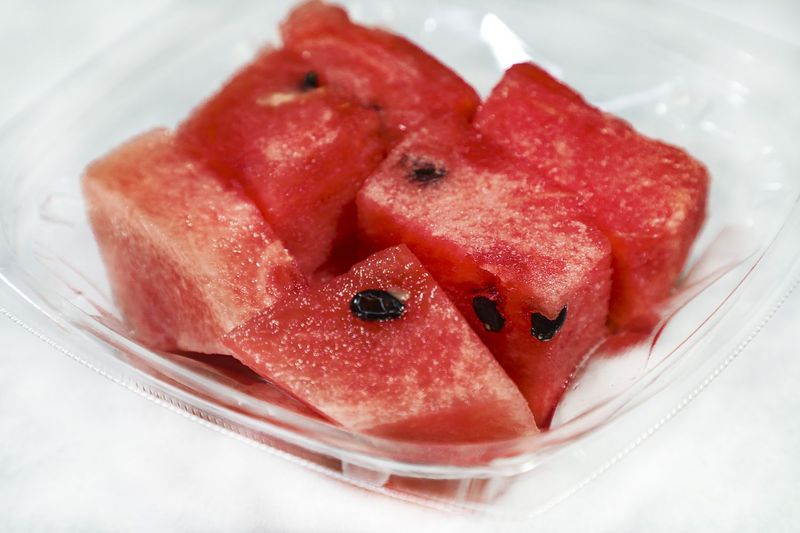
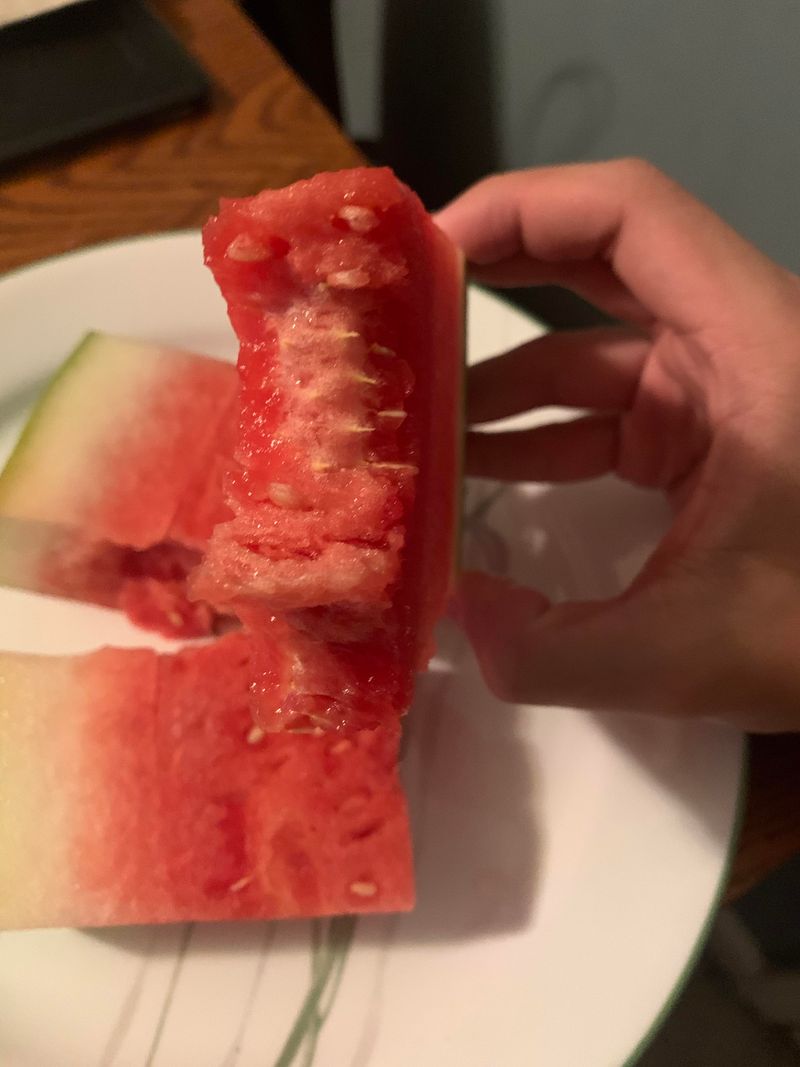
Fresh watermelon sparkles with a crisp, glassy look. When flesh turns dull, grainy, or mushy, structure has collapsed.
Water has migrated out of cells, leaving a mealier bite.
This can happen from age, poor storage, or bruising. Expect flatter flavor and disappointing juiciness.
You might also see pale streaks or dry looking pockets that crumble when pressed.
If the texture is off across the board, it is not recovering. Use any salvageable pieces quickly in smoothies where texture matters less.
Otherwise, accept the loss and choose better next time.
10. Excess liquid pooling in the container
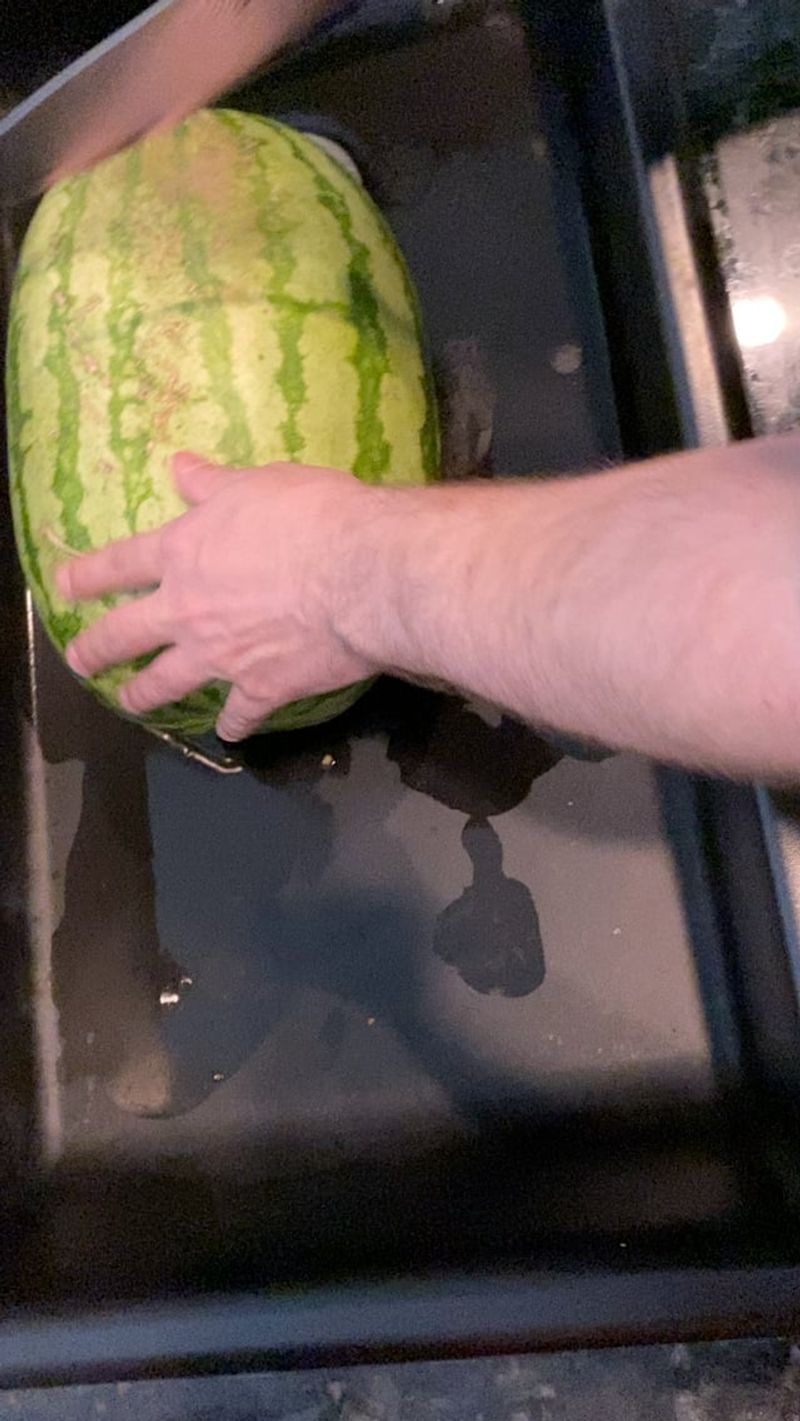
A little juice at the bottom is normal. A large watery pool means the cells are breaking down and dumping liquid.
That usually tracks with softer, less vibrant cubes.
As the structure fails, flavor washes out and sweetness dilutes. You may also spot pale edges where water leached away.
The texture shifts from crisp to soggy quickly.
Drain and taste a small piece. If it is bland and soft, the batch is declining and should be used immediately or tossed.
Next time, store in a shallow layer and keep it cold to slow weeping.
11. Color shifts to grayish, darkened, or patchy
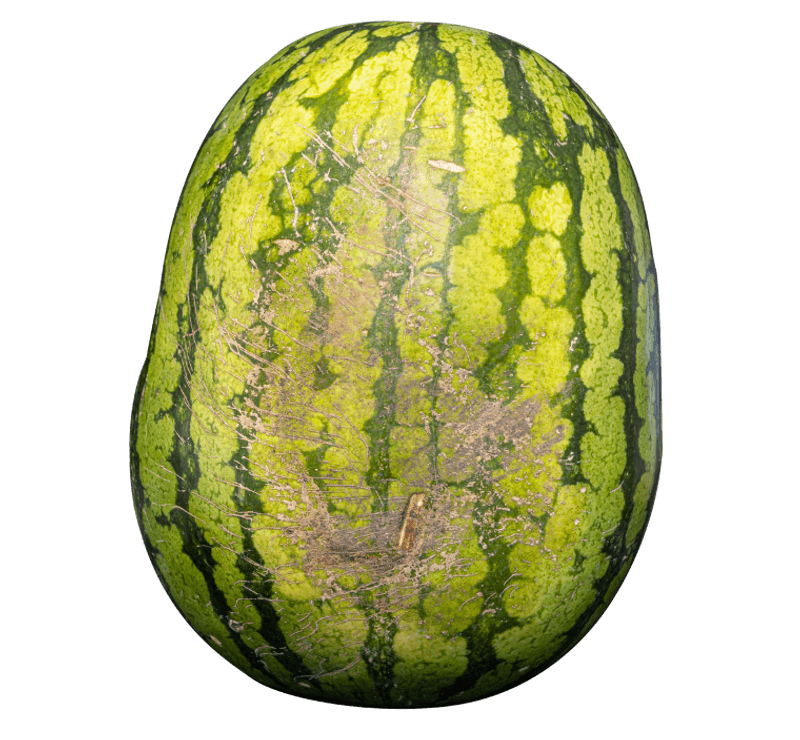
Bright, even color signals freshness. When cubes look grayish, unusually dark, or patchy, internal changes are underway.
Pigments break down as the fruit ages or warms.
These color shifts often come with texture problems like graininess and dryness. Flavor can skew bitter or flat.
Patchiness may also point to bruised sections that never recovered.
Trust the overall look. If the color no longer pops and the surface seems dull, conditions likely favored spoilage.
Combine this with smell and texture checks to decide quickly.
12. White fuzz or visible mold on cut fruit
Any fuzzy growth on cut watermelon is a hard stop. White, green, or black specks indicate mold colonies.
Spores travel fast in moist containers, so one spot often means many more.
Do not trim and keep eating. Mold roots can extend into the flesh, carrying off flavors and potential toxins.
The safest choice is to discard the entire container.
To prevent this, keep containers clean, dry lids, and store below 40 degrees Fahrenheit. Use cut melon within three to four days.
If you spot even a tiny fuzzy dot, it is not worth the risk.
13. Off smell: sour, bubbly, or fermented
Open the container and smell before serving. Fresh cubes smell clean and sweet.
A sour, bubbly, or boozy aroma signals fermentation or bacterial growth.
Those scents tell you sugars are being metabolized into acids and alcohols. Texture usually follows, turning soft or slimy.
Flavor becomes harsh or oddly fizzy on the tongue.
Once that smell appears, it will not reverse. Discard and sanitize the container.
It is better to lose a bowl than deal with stomach trouble later.
14. Strange taste: bitter, fizzy, or overly sour
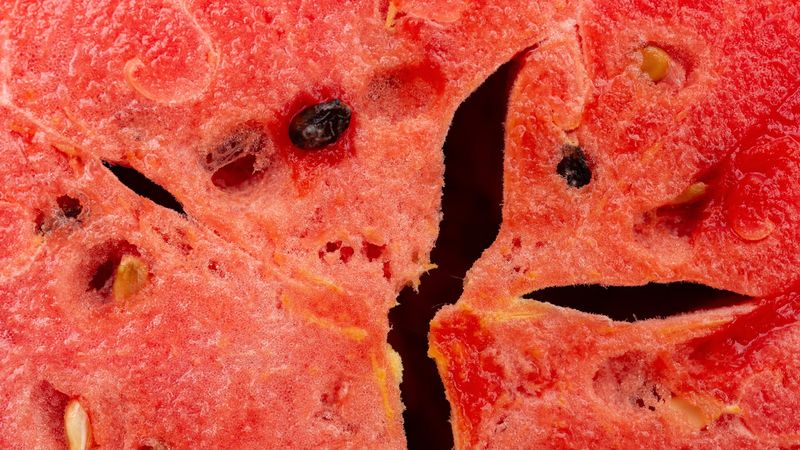
Take a cautious taste if everything else seems borderline. Bitter, fizzy, or overly sour flavors are clear signs of spoilage.
Fizz indicates fermentation, where gas forms inside the fruit.
Bitter notes can come from microbial activity or breakdown byproducts. Sweetness fades as sugars are consumed, leaving a harsh or vinegary profile.
Texture typically feels soft or watery.
If you notice any of these tastes, stop eating and discard. Trust your palate.
Fresh watermelon should taste clean, bright, and simply sweet, never sharp or prickly on the tongue.