18 Scandinavian Desserts Worth Knowing
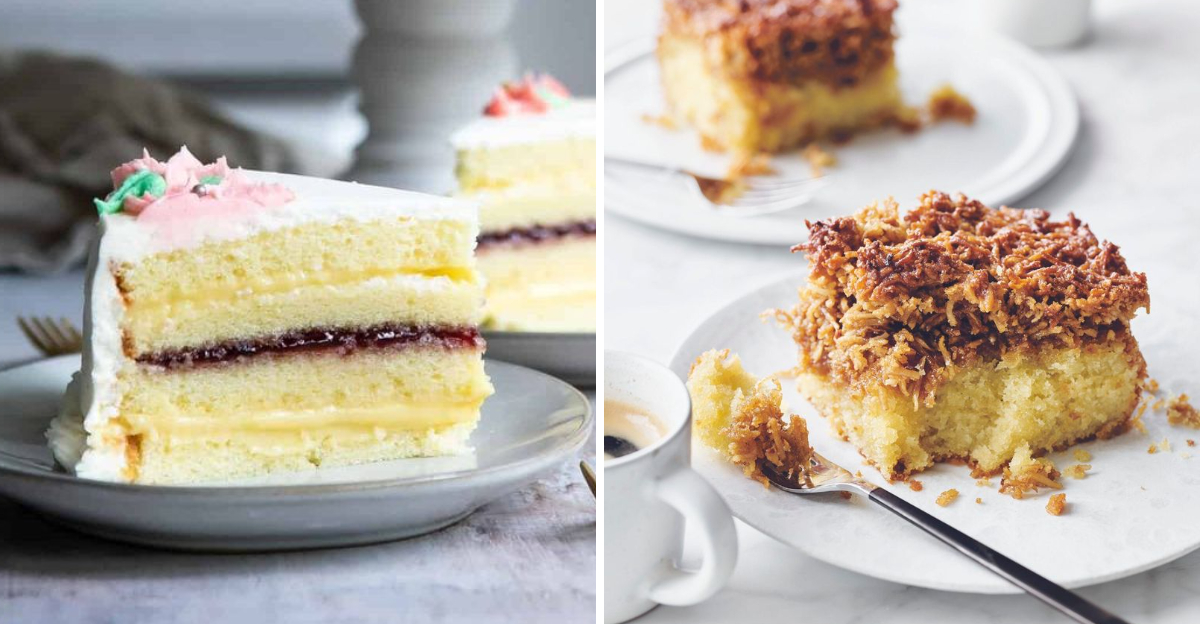
Scandinavian countries have a long, rich tradition of baking and sweet treats that go far beyond what most people expect. From cozy Danish pastries to festive Norwegian cakes, these desserts are deeply tied to culture, seasons, and family gatherings.
Whether you’re a curious foodie or just love trying new sweets, these 18 Scandinavian desserts are absolutely worth knowing about.
1. Lagkage (Danish Layer Cake)
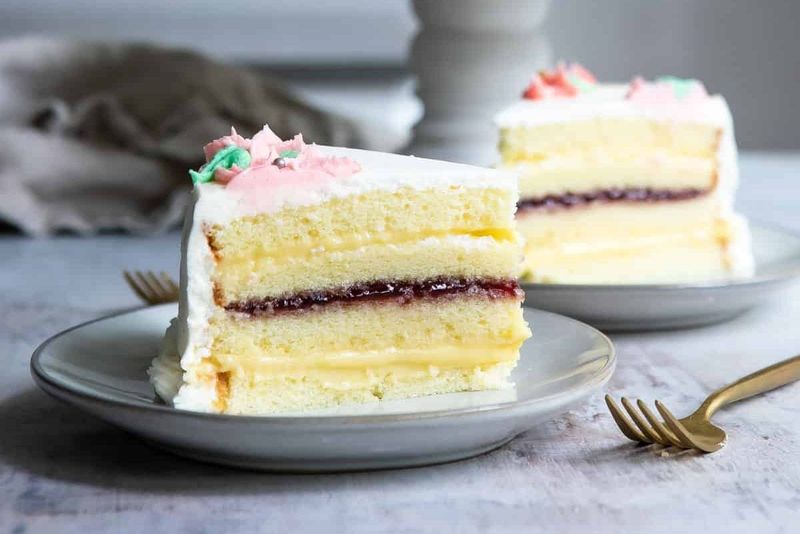
Birthday celebrations in Denmark almost always feature one showstopper on the table: Lagkage. This gorgeous layer cake stacks soft vanilla sponge with raspberry jam and silky vanilla pastry cream between each tier.
Topped with smooth white icing and piped whipped cream, it looks as impressive as it tastes. Danes take their birthday cakes seriously, and Lagkage has earned its place as the ultimate celebration centerpiece.
It’s the kind of cake that makes everyone stop and stare before the first slice is even cut.
2. Drømmekage (Dream Cake)
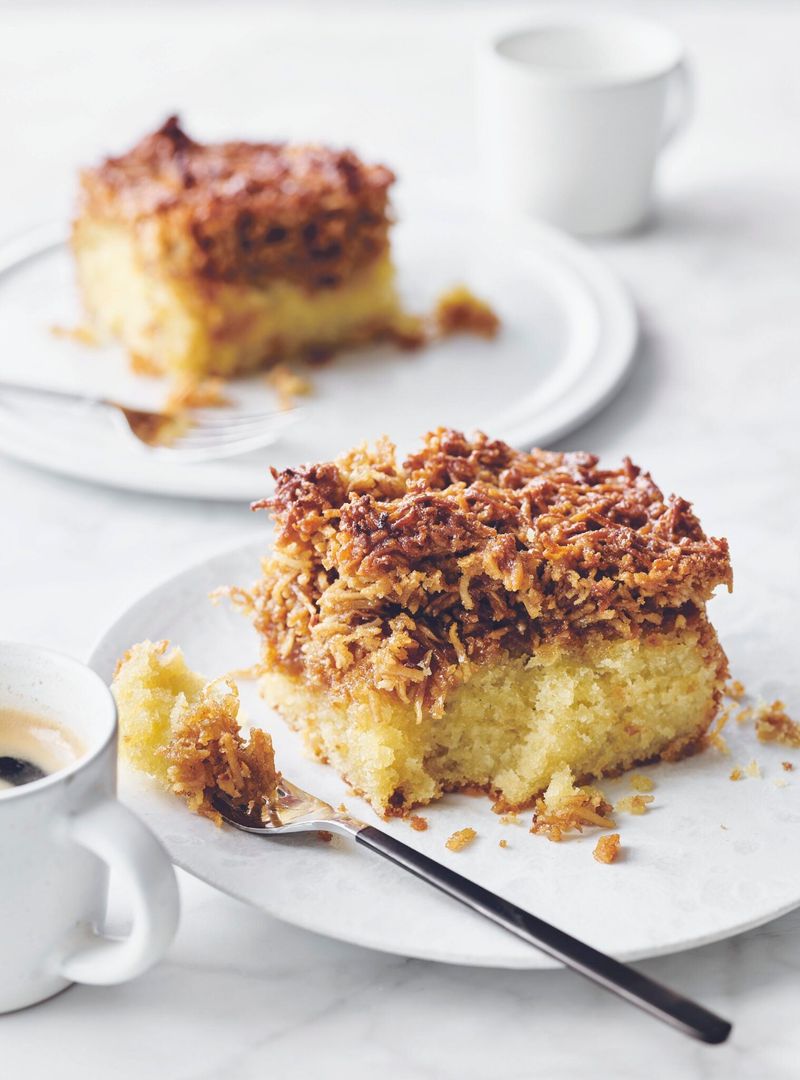
The name says it all. Drømmekage, which translates to “Dream Cake,” earns its title thanks to one unforgettable feature: a sticky, caramelized coconut topping that gets broiled right onto the soft vanilla sponge beneath it.
The contrast between the fluffy cake and the crunchy, buttery coconut crust is what makes every bite so satisfying. Originally from the small Danish town of Brovst, this humble cake has become a beloved staple across Denmark.
Once you try it, ordinary cake just won’t cut it anymore.
3. Æbleskiver
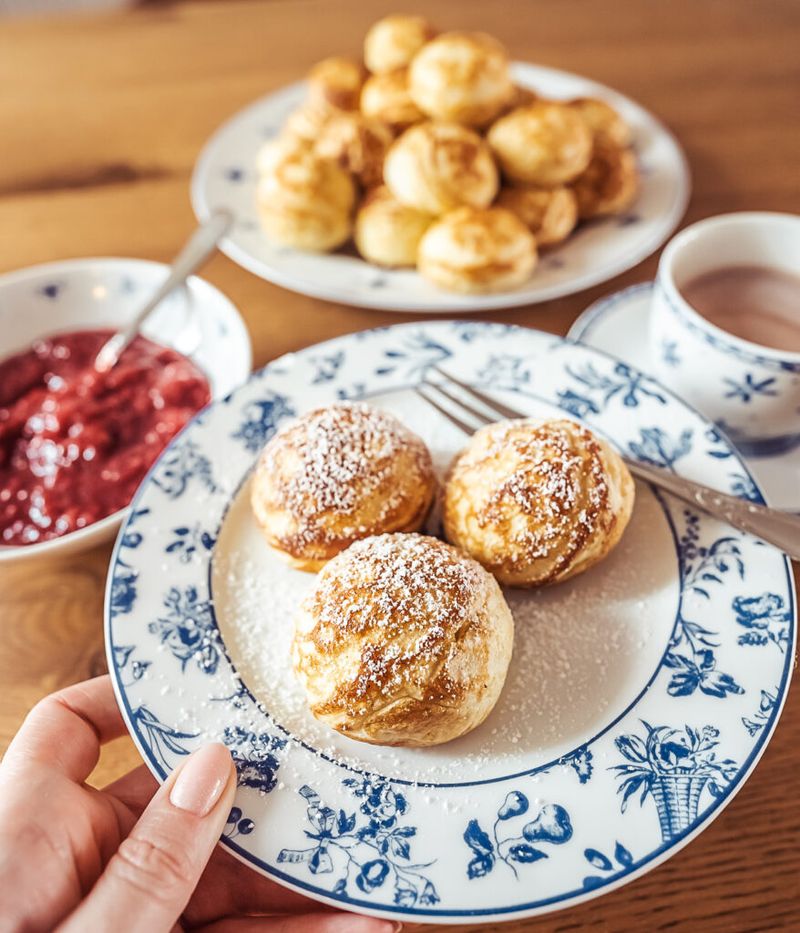
Perfectly round and golden on the outside, Æbleskiver are one of Denmark’s most charming and recognizable treats. These puffy, pancake-like spheres are cooked in a special pan with round molds, giving them their signature ball shape.
Dusted generously with powdered sugar and paired with raspberry jam for dipping, they’re especially popular during the Christmas season. In Norway, they go by the name “munker.” Whether you call them Æbleskiver or munker, one thing is certain: you’ll always want more than just one.
4. Hindbærsnitter (Danish Raspberry Squares)
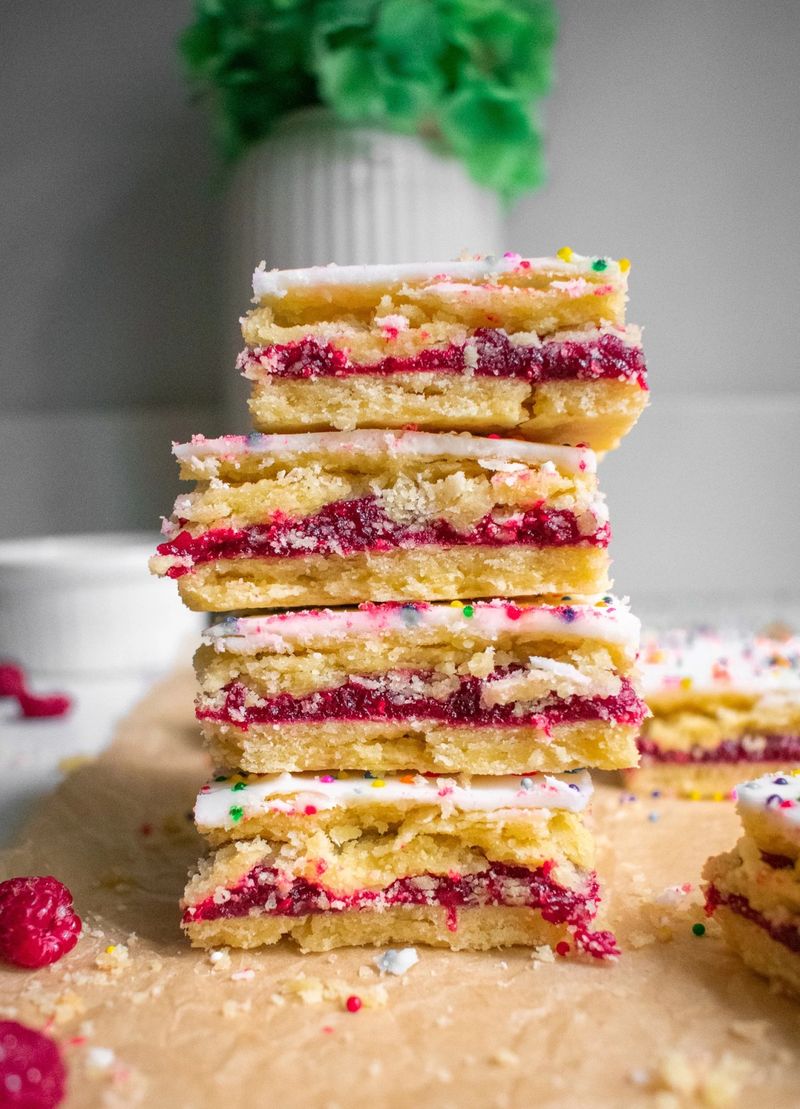
Walk into almost any Danish bakery and you’ll spot Hindbærsnitter right away. These eye-catching squares are made from two sheets of buttery vanilla shortcrust pastry hugging a thick, jewel-bright layer of raspberry jam in the middle.
A generous coat of white icing on top, often dotted with colorful sprinkles, makes them look almost too pretty to eat. Crisp, sweet, and slightly tart all at once, they’re a classic Scandinavian treat that appeals to kids and adults equally.
Bakeries across Denmark sell out of them daily.
5. Risalamande
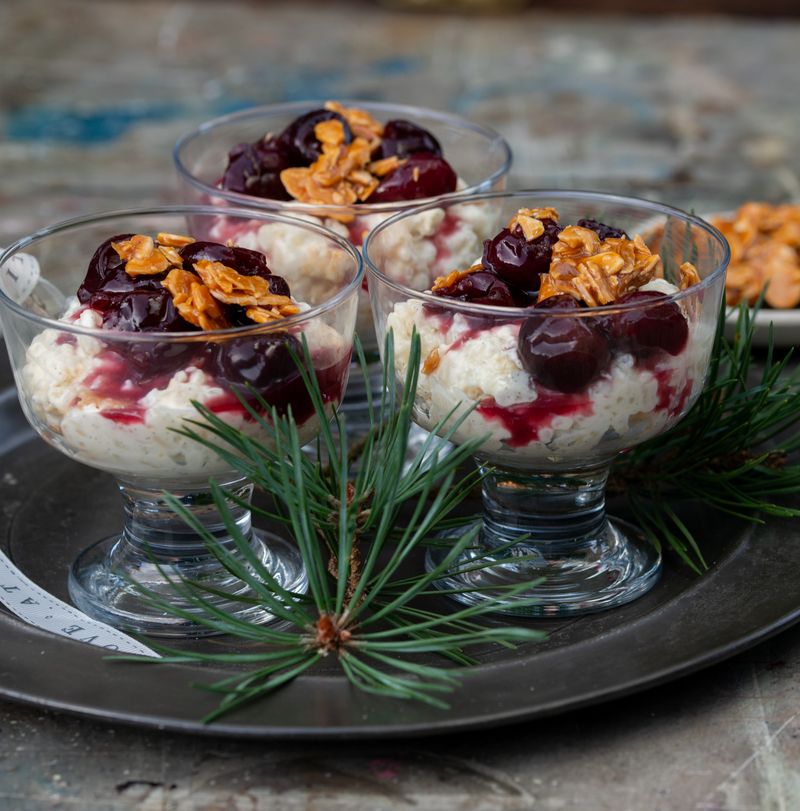
Christmas Eve in Denmark wouldn’t be complete without a bowl of Risalamande. This chilled dessert starts with leftover rice porridge, then gets folded together with vanilla-scented whipped cream and finely chopped almonds.
The warm cherry sauce poured on top creates a beautiful contrast in both temperature and color. There’s also a beloved Danish tradition hidden inside: one whole almond is tucked into the bowl, and whoever finds it wins a small prize.
It’s the kind of dessert that turns a simple meal into a treasured memory.
6. Kringle (Danish Pastry Ring)
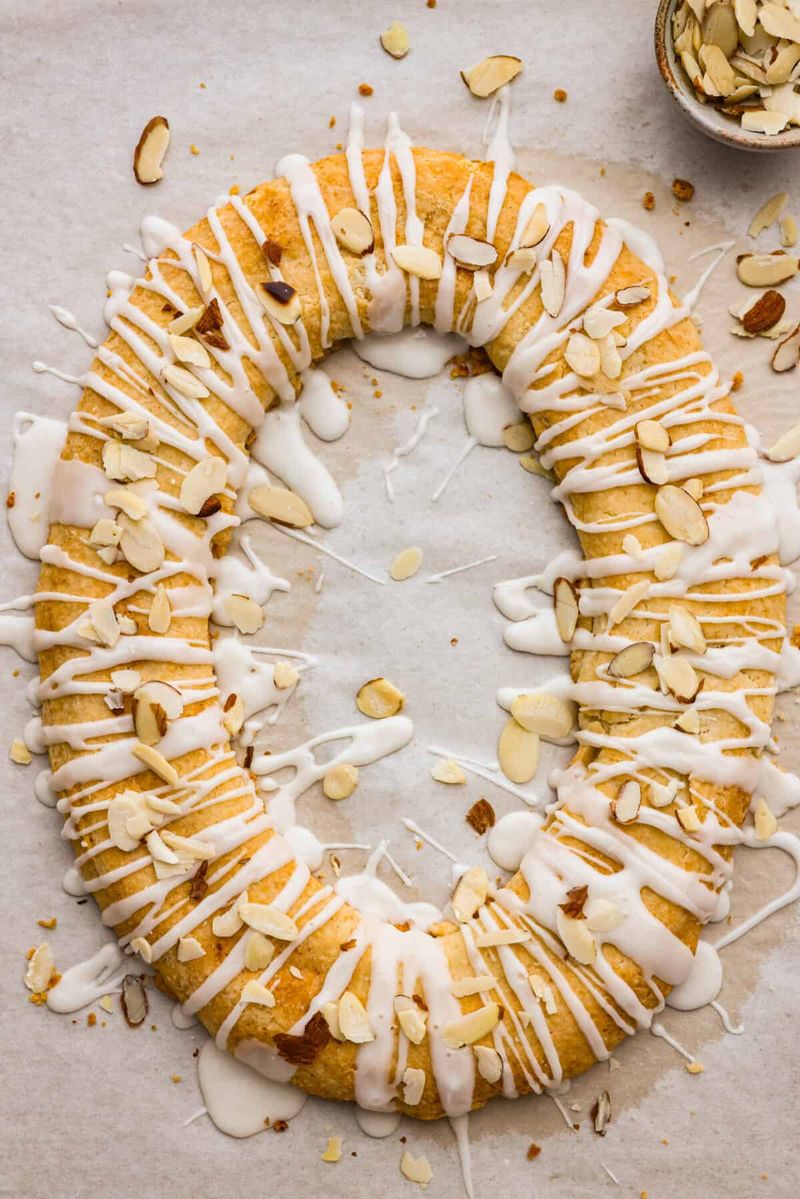
Imagine a giant cinnamon roll stretched into a ring shape, layered with sweet almond or apple filling, and drizzled with glossy icing. That’s Danish Kringle in a nutshell, and it’s every bit as indulgent as it sounds.
Originating from Denmark but hugely popular in Wisconsin, USA thanks to Danish immigrants, Kringle has traveled far from its roots. The flaky, buttery dough pulls apart beautifully into individual slices.
It’s a pastry built for sharing, perfect alongside a strong cup of coffee on a slow weekend morning.
7. Fyrstekake (Norwegian Prince Cake)
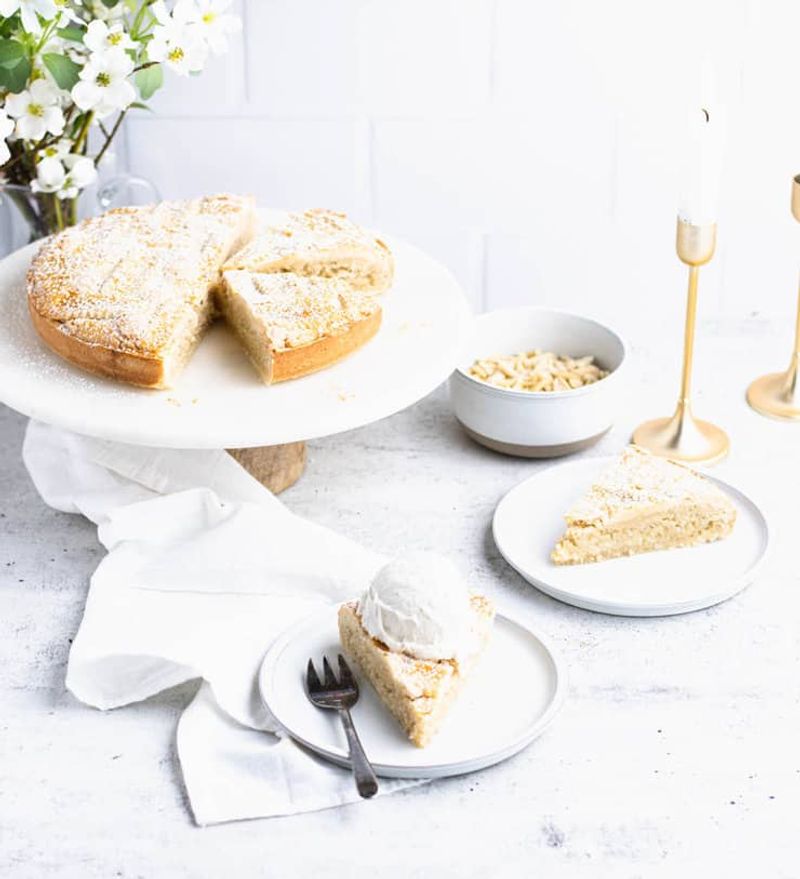
Dating back to the 1860s, Fyrstekake is one of Norway’s most enduring and beloved baked goods. The name translates to “Prince Cake,” and there’s something undeniably regal about its elegant lattice pastry crust sitting atop a tender, fragrant almond filling.
The filling, made from ground almonds, sugar, and egg whites, stays wonderfully moist even after baking. Traditionally served with coffee, this cake has been a staple at Norwegian gatherings for over 150 years.
Classic recipes rarely need updating when they’re already this good.
8. Kransekake (Norwegian Wreath Cake)
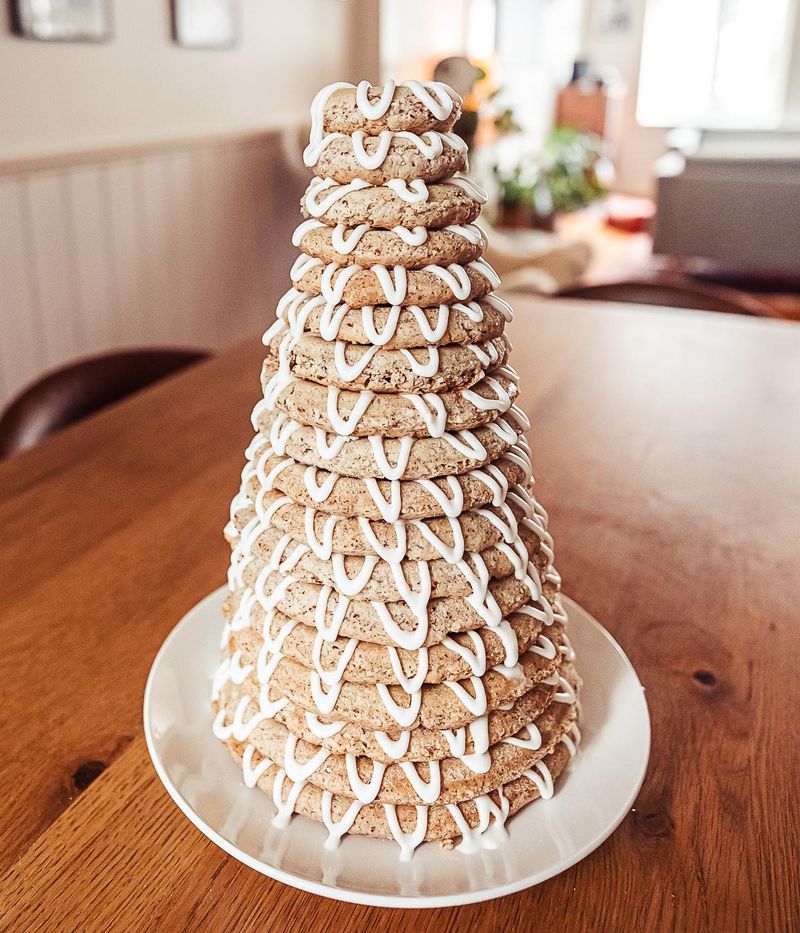
Few desserts make an entrance quite like Kransekake. This towering Norwegian showpiece is built from a series of concentric almond rings, each one slightly smaller than the last, stacked high to form an impressive cone-shaped tower.
The rings are made from a chewy, marzipan-like dough of ground almonds, sugar, and egg whites, then decorated with thin zigzags of white icing. Kransekake is a fixture at Norwegian weddings, New Year’s celebrations, and national holidays.
Guests simply pull off a ring and enjoy the satisfying chew.
9. Skolebrød (Norwegian School Bread)
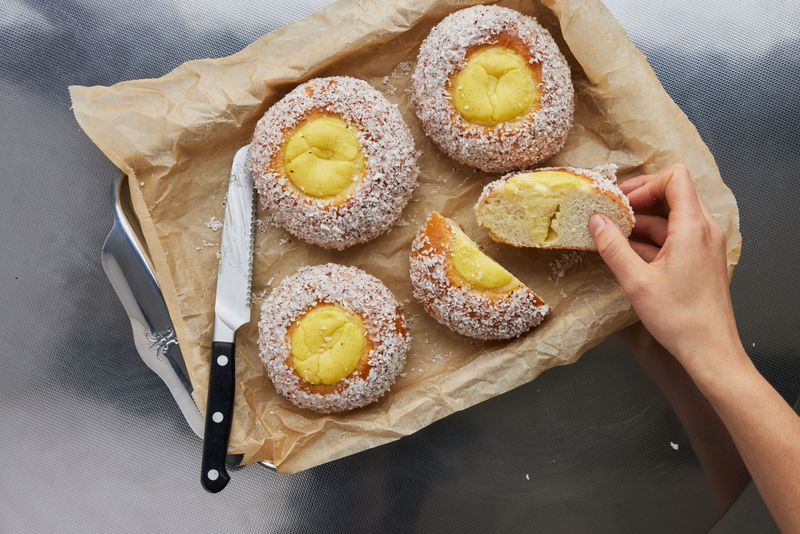
Norwegian kids have been tucking Skolebrød into their school bags for generations, and it’s easy to see why. These soft, pillowy sweet buns hide a creamy vanilla custard filling right in the center, making every bite a little surprise.
The top is dipped in sweet icing and rolled in shredded coconut, giving each bun a satisfying chew and extra sweetness. “Skolebrød” literally means “school bread,” but don’t let that fool you — these buns are far too good to be limited to lunchboxes.
10. Riskrem (Norwegian Christmas Cream)
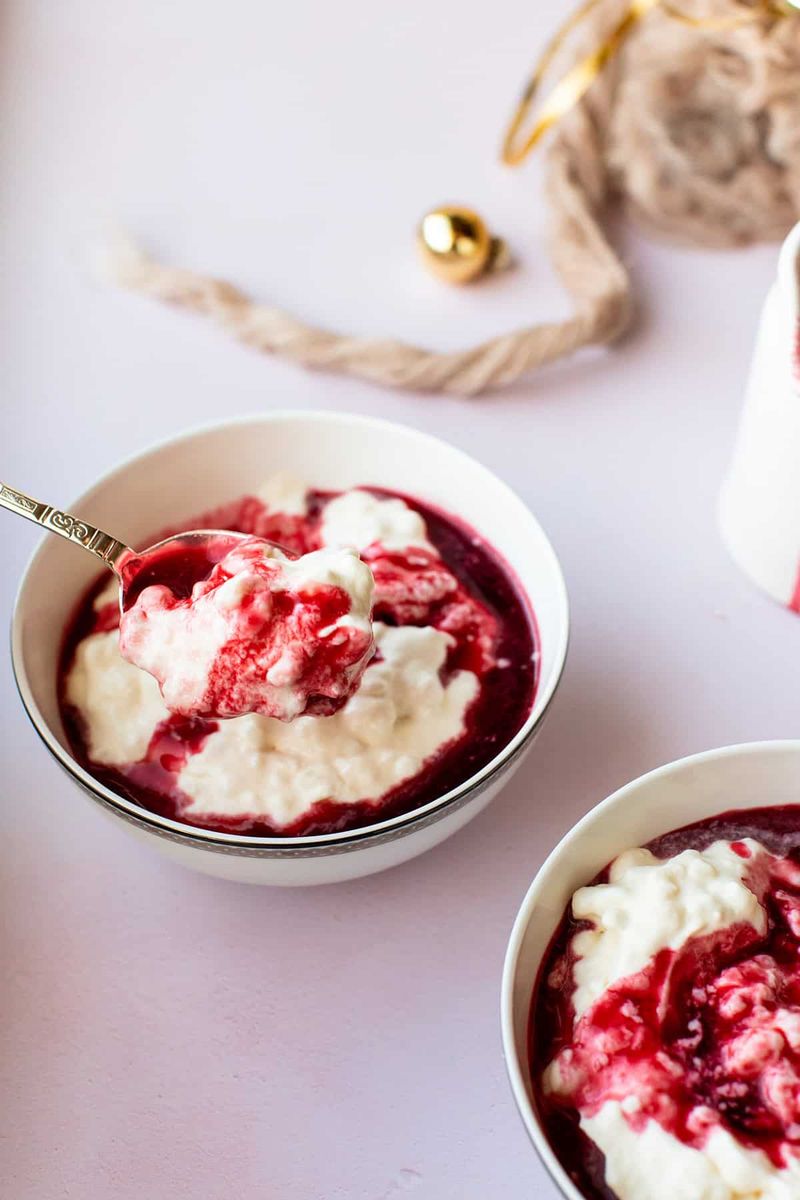
On Christmas Eve in Norway, Riskrem holds a place of honor at the dinner table. Made by folding vanilla-scented whipped cream into leftover rice porridge, this dessert is light, airy, and subtly sweet.
A bright raspberry coulis drizzled over the top adds a beautiful pop of color and a refreshing tartness that balances the creaminess perfectly. Much like Denmark’s Risalamande, a hidden almond is sometimes tucked inside for a playful prize tradition.
Simple ingredients, a little technique, and a lot of love make Riskrem truly special.
11. Vafler (Norwegian Heart Waffles)
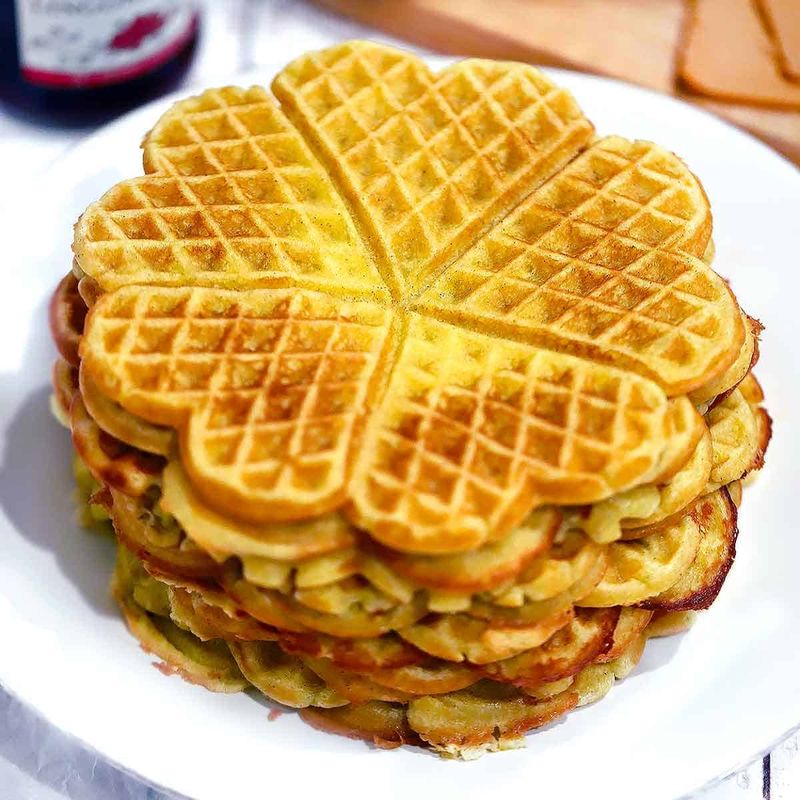
Norwegian waffles are instantly recognizable by their charming heart-shaped sections, pressed into five connected hearts by a special waffle iron. Crispy on the outside and tender on the inside, Vafler are a beloved everyday treat across Norway.
They’re often served with a combination of sour cream and jam, or paired with a slice of brunost, the iconic sweet brown cheese unique to Norway. Waffle houses and mountain cabins across the country serve them fresh and hot.
There’s something deeply comforting about a warm Norwegian waffle on a cold afternoon.
12. Prinsesstårta (Swedish Princess Cake)
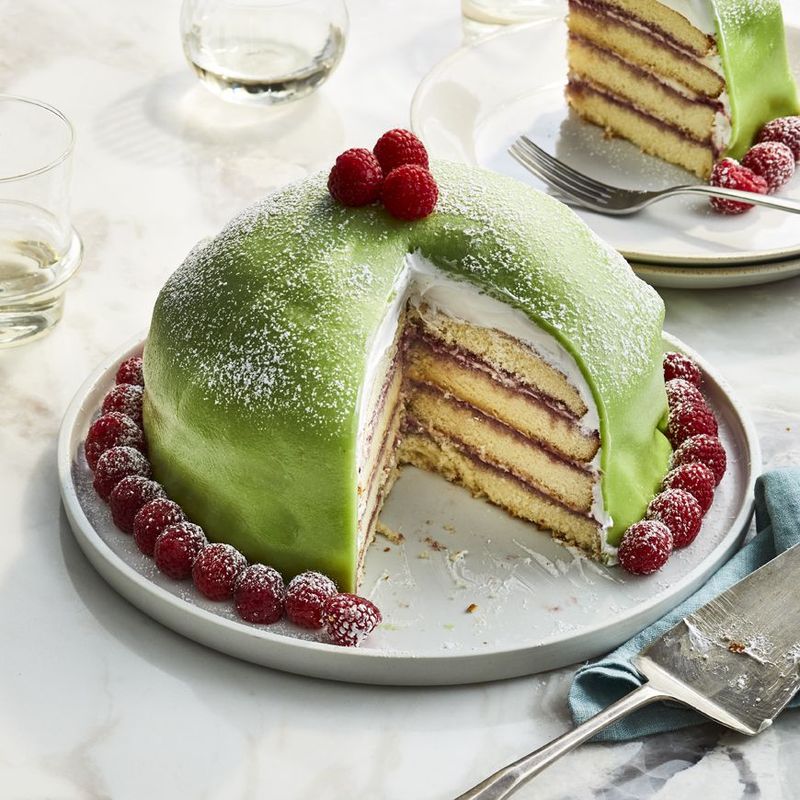
Green, domed, and impossibly elegant, Prinsesstårta is one of the most recognizable cakes in all of Scandinavia. Beneath that signature bright green marzipan shell lies a stunning combination of light sponge cake, raspberry jam, vanilla pastry cream, and a thick layer of whipped cream.
The cake was originally created in the 1920s by Swedish home economics teacher Jenny Åkerström for the Swedish princesses she taught. A delicate pink marzipan rose always sits on top.
It’s a cake that feels like royalty, one slice at a time.
13. Kladdkaka (Swedish Sticky Chocolate Cake)
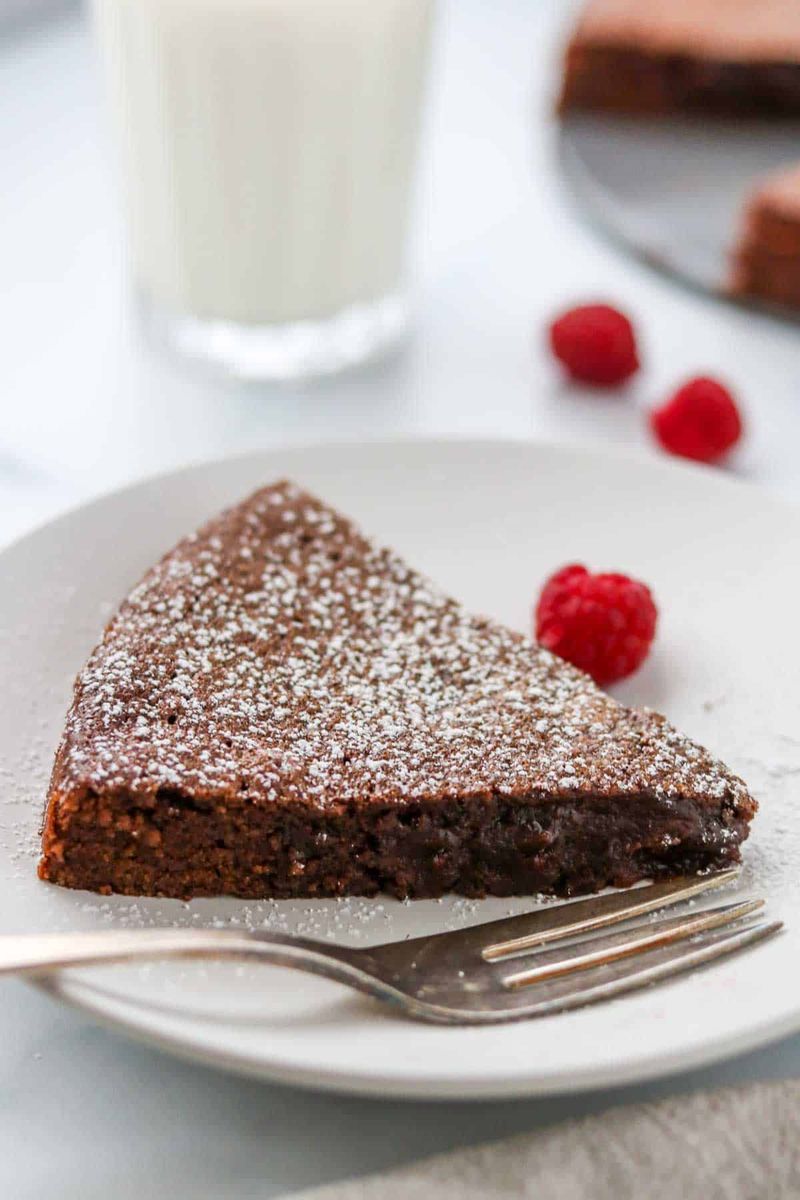
Sweden’s answer to the brownie is gloriously messy and unapologetically rich. Kladdkaka, which means “sticky cake,” is intentionally underbaked to keep the center dense, gooey, and almost fudge-like in texture.
Unlike a traditional chocolate cake, Kladdkaka uses no leavening agent, so it stays flat and intensely chocolatey throughout. A dusting of powdered sugar on top and a generous scoop of whipped cream alongside are the classic finishing touches.
Swedes love it so much that October 7th is officially celebrated as National Kladdkaka Day.
14. Kanelbullar (Swedish Cinnamon Buns)
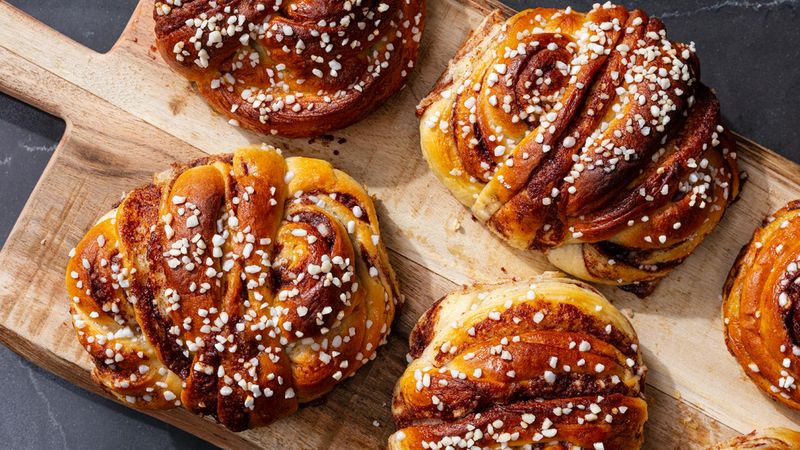
Sweden takes cinnamon buns so seriously that October 4th is officially “Kanelbullens Dag” — Cinnamon Bun Day. Unlike their American cousins, Swedish Kanelbullar are spiced with cardamom in the dough itself, which adds a warm, floral depth that sets them apart.
Filled with a buttery cinnamon mixture and often twisted into a knot shape, they’re topped with crunchy pearl sugar rather than frosting. The result is a bun that’s fragrant, fluffy, and not overly sweet.
Pair one with coffee and you have the perfect Swedish fika moment.
15. Semlor (Swedish Lenten Buns)
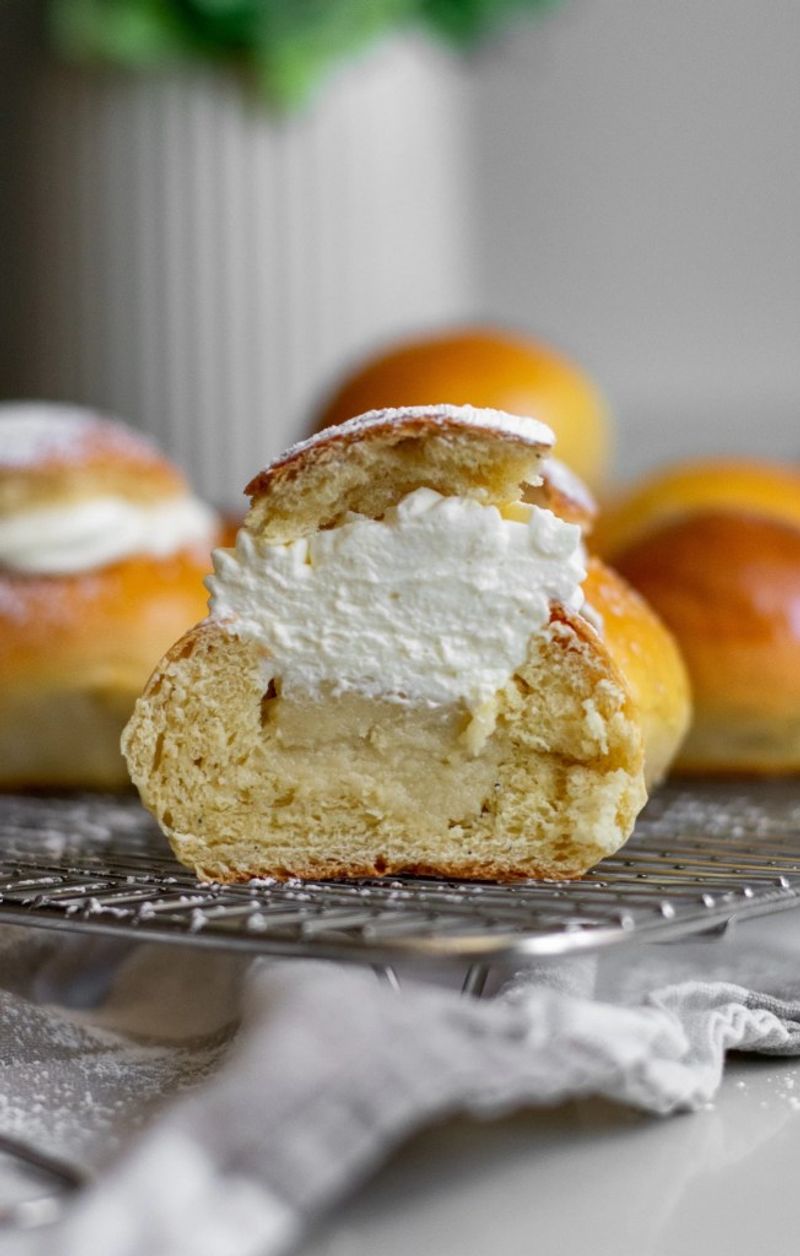
Every February, bakeries across Sweden fill up with the sweet scent of Semlor, and lines form out the door. These soft, cardamom-spiced buns are sliced open and hollowed out slightly to make room for a generous filling of almond paste and freshly whipped cream.
Traditionally eaten on Shrove Tuesday before Lent, Semlor have grown so popular that Swedish bakeries now sell them from January all the way through Easter. Legend has it that King Adolf Fredrik of Sweden ate himself to death after a feast that included 14 servings of Semlor in 1771.
16. Kleina (Icelandic Fried Dough)
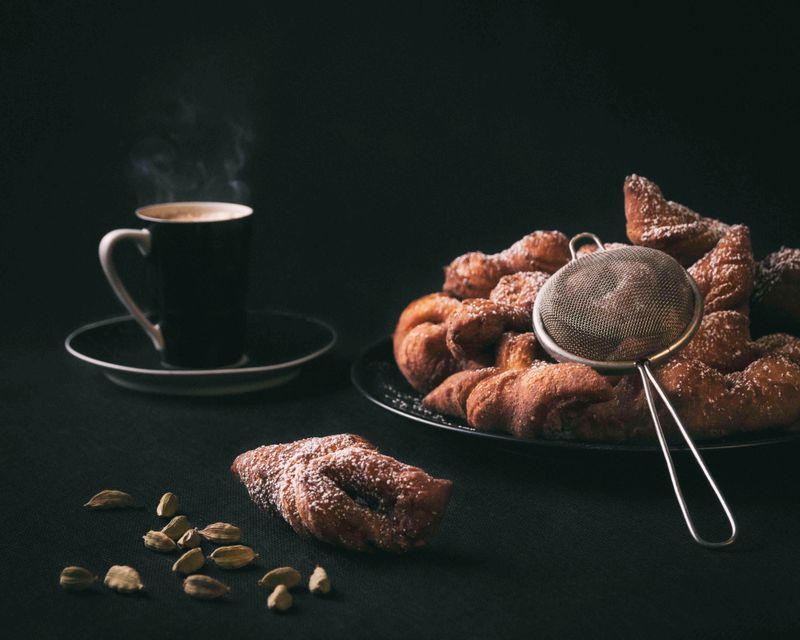
Kleina might look like a simple fried pastry, but in Iceland, it carries centuries of tradition. These diamond-shaped twists of fried dough are flavored with cardamom or vanilla, giving them a warmly spiced aroma that fills the kitchen during preparation.
Crunchy on the outside and slightly soft inside, Kleina are a go-to companion for a cup of Icelandic coffee. They’re especially popular during the Christmas season and at family gatherings.
Some Icelandic families have passed down their Kleina recipe through multiple generations, keeping the tradition deliciously alive.
17. Hjónabandssæla (Icelandic Marriage Cake)
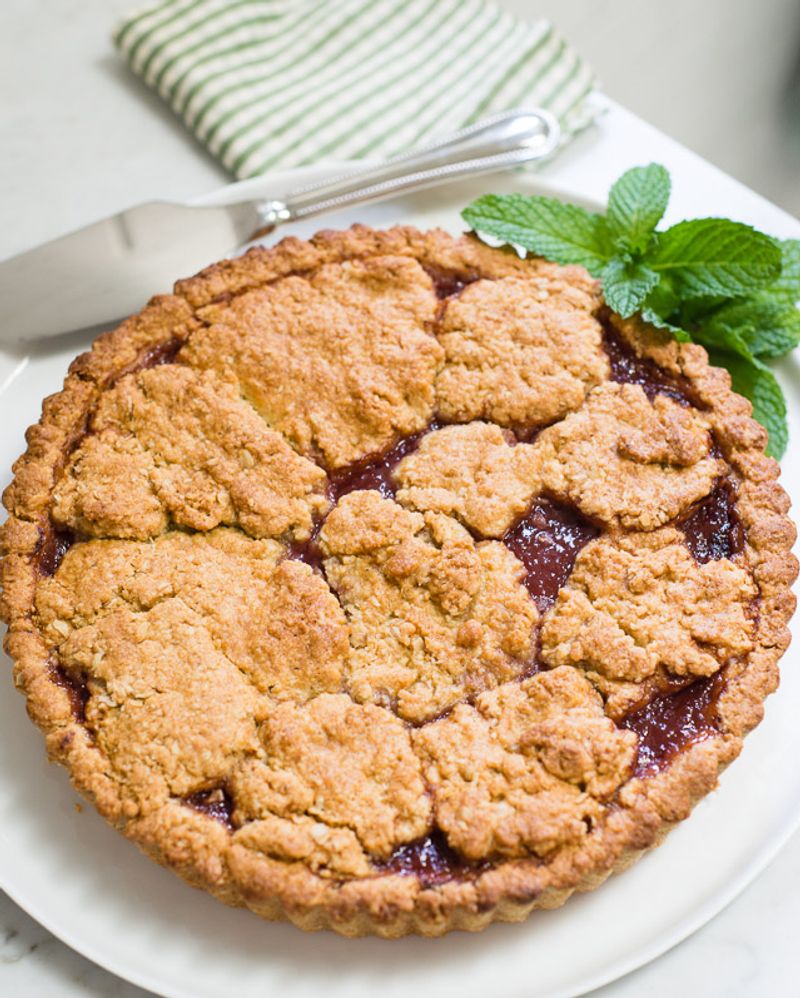
The name Hjónabandssæla translates to “marital bliss,” which is a wonderfully optimistic name for a dessert. This Icelandic treat sits somewhere between a rhubarb crumble and an oatmeal cookie bar, with a buttery oat and flour mixture pressed as both the base and the crumble topping.
Sandwiched in the middle is a generous layer of tangy rhubarb jam, which balances the sweetness of the oat layers beautifully. Rhubarb grows abundantly in Iceland thanks to the long summer daylight hours.
Every bite tastes like a cozy Icelandic kitchen on a rainy afternoon.
18. Mustikkapiirakka (Finnish Blueberry Pie)
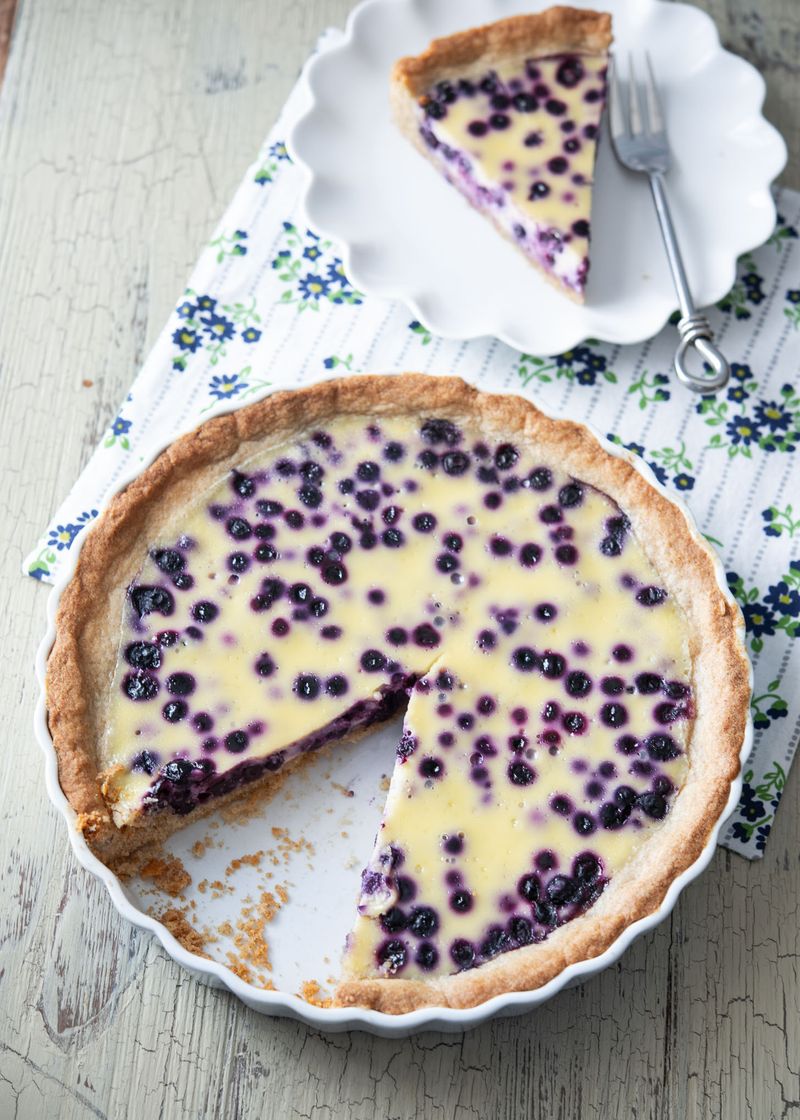
Finland’s forests are bursting with wild blueberries every summer, and Mustikkapiirakka is the most delicious way to celebrate the harvest. This traditional Finnish pie combines a slightly dense rye flour crust with a rich sour cream custard filling packed with fresh blueberries.
The result is something that tastes like a tart, a cheesecake, and a fruit pie all at once. Rye flour gives the crust a subtle earthiness that pairs beautifully with the sweet-tart berries.
It’s rustic, honest baking at its very best — deeply Finnish in every way.