22 Eccentrically Themed Restaurant Chains That Vanished Forever
Craving a nostalgia trip with a side of kitsch and curiosity? These long-gone restaurant chains promised dinner with a show, a story, or a strangely specific obsession, and then slipped off the map. You might remember the neon, the costumes, or the wild decor that felt like stepping onto a set. Get ready to revisit the oddball favorites you bragged about visiting and the ones you cannot believe ever existed.
1. Casa Bonita (Original Chain)
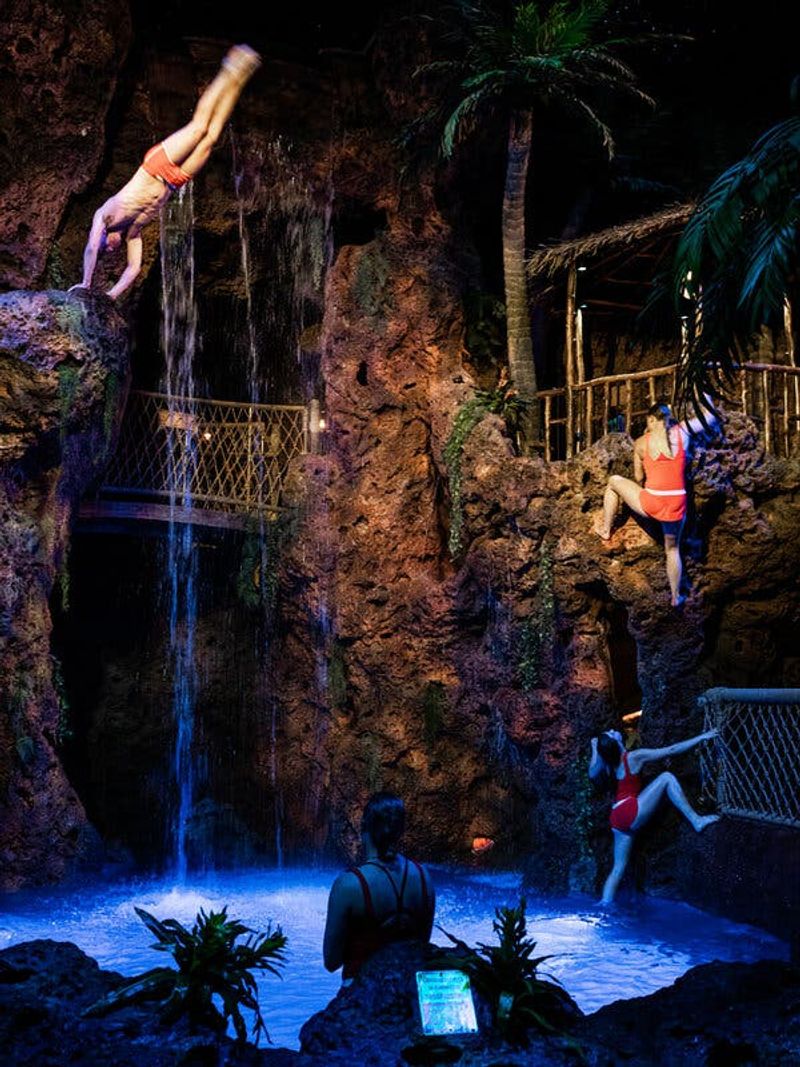
You walked in and felt transported to a technicolor Mexico, complete with cliff divers splashing into a pool beside your booth. Casa Bonita was chaotic, loud, and completely unforgettable, where sopapillas arrived with a flag you raised at the table. The Black Bart’s cave terrified kids while mariachi music bounced off faux-stone walls.
Food critics rarely raved about the menu, but nobody cared. It was theater with enchiladas, and the check doubled as a backstage pass. When locations closed, whole communities mourned. The legend survives in stories, souvenirs, and a craving for cinnamon sugar and spectacle.
2. Medieval Times Dinner and Tournament (Defunct Select Markets)
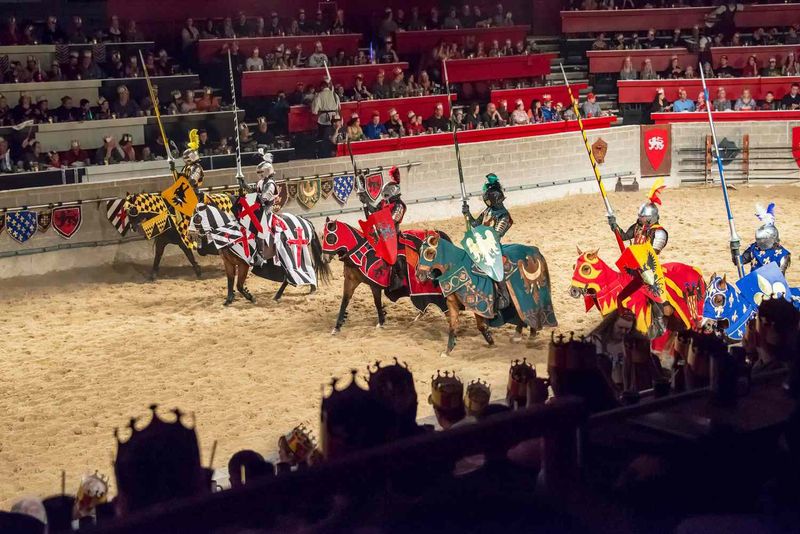
You cheered for a color-coded knight while tearing into roast chicken with your hands. Medieval Times delivered a raucous spectacle that rewired dinner into a tournament, complete with falconry and thundering hooves. Not every market could sustain the pageantry, and several locations eventually dimmed their torches.
Even where it survived, closures revealed the fragile economics behind horses, armor, and massive arenas. The immersive charm felt undeniable, but the bills piled high as a castle keep. Fans still swap tales of flying lances and clanking mugs. If you missed it, you missed dinner as sport.
3. Bennigan’s (Original Era)
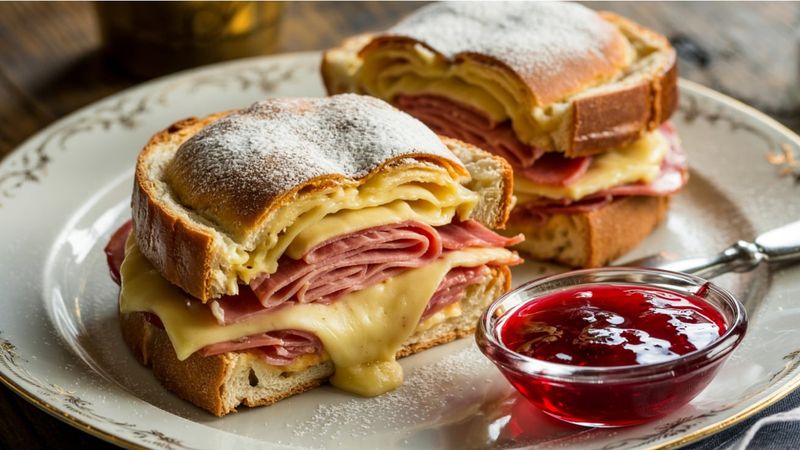
Bennigan’s felt like a friendly Irish pub transplanted into a mall parking lot, and somehow that worked. The menu was unapologetically indulgent, loaded with potato skins and Monte Cristos dusted in powdered sugar. Neon beer signs glowed over brass rails while the soundtrack hummed with classic rock.
Then the casual dining bubble popped. Competition multiplied, rents soared, and customers drifted to fast-casual convenience. Many locations shuttered, leaving only a faint Celtic echo and a craving for legendary sandwich excess. You can still find a few survivors, but the original chain’s magic mostly vanished into suburban lore.
4. Rainforest Cafe (Wider Retreat)
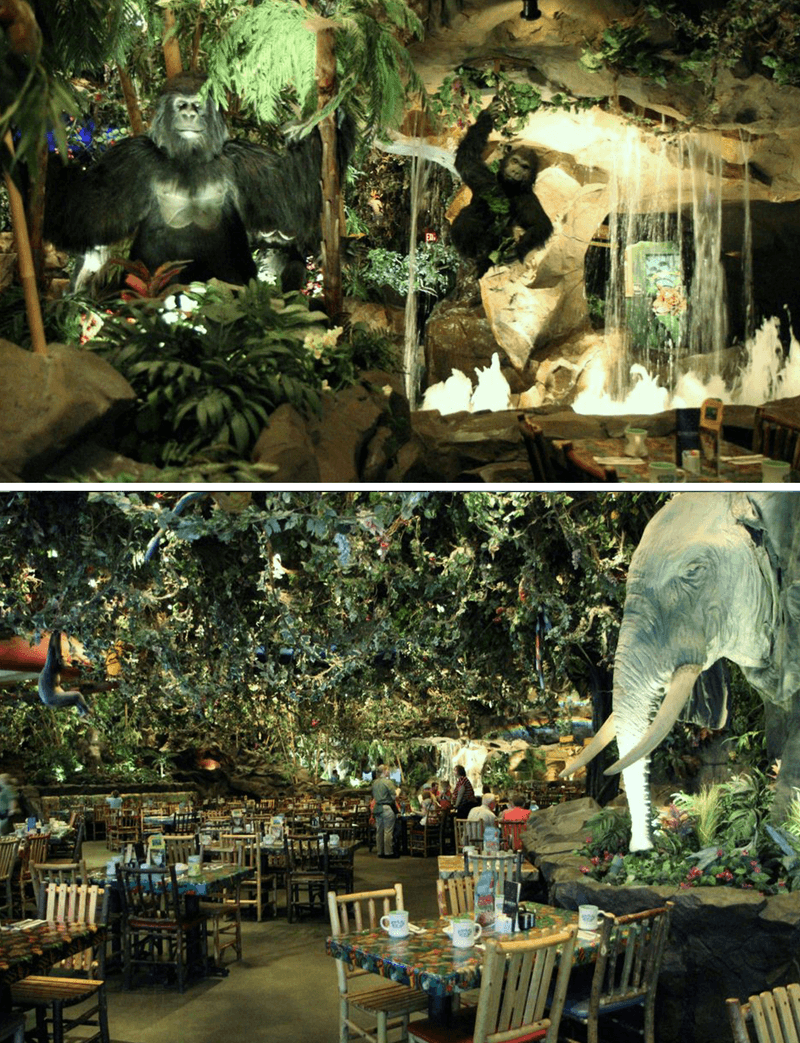
You dined under rumbling thunder as animatronic gorillas beat their chests in a fluorescent faux jungle. Rainforest Cafe made a meal feel like a theme park queue, complete with talking trees and souvenir-heavy gift shops. The experience dazzled kids and nostalgics alike, but rising costs and shifting foot traffic clipped its canopy.
Malls waned, landlords changed, and the spectacle lost some novelty. Some locations endure, yet many vanished like mist after a staged storm. The memory of glowing aquariums and chirping frogs lives on. If you loved the chaos, you still hear distant thunder when the check arrives.
5. Mars 2112
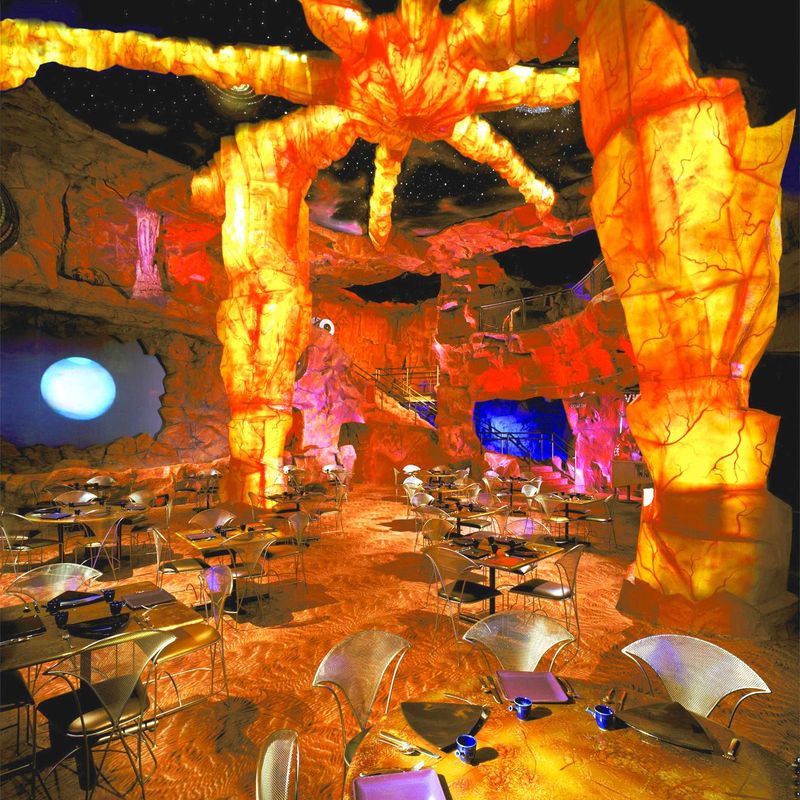
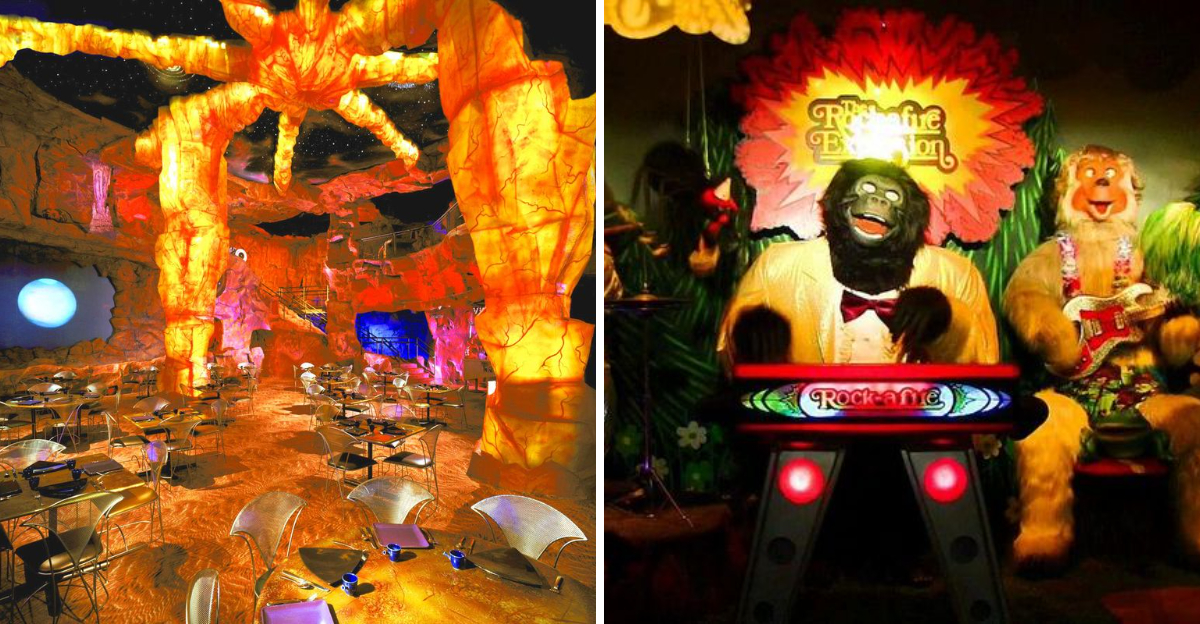
Mars 2112 promised dinner on another planet, beginning with a cheesy shuttle ride through space. Inside, you navigated Martian canyons, neon stalactites, and servers in spacey costumes selling cosmic cocktails. The concept felt bold, bizarre, and perfect for field trips or first dates gone delightfully weird.
New York’s rent gravity crushed it. Maintenance on props and rides added astronomical costs, while menus struggled to justify tourist prices. When the red lights dimmed, a hole opened in the galaxy of novelty dining. You still remember the launch doors hissing, then reality returning on the sidewalk.
6. Samurai Sam’s Teriyaki Grill (Early Expansion Busts)
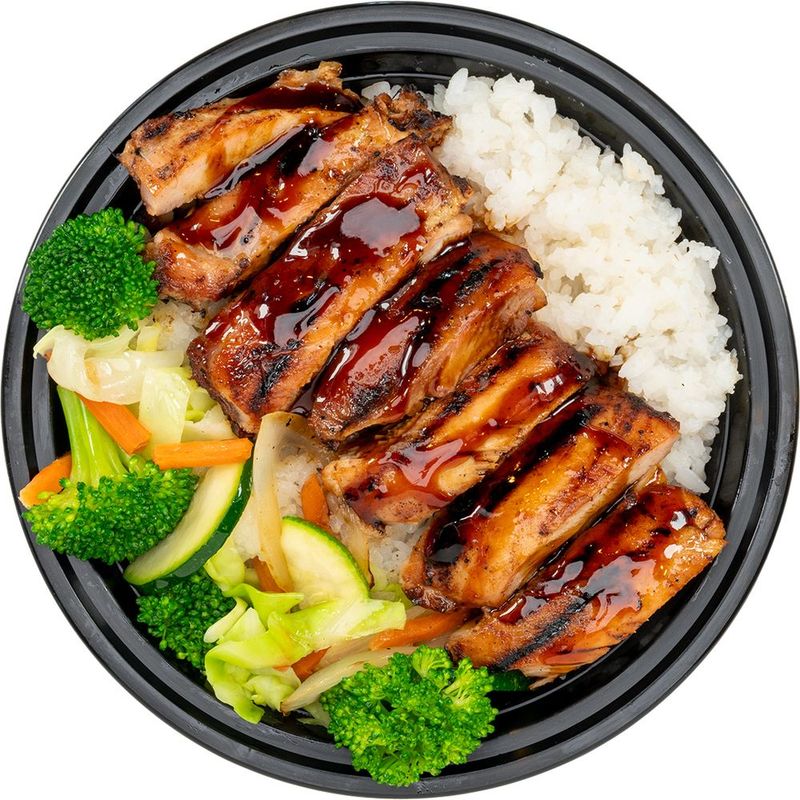
Samurai Sam’s rode the early 2000s teriyaki wave with bowls that felt both fast and a little fresher. You could smell the sweet soy glaze from the sidewalk as steam drifted across a compact counter. Expansion proved tricky, and some markets simply never stuck with the brand.
Franchise fatigue and competition from trendier bowls chipped away at the base. Locations quietly winked out like lanterns after a festival. A few remain, but the broader dream thinned to a whisper. If you miss it, you miss that dependable, slightly sticky teriyaki comfort served without much fuss.
7. Planet Hollywood (First Wave)

Planet Hollywood made burgers feel like a premiere night, with prop-filled glass cases and overhead scripts. You showed up for the memorabilia and stayed for the milkshakes, even if critics mocked the menu. In the 1990s, star power trumped subtle flavors, and everyone wanted a branded T-shirt.
Then the flash faded. Rents, competition, and novelty fatigue emptied rooms once lined with cameras. Many locations shuttered while a shrunken roster held on. You still picture the spotlight logo, a relic of blockbuster dining. It was loud, shiny, and spectacularly of its time.
8. All Star Cafe

All Star Cafe was Planet Hollywood for sports fans, backed by superstar athletes and super-size screens. You could order wings beneath a jersey worn in a championship game and argue stats while a DJ hyped the room. It felt like a sports bar in a theme park costume.
But star endorsements could not beat rent, fickle tourism, and brutal margins. The chain’s noise drowned out the numbers, and locations blinked off one by one. Today you remember the adrenaline and the gift shop brimming with branded balls. It was a highlight reel without a playoff run.
9. ShowBiz Pizza Place
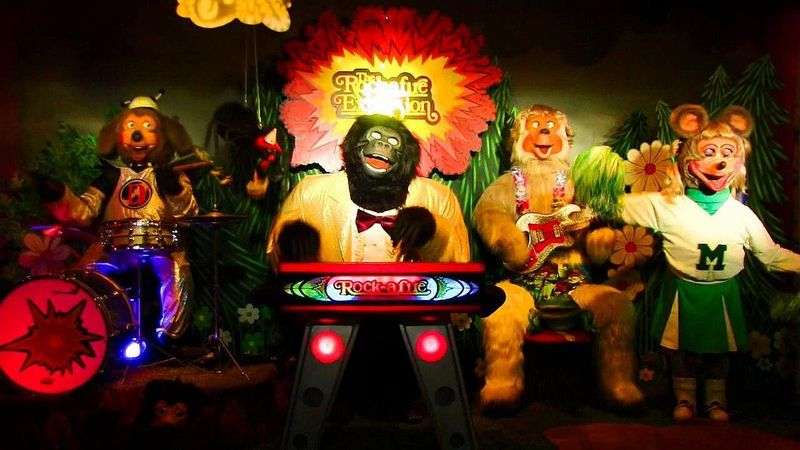
ShowBiz Pizza Place delivered birthdays powered by tokens, arcade lights, and an animatronic band that banged through tinny tunes. You came for greasy slices and stayed for the Rock-afire Explosion’s uncanny grins. It felt like a carnival nested inside a pizzeria.
Corporate mergers and rebranding rolled it into Chuck E. Cheese, and the ShowBiz identity fizzled. Some fans still collect animatronic parts like relics from a lost age. Nostalgia footage keeps the vibe alive online. If you remember the tickets spilling out, you recall joy measured in arcades and soda refills.
10. Tiki-Ti Inspired Chains (Various)

The tiki craze spawned chains that promised Polynesian fantasy through umbrellas, torches, and syrupy sunsets in a glass. You wandered through bamboo corridors as bartenders lit drinks on fire and stories on brighter fire. The food was part Cantonese, part tropical dream, and wholly escapist.
When tastes changed, many concepts faded or shrank to single legendary bars. Rising costs and cultural reevaluation pushed brands to retool or retire. Yet the kitsch remains irresistible to nostalgia hunters. You might still chase that pufferfish glow, knowing most original chains drifted away like flotsam after a long luau.
11. Little Tavern
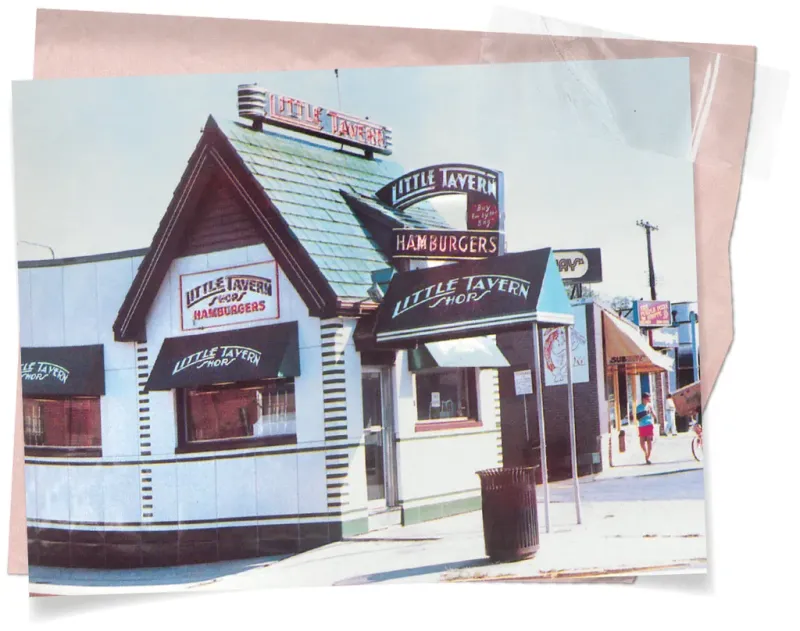
Little Tavern was a bite-sized burger chain serving sliders from jewel-box shops that glowed like lighthouse beacons. You could grab a sack of tiny burgers and a coffee for pocket change back when pocket change mattered. The buildings were adorable, the menus stripped down, the nostalgia rich.
As car culture evolved and costs rose, the chain sputtered. Drive-thrus multiplied elsewhere while Little Tavern stayed stubbornly small. A few buildings survived as memories or rebranded cafes. You still picture the porcelain fronts and the green script logo, hinting at midnight snacks and simpler times.
12. Beefsteak Charlie’s
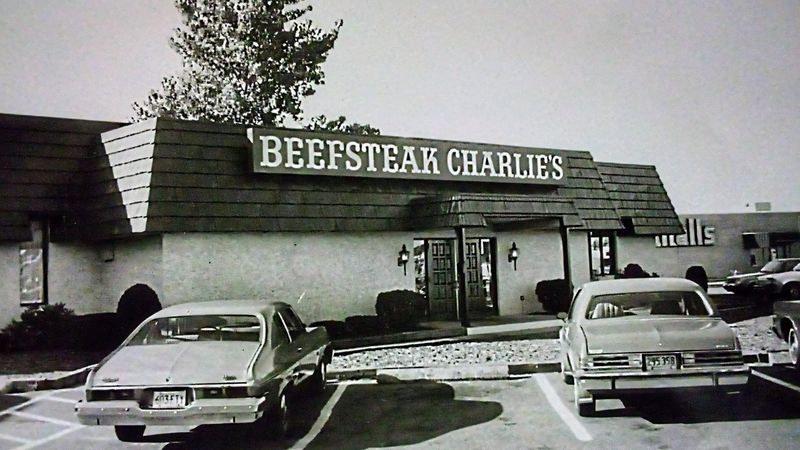
Beefsteak Charlie’s promised you would be spoiled with unlimited beer, wine, and sangria. You hit the salad bar like a competitive event and pretended the steak was the star. The vibe was dark, plush, and faintly conspiratorial, perfect for expense accounts and big appetites.
But unlimited drinks collide with ruthless economics. As regulations tightened and competition sharpened, the formula broke. Locations closed, memories fermented, and the brand slipped into folklore. You can still recite the slogan, laughing about the bottomless pours. It was excess served with red leather and a wink.
13. Chi-Chi’s
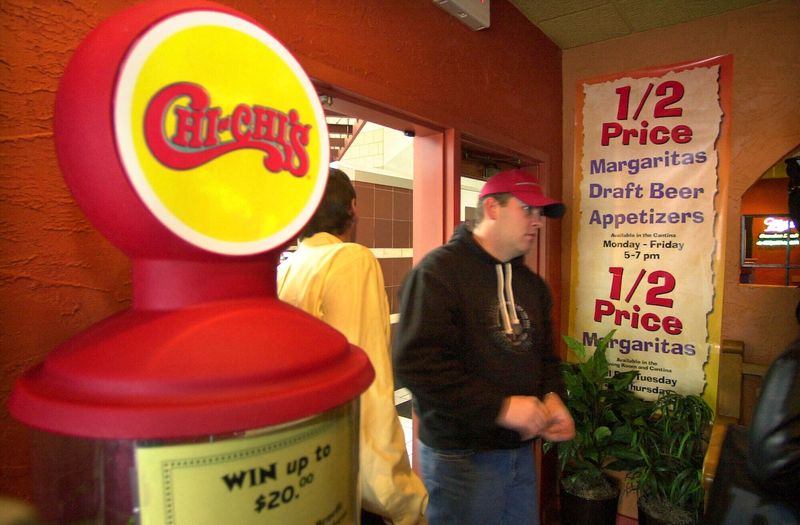
Chi-Chi’s mainstreamed Tex-Mex for suburban families hungry for sizzling fajitas and sugar-rimmed margaritas. You remember baskets of chips that never emptied and a festive glow bathing every plate. The brand felt ubiquitous, the menu a greatest hits tape of Americanized Mexican comfort.
Disaster and lawsuits crushed it after a hepatitis outbreak, paired with financial trouble. It was a painful, public unraveling. Some branded products lingered in grocery aisles, echoing a once-mighty presence. If you ever celebrated a birthday there, the sombrero photo lives on. The chain’s fall remains a cautionary tale about trust and safety.
14. Marsden’s Magic Pan (The Magic Pan)
The Magic Pan turned crepes into a mall spectacle, with copper pans twirling on a carousel stove. You could watch dessert being born in a swirl of batter and steam, then order savory classics with Swiss and mushrooms. It felt refined yet approachable, perfect for a shopping break.
Trends shifted, and buttery crepes ceded ground to newer cuisines. Operating costs and declining mall traffic thinned the batter. Most locations folded, leaving behind recipe cards and wistful recollections. You still crave strawberry crepes dusted with powdered sugar, served with a flourish. The show was half the flavor.
15. Blimpie (Shrinking Footprint)
Blimpie was the sub shop you found in strip malls and gas stations, a dependable sandwich when hunger struck. You watched the line build as knives sliced through soft rolls and mustard perfumed the air. The branding felt friendly, the price right, the loyalty quiet but real.
Then competitors outmarketed, outnumbered, and outmaneuvered. Store counts shrank as franchisees flipped signs to stronger players. A few stalwarts remain, yet the name drifts like a faded coupon. You remember crinkly paper around an Italian sub and a soda too big to finish. Simpler lunches, simpler times.
16. White Tower
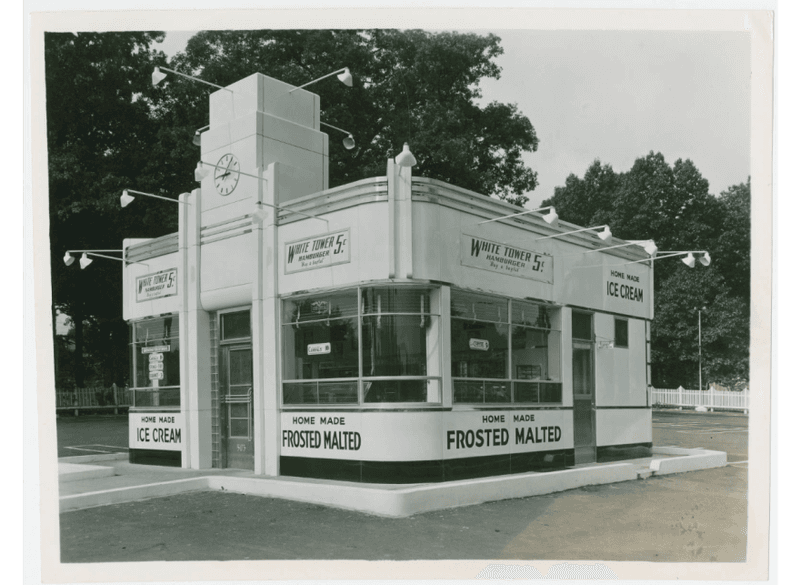
White Tower mirrored a successful rival with porcelain-tiled mini castles and tiny burgers by the sack. You could slide onto a stool and watch grills hiss like distant trains. The brand became a landmark on corners where commuters grabbed quick comfort.
Lawsuits, modernization pressures, and broader fast-food consolidation squeezed it hard. Many towers toppled quietly, converted or demolished. A few buildings still stand as ghosts in glossy white. You remember that clean, clinical charm, the promise of consistency and speed. It vanished into the archive of American roadside dreams.
17. Howard Johnson’s Restaurants

Howard Johnson’s was the interstate’s friendly lighthouse, an orange roof guiding families to clam strips and 28 ice cream flavors. You could count on that menu like a road map. The brand defined road-trip dining before fast food gobbled its lanes.
As highways and habits changed, newer chains outpaced its slower service and aging buildings. One by one, dining rooms darkened. A final location lingered before vanishing into headlines and wistfulness. You still picture the peppermint stick scoop and a paper placemat maze. The road feels lonelier without it.
18. Dinner House with a Show (Ferris O’Brien’s style)
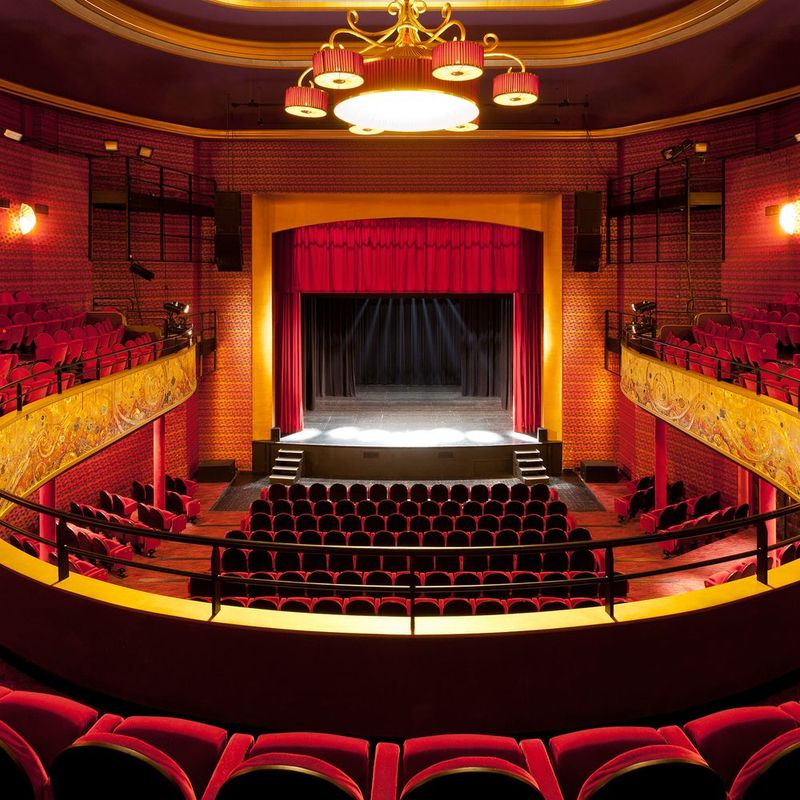
Some chains married supper with stagecraft, turning your entree into an intermission. You might remember a crooner gliding through standards while servers whisked past velvet curtains. It felt glamorous, accessible, and proudly old-fashioned in the best way.
When entertainment costs rose and tastes shifted, the dual model struggled. You can see why: two businesses stacked together, each hard. Many folded, leaving only scattered venues and warm memories of torch songs over prime rib. If you were there, you still hum along when the lights dim. The curtain fell quietly on dinner-as-theater.
19. PoFolks
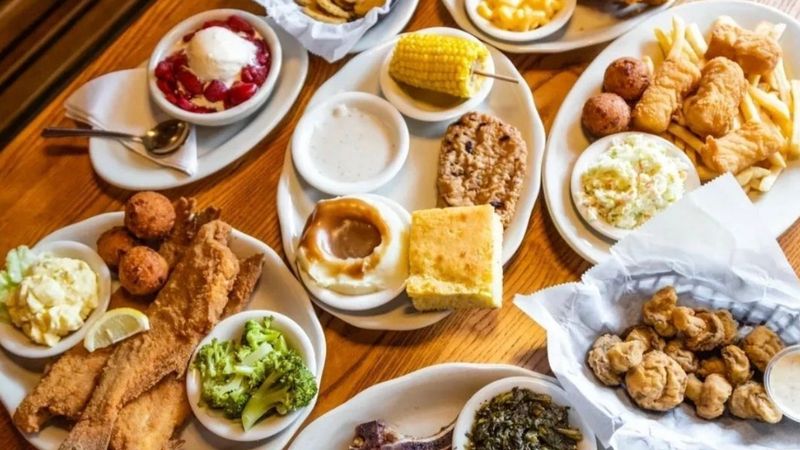
PoFolks leaned hard into country comfort, serving up chicken fried steak and sweet tea in mason jars. You sat at gingham tables beneath signs that winked in down-home slang. The vibe was friendly, the portions generous, the prices careful with your paycheck.
But as branding trends shifted, the cornpone charm lost ground to sleeker competitors. Some locations rebranded, others vanished. Fans still crave catfish and cornbread the way grandma might serve it. You remember hospitality that felt like a front-porch hello. The chain faded, but the craving never did.
20. Luby’s Cafeteria (Classic Chain)
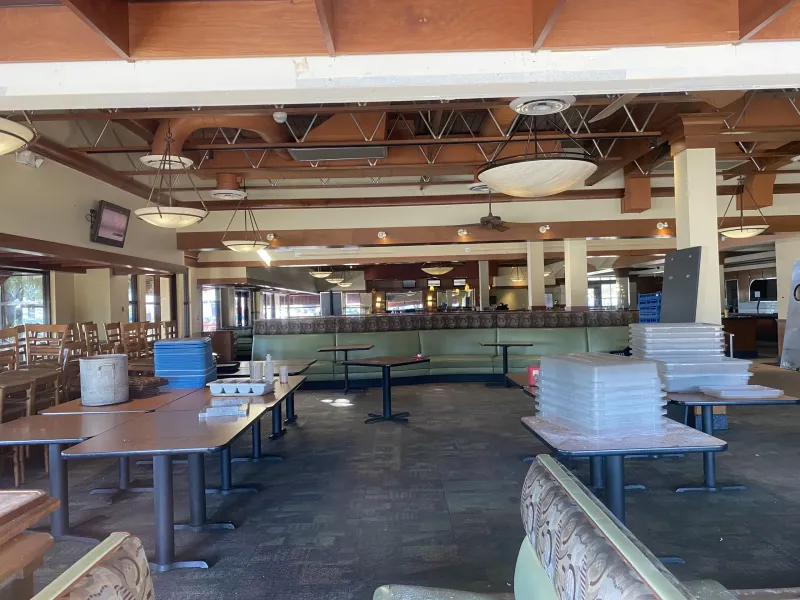
Luby’s was a comfort ritual: slide a tray, point at a casserole, and sit with people you loved. You could clock the rhythm of dinner by the clack of plates and the sway of cafeteria lines. Meatloaf, mac, and memories piled high under heat lamps.
When fast-casual streamlined choices and delivery rewired convenience, cafeterias struggled. Closures spread across the map, taking Sunday routines with them. Some units survived under new ownership, but the classic chain thinned. You still taste square-cut Jell-O and cornbread. It was dependable, gentle dining in a loud world.
21. BrewBurger (Regional 1980s)
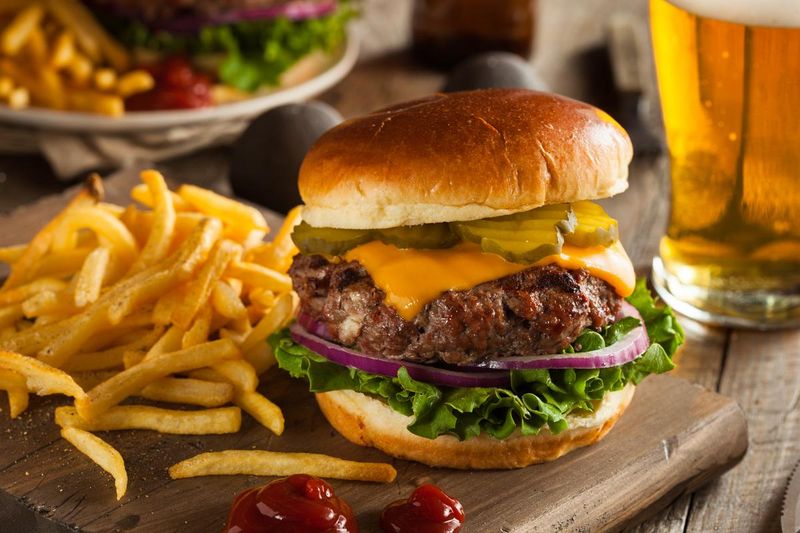
BrewBurger tied char-grilled patties to frosty mugs when that pairing still felt novel. You camped in a wooden booth while the chalkboard listed beers you had to ask about. It was neighborhood cool, a little ahead of its time, and very much of its decade.
Competition matured, trends professionalized, and regional players squeezed the margins. The brand could not keep pace and receded into memory. Old coasters and faded T-shirts are now collector bait. If you remember the grill smoke, you remember your friends’ laughter rising with it.
22. Kenny Rogers Roasters (US Retreat)
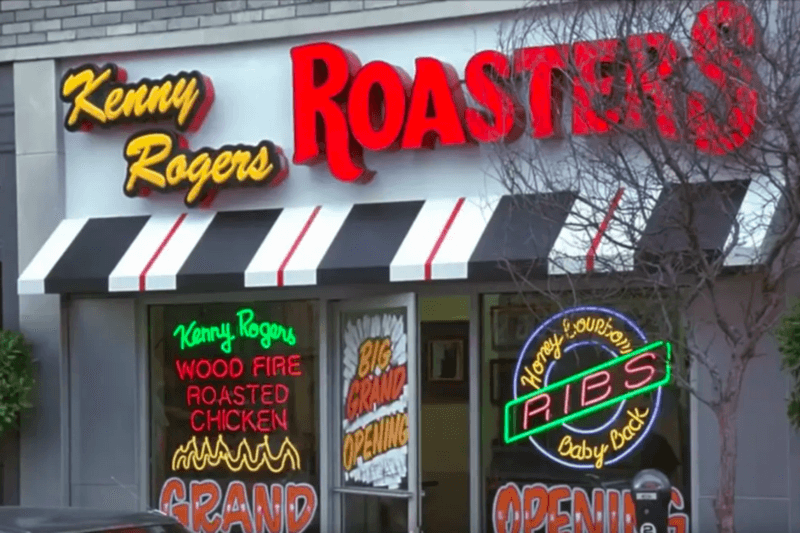
Kenny Rogers Roasters served golden rotisserie chicken in a glow of country-star branding. You could see rows of birds slowly turning, promising juicy comfort with sides that felt homey. The theme song practically played in your head with every order.
As competition intensified, the US presence wilted, leaving fans swapping lore online. The brand found more success overseas than stateside. Here, the lights dimmed and the chicken moved on. You still crave that signature seasoning and a buttery roll. Fame helped launch it, but staying power required more than a chorus.