15 Regional Beef Sandwiches Built On Local Pride
Across America, beef sandwiches are more than just lunch — they are edible landmarks that tell the story of a city or region. From the smoky pits of Baltimore to the busy delis of New York City, every sandwich carries a history worth tasting.
Local ingredients, immigrant traditions, and neighborhood creativity all shaped these iconic bites. Get ready to take a flavorful road trip through 15 beef sandwiches that locals swear by and visitors never forget.
1. Reuben Sandwich (Omaha, Nebraska)
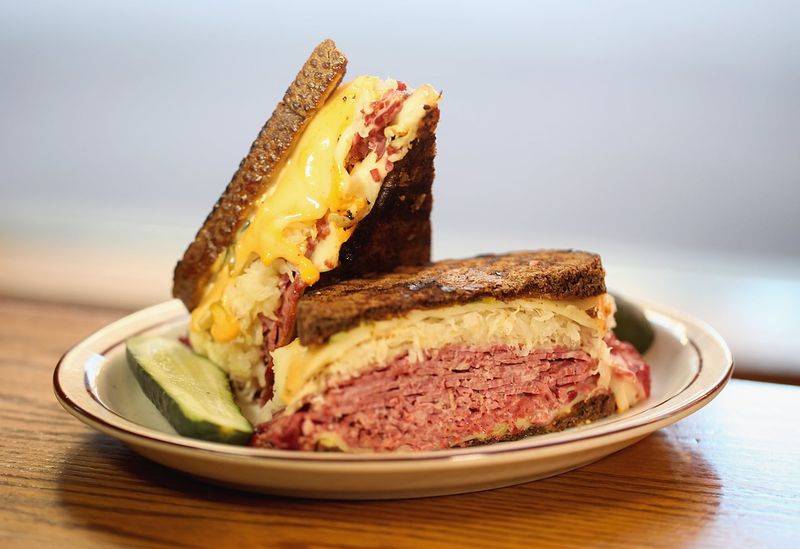
Back in 1925, Bernard Schimmel of the Blackstone Hotel in Omaha reportedly stacked corned beef, sauerkraut, Swiss cheese, and Thousand Island dressing on rye bread — and changed sandwich history forever.
The Reuben became a staple of Jewish delicatessens across the country, beloved for its bold, tangy, savory flavors all in one bite. Nebraska proudly claims this sandwich, even though New York also raises its hand.
Either way, the original recipe has barely changed, and that is the highest compliment a sandwich can get.
2. Beef on Weck (Buffalo, New York)
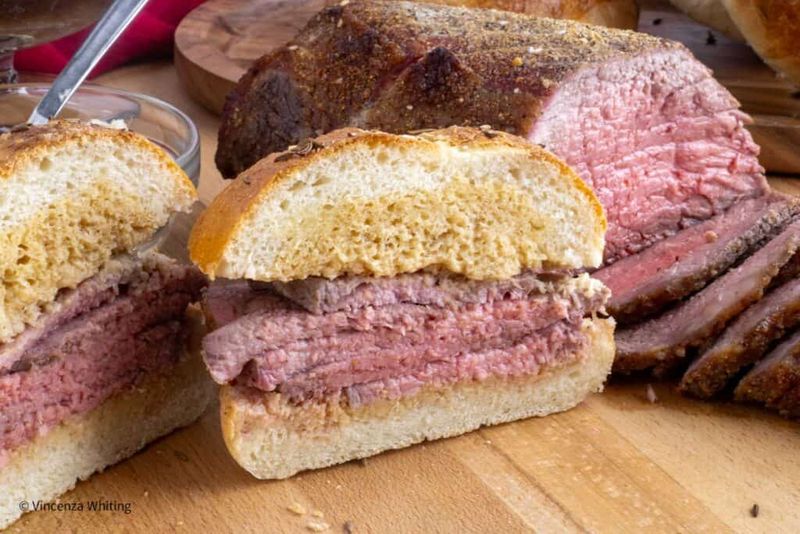
Buffalo has chicken wings, sure — but locals will tell you the Beef on Weck is the city’s true pride. German immigrant William Wahr is credited with bringing this sandwich to life in the late 1800s.
The star is the kümmelweck roll, dusted with caraway seeds and coarse salt, giving every bite a satisfying crunch. The roast beef is sliced thin and served rare, with the top bun dipped in au jus.
Add a swipe of sharp horseradish and you have something Buffalo calls its own.
3. North Shore Roast Beef 3-Way (Revere, Massachusetts)
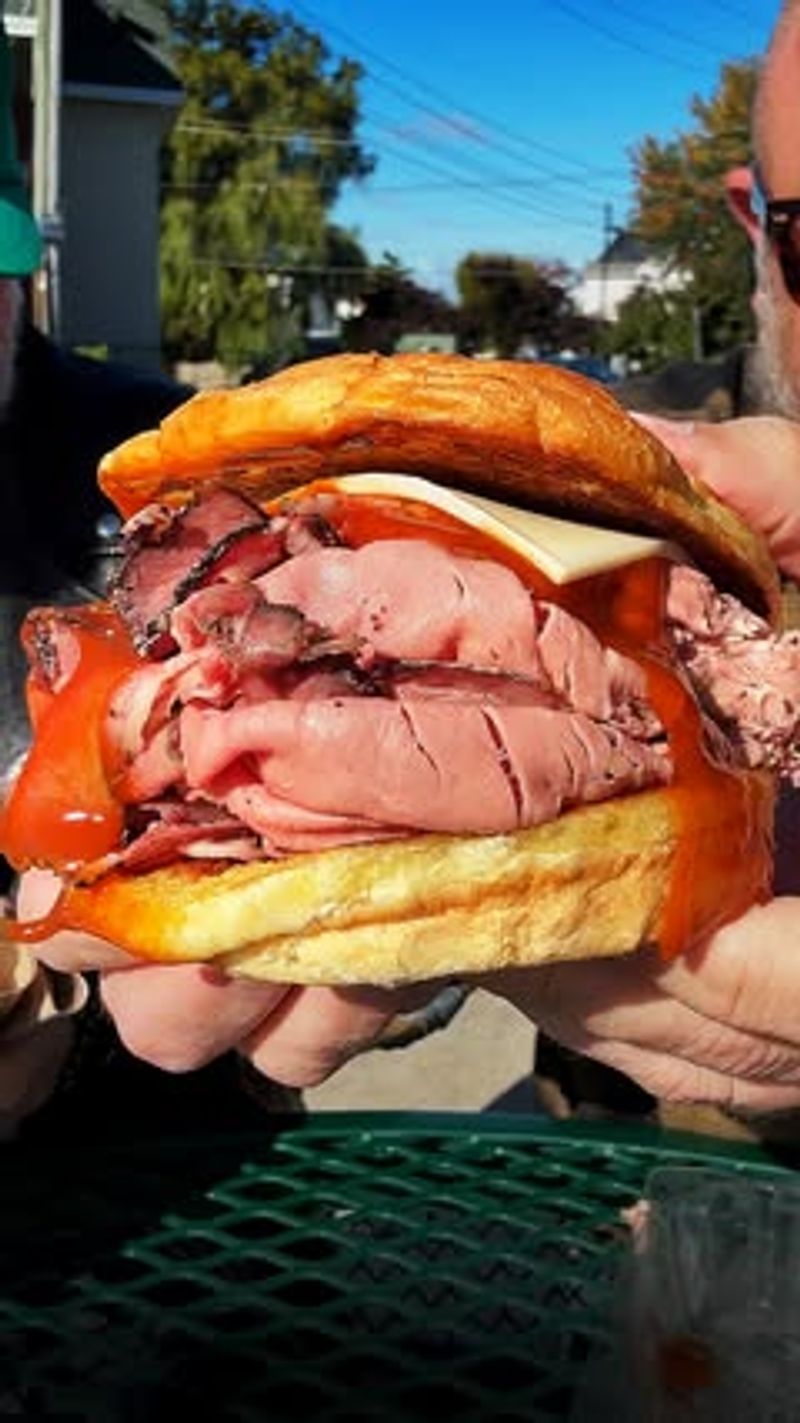
Kelly’s Roast Beef in Revere, Massachusetts, opened in 1951 and sparked a regional obsession that has never cooled down. The “3-Way” name comes from the trio of toppings that make it legendary: American cheese, mayonnaise, and barbecue sauce.
Roast beef is shaved ultra-thin and piled onto a soft roll with all three sauces layered just right. North Shore locals are fiercely loyal to this sandwich style, and debates about which shop does it best are practically a community sport.
4. Baltimore Pit Beef (Baltimore, Maryland)
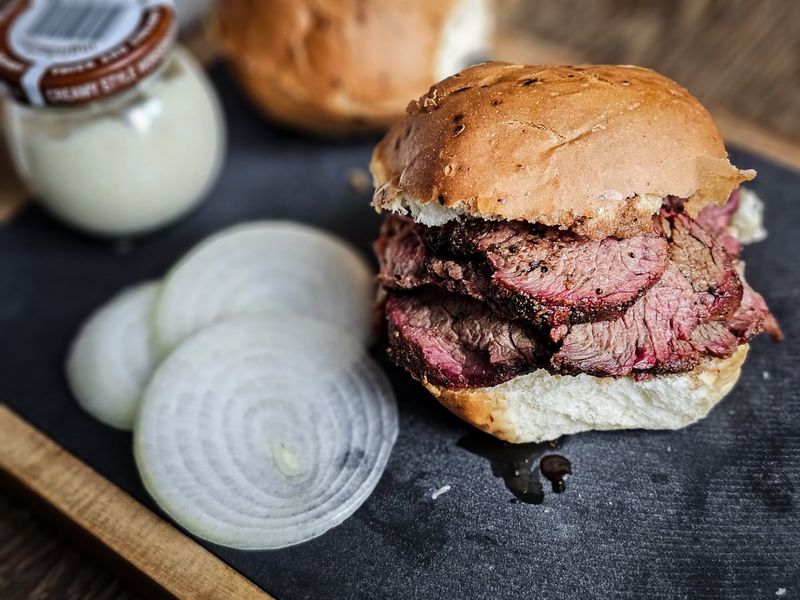
Pit beef was born on the roadsides of Baltimore in the 1970s, cooked over open charcoal pits by working-class cooks who knew how to make something extraordinary from simple ingredients. The beef — usually top round — gets a charred crust on the outside while staying nearly raw and juicy inside.
It lands on a kaiser or brioche roll with a smear of tiger sauce, which is just horseradish mixed with mayo. It is unpretentious, smoky, and absolutely addictive.
5. Chicago Italian Beef (Chicago, Illinois)
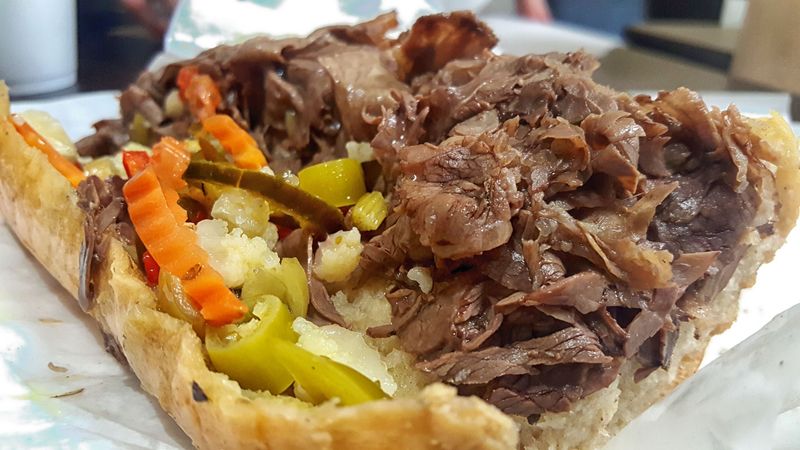
Few sandwiches inspire as much passion as the Chicago Italian beef. Italian immigrants in the early 1900s slow-cooked tough cuts of beef in seasoned broth, then sliced it paper-thin and piled it onto a sturdy hoagie roll.
You can order it “wet” — meaning the whole roll gets dunked in the cooking juices — or “dry” if you prefer less drip. Giardiniera, a spicy pickled vegetable mix, tops it off with a satisfying kick.
Chicago residents treat this sandwich like a civic identity.
6. Philly Cheesesteak (Philadelphia, Pennsylvania)
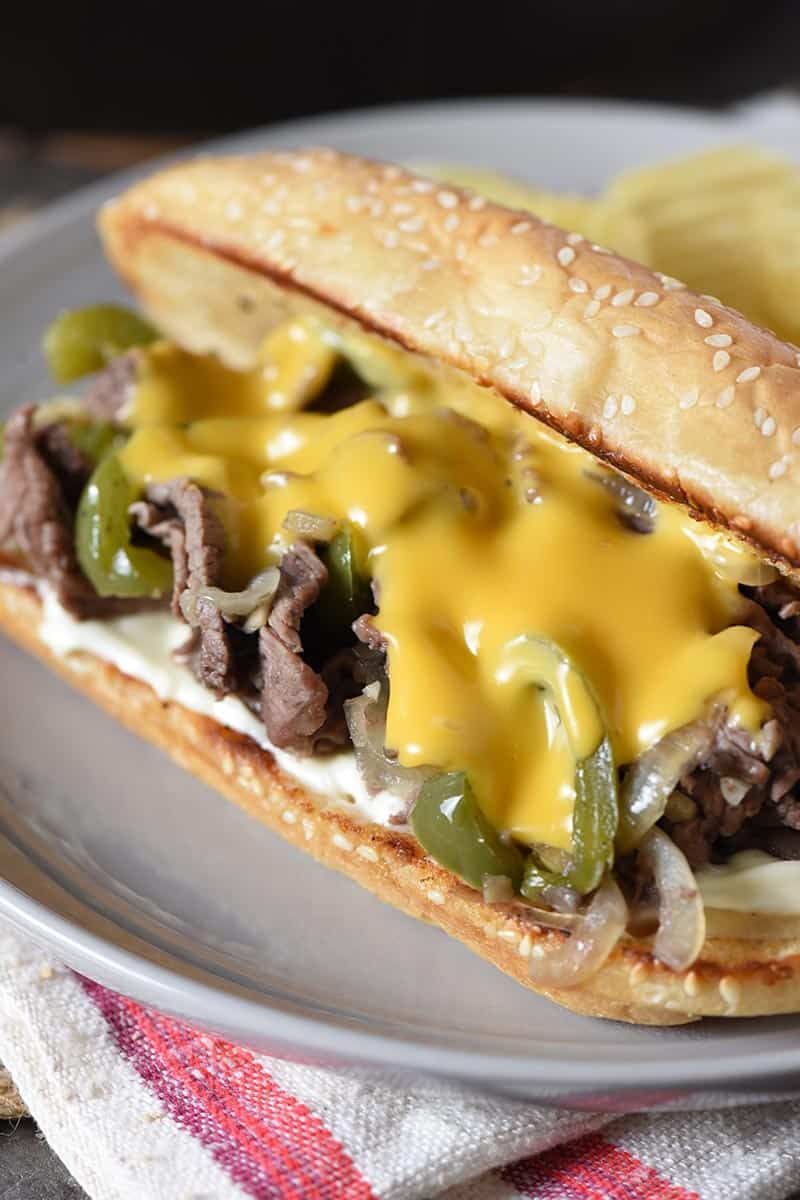
Hot dog vendor Pat Olivieri made history in 1930 when he tossed beef on his grill in South Philadelphia, and the cheesesteak was born. Thinly sliced ribeye, seared fast on a flat-top griddle, gets loaded onto a soft hoagie roll with melted cheese — Cheez Whiz being the most iconic choice.
Caramelized onions are a classic addition. Philadelphians take their cheesesteak orders seriously, and getting it wrong is practically an insult.
Visitors quickly learn to order with confidence or face the line.
7. Roast Beef Po’ Boy (New Orleans, Louisiana)
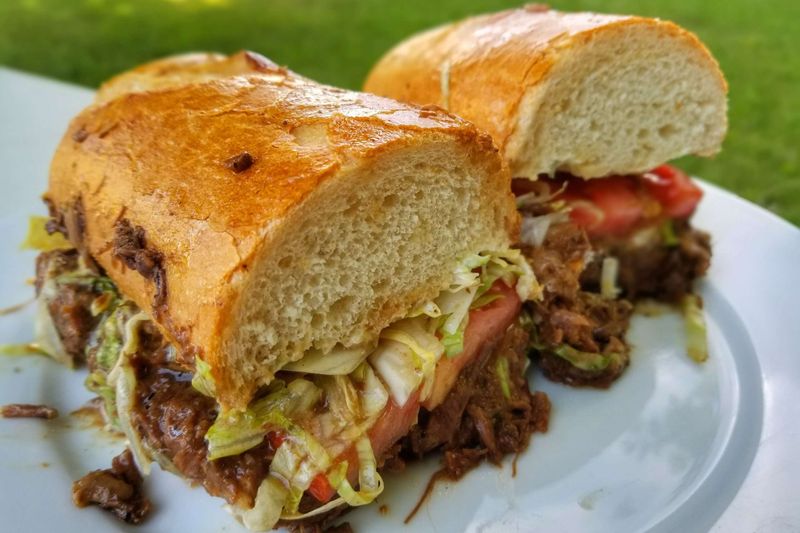
In New Orleans, a po’ boy is not just a sandwich — it is a way of life. The roast beef version is especially beloved, loaded with slow-cooked tender beef and topped with “debris,” the rich, flavorful bits of meat that fall into the gravy during roasting.
Everything lands on a crispy French baguette that is soft inside and crunchy outside. Add pickles, tomato, lettuce, and mayonnaise to “dress” it properly.
Every bite is messy, saucy, and completely worth it.
8. Santa Maria Tri-Tip Sandwich (Santa Maria, California)
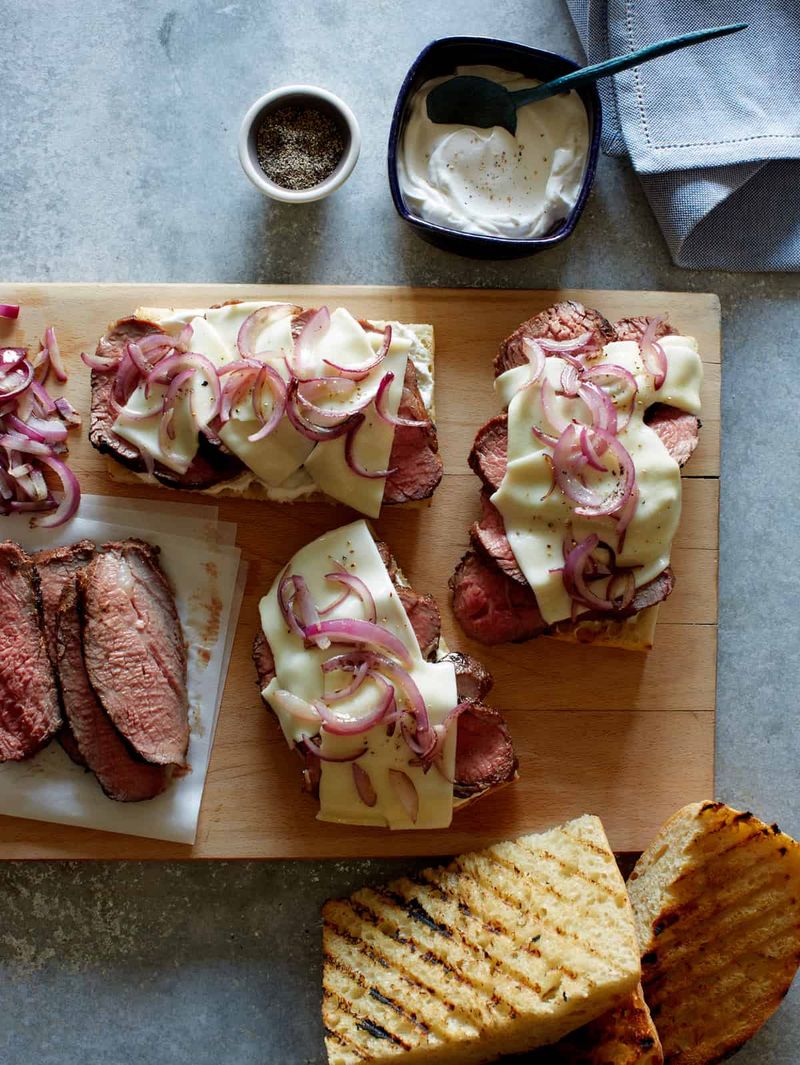
Santa Maria, California, has a barbecue culture all its own, and the tri-tip sandwich is its crown jewel. Tri-tip is a triangular cut of sirloin that is more popular on the West Coast than almost anywhere else in the country.
It gets seasoned simply — salt, pepper, garlic — then grilled over red oak wood for a smoky, beefy flavor that needs no fuss. Served on a flour tortilla with pico de gallo and pinquito beans on the side, this sandwich is California confidence on a plate.
9. French Dip (Los Angeles, California)
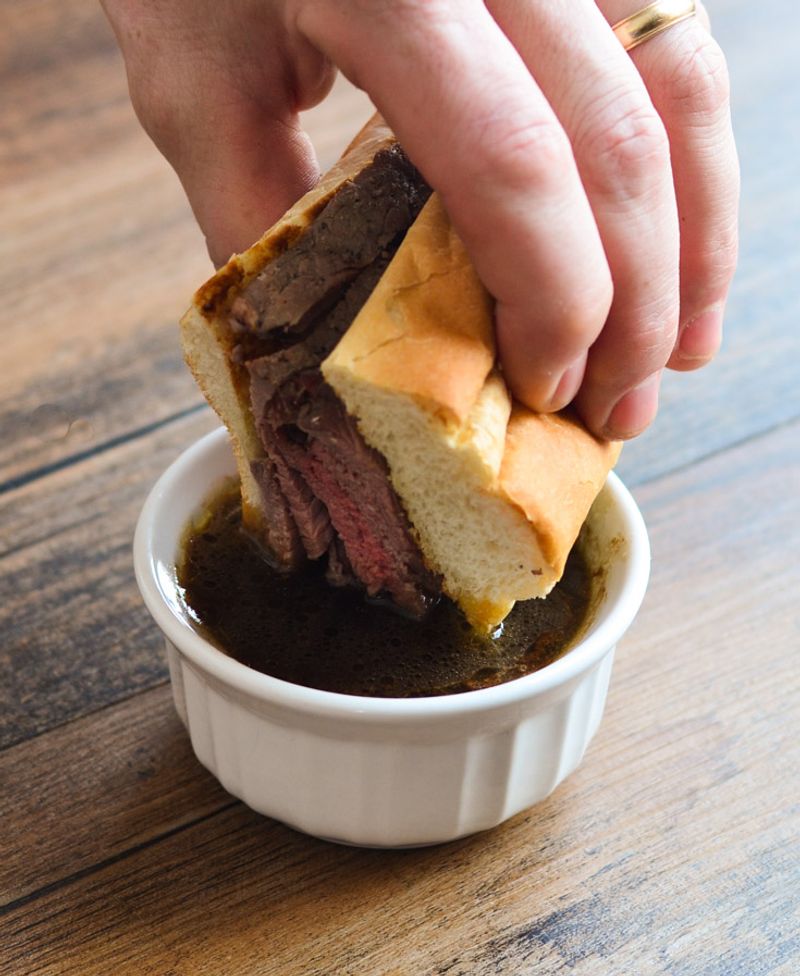
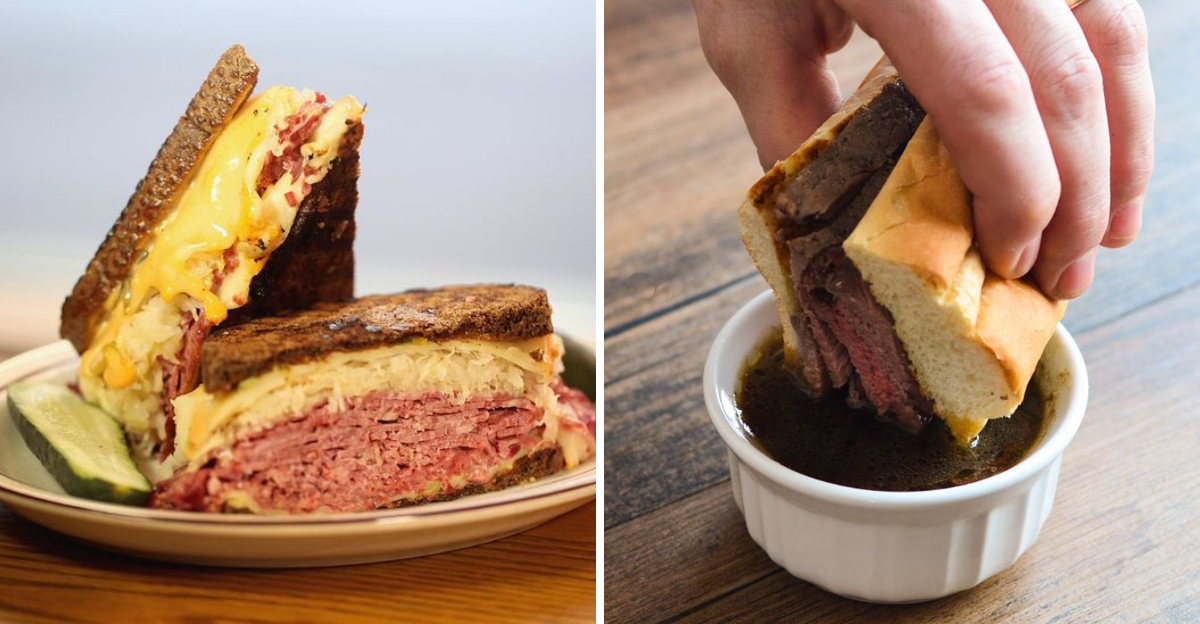
Two Los Angeles restaurants — Philippe’s and Cole’s — have been arguing since the early 1900s about who invented the French Dip, and honestly, both deserve credit for keeping the legend alive. The sandwich itself is beautifully simple: roast beef on a crusty French roll.
The real magic happens when you dip the whole thing into a cup of warm, savory au jus. The bread softens just enough to soak up the flavor without falling apart.
It is comfort food with a little drama built right in.
10. Brisket Burnt Ends Sandwich (Kansas City, Kansas)
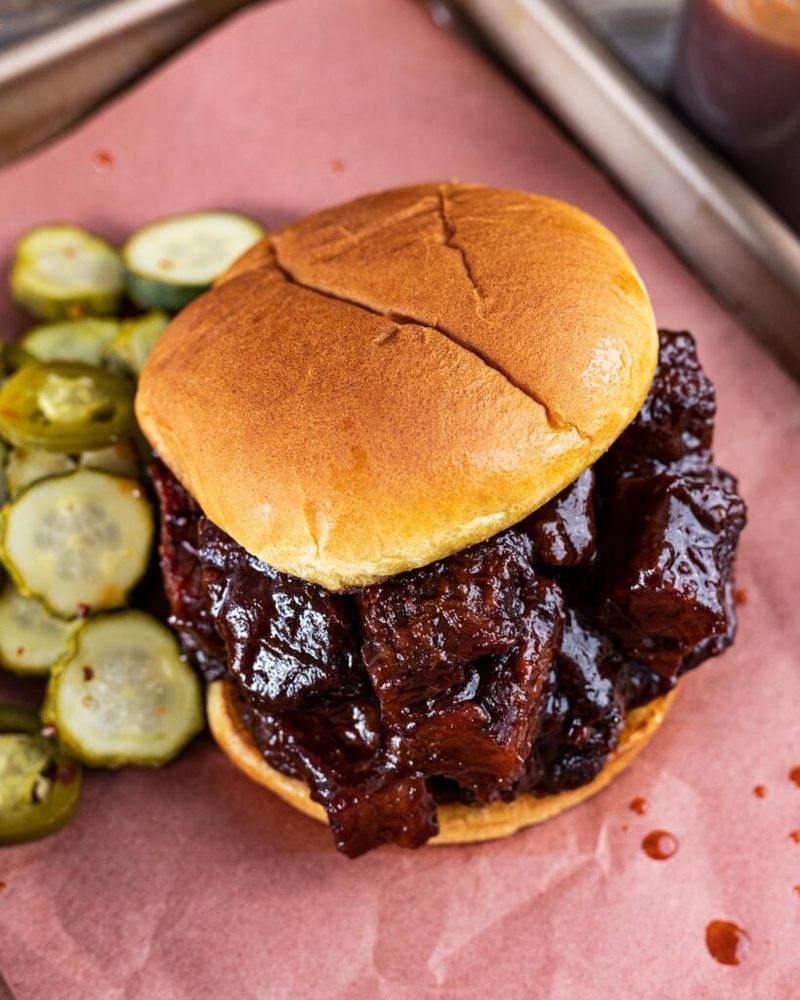
Burnt ends were once considered scraps — the crusty, overcooked tips of a smoked brisket that pit masters tossed aside or gave away for free. Kansas City turned those “scraps” into a barbecue delicacy worth traveling for.
Now piled high on a soft hamburger bun with sweet, sticky barbecue sauce, burnt ends have become a sandwich icon. The exterior is caramelized and slightly crispy, while the inside stays melt-in-your-mouth tender.
Kansas City barbecue joints serve these with a confidence that is 100 percent earned.
11. Patty Melt (Las Vegas, Nevada)
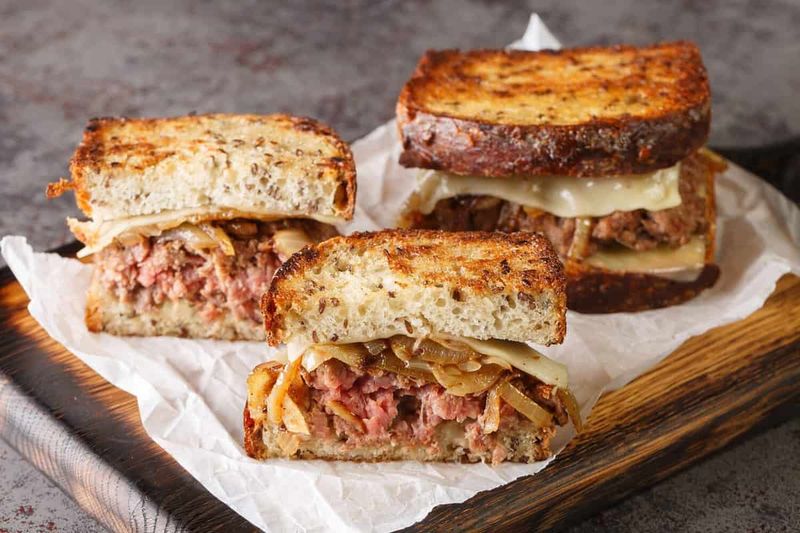
Somewhere between a burger and a grilled cheese lives the Patty Melt — a diner masterpiece that Nevada claims with quiet confidence. Legend connects its roots to the Golden Gate Hotel and Casino in Las Vegas, where the combination of beef patty, Swiss cheese, and caramelized onions on toasted rye became a crowd favorite.
The bread gets butter-toasted on a flat griddle until golden and crisp. Every layer — savory beef, sweet onions, melted cheese — works in perfect harmony.
It is retro, satisfying, and genuinely hard to improve upon.
12. Loose Meat Tavern Sandwich (Iowa)
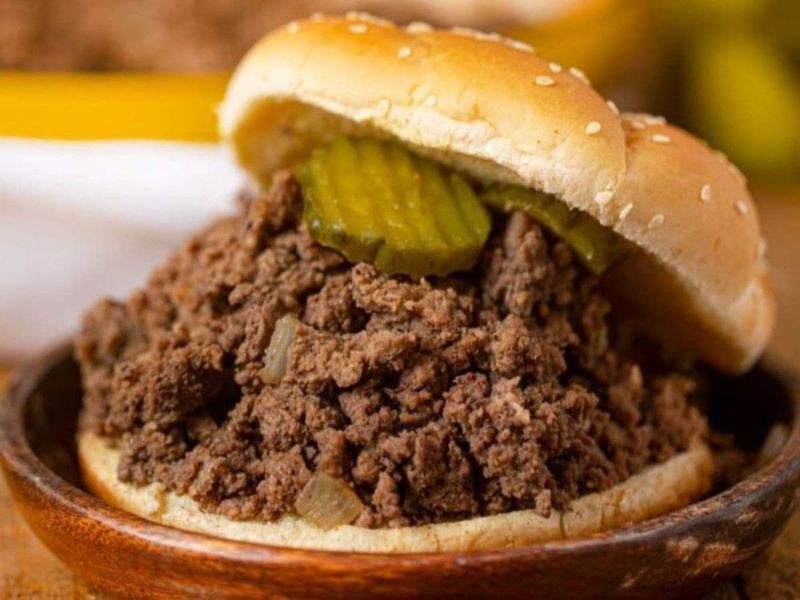
Iowa’s loose meat sandwich is proof that simplicity wins. Also called a tavern sandwich, it skips the patty entirely — ground beef is cooked crumbled and loose, then spooned onto a soft bun without pressing it into a burger shape.
Toppings are straightforward: onions, mustard, pickles, and sometimes a slice of cheese. The result is juicy, messy, and deeply satisfying in a no-frills Midwestern way.
Iowans grew up eating these at diners and drive-ins, and the tradition shows no sign of slowing down.
13. Pastrami on Rye (New York City, New York)
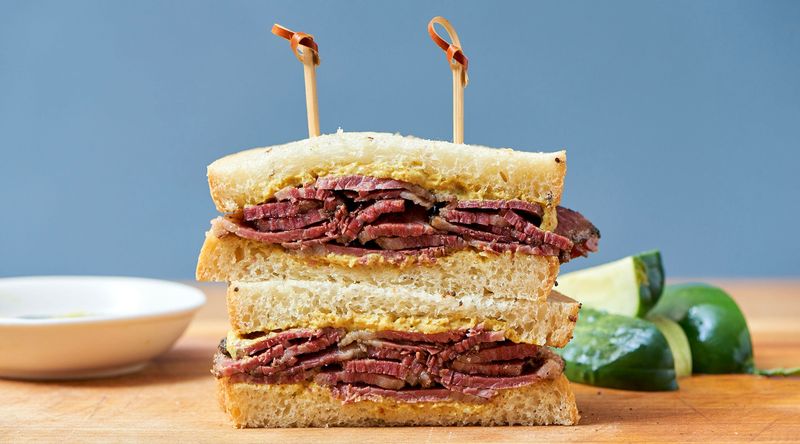
In 1888, Lithuanian immigrant Sussman Volk introduced New Yorkers to pastrami, and the city never looked back. Pastrami on rye is now considered New York’s signature sandwich — a towering, steam-heated stack of cured beef brisket on soft rye bread with a slather of sharp yellow mustard.
A kosher dill pickle on the side is non-negotiable. The pastrami is peppery, smoky, and tender enough to pull apart with a fork.
New York delis guard their recipes fiercely, and every shop insists theirs is the real deal.
14. Jibarito (Chicago, Illinois)
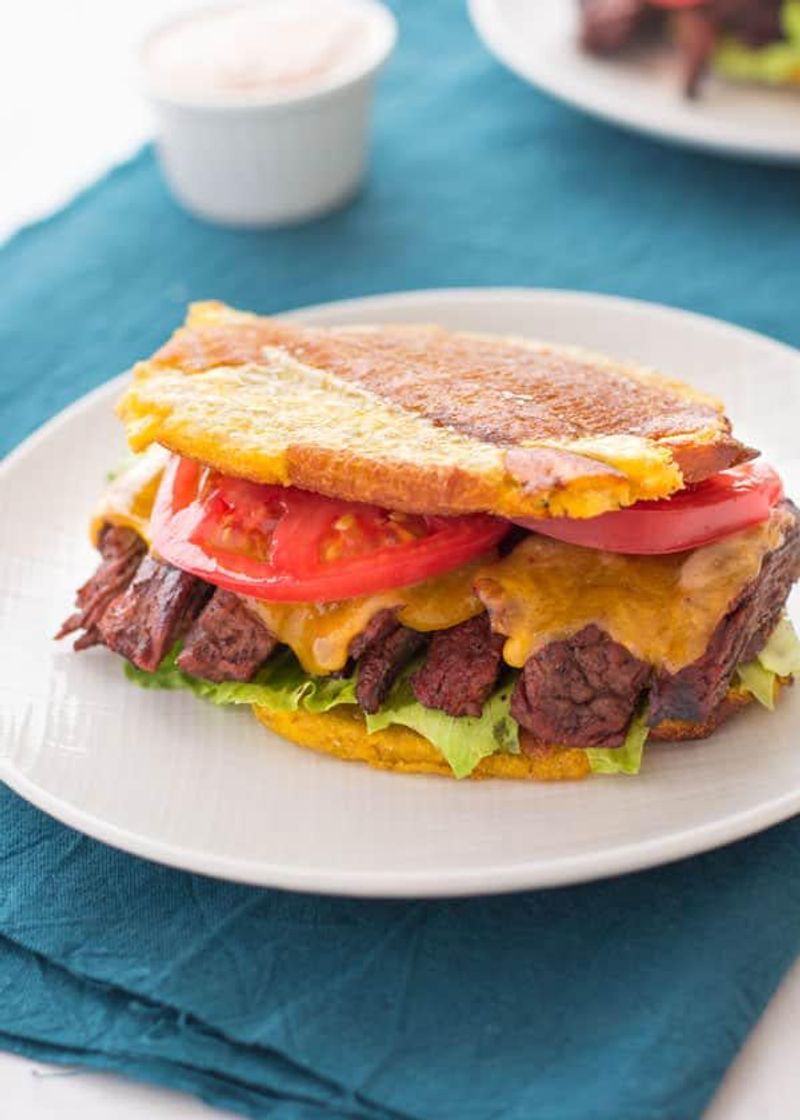
Chicago’s Puerto Rican community gave the world one of the most creative sandwiches ever made. The Jibarito, born in the 1990s in the Humboldt Park neighborhood, swaps out bread entirely for two flattened, fried green plantains.
Between those golden plantain slabs goes seasoned beef steak, American cheese, lettuce, tomato, and a swipe of garlicky mayo. The crunch of the plantain against the savory beef is unlike anything else on this list.
It is a sandwich that carries cultural pride in every single layer.
15. Hot Beef Commercial (Dakotas and Minnesota)
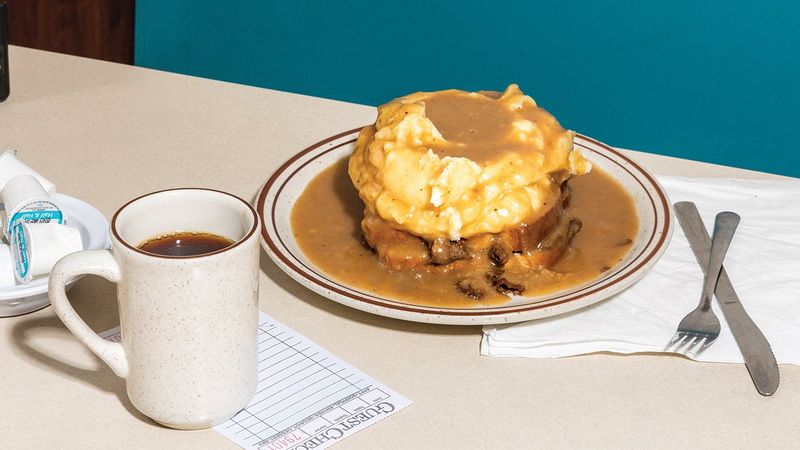
Ask anyone from the Upper Midwest about comfort food and the hot beef commercial comes up fast. This fork-and-knife sandwich — popular across Minnesota and the Dakotas — features thick slices of pot roast laid open-faced on white bread and completely buried in brown gravy.
Mashed potatoes almost always come alongside, and the gravy flows freely between both. It is the kind of meal that warms you from the inside out on a January afternoon.
Locals call it a “commercial,” and ordering it anywhere else in the country will get you a confused look.