6 Rare American Berries That Are Hard To Find
Most people know about strawberries, blueberries, and raspberries — but America is home to some truly wild and elusive berries that most folks have never tasted. These hidden gems grow in forests, mountain slopes, and remote wilderness areas, far from your local grocery store.
Tracking them down is part treasure hunt, part nature adventure. Whether you are a forager, a foodie, or just plain curious, these six rare berries are worth knowing about.
1. Thimbleberry (Rubus parviflorus)

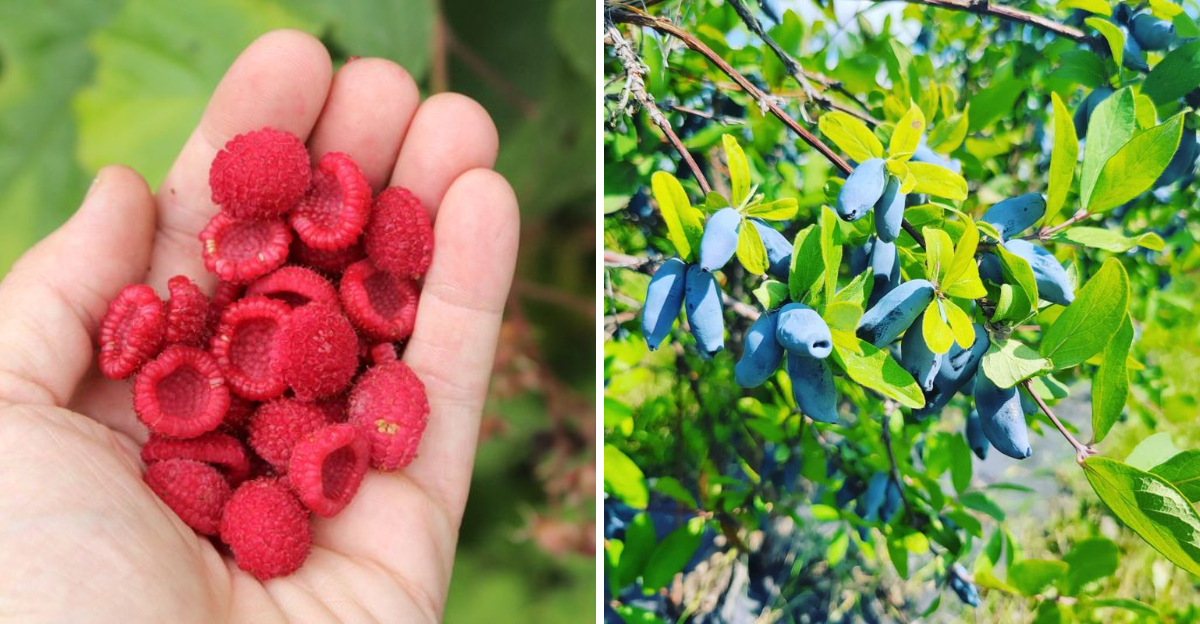
Imagine picking a berry so fragile it falls apart in your hand within hours of leaving the bush. That is the thimbleberry experience.
Bright red and shaped like a shallow cap, these berries burst with an intense tart-sweet flavor that puts raspberries to shame.
The trouble is, they spoil so fast that no store will ever carry them. You have to find them yourself, growing quietly along wooded trails.
Logging and development continue to shrink their habitat, making each find feel like striking gold.
2. Haskap Berry (Honeyberry)

Picture a blueberry that somehow tastes like blueberry and blackberry had a flavor-packed baby — that is a haskap berry. Native to North America yet almost invisible in American markets, these odd-shaped, dark blue berries are a hidden culinary treasure worth chasing.
Their paper-thin skin bruises easily and gives them a shelf life that shipping companies simply cannot work with. Farmers are slowly starting to grow them, but for now, finding fresh haskaps usually means knowing the right small orchard or farmers market vendor.
3. Huckleberry (Vaccinium spp.)

Wild huckleberries have resisted every attempt to tame them. The USDA has spent over 60 years trying to farm them — and failed.
Nearly every huckleberry eaten in America was picked straight from the wild, mostly in the rugged forests of the Pacific Northwest.
Native Americans once used controlled burns to help huckleberry patches thrive, since the plants love recently burned, acidic soil. Today, fire suppression and commercial logging have made wild stands harder to find.
Their rich, complex sweet-tart flavor makes the search absolutely worth it.
4. Cloudberry (Rubus chamaemorus)

Cloudberries look like golden raspberries and grow in some of the most remote corners of the planet — alpine tundra in Alaska and northern Canada. Their harvest window runs only from July to mid-August, which means missing the season means waiting a full year.
Packed with vitamin C and antioxidants, they are considered a true superfood by nutritionists. In Scandinavia, cloudberry jam is practically a national treasure.
In America, finding fresh cloudberries is rare enough that many foragers treat a successful harvest like winning a small lottery.
5. Boysenberry

Born in a Northern California backyard in the 1920s, the boysenberry is a quirky mashup of raspberry, blackberry, and loganberry — and somehow it manages to taste better than all three. Deep purple, plump, and juicy, it carries a flavor that is bold and complex in the best possible way.
Despite being a California staple for decades, boysenberries never quite went mainstream. You will rarely spot them in supermarkets outside select regions.
Local farm stands and specialty grocers are usually your best bet for scoring a fresh pint.
6. Native Gooseberry and Currant (Ribes genus)

Few berries have had a rougher history than native gooseberries and currants. In the early 1900s, the U.S. government launched eradication programs targeting Ribes plants because some species spread white pine blister rust, a disease that devastated timber industries.
Millions of plants were destroyed, and wild populations never fully recovered. Today, these tart, jewel-like berries remain rare across much of the country.
Shade-tolerant and resilient, they quietly persist in woodland edges — a bittersweet reminder of how human decisions can reshape an entire ecosystem.